Rubber Mats in South Africa for Industrial, Commercial and Everyday Floor Protection
Rubber mats provide a practical way to protect hard floors, cushion standing areas and create resilient surfaces around selected equipment. From production workstations and workshops to gyms, garages and building entrances, the right rubber matting can help manage daily wear without requiring a complete floor replacement.
PVC Floor Tile supplies a varied selection of rubber mats in South Africa, including dense equipment support mats, industrial coin-pattern mats, anti-fatigue bubble mats, entrance scraper mats, EPDM rubber sheeting and modular comfort products. These products serve different purposes: no single mat is ideal for every load, surface or environment.
Use this buying guide to compare applications, understand important specifications and choose suitable heavy-duty rubber mats for your project. Browse the products listed above to see available sizes, variations and current prices.
Why Choose Rubber Floor Mats?
Concrete, painted floors and tiles can be vulnerable to scuffs, equipment contact and repeated use. Some hard surfaces also offer little cushioning for employees working at fixed stations. Rubber floor mats add a removable or semi-permanent layer between the activity and the base floor, depending on the product and installation method.
For commercial spaces, this targeted approach can be efficient: place a correctly specified mat where workers stand, where equipment rests or where footwear brings dirt indoors. Different textures and constructions address different needs, from debris scraping to standing comfort.
- Floor protection: helps reduce direct contact between suitable equipment and the underlying surface.
- Standing comfort: appropriately designed anti-fatigue mats can improve underfoot comfort at workstations.
- Practical grip: selected surface textures offer traction when matched to footwear and conditions.
- Flexible coverage: individual mats protect priority areas without covering an entire room.
- Maintenance: many options are easy to lift, inspect, sweep and clean with compatible products.
Real performance depends on rubber formulation, thickness, compression behaviour, moisture, contact pressure and use. For example, a cushioned standing mat is not automatically appropriate beneath a heavy machine, and a solid mat cannot drain standing water through its surface.
Rubber Mats Available for Different Applications
Heavy-Duty Industrial and Equipment Support Mats
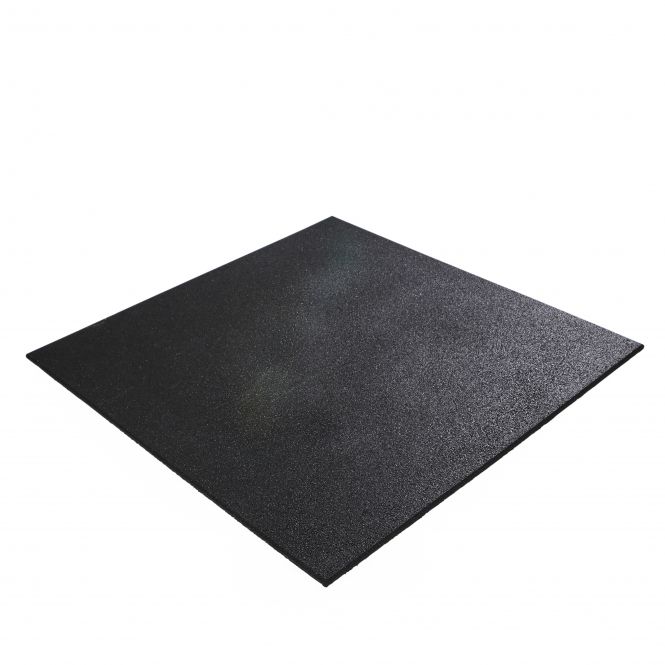
Heavy-duty industrial rubber mats are designed for work areas where resistance to wear and floor protection matter. The collection includes a Dense Rubber Equipment Support Mat – 1m × 1m, useful as a protective layer beneath selected equipment. Before placing machinery on any mat, consider the equipment’s total weight, the dimensions of its feet and whether it vibrates or moves during operation.
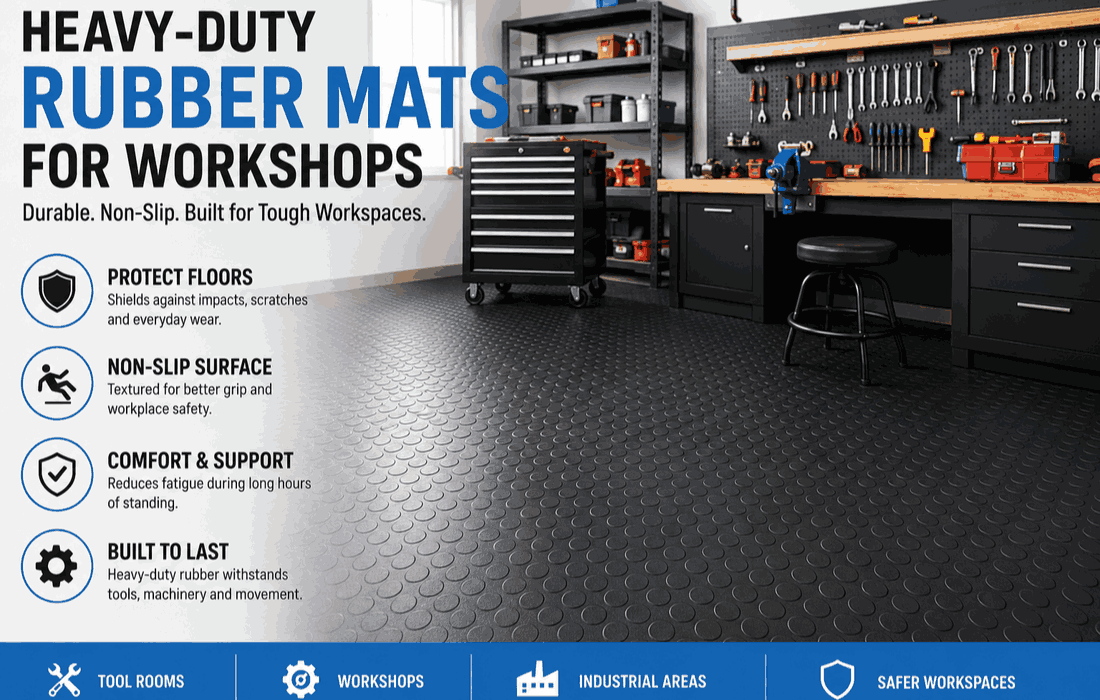
The Heavy-Duty Industrial Floor Mat – 500 × 500mm offers a coin-pattern finish for selected workshops, production zones and commercial floors. Textured rubber surfaces can be practical, but their suitability should be assessed against the actual traffic and contaminants present.
Anti-Fatigue Rubber Mats for Standing Work Areas
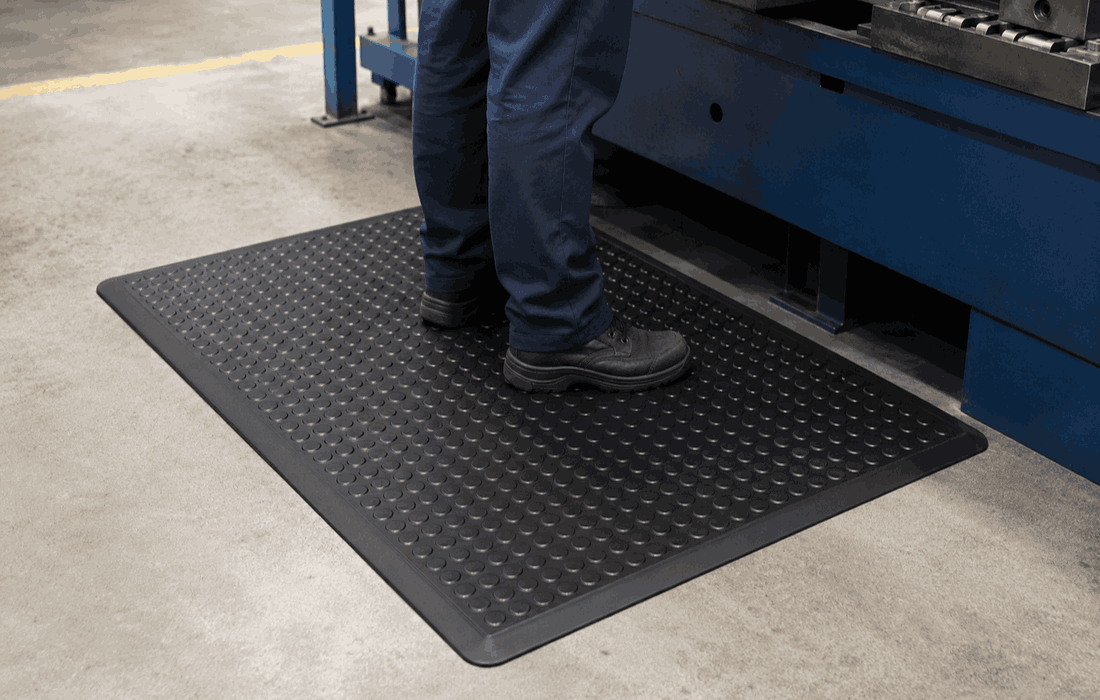
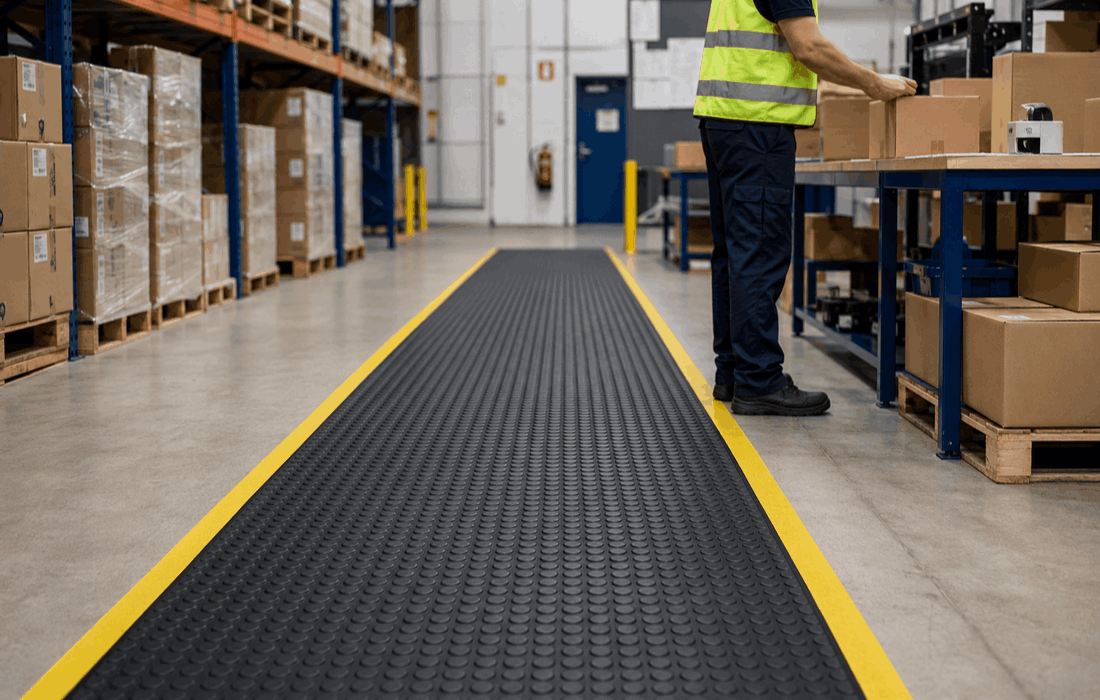
Anti-fatigue rubber mats are intended for employees who spend extended periods standing at counters, benches, packaging stations and assembly points. The Ergonomic Anti-Fatigue Bubble Mat features a raised bubble surface, while the Rubber Anti-Fatigue Bubble Mat – Black With Yellow Edging provides a visually distinct perimeter for designated standing areas.
The Industrial Rubber Modular Comfort Mat – 900 × 900mm is another option for larger workstation zones. When comparing these products, check the standing task, frequency of movement, footwear, edge profile and whether trolleys must cross the mat. A comfortable mat should also remain stable and avoid introducing a trip hazard.
Entrance, Scraper and Drainage Rubber Mats
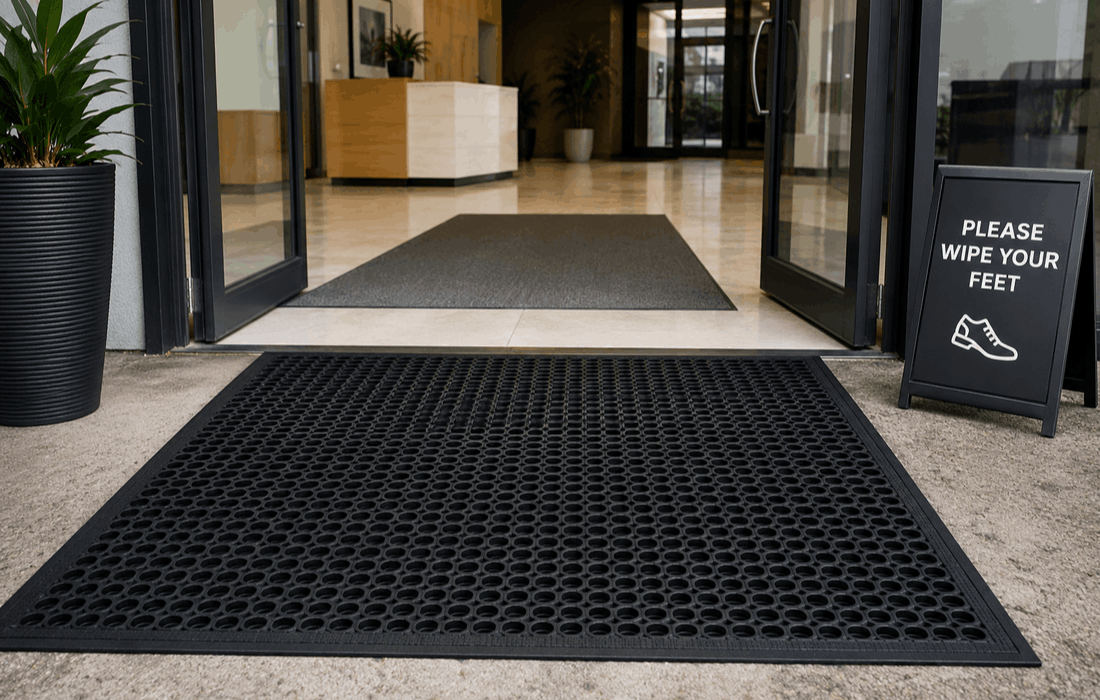
Rubber entrance mats can help manage dirt carried on footwear before it spreads through a building. The collection includes a Rubber Fingertip Mat – 1200 × 900mm and a Rubber Paw Print Scraper Mat – 750 × 450 × 8mm, both designed around dirt-removal applications.
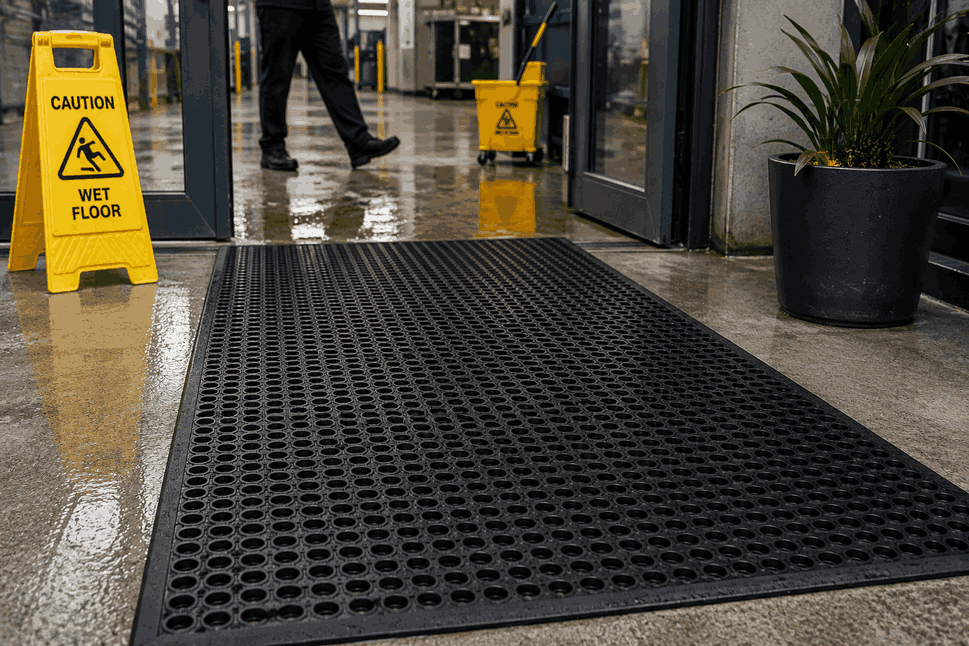
Where water needs to move through the walking surface, open-grid products may be more useful than solid mats. For additional drainage designs, see our rubber ring mats for entrances and wet areas. Confirm outdoor suitability, drainage provision and cleaning access before buying.
Specialised Rubber Sheeting and Workstation Finishes
The EPDM Rubber Sheet – Sold Per Metre is offered for selected lining, sealing and industrial protection needs. EPDM is a rubber family often considered where weathering resistance matters, but the exact sheet grade must match the intended use. The collection also features an Anti-Static Leather Finish Work Mat – 500 × 500 × 5mm; any electrostatic-dissipative requirement should be supported by the exact product specification and installation design, not appearance alone.
Additional accessories, such as rubber floor border edges, help create transitions around compatible modular installations. Always confirm compatibility between edging and the chosen mat system.
Where Are Rubber Mats Used?
Workshops, Garages and Maintenance Areas
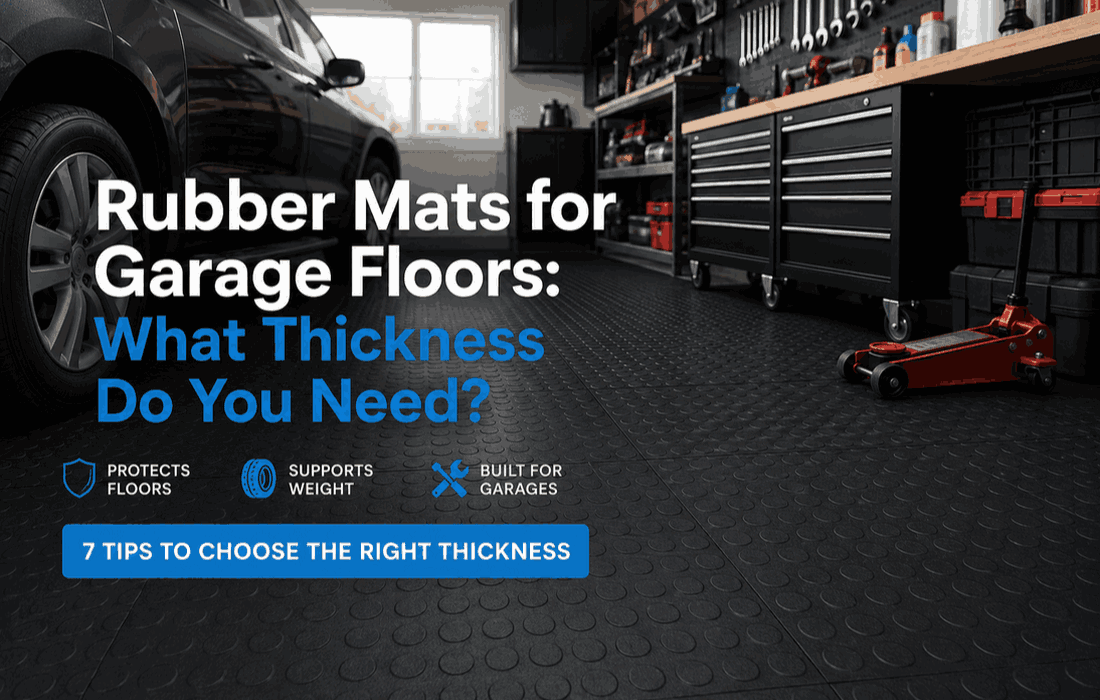
Workshop rubber mats can be placed around benches, hand-tool stations and selected machine positions to protect exposed flooring. In home garages, localised mats can help define a work area while leaving the rest of the floor unchanged. If vehicles will drive or park directly on the surface, verify that the product is rated for vehicle use, hot tyres and expected automotive exposure.
Workshops may contain oils, grease, solvents and fuel. Chemical resistance varies significantly between rubber formulations, so a generic description such as “heavy-duty” does not establish suitability for a contaminated environment.
Factories, Warehouses and Packing Stations
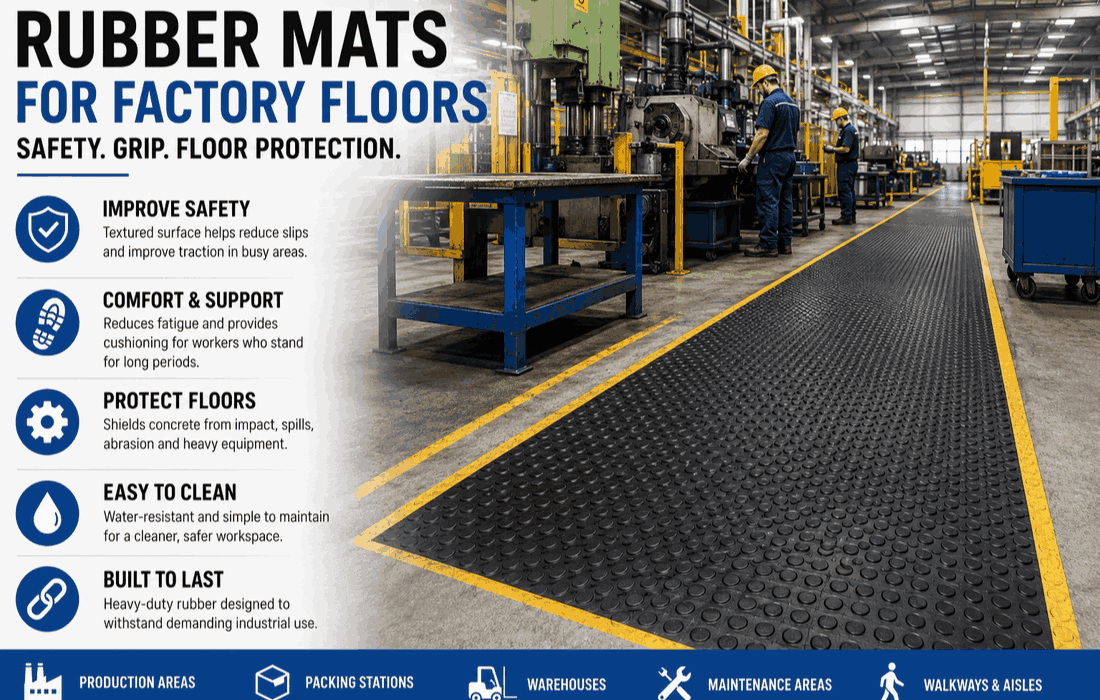
Industrial rubber mats can be valuable around fixed workstations, packing benches, inspection areas and maintenance points where people stand or equipment contacts the floor. Loose-laid mats are not automatically appropriate for forklift lanes, high-speed trolley movement or heavily loaded pallet traffic. Those applications require a specific assessment of mat stability, edge transitions and load behaviour.
Gyms, Fitness Spaces and Equipment Zones
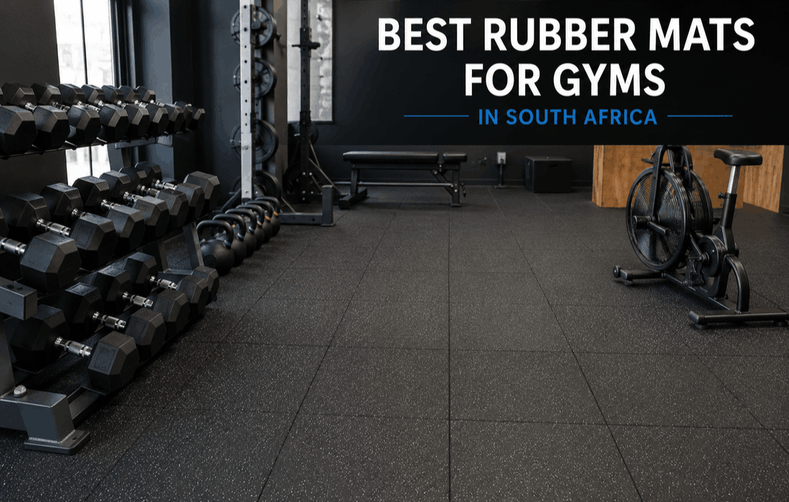
Rubber mats for gyms can provide a resilient layer around exercise machines, benches, stretching areas and selected weight-storage positions. They may reduce some impact transfer and surface wear, but noise and vibration performance depends on the equipment, slab, building structure and rubber design.
When planning a larger connected gym floor, compare interlocking rubber floor tiles rather than assuming individual rubber mats are the most appropriate format. Match the flooring system to the type of exercise and expected loading.
Technical Specifications to Compare When Buying Rubber Mats
Before ordering rubber matting, compare the technical details that affect performance. The table below is a selection checklist, not a declaration that every product in this collection has every listed property or thickness. Check the individual product page or request a technical data sheet for confirmed values.
Technical note: The 3mm–20mm+ range and materials above are general comparison considerations, not verified specifications for every product displayed here. A chemical-resistance, anti-static or slip-performance claim must be checked against the exact mat and its data sheet.
How to Choose the Right Rubber Mats for Your Space
Start with the intended use, not price or thickness alone. A durable mat beneath a fixed bench has different requirements from a flexible standing mat or an open-grid entrance mat. Describe how the surface will be used and what might come into contact with it.
- Identify the load: note equipment weight, foot size, impact and whether the load is stationary or moving.
- Check pedestrian traffic: assess standing duration, walking frequency and carts or trolleys.
- Match the texture: choose a finish that suits the walking conditions and cleaning routine.
- Plan for moisture: select drainage designs where water and debris must pass through the mat.
- Verify chemistry: request guidance where oil, grease, fuel or cleaning chemicals are present.
- Measure accurately: account for workbenches, doorways, edges and access routes.
- Review maintenance: consider whether mats must be lifted frequently or remain in place.
For larger projects, an application-led quotation is more useful than ordering from dimensions alone. Share the area size, floor condition, traffic, equipment details and any exposure concerns so that suitable available products can be identified.
Grip, Wet Areas and Workplace Safety
Textured rubber mats may improve traction in suitable conditions, but no rubber surface should be described as universally slip-proof. Footwear, liquids, dust, slope, wear and cleaning all affect slip risk. A solid rubber mat may also trap water underneath if the supporting surface does not drain.
For practical guidance on how floor selection influences slipping hazards, consult the UK's Health and Safety Executive advice on flooring and slips. This is general workplace guidance, not a certification for products sold by PVC Floor Tile and not a replacement for South African workplace requirements.
In busy workplaces, keep mats flat and stable, check transitions, clean spills promptly and replace damaged products. Where a formal slip-rating, fire-rating or electrical specification is necessary, request evidence for the particular product before purchase.
Installing and Maintaining Rubber Floor Mats
Installation requirements vary by product. Many individual rubber mats can be placed on a clean, dry, stable and reasonably level floor, while modular or bonded systems have different preparation requirements. Remove grit, loose coatings and grease before placing a mat, and assess any existing moisture problems.
Allow products delivered rolled or compressed to settle in accordance with supplier guidance. Inspect corners and edges to ensure they do not lift or move during normal use. Avoid creating a raised transition across busy walkways, especially where wheels or mobility aids are used.
For routine cleaning, sweep or vacuum loose debris. Where the manufacturer permits, use clean water and a mild compatible detergent. Avoid strong solvents or unapproved chemicals, as they can damage certain rubber compounds. Lift loose mats periodically where practical to inspect, clean and dry the underlying floor.
Rubber mat lifespan depends on the material, environment, weight distribution, sunlight, traffic and cleaning routine. Replace mats showing severe wear, permanent deformation, cracks or unstable edges rather than continuing to use them in high-traffic or safety-sensitive locations.
Frequently Asked Questions About Rubber Mats
What are the best rubber mats for heavy-duty use?
The best heavy-duty rubber mat is one matched to the load, contact area, traffic and environment. Dense equipment support mats may suit selected machinery, while industrial textured mats suit different work-area needs. Check actual compression and product specifications.
What thickness of rubber mat should I buy?
There is no single ideal thickness. Thin sheeting, cushioned standing mats and thick equipment mats have different purposes. Confirm the product's thickness together with density, compression performance and intended loading before choosing.
Are rubber mats suitable for oily workshops?
Only if the exact rubber compound is compatible with the oils and chemicals present. Different formulations vary in oil and fuel resistance, so request the relevant product information rather than relying on surface texture alone.
Can rubber mats go directly over concrete?
Many loose-lay mats can be installed on firm, dry, clean and reasonably level concrete. Check the product instructions, ensure the mat stays stable and address moisture or unevenness first.
Can rubber mats be used outdoors or in wet entrances?
Some mats are intended for outdoor or wet-area use, especially suitable drainage designs. Verify UV, weather and water exposure suitability for the specific product and make sure the installation allows appropriate drainage.
Where can I buy rubber mats in South Africa?
PVC Floor Tile supplies rubber mats for commercial, industrial and selected residential projects. Customers can explore the products in this collection and ask for advice on specifications, quantities and delivery requirements.
Buy Rubber Mats in South Africa from PVC Floor Tile
Looking for rubber mats for sale for a gym, garage, factory, entrance or industrial workstation? Compare the products displayed in this collection and choose according to your floor, expected traffic and technical requirements. PVC Floor Tile has showroom locations in Randburg, Westville and Maitland, and offers delivery options across South Africa.
For a more accurate recommendation, provide the intended application, dimensions, quantity, site conditions and delivery location when contacting the team. WhatsApp: 082 534 3320 · Telephone: 011 568 9578.