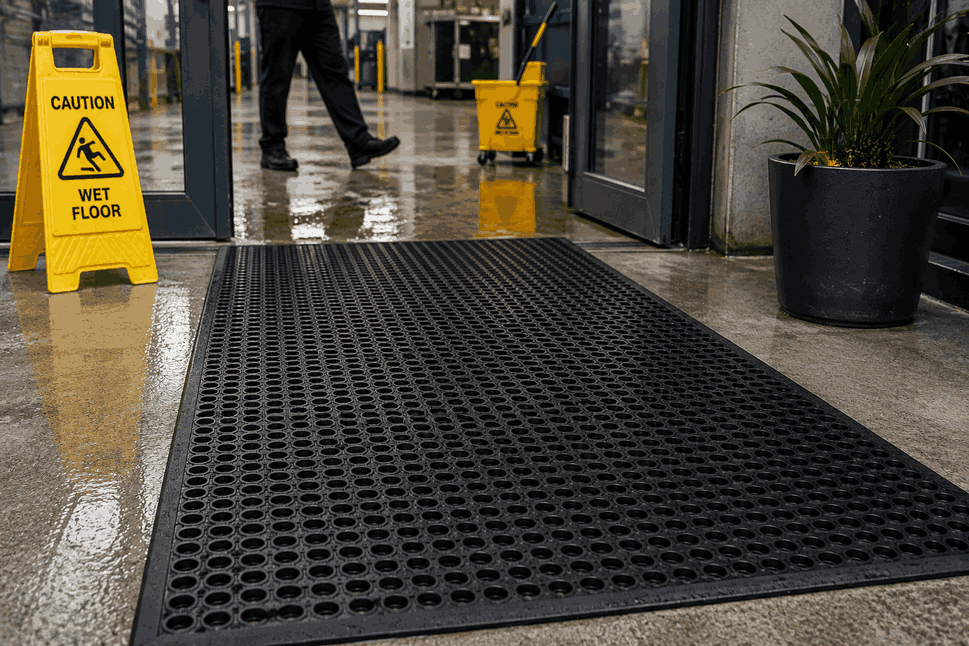
Non-slip rubber mats for wet areas are useful in places where floors can become slippery from water, dirt, moisture, cleaning, foot traffic or outdoor conditions. Wet and high-traffic areas need a surface that supports better grip, safer movement and practical floor protection throughout the day. Whether the space is an entrance, walkway, washing area, workshop, factory route, kitchen back area or commercial doorway, the right rubber safety mat can help make the floor more suitable for daily use. For practical matting used in busy wet and work areas, view our rubber safety matting for wet areas.
Wet floors are one of the most common flooring problems in commercial, industrial and public spaces. Water can come from rain, cleaning, leaking equipment, outdoor traffic, washing processes or people walking in from outside. When moisture is combined with smooth flooring, the surface can become difficult to manage and less safe for workers, customers or visitors.
Slip-resistant rubber floor mats are a practical way to improve selected areas without replacing the entire floor. They can be placed where grip is needed most, such as entrances, wet walkways, changing areas, service zones, packing areas or high-traffic paths. The goal is to create a surface that is easier to walk on, easier to maintain and better suited to the conditions of the space.
Why Non-Slip Rubber Mats for Wet Areas Are Important
Non-slip rubber mats for wet areas are important because wet surfaces can quickly become a risk in busy spaces. A floor may look clean and neat, but if it becomes smooth or slippery when wet, it can create movement problems. This is especially true in entrances, warehouses, factories, workshops and commercial buildings where people move in and out all day.
Rubber safety mats help by adding texture and grip to the floor surface. They are commonly used in places where ordinary tiles, concrete or smooth floors may not provide enough traction when exposed to moisture. This makes them a useful flooring support option for areas that need better control underfoot.
A good mat should not only improve grip. It should also be strong enough for daily traffic, practical to clean and suitable for the area where it is installed. Wet areas often collect dirt and debris, so the mat must be easy to maintain.
Best Places to Use Slip-Resistant Rubber Floor Mats
Slip-resistant rubber floor mats can be used in many different spaces. The best placement depends on where moisture, dirt and regular movement are most common. Some buildings need mats at entrances, while others need them in wet work zones or behind-the-scenes service areas.
Many businesses use non-slip rubber mats for wet areas because they need a practical surface where water, dirt and daily foot traffic meet.
Common areas for non-slip rubber mats include:
- Building entrances exposed to rain and outdoor traffic
- Warehouse walkways and high-use work routes
- Factories, production areas and packing zones
- Workshops, tool rooms and maintenance spaces
- Commercial kitchens and back-of-house areas
- Changing rooms, wash areas and wet passages
- Outdoor covered walkways and doorway zones
- Retail, office and business entrances
- Areas where staff stand or move during cleaning
The most important thing is to place the mat where it solves a clear problem. A wet entrance may need rubber mats that help trap dirt and support traction. A factory walkway may need stronger matting for repeated movement. A wash area may need drainage-style matting depending on the amount of water present.
How Rubber Safety Mats Improve Grip in Wet and Busy Spaces
Rubber safety mats are designed to create a more practical walking surface. Many rubber mats have textured surfaces, raised patterns or open drainage features that help improve grip. This can be useful where people walk through wet areas or where floors become dusty, dirty or damp during the day.
The best place to start with non-slip rubber mats for wet areas is at entrances, doorway zones, wet walkways and high-use paths where people move often.
Non-slip rubber mats for wet areas can help support safer movement by giving shoes better contact with the floor surface. This is useful in high-traffic spaces where people may be walking quickly, carrying items or moving between workstations.
The mat must still be managed properly. A mat that is dirty, damaged, curled or badly positioned can create problems. That is why correct placement and regular inspection are important for long-term performance.
Quick Safety Tip
Use rubber safety mats in the places where water, dust, dirt and movement overlap. These are usually the areas where grip and floor protection matter most.
Non-Slip Rubber Mats for Entrances and Doorways
Entrances are one of the most important places to manage wet floors. When people walk in from outside, they can bring in rainwater, mud, dust and grit. This can make the entrance floor slippery and can also spread dirt further into the building.
Rubber safety matting at entrances can help reduce the amount of moisture and debris that enters the building. It can also create a more stable walking surface at the doorway. For businesses that want to manage dirt, moisture and first impressions at the entrance, our durable entrance matting solutions can help support cleaner and safer doorway areas.
In commercial spaces, entrances should be planned properly because they receive constant foot traffic. A good mat should be positioned where people naturally step, not in a place they avoid. It should also be large enough to help with moisture control before people step onto the main floor.
Slip-Resistant Rubber Floor Mats for High-Traffic Work Areas
High-traffic work areas need mats that can handle repeated movement. This includes workers walking between departments, trolleys moving through a space, customers entering a building or staff moving around workstations. A weak mat may wear quickly or move out of place.
Slip-resistant rubber floor mats are useful because they combine grip with durability. In work areas, the mat must support movement without becoming difficult to clean or maintain. It should also remain stable under daily use.
Non-slip rubber mats for wet areas are especially valuable where water and traffic meet. This could be near loading areas, entrances, production zones, washing points or service spaces. These are the areas where ordinary hard floors may not provide enough practical support.
How to Choose the Right Rubber Safety Mats
Choosing the right rubber safety mat depends on the condition of the area and the type of traffic. A doorway mat may need moisture control and dirt trapping. A wet work zone may need drainage. A warehouse walkway may need grip and strength. A workshop may need impact protection as well as slip resistance.
Before choosing rubber safety mats, check:
- Whether the area is wet occasionally or wet often
- How many people walk through the space every day
- Whether the mat will be used indoors, outdoors or near an entrance
- Whether the area needs drainage, grip or general floor protection
- Whether trolleys, tools or equipment move across the area
- How easy the mat will be to clean and lift if needed
- Whether the mat edges will sit flat and remain secure
- Whether the area needs comfort for workers who stand for long periods
The best mat is not always the thickest one. It is the mat that matches the conditions of the space. A light entrance mat may not be strong enough for a workshop. A heavy industrial mat may be more than what is needed for a small office doorway.
Drainage, Texture and Mat Surface Design
The surface design of a mat affects how it performs in wet areas. Some rubber mats are textured to improve traction. Others have holes or drainage patterns to allow water to move through the mat instead of sitting on top. The right choice depends on how much water is present.
In lightly wet areas, a textured rubber mat may be enough. In areas where water collects more often, a drainage-style mat may be more practical. In entrance areas, a mat that helps trap moisture and dirt can support better floor management.
Rubber safety mats should be chosen based on both grip and cleaning. A mat with too much texture may trap dirt if the area is not cleaned often. A smooth mat may be easier to clean but may not provide enough traction in wet conditions.
How Non-Slip Rubber Mats Help Protect Floors
Wet and high-traffic areas can damage floors over time. Water, grit, dirt, shoes, trolleys and repeated movement can wear down the surface. Concrete can become marked, tiles can become slippery, and coated floors can wear faster in busy areas.
Non-slip rubber mats for wet areas help protect the floor by creating a barrier between daily activity and the surface underneath. This is especially useful where people walk through the same route many times per day.
Floor protection is important because repairs can be expensive and disruptive. A matting solution can help reduce wear in selected zones without needing a full floor replacement.
Cleaning and Maintaining Rubber Safety Mats
Rubber safety mats must be cleaned regularly to keep them practical. Wet areas often collect dirt, dust, leaves, packaging particles, mud or cleaning residue. If these materials build up, they can reduce the mat’s effectiveness and make the area look untidy.
Simple cleaning tips for rubber safety mats:
- Sweep mats regularly to remove loose dirt and grit
- Shake or lift smaller mats when needed to remove trapped debris
- Damp mop or rinse mats depending on the mat type
- Clean spills quickly to reduce slippery residue
- Check drainage holes if the mat has an open design
- Inspect edges to make sure they stay flat
- Replace worn or damaged mats in high-traffic areas
For general workplace slip prevention guidance, you can read this external resource from the Health and Safety Executive on preventing slips and trips. Good mat placement, cleaning and floor maintenance all work together to support safer movement in wet and busy spaces.
Common Mistakes When Buying Non-Slip Rubber Mats
One common mistake is choosing a mat only because it looks strong. A mat may look heavy-duty, but it still needs to suit the specific area. Wet entrances, workshops, factory floors and high-traffic walkways all need different matting features.
Another mistake is using a mat that is too small. If people step over the mat or only use one step on it, it may not manage moisture and dirt properly. Entrance and walkway mats should be positioned according to how people actually move through the space.
Some businesses also forget about cleaning. A non-slip mat still needs regular care. Dirt, water and residue can build up if the mat is not maintained. This can reduce grip and make the mat less effective over time.
Simple Buying Advice
Choose non-slip rubber mats based on water exposure, foot traffic, cleaning needs and the type of movement in the area. The right mat should improve grip, protect the floor and remain practical for daily use.
Final Advice on Non-Slip Rubber Mats for Wet Areas
Non-slip rubber mats for wet areas are a practical choice for entrances, walkways, workshops, factories, commercial buildings and high-traffic spaces. They help improve grip, support floor protection and make wet or busy areas easier to manage.
The right mat can reduce wear on the original floor, support safer movement and create a more practical surface where people walk, work or stand. It can also help manage moisture and dirt before they spread further into a building.
Before choosing a mat, look carefully at the area. Consider how often it gets wet, how many people use it, whether trolleys or tools are present, and how the mat will be cleaned. A well-planned rubber safety mat can make a big difference in wet and high-traffic areas.
Need Help Choosing Non-Slip Rubber Mats?
PVC Floor Tile supplies rubber mats and entrance matting solutions for wet areas, walkways, entrances, commercial spaces and high-traffic work zones across South Africa. Speak to our team for help choosing the right mat type, size and layout for your space.
Contact Us