
Blue Garage Ramps – 2 Piece Edge Finish
Durable finishing ramps for creating clean, safer edges around modular warehouse, workshop and garage flooring.

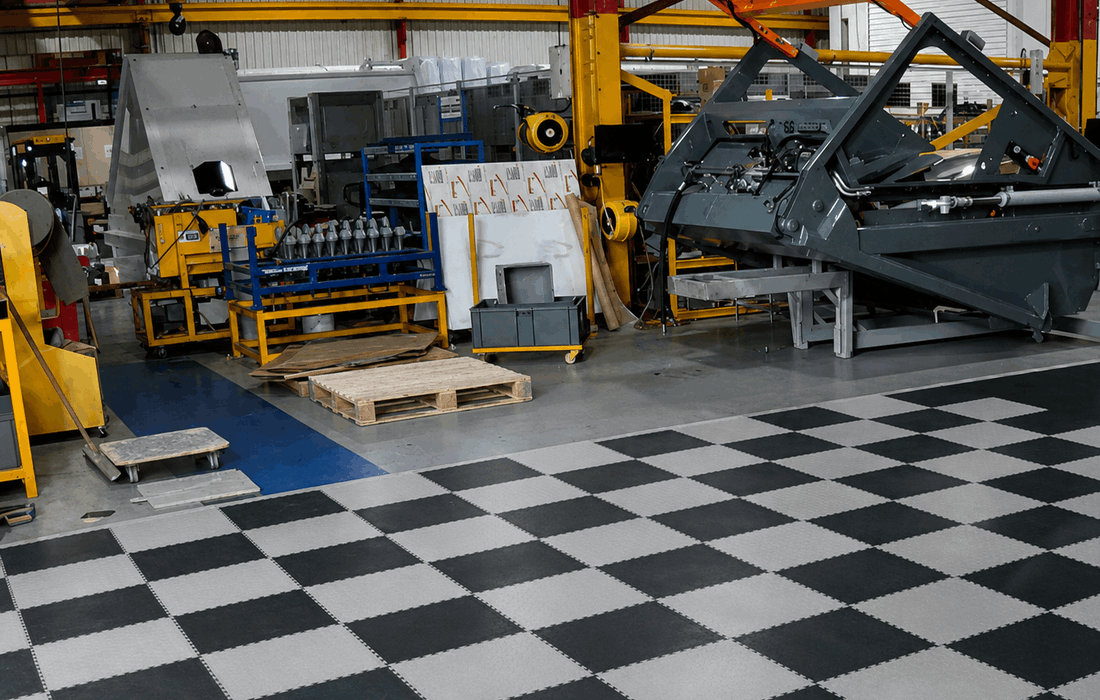
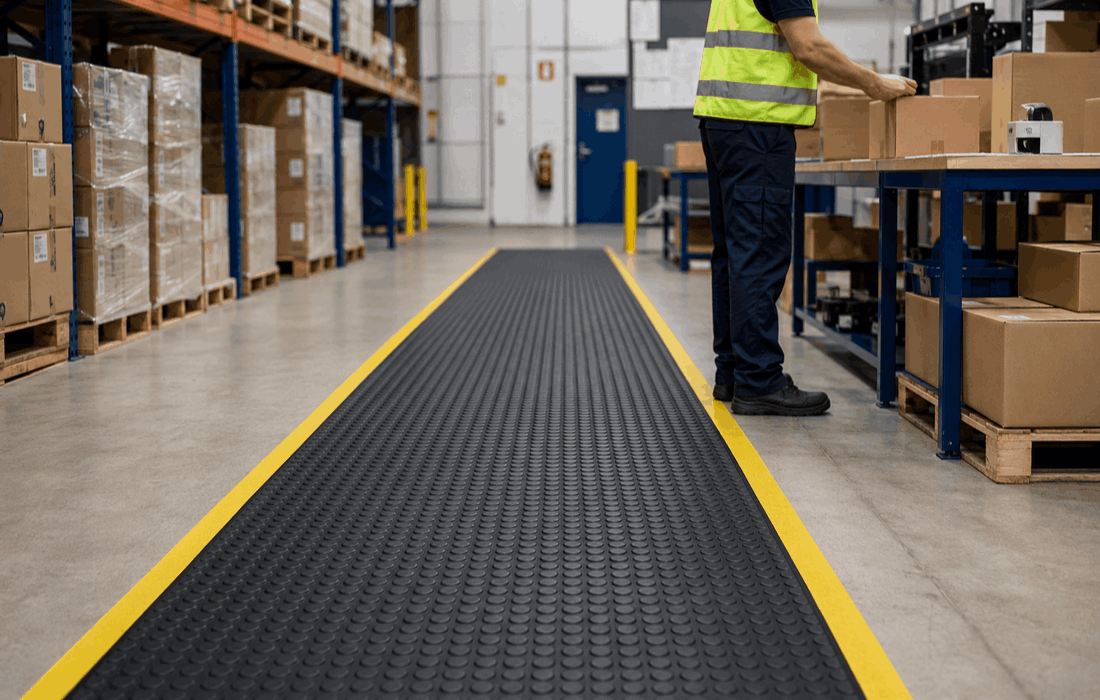
Durable warehouse flooring for stockrooms, packing zones, dispatch areas, storage facilities and busy logistics environments. Our practical floor products help protect concrete surfaces, create cleaner working areas and support daily operations in commercial and industrial facilities across South Africa.
Durable finishing ramps for creating clean, safer edges around modular warehouse, workshop and garage flooring.
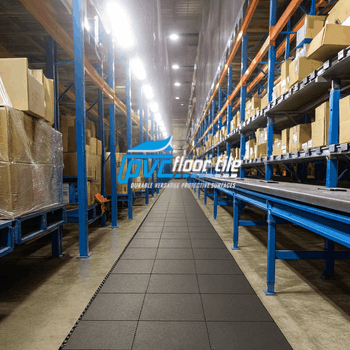
Thick heavy-duty floor tiles designed for warehouse aisles, storage areas and demanding industrial workspaces.

Leather-look interlocking PVC tiles for durable, attractive and easy-to-maintain warehouse or commercial floors.
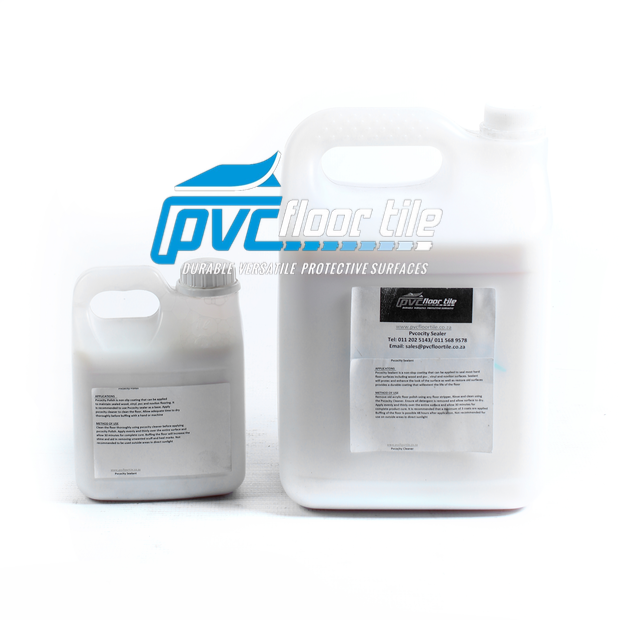
Protective PVC floor sealer designed to improve floor appearance and support easier routine cleaning and maintenance.

Durable interlocking warehouse flooring for storage zones, operational work areas and high-traffic industrial spaces.
Pay online through PayFast when purchasing selected warehouse flooring products.
Delivery is available across South Africa, subject to order size, weight and delivery location.
Buy warehouse flooring directly from PVC Floor Tile with competitive pricing for small and bulk orders.
Send your warehouse measurements, traffic details and application by WhatsApp for product guidance and a quotation.
Explore practical advice on choosing, comparing, cleaning and maintaining warehouse and industrial flooring for demanding workspaces.
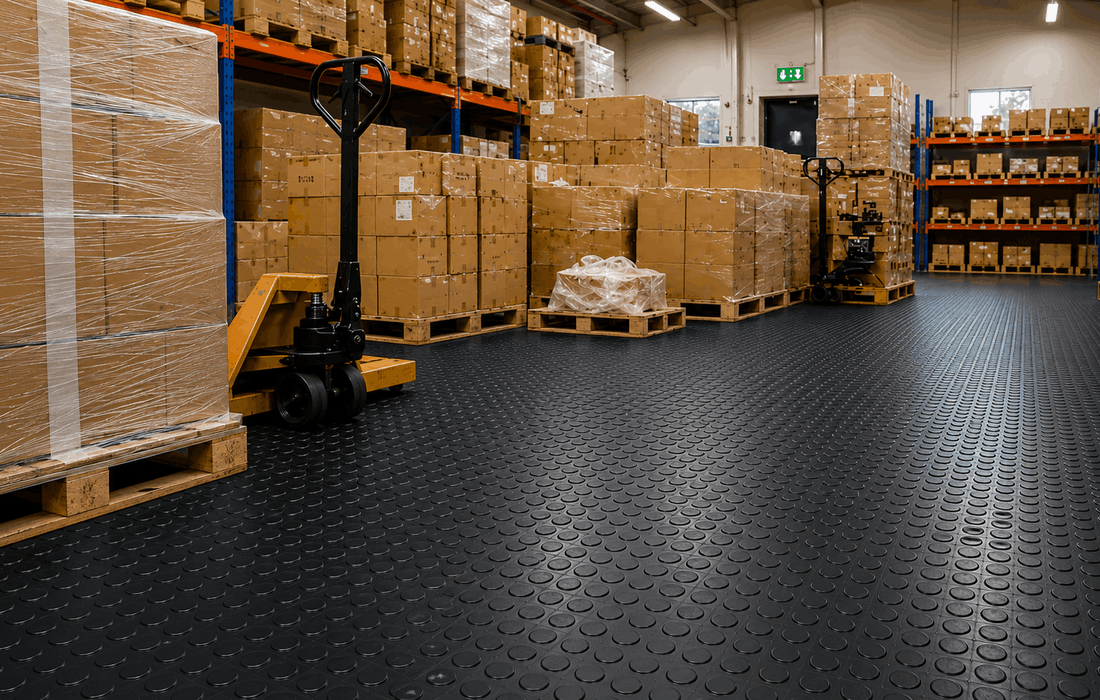
Compare practical warehouse flooring options based on durability, traffic levels, floor safety, maintenance and the daily demands of storage and operational areas.
Read Guide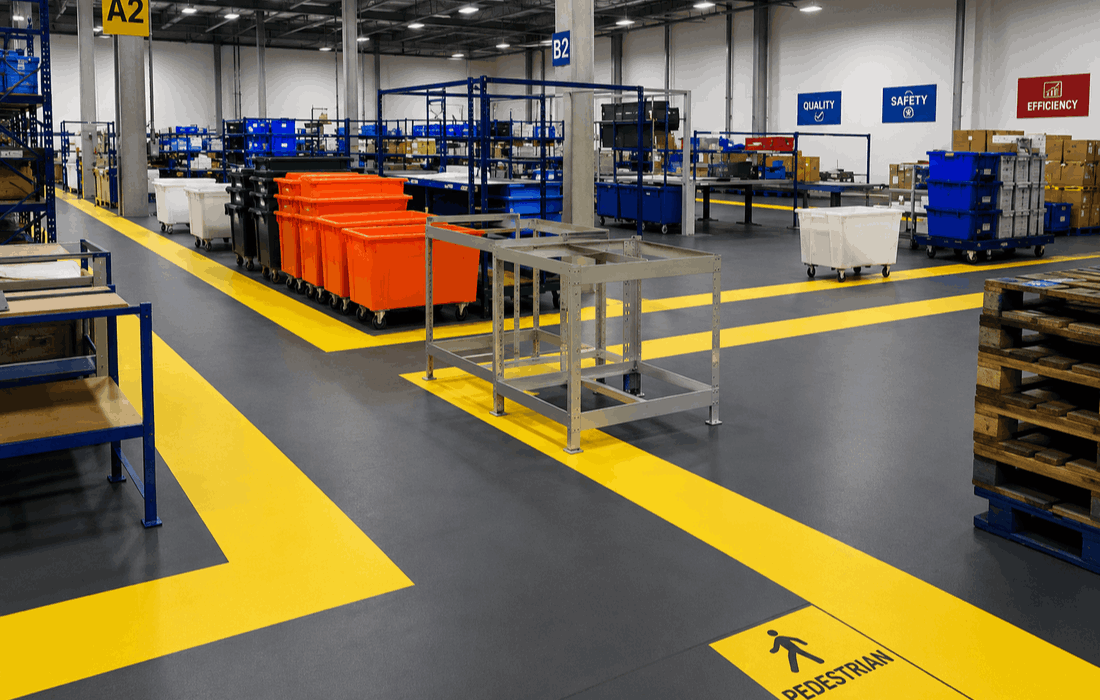
Learn how flooring durability, maintenance, safety and replacement requirements can affect the long-term value of a warehouse flooring investment.
Read Guide
Explore durable flooring choices for factories, workshops, warehouses and commercial work areas that experience traffic, equipment, spills and regular cleaning.
Read Guide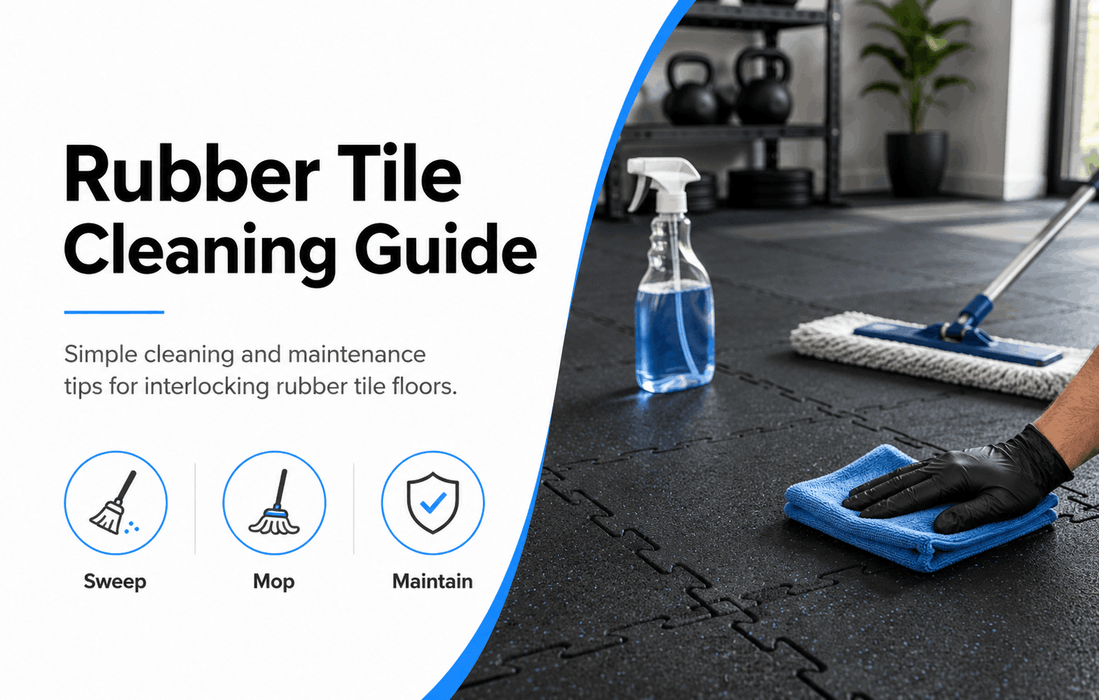
Follow a practical cleaning routine for removing dirt, marks and debris while protecting the grip, appearance and performance of interlocking rubber tiles.
Read GuideWarehouse flooring should be selected according to how each part of the facility is used. Storage racks, packing benches, employee movement, boxes, trolleys, stock handling and routine cleaning can place continuous pressure on bare concrete and unfinished floor surfaces.
PVC Floor Tile supplies practical warehouse flooring for stockrooms, storage areas, packing sections, dispatch zones, staff walkways and selected logistics environments throughout South Africa.
Suitable flooring can help protect the supporting concrete, improve the appearance of high-use areas and make routine cleaning more manageable. The exact product must still match the expected traffic, equipment, loads and operating conditions.
Different warehouse zones have different requirements. A stockroom used mainly for shelves and cartons does not experience the same pressure as a forklift route, loading area or production-linked zone.
Storage areas containing shelves, cartons and regular employee access.
Work areas around packing benches, wrapping tables and labelling stations.
Sections where outgoing orders are sorted, prepared and collected.
Frequently used routes between storage areas, offices and work zones.
Areas where employees remain at a packing, inspection or sorting position for long periods.
Suitable staging, sorting and stock-movement areas within the facility.
Important: A flooring product that performs well in a pedestrian walkway may not be suitable for forklifts, loaded pallet jacks, heavy trolleys or concentrated racking loads.
| Warehouse area | Main requirement | Recommended flooring approach |
|---|---|---|
| Stockroom | Easier cleaning and protection from daily foot traffic | Durable modular flooring selected for the expected use |
| Packing station | Floor protection and support around standing workers | Suitable modular flooring with selected rubber or anti-fatigue matting |
| Dispatch area | Durability, neat appearance and routine cleaning | Firm flooring selected for the movement and equipment used |
| Staff walkway | Defined pedestrian routes and reduced direct concrete wear | Textured modular flooring with compatible finished edges |
| Maintenance corner | Protection around tools, benches and repair work | Workshop flooring |
| Production-linked zone | Higher loads and machinery-related activity | Factory flooring selected for the operation |
Bare concrete is common in warehouses, but older surfaces may become dusty, stained, rough or difficult to clean. Visible wear often develops in routes and workstations used repeatedly.
Suitable warehouse tiles or matting can create a protective layer over selected sections. Depending on the product, this may improve appearance, simplify routine cleaning and reduce direct wear on the original floor.
| Consideration | Bare concrete | Warehouse flooring |
|---|---|---|
| Appearance | May appear unfinished, stained or worn | Creates a cleaner and more organised finish |
| Maintenance | Rough or dusty sections may be more difficult to clean | Suitable surfaces may simplify regular maintenance |
| Floor protection | Receives direct wear from daily activity | Adds a protective surface in selected working zones |
| Standing workstations | Hard surface directly beneath workers | Selected rubber products may provide localised support |
| Zone planning | One visually open surface | Different colours may help identify routes and workstations |
Packing, sorting and dispatch employees may spend long periods standing at benches or moving within a limited working zone. Appropriate flooring can help protect the base and create a more defined workstation.
Selected rubber mats or anti-fatigue products may be used around packing tables, inspection points and sorting stations where localised underfoot support is required.
Mats should lie flat, remain stable and suit the movement within the area. Raised or loose edges must not interfere with pedestrian routes, trolleys or pallet jacks.
Rolling equipment places different pressure on flooring compared with normal pedestrian traffic. Concentrated wheel loads and repeated turning can affect joins, exposed edges and softer materials.
Suitability depends on:
Do not assume every modular tile is suitable for forklifts or loaded pallet jacks. Heavy or repeated rolling loads should be assessed before installation.
Identify where staff walk, where stock is stored, where employees stand and where equipment moves, turns or stops.
Check the concrete for moisture, cracks, loose sections, severe unevenness, oil and other conditions that may affect installation.
Determine the level of pedestrian use and whether the area is crossed by trolleys, pallet jacks, forklifts, carts or other rolling equipment.
Consider stored stock, shelving, rack feet, benches and equipment that may create concentrated pressure on the flooring.
Confirm whether the area is exposed to moisture, oils, chemicals, dirt, heat or frequent cleaning.
Exposed edges may need compatible ramps or edging to create a cleaner transition and reduce contact with trolley wheels.
Modular warehouse flooring generally performs best over a clean, dry, firm and sufficiently level surface. Remove dust, loose grit, oil, moisture and sharp debris before installation.
Plan the layout around shelving, doors, packing benches, workstations and access routes. Avoid narrow cut pieces in busy entrances and turning areas where possible.
For larger installations, assess traffic flow and equipment movement before beginning. The tile layout should support the daily operation of the facility rather than following only the room dimensions.
Installation may be completed in phases where the facility must remain operational.
Browse our flooring accessories and floor-care products for selected edging, adhesive and maintenance options.
Warehouse flooring is used in stockrooms, storage facilities, packing sections, dispatch areas, staff walkways and selected logistics environments.
Many modular products can be installed over concrete when the surface is clean, dry, firm and sufficiently level. Major moisture, cracking or unevenness should be addressed first.
Suitability must be confirmed for the exact product. Forklift weight, wheel type, turning movement, traffic frequency and subfloor condition can all affect performance.
Packing areas generally need durable and easy-to-maintain flooring. Selected rubber or anti-fatigue mats may be added where employees stand for long periods.
Covering properly prepared concrete may reduce direct contact with dusty sections and make selected work zones easier to clean.
Yes. Subject to available colours, modular flooring may help create visually defined pedestrian routes, work zones and storage sections.
Multiply the length by the width of the installation area to calculate square metres. Add an allowance for cuts, obstacles, edges and possible future replacement pieces.
No. Warehouse flooring is focused mainly on storage, packing, dispatch and logistics areas. Manufacturing and machinery-related zones may require products from the Factory Flooring collection.
PVC Floor Tile supplies warehouse flooring for storage areas, stockrooms, packing zones, dispatch sections, staff walkways and logistics facilities across South Africa.
Send us your floor dimensions, site photographs, expected traffic and equipment information so that suitable flooring options and quantities can be compared.
Send us your measurements, traffic details, equipment information and project location for product guidance and a factory-direct quotation.
