
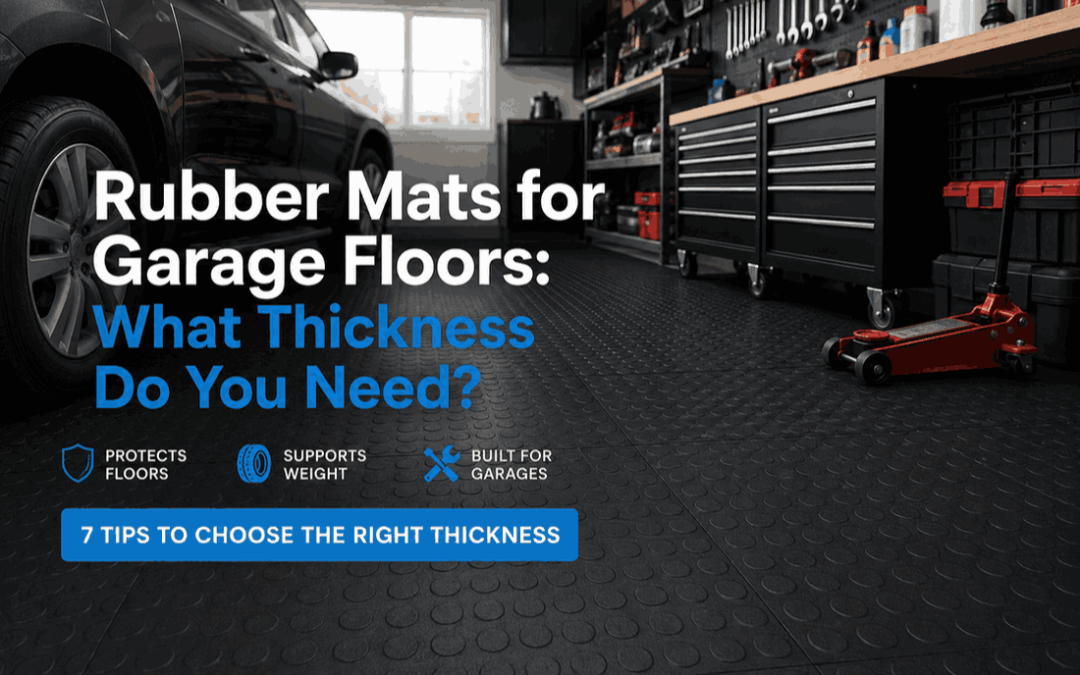
Choosing the right garage rubber flooring thickness can make a big difference to how well your floor handles cars, tools, foot traffic and everyday use. A garage floor is not the same as a normal room because it must deal with vehicle weight, tyre movement, oil marks, tool drops, storage racks and sometimes workshop activity. That is why many homeowners and businesses compare rubber mats before deciding what thickness will give the right level of protection. For practical floor protection options, view our heavy-duty rubber mats for garage use.
Rubber mats are popular in garage spaces because they are strong, practical and easier to install than many permanent floor systems. They can be used in a home garage, vehicle storage area, workshop corner, tool room, mechanic space or multipurpose garage. The main question many people ask is simple: what thickness do you need?
The answer depends on how the garage is used. A light-use garage where a car is parked overnight may not need the same thickness as a busy workshop where heavy tools, jacks and equipment are used daily. A garage used for storage may have different needs from a garage used for DIY repairs or small business operations.
What Thickness Rubber Mats for Garage Floors Should You Choose?
When deciding what thickness rubber mats for garage floors should have, start by looking at the pressure the floor must handle. A garage mat must support vehicle weight, resist movement, protect the concrete underneath and still remain practical for walking, cleaning and daily use.
For light-duty garage use, thinner rubber mats may be suitable for selected areas, such as walkways, tool benches or storage spaces. For regular vehicle parking, medium-thickness rubber mats are usually a better choice because they offer more protection under tyres and equipment. For heavy-use garages, workshops or areas with machinery, thicker mats are normally the safer long-term option.
The goal is not only to cover the floor. The goal is to choose a rubber mat that matches the work happening in the garage. If the mat is too thin for the application, it may wear faster or fail to protect the floor properly. If the mat is too thick for a simple area, it may be more than you need.
Many customers ask what thickness rubber mats for garage floors should be when the space is used for both parking and everyday storage.
Garage Rubber Flooring Thickness for Cars, Tools and Daily Use
Garage rubber flooring thickness should be selected according to vehicle weight, tool use and foot traffic. Cars place constant pressure on the floor, especially under the tyres. When a vehicle turns, brakes or parks in the same spot every day, the floor covering must be able to handle repeated pressure.
Rubber mats for cars and tools should also handle impact from items that may be dropped or moved around. A garage often has spanners, boxes, jacks, ladders, shelves and cleaning equipment. Even small tool drops can mark or damage an unprotected concrete or tiled floor over time.
If you use the garage mainly for parking, focus on durability and tyre pressure resistance. If you use the garage as a workshop, focus on impact protection, grip and thickness. If your garage is used for both parking and work, choose a mat that can support both needs.
Understanding what thickness rubber mats for garage floors need helps you avoid choosing matting that is too light for vehicle weight, tool drops or regular workshop movement.
| Garage Use | Recommended Mat Type | Thickness Guidance | Best For |
|---|---|---|---|
| Light garage storage | Standard rubber matting | Lower to medium thickness | Boxes, shelves, light walking areas |
| Home car parking | Durable garage rubber mats | Medium thickness | Cars, foot traffic, basic floor protection |
| DIY garage workshop | Heavy-duty rubber flooring | Medium to thicker options | Tools, benches, jacks and regular work |
| Commercial garage | Industrial-grade rubber mats | Thicker heavy-duty options | High traffic, heavier use and equipment |
Why Thicker Rubber Mats Are Better for Heavy Garage Areas
Thicker rubber mats offer more support where the floor is exposed to heavier use. This does not mean every garage needs the thickest mat available, but it does mean high-pressure areas should not be covered with light-duty matting.
A thicker mat can help reduce direct impact from tools, equipment and regular garage work. It also creates a stronger protective layer between the activity above and the floor below. This is useful for garages where people work on vehicles, store heavy items or use the space as a practical workshop.
Thickness also affects how comfortable the floor feels underfoot. A hard concrete floor can become uncomfortable when standing for long periods. A suitable rubber mat can make the space more comfortable for DIY tasks, cleaning, packing, repairs and daily movement.
Quick Thickness Rule
If the garage is mainly for walking and storage, you may not need the thickest mat. If the garage is used for parking, tools, equipment and workshop activity, choose a stronger rubber mat that gives better long-term protection.
Rubber Mats for Cars and Tools: What Must the Floor Handle?
Rubber mats for cars and tools must handle different types of pressure. A parked car creates steady weight. Turning tyres create friction. Tools create impact. Workbenches and storage racks create concentrated pressure on certain points of the floor.
This is why garage floors often wear unevenly. The area under the tyres may show marks. The space near the tool bench may become scratched or stained. The entrance may collect dirt, water and grit. A good rubber mat helps reduce these problems by giving the garage a protective surface that is easier to manage.
In a garage workshop, thickness becomes more important because the floor is used actively. If tools are dropped, if equipment is dragged, or if heavy items are stored, a stronger rubber surface can help protect the subfloor. It can also improve grip and make the space more practical.
Best Rubber Mat Thickness for a Home Garage
For a normal home garage, the best thickness depends on whether the garage is only used for parking or also used for other tasks. Many homeowners use the garage as a mixed-use space. It may hold a car, bicycles, gym equipment, tools, garden items and storage boxes.
For simple vehicle parking, a durable medium-thickness rubber mat is often suitable. It helps protect the floor from tyre marks, dust and everyday wear. For garages that also have workbenches, tools or heavy storage, a thicker option may be more practical.
When planning a home garage floor, think about where the most pressure happens. You may need stronger mats in the vehicle parking zone and under the workbench, while lighter mats may be enough in storage corners or walking areas.
Best Garage Rubber Flooring Thickness for Workshop Areas
A garage workshop needs more protection than a basic parking garage. Workshop areas deal with tools, machines, movement, standing work and sometimes small repairs. The floor must be able to handle repeated use without becoming uncomfortable or damaged.
For workshop areas, thicker rubber mats are often the better choice because they can support heavier activity. They help protect concrete from scratches, chips and marks. They also create a more comfortable standing surface, which is useful when working for longer periods.
If the workshop includes heavy equipment, tool chests, jacks or machinery, avoid using thin matting in those areas. The stronger the pressure, the more important it becomes to choose the correct thickness from the beginning.
How Garage Flooring Thickness Affects Comfort and Safety
Garage floors are usually hard and unforgiving. Concrete is strong, but it is not always comfortable for people who stand, walk or work for long periods. Rubber flooring adds a layer of support that can make daily tasks easier.
Thickness affects comfort because a stronger rubber layer can reduce the harsh feeling of a hard floor. It also helps with grip, especially in areas where dust, dirt or light moisture may be present. A garage is not always a clean indoor room, so choosing a surface with practical traction is important.
For general floor safety and slip-prevention guidance, you can view this external resource from the Health and Safety Executive on preventing slips and trips. Good floor selection, cleaning and maintenance all work together to make a space safer.
Garage Rubber Mats vs PVC Garage Flooring Tiles
Rubber mats and PVC garage flooring tiles can both be useful, but they serve slightly different needs. Rubber mats are often chosen for impact protection, tool areas and places where extra cushioning is helpful. PVC garage tiles are often chosen for a neat, modular finish and strong everyday flooring performance.
If your garage needs a clean tiled appearance, easy modular installation and a professional look, PVC garage flooring may be a strong option. If your main concern is impact from tools, heavier workshop use or selected protection zones, rubber mats may be more suitable.
Many customers compare both options before choosing. For full garage upgrades and modular floor systems, you can also explore our durable garage flooring options for homes, workshops and vehicle spaces.
How to Measure Your Garage Before Buying Rubber Mats
Before buying rubber mats, measure the garage carefully. Start by measuring the full length and width of the area. Then decide whether you want to cover the entire floor or only selected sections. Some people only need mats under the car. Others need mats around the tool bench, storage shelves or workshop space.
If you are covering the full garage, allow for edges, door openings, pillars and fixed objects. If you are only covering selected zones, mark the areas where the car tyres sit, where tools are used and where you walk most often.
Planning the layout properly helps you avoid ordering too little or too much. It also helps you choose the right thickness for each area. A garage can have more than one use, so it may also need more than one type of protection.
Before choosing rubber mats for garage floors, check:
- Whether the garage is used for parking, tools, storage or workshop activity
- The weight and type of vehicles parked in the space
- Where the tyres sit most often
- Whether tools or equipment are dropped or moved around
- How much daily foot traffic the floor receives
- Whether the floor needs full coverage or selected protection zones
- How easy the surface will be to clean and maintain
Cleaning and Maintaining Rubber Mats in a Garage
Garage rubber mats are practical, but they still need proper cleaning to perform well. Dirt, grit and small stones can collect on the surface. If left for too long, these can make the garage look untidy and may affect grip. Regular sweeping is the easiest way to keep the floor clean.
For deeper cleaning, damp mopping can help remove dust and marks. Avoid harsh chemicals unless the mat manufacturer recommends them. A simple cleaning routine is usually enough for most home garages and light workshop spaces.
If the garage is used for vehicle work, clean spills as soon as possible. Oil, grease and chemicals should not be left sitting on any floor surface. Good maintenance helps your mats last longer and keeps the garage safer and more professional.
Common Mistakes When Choosing Garage Rubber Flooring Thickness
One common mistake is choosing a mat based only on price. A cheaper mat may seem like a saving at first, but if it is too thin for the garage, it may wear faster or fail to protect the floor properly. The right thickness should match the actual use of the space.
Another mistake is treating every part of the garage the same. The tyre area, workbench area and storage area may all have different flooring needs. A garage used for parking and tools should be planned carefully so that high-pressure zones get better protection.
Some people also forget about cleaning. A mat that is hard to clean can become frustrating in a busy garage. Choose a practical surface that can be swept, wiped and maintained without complicated cleaning methods.
Simple Buying Advice
Choose garage rubber flooring thickness based on use, not only on appearance. Light storage areas can use lighter protection, but cars, tools and workshop zones need stronger mats that can handle pressure, movement and impact.
Final Advice: What Thickness Rubber Mats for Garage Floors Do You Need?
The best thickness depends on how your garage works every day. If your garage is only used for light storage and walking, you may not need very thick rubber matting. If you park a car, use tools, move equipment or work in the garage regularly, a stronger and thicker mat is usually a better investment.
For cars, focus on durability and tyre pressure. For tools, focus on impact protection. For workshops, focus on strength, comfort and grip. For multipurpose garages, choose a rubber mat that can handle more than one type of use.
Rubber mats for garage floors are a practical way to protect concrete, improve comfort and make the garage easier to use. By choosing the right thickness from the start, you can create a cleaner, stronger and longer-lasting garage floor.
Need Help Choosing Garage Rubber Mats?
PVC Floor Tile supplies durable rubber mats and garage flooring options for homes, workshops, vehicle areas and commercial spaces across South Africa. Speak to our team for help choosing the right thickness, layout and flooring option for your garage.
Contact Us