
Indoor Foam Flooring
Indoor Foam Flooring is designed to provide a soft, cushioned surface for play areas, home gyms, fitness spaces and everyday indoor use. Lightweight and easy to install, these foam flooring solutions offer comfort underfoot while helping protect indoor floor surfaces.
Read More About Indoor Foam Flooring
Are EVA Foam Mats Suitable for Home Gyms and Playrooms?
EVA foam mats can be suitable for home gyms and playrooms where the main priorities are comfort, cushioning, lightweight use and easy DIY installation. They work well for stretching, yoga, mobility exercises, children’s play areas and other light indoor activities.
EVA foam flooring is not designed for every type of gym use. Heavy exercise machines, concentrated point loads, sharp equipment and repeatedly dropped weights may mark, compress or damage softer foam. For heavier training areas, compare our
indoor gym flooring options
instead.
For playrooms, EVA foam mats can provide a softer layer over hard indoor floors such as concrete, tiles, laminate or timber. The interlocking puzzle edges also allow sections to be removed, rearranged or replaced when the room layout changes.
What Flooring Is Suitable for Preschools and Crèches?
Flooring for preschools and crèches should be selected according to the age of the children, the activities taking place, cleaning requirements, cushioning needs, traffic levels and the condition of the supporting floor.
Indoor foam flooring can be suitable for supervised play areas, reading corners, crawling zones, story-time spaces and other dry indoor environments where children regularly sit, kneel or play on the floor.
EVA foam tiles are lightweight, cushioned and easy to install over many suitable hard floors. Because childcare environments require regular cleaning, removable interlocking tiles can also make it easier to inspect and clean the supporting floor underneath.
For areas that require specialist impact performance, wet-area performance or other certified safety requirements, the flooring should be selected according to the exact project specification rather than assuming standard EVA foam is suitable for every childcare application.
Indoor Foam Flooring for Playrooms, Classrooms and Activity Areas
Indoor foam flooring provides a soft, lightweight and practical surface for rooms where comfort and cushioning are more important than heavy-duty floor protection.
It is particularly useful in children’s playrooms, crèches, classrooms, reading corners, home activity areas and other dry indoor spaces where people regularly sit, crawl, kneel, stretch or take part in light movement.
Interlocking foam flooring can be installed over many suitable hard indoor floors to create a softer activity surface without permanently changing the existing floor.
The puzzle-style edges make individual pieces easy to connect, rearrange and remove when the room layout changes.
What Is Indoor Foam Flooring?
Indoor foam flooring consists of lightweight foam mats or tiles designed to fit together and cover selected sections of a room.
The material provides cushioning between the user and harder surfaces such as tiles, concrete, laminate or wooden flooring.
Many of our soft flooring products are manufactured from EVA foam. For additional colours and foam options, browse our
EVA foam mats and tiles.
These products are intended primarily for comfort-focused indoor applications rather than industrial, vehicle or heavy-impact environments.
Where Can Indoor Foam Flooring Be Used?
Kids’ Playrooms and Bedrooms
Foam floor mats are useful in rooms where children spend time playing, sitting and moving on the floor.
The cushioned surface provides a softer layer over hard flooring and can also help define a dedicated play section within a larger room.
Crèches and Daycare Centres
Crèches and early-learning environments often need flooring that is comfortable for seated activities, story time, crawling and supervised indoor play.
Interlocking foam tiles are lightweight and can be removed when cleaning underneath the floor is required.
Preschools and Early-Learning Spaces
Indoor foam flooring can be used in selected preschool activity zones where children sit, learn, read or take part in supervised floor-based activities.
The flooring should be selected according to the age group, activity type, hygiene requirements, traffic and any specific safety standards required by the facility.
Classrooms and Reading Areas
A selected foam flooring section can be used to create reading corners, group activity areas or soft seating zones in classrooms.
Different colours may also be used to separate learning and activity sections visually.
Home Activity and Stretching Areas
Indoor foam mats can be considered for stretching, yoga, mobility work and other low-impact floor exercises.
They are best suited to activities where comfort is needed without repeated heavy impacts or dropped weights.
Home Gyms for Light Exercise
EVA foam mats can be used in home gym areas for bodyweight training, stretching and light exercise.
They are less suitable beneath heavy gym machines, benches with concentrated feet or areas where heavy weights are repeatedly dropped.
For weight-training areas, exercise machines or more demanding workouts, compare our
indoor gym flooring options
instead, as denser rubber or other gym flooring may be more appropriate for heavier loads.
Benefits of Interlocking Foam Flooring
- Creates a softer surface over hard indoor floors
- Lightweight and easy to handle
- Quick puzzle-edge installation
- No permanent floor covering required for many applications
- Individual pieces can be removed or repositioned
- Suitable for playrooms and selected childcare areas
- Can be used for light home exercise and stretching
- Provides a warmer feel than exposed hard floors
- Easy to create selected soft floor zones
Choosing the Right Foam Floor Mats
Before ordering indoor foam flooring, consider who will use the room, the activities taking place and the condition of the existing floor.
Foam flooring works best on a clean, dry, firm and reasonably level base.
| Factor | What to Consider |
|---|---|
| Room Type | Playroom, classroom, crèche, preschool, bedroom or light activity space |
| Activity | Playing, crawling, sitting, reading, stretching, yoga or light exercise |
| Users | Consider the age group and whether the area is used by children or adults |
| Floor Condition | The supporting surface should be clean, firm, dry and reasonably level |
| Thickness | Select according to the comfort and cushioning required |
| Cleaning | Consider how often the area needs to be wiped and cleaned underneath |
| Traffic Level | Foam is best suited to light and normal indoor activity rather than industrial traffic |
| Equipment | Avoid assuming soft foam is suitable beneath heavy machines, sharp equipment or concentrated loads |
12mm EVA Foam Flooring for Soft Indoor Areas
Selected indoor foam tiles in our range measure 600 mm × 600 mm with a 12 mm thickness.
This provides a cushioned surface for children’s activity spaces, playrooms, crèches, preschool areas and light indoor exercise.
Selected EVA products also use a density of approximately 90 kg/m³, depending on the specific product.
Because individual product specifications can differ, always check the product dimensions, pack coverage and intended application before calculating your order.
EVA Foam Flooring for Home Gyms
EVA foam flooring can be a practical option for home gym users who mainly need a comfortable surface for stretching, bodyweight exercise, mobility work and other light activities.
Foam can also help create a defined workout area over a hard indoor floor without permanently changing the original surface.
However, softer foam can compress under heavy gym equipment or narrow equipment feet.
Heavy weights, sharp objects and repeated impact may also damage the surface.
For heavier strength-training areas, rubber gym flooring is generally more appropriate than soft EVA foam.
Indoor Foam Flooring for Preschools and Crèches
Preschool and crèche flooring should support the activities taking place in the room while also allowing practical cleaning and maintenance.
Foam flooring may be appropriate for selected indoor areas used for:
- Supervised play
- Crawling and floor activities
- Reading corners
- Story-time areas
- Early-learning activities
- Quiet play zones
- Seated group activities
The supporting floor should remain clean, dry and reasonably level.
Mats should fit together correctly and the finished surface should be checked for raised or separated edges before children use the area.
Where Indoor Foam Flooring Should Not Be Used
Foam flooring is designed around comfort and lightweight use rather than heavy-duty protection.
It should therefore not be treated as a substitute for rubber flooring, industrial tiles or garage flooring.
Avoid using soft foam flooring beneath heavy machinery, vehicles, repeatedly dropped weights or sharp equipment.
Heavy furniture legs and narrow equipment feet may also leave marks or permanently compress the foam surface.
Foam tiles are generally best suited to dry indoor spaces.
Areas that are constantly wet or exposed to demanding industrial conditions require a flooring product designed specifically for those environments.
Cleaning Indoor Foam Floor Mats
Regular cleaning is especially important when foam flooring is used in children’s rooms, classrooms, preschools or early-learning facilities.
Sweep or remove loose dirt first, then wipe the surface using a suitable mild cleaning method recommended for the particular foam product.
The
CDC guidance for cleaning early care and education settings
recommends regular cleaning of surfaces and using products that are suitable for the particular surface.
Cleaning before sanitising or disinfecting is also important in childcare environments.
Allow foam mats to dry properly after cleaning and occasionally lift removable tiles to check and clean the supporting floor underneath.
Avoid aggressive solvents or abrasive cleaning methods unless the product manufacturer specifically confirms they are suitable.
Installing Interlocking Foam Flooring
Installation is straightforward on a suitable indoor floor.
Start by cleaning and drying the existing surface.
Plan the layout before connecting the pieces, particularly when several colours will be used.
Connect each puzzle edge carefully and keep the rows aligned.
Check the finished floor for raised edges, gaps or incorrectly connected pieces before the area is used.
Individual sections can then be lifted, rearranged or replaced if the room layout changes.
How Much Indoor Foam Flooring Do You Need?
Measure the length and width of the area in metres and calculate the total square metres.
Then compare this measurement with the coverage stated for the selected pack.
For example, a 600 mm × 600 mm tile covers approximately 0.36 m², while four tiles provide approximately 1.44 m² before any cutting or layout adjustments.
Always base the final quantity on the exact product being ordered.
Indoor Foam Flooring Frequently Asked Questions
Are EVA foam mats suitable for home gyms and playrooms?
Yes, EVA foam mats can be suitable for playrooms and light home gym activities such as stretching, yoga, mobility work and bodyweight exercise.
They are not intended for heavy exercise machines, sharp equipment or repeated dropped weights.
What flooring is suitable for preschools and crèches?
Indoor foam flooring can be suitable for selected supervised play areas, reading corners, crawling zones and activity spaces where cushioning and easy maintenance are priorities.
The correct flooring should still be selected according to the age group, activity, cleaning requirements and any project-specific safety standards.
Can EVA foam flooring be installed over tiles or concrete?
Yes, provided the supporting surface is clean, dry, firm and reasonably level.
Significant moisture, loose material or severe unevenness should be addressed first.
Can EVA foam mats be used under gym equipment?
Light equipment may be suitable depending on the load, but heavy machines and narrow equipment feet can compress or damage softer foam.
For heavier gym applications, compare denser rubber flooring options.
Is foam flooring suitable for children’s play areas?
Foam flooring can provide a cushioned surface for selected indoor play areas where children sit, crawl and play under appropriate supervision.
Can foam flooring be used in wet areas?
Foam flooring is generally intended for dry indoor environments.
Constantly wet areas should use flooring designed specifically for drainage and wet conditions.
Is foam flooring suitable for heavy weights?
Soft foam is not intended for repeatedly dropped heavy weights or concentrated heavy loads.
Rubber or another heavy-duty gym flooring system may be more appropriate.
Can individual foam tiles be replaced?
Yes. One advantage of interlocking foam flooring is that individual pieces can usually be lifted and replaced if compatible tiles are available.
Indoor Foam Flooring in South Africa
PVC Floor Tile supplies indoor foam flooring for homes, schools, crèches, preschools, classrooms, playrooms and light activity spaces across South Africa.
These lightweight interlocking mats are a practical option where the main priorities are cushioning, comfort and easy installation.
If you need assistance calculating quantities or choosing a suitable flooring option,
contact PVC Floor Tile
with your room measurements, photographs of the existing floor and information about how the area will be used.
Our team can assist with product selection, quantities and delivery options.
Showing all 8 results
-
Sale!
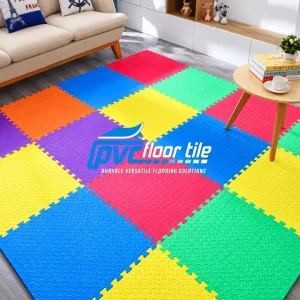
Baby Soft Foam Mat 600 x 600mm
Original price was: R560,00.R441,60Current price is: R441,60. -
Sale!

Black Fitness Foam Mat – 4 Piece Set
Original price was: R560,00.R441,60Current price is: R441,60. -
Sale!
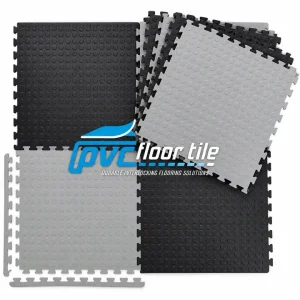
Classic EVA Foam Flooring Mat 4 Grey Peace (600 × 600 mm)
Original price was: R560,00.R441,60Current price is: R441,60. -
Sale!
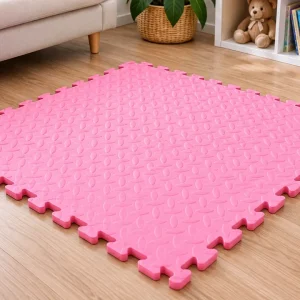
Eva Foam Mats
Original price was: R560,00.R441,60Current price is: R441,60. -
Sale!
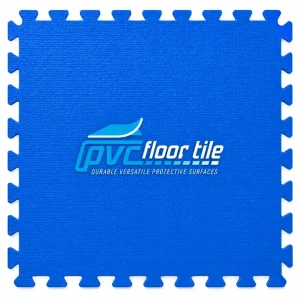
EVA Soft Foam Floor Mat (4 Peace)
Original price was: R560,00.R441,60Current price is: R441,60. -
Sale!
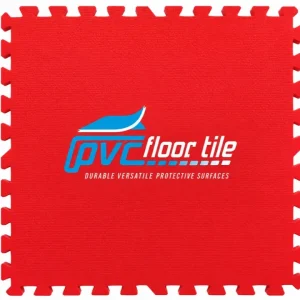
Kids Activity Foam Mat 600 x 600mm
Original price was: R560,00.R444,60Current price is: R444,60. -
Sale!
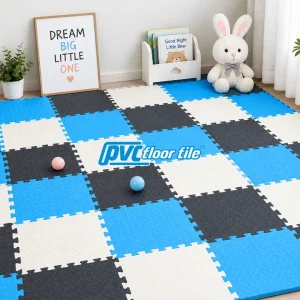
Kids Comfort Foam Mat 600 x 600mm
Original price was: R560,00.R441,60Current price is: R441,60. -
Sale!
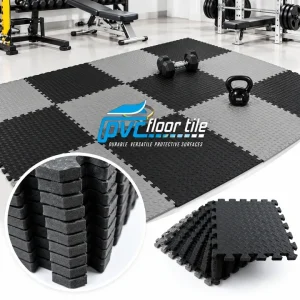
Soft Comfort Foam Mat 600 x 600mm
Original price was: R560,00.R441,60Current price is: R441,60.
