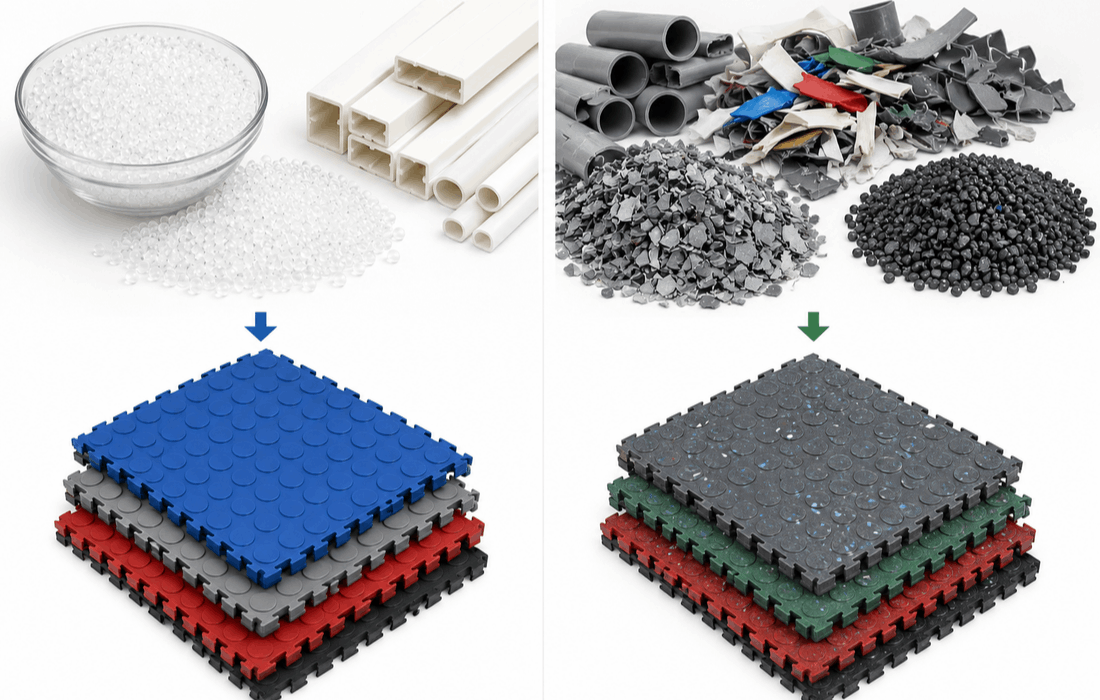
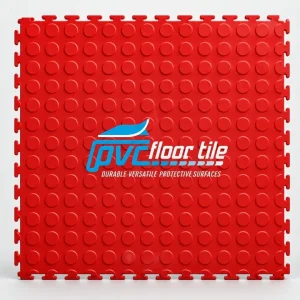
Virgin PVC vs Recycled PVC Floor Tiles
Compare material quality, durability, cost and sustainability.
Read More
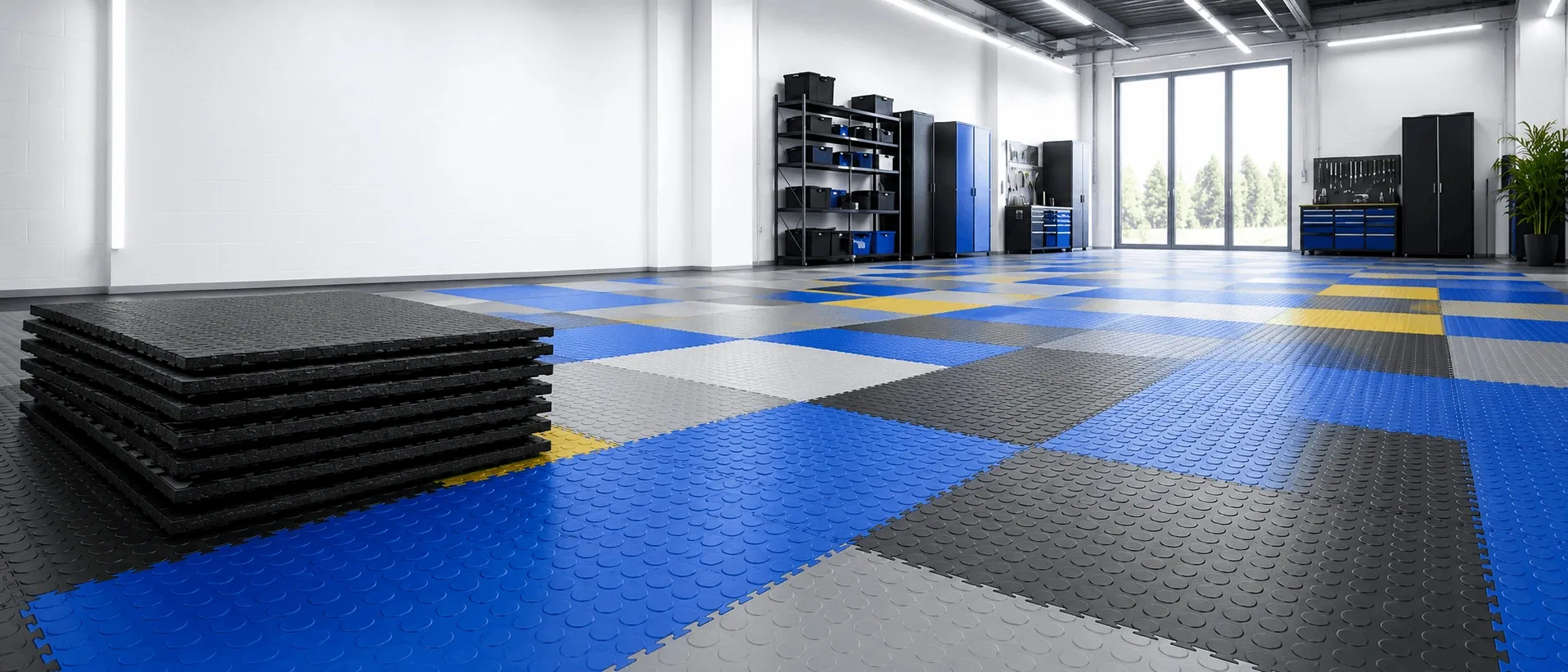
PVC Floor Tile manufacturers and supplies practical, durable and easy-to-install flooring solutions for homes, garages, workshops, gyms, warehouses, factories, schools, retail spaces and commercial buildings across South Africa. Our main focus is on PVC floor tiles, interlocking PVC tiles, plastic floor tiles, heavy-duty Pvc Mats that are designed to improve floor protection, reduce maintenance and create a cleaner, more professional working surface.
We cut out the middleman to bring you the best quality at the best value.
Eco-friendly flooring options made from recycled materials.
Fast and reliable delivery across South Africa.
Designed for residential, commercial and industrial spaces.
Modular tiles that are DIY-friendly, easy to install and clean.
Special pricing and support for businesses and large projects.
We cut out the middleman to bring you the best quality at the best value.
Eco-friendly flooring options made from recycled materials.
Fast and reliable delivery across South Africa.
Designed for residential, commercial and industrial spaces.
Modular tiles that are DIY-friendly, easy to install and clean.
Special pricing and support for businesses and large projects.

Built for garages, workshops and busy commercial spaces that need durable flooring.
R122,00 – R361,35Price range: R122,00 through R361,35
A practical option for grip, floor protection and easy everyday cleaning.
R122,00 – R361,35Price range: R122,00 through R361,35
Easy-fit tiles designed for quick DIY installation and simple maintenance.
R122,00 – R361,35Price range: R122,00 through R361,35
Strong modular flooring for garages, gyms, work areas and commercial spaces.
R122,00 – R361,35Price range: R122,00 through R361,35
Useful for everyday floor protection where grip and cleaning matter.

Made for busy areas, production spaces and practical everyday use.
R122,00 – R361,35Price range: R122,00 through R361,35
Suitable for machine bays, service areas and industrial work zones.

For livestock stables, cattle areas and agricultural flooring.

A neat hidden-lock option for classrooms, schools and learning spaces.
R122,00 – R361,35Price range: R122,00 through R361,35
Practical flooring for service stations and high-traffic commercial areas.

Ideal for storerooms, offices and commercial spaces needing a clean finish.
R122,00 – R369,25Price range: R122,00 through R369,25
A clean, professional option for industrial and commercial workspaces.
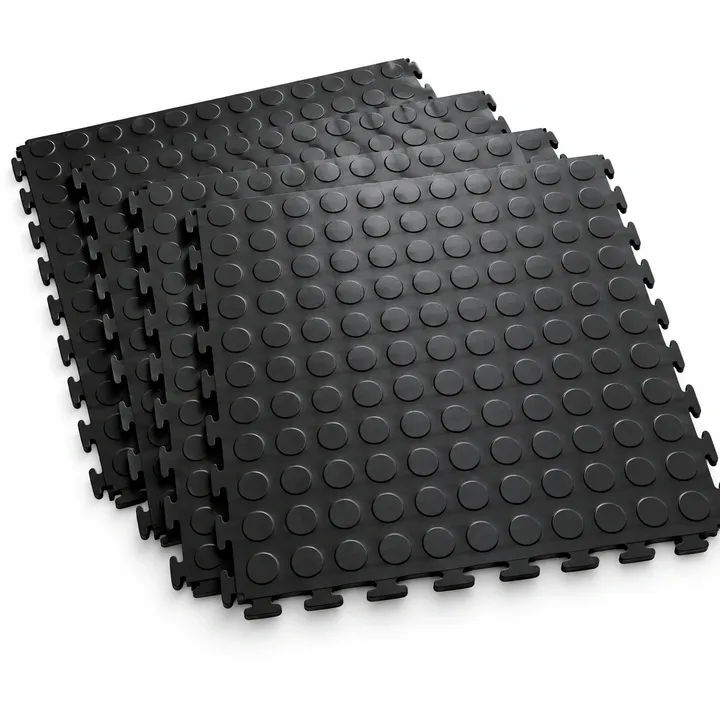
R149,50 – R397,18Price range: R149,50 through R397,18PVC floor tiles and mats are manufactured from Poly Vinyl Chloride, a durable polymer material used for modular flooring systems. They are water-resistant, easy to clean and ideal for garages, workshops, offices and commercial environments.
| Material | Best For |
|---|---|
| PVC / Poly Vinyl Chloride | Garages, workshops, offices, commercial floors, storage areas |
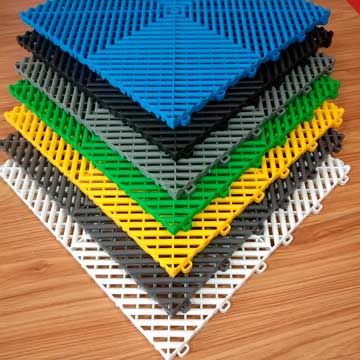
| Polypropylene / PP | Open-grid tiles, drainage tiles, wet areas, showroom tiles, rigid modular flooring |
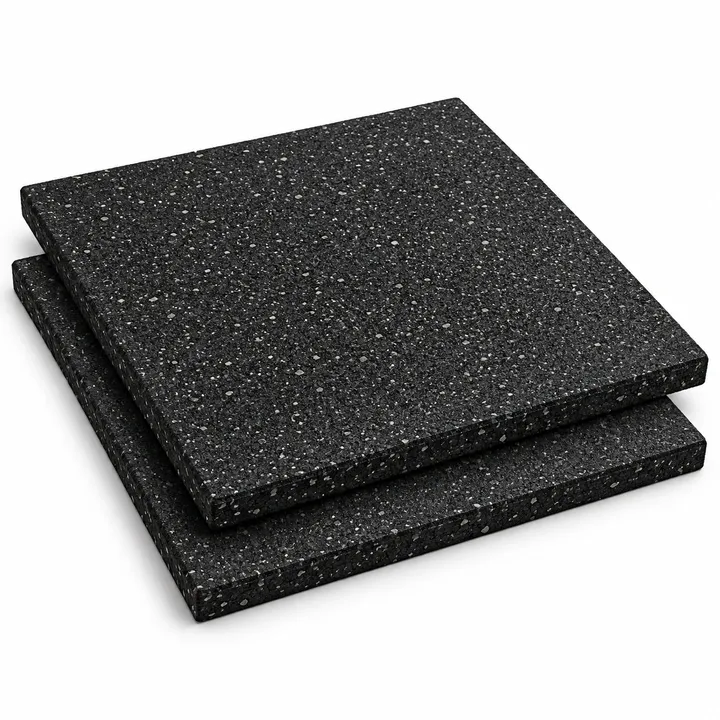
| Rubber | Gym impact areas, anti-fatigue zones, heavy-duty matting |
PVC tiles are best for practical floor protection.
Polypropylene tiles are useful for rigid/open-grid applications.
Rubber mats are better for impact, grip and anti-fatigue areas.
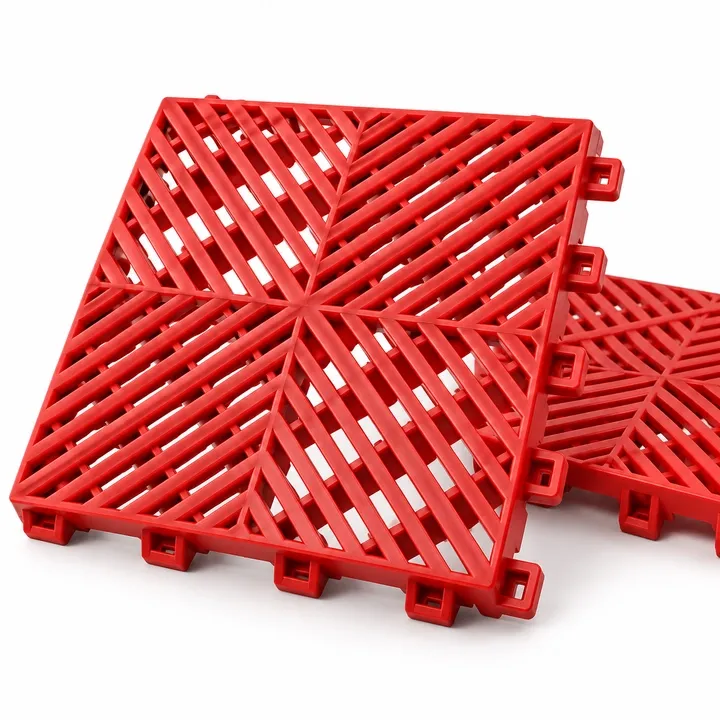
Duckboard tiles are better for drainage and wet spaces.
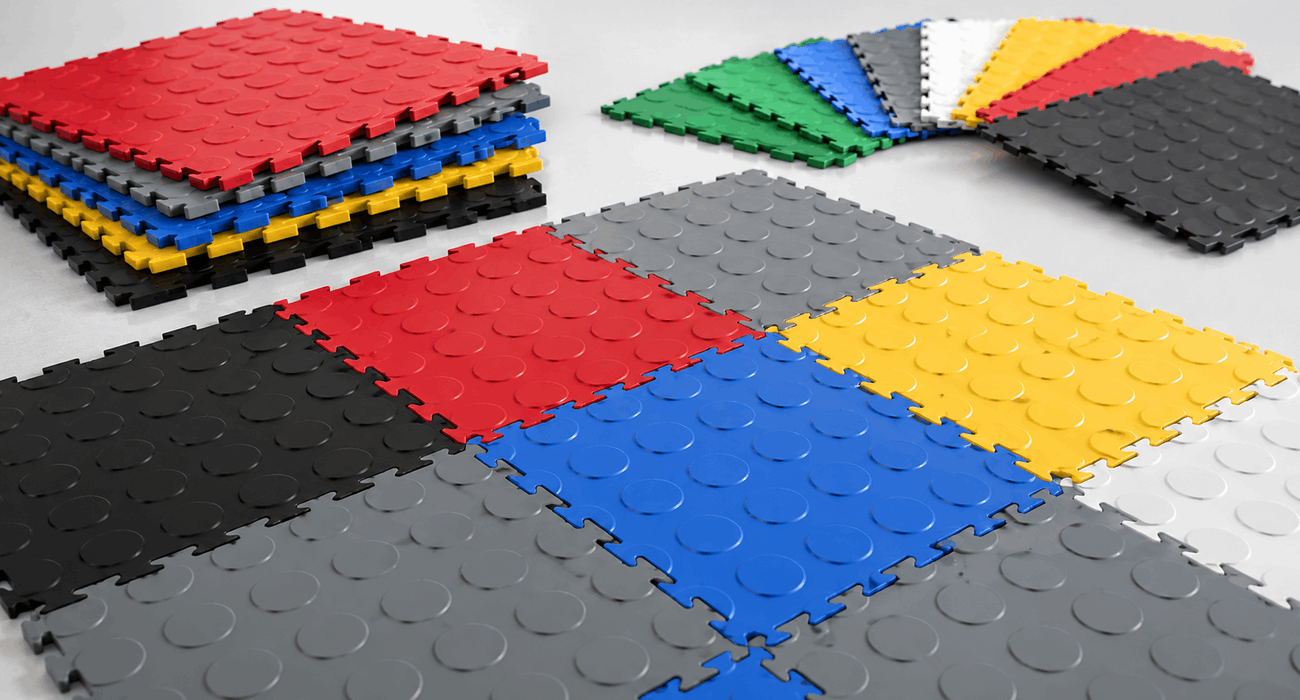
Poly Vinyl Chloride tiles, commonly known as PVC tiles, are popular where customers need a firm, flexible and hard-wearing floor surface. PVC flooring is suitable for quick installation, easy cleaning and practical floor protection.
Polypropylene tiles, also known as PP tiles, are another type of plastic flooring product. They are generally more rigid than PVC and are often used where drainage, airflow, firmness or open-grid performance is required.
Plastic flooring is a broad term that includes different polymer-based flooring products. Polymer materials such as Poly Vinyl Chloride and Polypropylene are widely used to manufacture tiles, mats and modular floor systems.
Choosing between PVC, Poly Vinyl Chloride tiles and Polypropylene tiles depends on the area, traffic level, moisture exposure and the type of surface performance required. Some spaces need a smooth and easy-clean floor, while others need grip, drainage, impact support or a modular tile system that can be repaired section by section.
As a South African flooring supplier, we focus on practical products that are strong, low-maintenance and suitable for real working environments. Whether you are upgrading a garage, improving a warehouse walkway, fitting a workshop floor, planning a gym area or looking for plastic floor tiles for a commercial project, our team can help you choose a suitable flooring solution for your space.
Browse our flooring ranges to compare PVC flooring, plastic flooring, interlocking floor tiles and related modular flooring products designed for long-term use and easy maintenance.
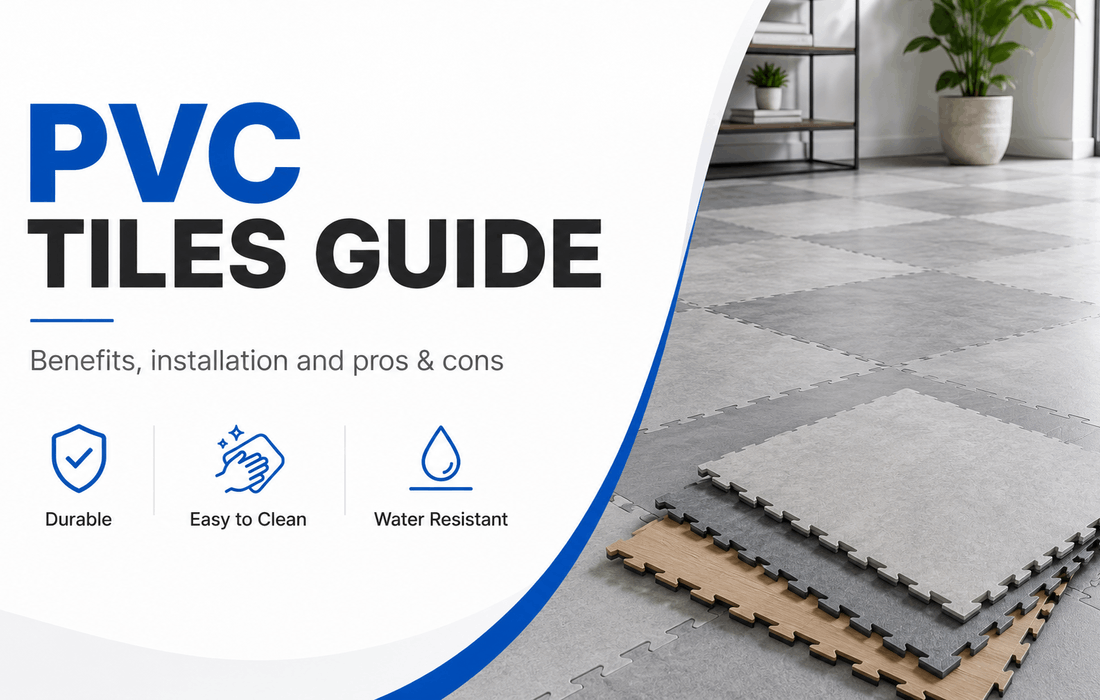
PVC flooring (polyvinyl chloride), which is in the vinyl family and mainly known for flooring, is a durable, waterproof and low-maintenance synthetic flooring option suitable for high-moisture and heavy-traffic areas.
Whether you are upgrading a high-traffic industrial warehouse or a home garage, our premium PVC tiles and PVC flooring tiles offer the ultimate interlocking solution for durability and style. These heavy-duty PVC flooring tiles are engineered to withstand massive weight loads and chemical spills, making them the superior choice for South African workshops and commercial spaces.
By choosing our interlocking systems, you ensure a seamless, professional finish that combines the structural integrity of permanent flooring with the ease of a DIY installation. Beyond structural flooring, we provide specialized PVC mats and PVC floor mats designed specifically for safety, comfort and versatility.
Our PVC floor mats are perfect for creating anti-fatigue standing areas in retail environments or high-impact zones in home gyms. Every one of our PVC mats is manufactured from 100% recycled materials, offering a slip-resistant and eco-friendly surface that protects your subfloor while providing underfoot cushioning. From massive industrial projects to simple modular layouts, our range covers every possible flooring need across South Africa.
Helpful guides about PVC tiles, recycled PVC, chemical resistance, workshop flooring and plastic vinyl flooring.
Compare material quality, durability, cost and sustainability.
Read More
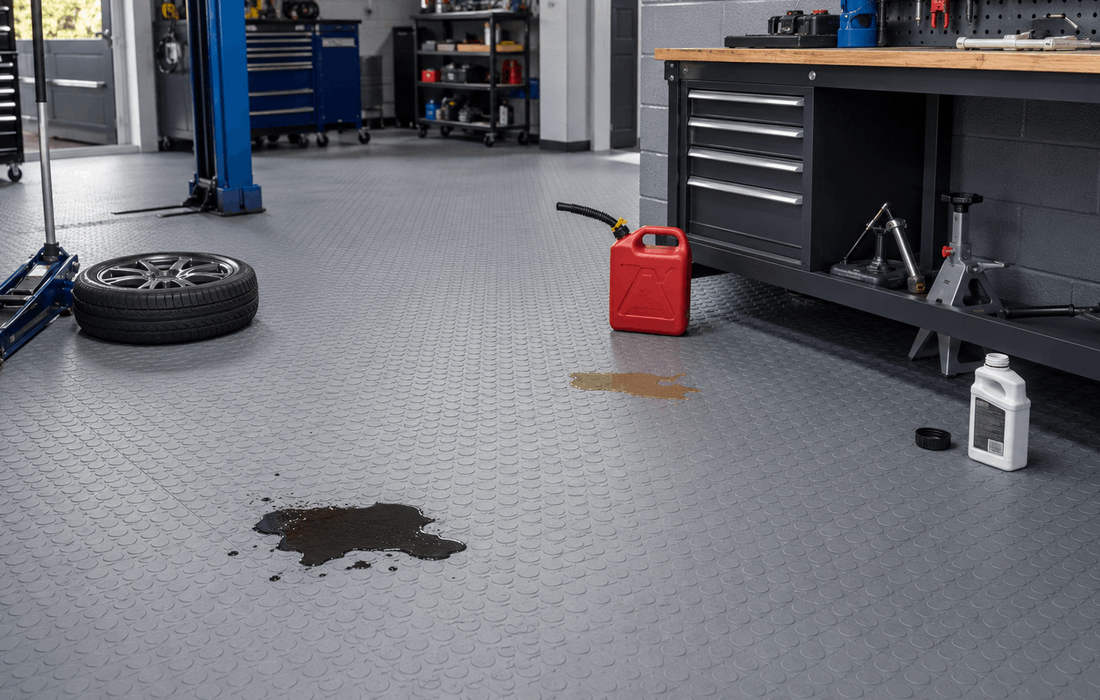
Understand oil, petrol and brake fluid exposure on PVC flooring.
Read More
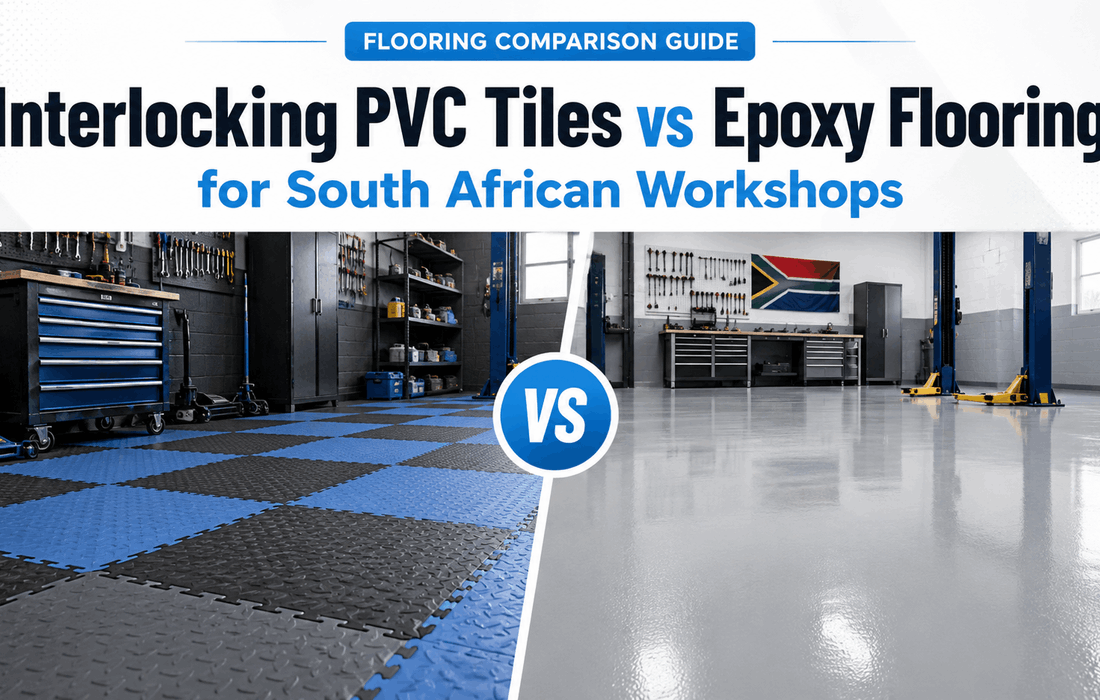
Compare workshop flooring options for South African businesses.
Read More
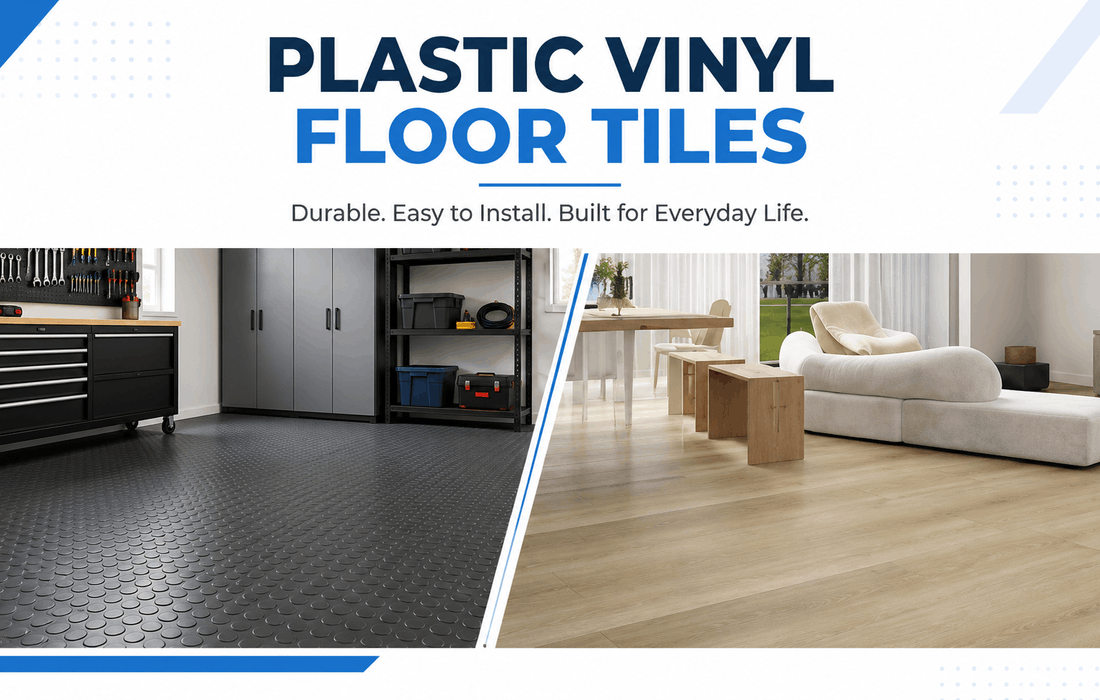
Explore plastic vinyl floor tile uses, benefits and comparisons.
Read MoreQuick answers about PVC tiles, cleaning, thickness, waterproofing and installation.
PVC flooring is popular for homes, garages, workshops, retail shops, gyms, warehouses and commercial areas because it is durable, easy to clean, cost-effective and quick to install.
However, like every flooring material, PVC flooring also has limitations that buyers should understand before making a decision. It may react to heat, need proper subfloor preparation and can be marked by sharp objects.
PVC flooring can last for many years when the correct product is chosen, installed properly and maintained according to the conditions of the space.
Good-quality PVC floor tiles can last anywhere from 5 to 30 years or more, depending on traffic level, tile thickness, surface type, cleaning routine, installation method and the environment where the floor is used.
The thickness for PVC flooring depends on the product type, installation area and level of traffic the floor needs to handle.
Common interlocking PVC floor tile thicknesses include around 4mm, 5mm, 6mm, 7mm and 10mm. One of the most common practical sizes is 500mm x 500mm x 5mm.
For most homes, garages, offices, showrooms, storerooms and light commercial areas, 5mm PVC floor tiles are usually a practical and cost-effective choice.
Heavier workshops, warehouses, commercial garages and high-traffic areas may need 6mm, 7mm or heavier-duty tiles, depending on the use.
Yes, PVC tiles are generally waterproof, especially solid PVC floor tiles and interlocking PVC tiles used in garages, workshops, storage rooms and commercial spaces.
PVC does not absorb water the way wood, carpet or some natural materials do. However, interlocking joints are not always fully sealed, so wet areas may need drainage-style flooring.
PVC flooring material is a type of plastic-based flooring made from Poly Vinyl Chloride, commonly known as PVC.
It is a durable polymer material used to manufacture floor tiles, vinyl flooring, interlocking floor tiles, mats and other practical flooring products.
Yes, PVC flooring is generally easy to clean and maintain, which is one of the main reasons it is used in homes, garages, workshops, gyms, warehouses, schools and commercial spaces.
PVC flooring does not absorb water easily and can handle regular sweeping, vacuuming and damp mopping.
PVC flooring can sometimes be installed over underfloor heating, depending on the type of PVC flooring, heating system, floor temperature and installation method.
It is important to ensure the surface temperature does not exceed 27°C, as extreme heat can cause the material to warp, bubble, expand or move over time.
Yes, PVC flooring can release VOCs, especially when it is new, recently installed or manufactured with certain additives, adhesives or surface treatments.
VOC levels are usually highest when the product is new and tend to reduce over time, especially when the room is well ventilated.
VOCs are volatile organic compounds, which are gases released from some materials, including paints, adhesives, sealants, plastics, cleaning products and some flooring products.
When a new product releases a smell, that smell may be linked to VOCs or other manufacturing residues. This is sometimes called off-gassing.
A mild new-product smell can be normal with PVC flooring, especially after unpacking or installation.
The smell often reduces after a few days as the area is ventilated and the product settles.
The answer depends on the level of VOCs, the type of compounds released, ventilation and the sensitivity of the people using the space.
For most practical flooring applications, the main recommendation is to reduce unnecessary exposure by choosing good-quality products, ventilating the area properly and avoiding harsh adhesives or cleaning chemicals where they are not needed.