
Flooring Buyer’s Guide: How to Choose the Right Flooring for Your Space
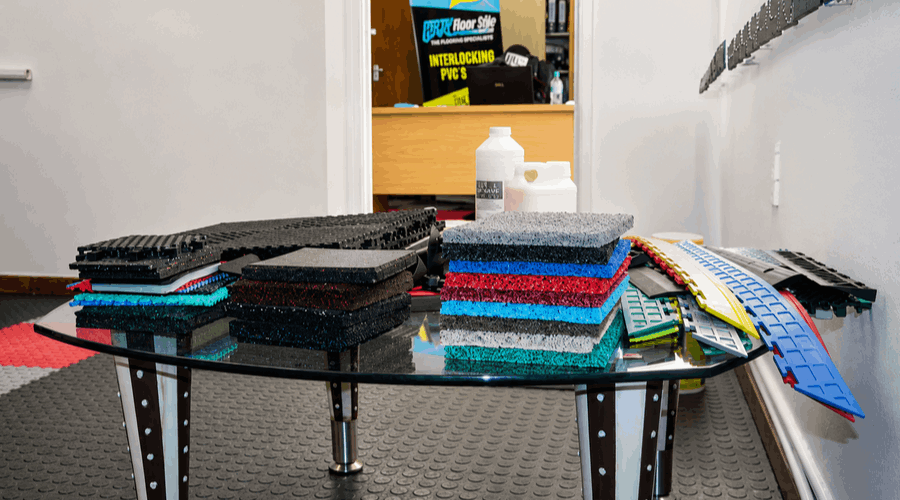
Choosing the right flooring means looking beyond colour and price. A floor that performs well in a home gym may not be suitable for a garage, factory or busy workshop. Vehicle traffic, heavy equipment, moisture, impact, comfort, cleaning and installation all influence which flooring solution is right for your space.
This flooring buyer's guide from PVC Floor Tile is designed to help you compare PVC flooring, rubber flooring, EVA foam mats and modular drainage flooring before you buy. Use it to understand materials, thicknesses, tile sizes, floor coverage and applications, then explore the flooring collection most suitable for your project.
Start Here: What Area Are You Flooring?
The easiest way to choose flooring is to start with the area where it will be installed. Different spaces place different demands on a floor, so the correct material should be selected according to its intended use.
Garage Flooring
Garage flooring should cope with parked vehicles, regular movement, dirt, moisture and cleaning. Interlocking PVC tiles and suitable vented modular tiles are practical options depending on the environment.
Explore Garage Flooring →Gym Flooring
Gym floors often need cushioning, grip and impact resistance. Rubber flooring is well suited to weight and equipment areas, while EVA foam can suit lighter exercise spaces.
Explore Gym Flooring →Workshop Flooring
Workshop flooring should be durable and practical to maintain. PVC flooring, rubber products and anti-fatigue solutions can be selected according to the type of work being carried out.
Explore Workshop Flooring →Factory Flooring
Factory flooring may need to handle machinery, employees, production equipment and repeated traffic. Loads, moisture, chemicals and workstation requirements should all be considered.
Explore Factory Flooring →Commercial Flooring
Commercial spaces need flooring that combines durability, maintenance and appearance. The correct solution depends on traffic levels and how the space is used.
Explore Commercial Flooring →Sports Flooring
Sports surfaces should be selected according to movement, grip, impact, drainage and whether the installation is indoors or outdoors.
Explore Sports Flooring →Understanding the Different Flooring Materials
Flooring materials perform differently. PVC, rubber, EVA foam and open-grid modular tiles should not be treated as interchangeable products. Understanding their strengths will help you select flooring according to function rather than appearance alone.
PVC Flooring
Interlocking PVC flooring is a practical modular solution for many garages, workshops, factories and commercial environments. Individual tiles connect together to create a finished surface over a suitable subfloor.
Depending on the product, advantages can include:
- Modular interlocking installation
- Individual tile replacement
- Different surface textures and finishes
- Easy-to-maintain surface
- Multiple colour options
- Suitable options for busy environments
- Professional finished appearance
Rubber Flooring
Rubber flooring is particularly useful where cushioning, grip and impact resistance are important. It is widely used in gym, fitness and workstation environments and is available in different formats, including mats, tiles and rolls.
Heavy-duty rubber flooring is generally a stronger starting point than lightweight foam when equipment, benches or free weights will be placed on the floor.
View Rubber Mats and Flooring →
EVA Foam Flooring
EVA foam provides a softer, lighter surface for areas where comfort and cushioning are important. It can work well for home fitness rooms, stretching areas, martial arts and lighter exercise applications.
Because EVA foam is softer than heavy-duty PVC or rubber flooring, it should not automatically be selected for vehicle areas or spaces containing very heavy equipment.
Vented and Drainage Flooring
Vented modular flooring uses an open-grid structure that allows water, dust and small debris to move beneath the upper walking surface. This can be useful in garages, workshops, car-detailing areas and other environments where drainage is a priority.
PVC vs Rubber vs EVA Foam vs Vented Flooring
There is no single flooring material that is best for every environment. Use this table as a quick comparison before looking at individual product specifications.
| Requirement | PVC Flooring | Rubber Flooring | EVA Foam | Vented Flooring |
|---|---|---|---|---|
| Garage use | Excellent | Product dependent | Not intended for vehicles | Excellent |
| Workshop use | Excellent | Good | Limited | Good |
| Gym use | Application dependent | Excellent | Good for lighter exercise | Limited |
| Impact absorption | Moderate | Excellent | Good | Low |
| Comfort underfoot | Moderate | High | High | Moderate |
| Heavy equipment | Good | Excellent | Limited | Product dependent |
| Drainage | Limited | Product dependent | Limited | Excellent |
| DIY installation | Excellent | Good | Excellent | Excellent |
| Individual tile replacement | Excellent | Product dependent | Excellent | Excellent |
How to Choose the Right Flooring Thickness
Flooring thickness matters, but the thickest product is not automatically the best choice. PVC, rubber and EVA foam are different materials and should be selected according to the intended application, expected loads, impact and comfort requirements.
Interlocking PVC Tile Thickness
PVC Floor Tile offers interlocking PVC flooring in different thicknesses, including 5 mm, 6 mm and 7 mm options. The correct thickness depends on the specific tile, existing floor, traffic and intended application.
| PVC Thickness | General Buying Consideration | Before Ordering |
|---|---|---|
| 5 mm | Lower-profile modular flooring option for suitable applications. | Check expected traffic, load and individual product specifications. |
| 6 mm | Mid-range option available for selected garage, workshop or commercial applications. | Confirm suitability for the specific environment. |
| 7 mm | A thicker PVC option where a more substantial modular floor is required. | Thickness should still be matched to load and application. |
Rubber Flooring Thickness
Rubber flooring thickness becomes particularly important where cushioning and impact protection are priorities. PVC Floor Tile supplies heavy-duty rubber gym tiles in 15 mm and 20 mm options.
15 mm Rubber Flooring
Suitable for selected gym, fitness and equipment areas where a durable cushioned rubber surface is required.
20 mm Rubber Flooring
Provides additional rubber depth for more demanding fitness and impact applications.
EVA Foam Thickness
Our fitness EVA foam mats are available in a 12 mm format, providing a lightweight cushioned surface for suitable home fitness, exercise and multipurpose areas.
Questions to Ask Before Choosing Thickness
- Will vehicles travel over the flooring?
- Will heavy machinery or gym equipment be placed on it?
- Will weights be dropped?
- How much cushioning is required?
- How much daily foot traffic will the area receive?
- Is the floor permanent or temporary?
- What type of subfloor will be underneath?
Choose thickness according to how the flooring will perform in the space, rather than choosing the thickest product by default.
Flooring Sizes and Coverage
Measure the complete area before ordering. The basic floor-area calculation is:
Example: 6 m × 5 m = 30 m²
Tile dimensions and pack coverage vary between flooring types, so always calculate according to the actual product you plan to purchase.
| Flooring Type | Standard Size | Thickness | Planning Quantity |
|---|---|---|---|
| Interlocking PVC Tiles | 500 × 500 mm | 5 / 6 / 7 mm | 4 tiles per m² |
| Rubber Gym Tiles | 1000 × 1000 mm | 15 / 20 mm | 1 tile per m² |
| EVA Foam Mats | 600 × 600 mm | 12 mm | Check individual pack coverage |
| Vented Modular Tiles | 395 × 395 mm | Approx. 18.1 mm | Approx. 6.4 tiles/m²; allow about 7 tiles/m² when planning |
Should You Allow Extra Flooring for Cutting and Wastage?
Ordering exactly the measured floor area may not provide enough material. Extra flooring can be required for cuts around walls, corners, doorways, pillars and irregular sections.
A simple rectangular room normally creates less waste than a room containing several corners or fixed obstacles. Keeping a few spare modular tiles can also be useful for future replacement.
Flooring Calculator: Estimate How Much You Need
Enter your room dimensions, choose the flooring type and select a cutting allowance. This calculator provides an estimate to help with initial planning.
Calculate Your Flooring Quantity
Measurements should be entered in metres.
What Does Your Floor Need to Handle?
Before choosing the material, consider what will happen on the floor every day. This is often more important than colour, pattern or even thickness.
Vehicles
Garage flooring should be selected for vehicle loads and regular vehicle movement. Soft flooring intended for exercise should not be substituted for a floor designed for garage use.
Heavy Equipment
Machinery, gym equipment and workshop equipment can create concentrated loads. Consider machine weight, feet or wheels, movement, vibration and how long the equipment will remain in one position.
Dropped Weights
Free-weight areas usually require greater impact protection than cardio or stretching zones. Heavy-duty rubber flooring is a stronger starting point for repeated impact applications.
Water and Moisture
Where floors regularly become wet, consider drainage, grip, cleaning and moisture below the finished floor. Open-grid flooring can help when water needs to move beneath the walking surface.
High Foot Traffic
Shops, factories, workshops and commercial facilities need flooring suitable for repeated daily movement. Lightweight products intended for occasional use may not be appropriate.
Standing Workers
Workstations where employees stand for extended periods may benefit from anti-fatigue flooring designed specifically to improve underfoot comfort.
Indoor vs Outdoor Flooring
Do not assume every interlocking tile can be used outdoors simply because the material is water resistant.
Outdoor flooring can be exposed to:
- Direct sunlight and UV exposure
- Rain and standing water
- Temperature changes
- Expansion and contraction
- Dirt and debris
- Weathering
Always check whether the individual product is suitable for outdoor use before installation. Where outdoor performance is required, look specifically for products designed for the intended conditions.
How to Choose the Right Flooring Surface and Texture
Surface texture affects grip, cleaning, drainage and appearance. Choose the surface according to the environment rather than selecting it only because of its appearance.
Textured Surfaces
Commonly used in garages, workshops and demanding environments where a more pronounced surface finish is preferred.
Decorative Finishes
Suitable where the customer wants a neat finished appearance for garages, showrooms and selected commercial spaces.
Rubber Granulated Surfaces
Common in gym flooring because rubber provides cushioning and impact absorption.
Open-Grid Surfaces
Designed to allow water and small debris to pass beneath the main walking surface.
Interlocking Flooring vs Adhesive Installation
Installation method can affect installation time, maintenance and how easily flooring can be changed in future.
Interlocking Flooring
Interlocking tiles connect to neighbouring tiles to create a modular floor. Depending on the product and application, benefits can include:
- DIY-friendly installation
- Individual tile replacement
- Easy floor expansion
- Less permanent alteration to the subfloor
- Faster installation for suitable applications
Loose-Lay Flooring
Certain mats and flooring products may be loose-laid over a suitable existing floor. Always check the product instructions and environment before installation.
Adhesive Installation
Some flooring applications may require adhesive for additional stability. The installation method should always follow the requirements of the specific flooring product.
Can Interlocking Flooring Be Installed Over Concrete?
Many modular floors can be installed over a suitable concrete surface, but the existing floor should first be inspected for major cracks, holes, loose concrete, severe unevenness, moisture problems, oil and dirt.
Cleaning and Maintaining Modular Flooring
Proper maintenance helps flooring remain presentable and functional. Cleaning requirements vary according to material, so PVC, rubber and EVA flooring should not automatically be treated in exactly the same way.
- Sweep or vacuum loose dirt regularly.
- Remove spills as soon as practical.
- Use cleaning products suitable for the flooring material.
- Avoid aggressive solvents unless compatibility has been confirmed.
- Inspect high-traffic areas periodically.
- Clean beneath removable modular flooring when required.
- Replace damaged modular sections where possible.
Common Flooring Buying Mistakes to Avoid
Choosing Flooring Only by Price
The cheapest product can become expensive if it is unsuitable for the application and needs to be replaced.
Choosing the Wrong Material
PVC, rubber and EVA foam perform differently. Select the material according to the actual environment.
Buying Based Only on Thickness
Thickness is important, but thicker does not automatically mean better. Material construction and intended use also matter.
Ignoring Drainage
If water regularly reaches the floor, consider how it will drain and how the surface will be cleaned.
Ordering Only the Exact Room Measurement
Cuts around walls, doorways and irregular sections may require additional flooring.
Ignoring the Existing Subfloor
Significant cracks, holes, moisture problems or uneven areas may need attention before flooring is installed.
Choosing Colour Before Performance
Colour is important, but first make sure the flooring is suitable for the space.
Forgetting About Edging and Transitions
Exposed flooring edges at entrances or transitions may require ramps, edging or finishing accessories.
Which Flooring Should You Choose?
Use these recommendations as a starting point, then check the individual product specification before ordering.
For a Garage
Start with interlocking PVC flooring or suitable vented garage flooring.
Compare Garage Flooring →For Heavy Gym Equipment
Start with heavy-duty rubber flooring designed for impact and equipment areas.
Compare Gym Flooring →For Home Exercise
EVA foam can be considered where a lightweight and comfortable surface is required.
Compare EVA Foam Mats →For a Workshop
Compare PVC flooring, rubber flooring and anti-fatigue products according to the work area.
Compare Workshop Flooring →For a Factory
Start with traffic, machinery, moisture, cleaning and employee workstation requirements.
Compare Factory Flooring →For Commercial Areas
Compare durability, appearance, maintenance and expected daily traffic.
Compare Commercial Flooring →Flooring Buying Checklist
Before requesting a quotation or placing an order, check the following:
- Measure the total floor area
- Confirm how the space will be used
- Check indoor or outdoor location
- Consider daily foot traffic
- Consider vehicles
- Consider machinery and equipment
- Consider dropped weights or impact
- Check moisture and drainage
- Inspect the existing subfloor
- Decide whether cushioning is required
- Choose the appropriate material
- Select suitable thickness
- Confirm tile dimensions
- Calculate flooring quantity
- Allow for cutting and wastage
- Select colour and surface finish
- Consider edging and transitions
- Confirm installation requirements
- Confirm delivery requirements
Frequently Asked Flooring Questions
What is the best flooring for a garage?
Interlocking PVC flooring and suitable vented modular tiles are good starting points for many garages. The correct option depends on vehicle use, drainage, appearance and the condition of the existing floor.
Is PVC or rubber flooring better?
Neither material is automatically better. PVC flooring is commonly selected for garages, workshops and commercial environments, while rubber is particularly useful where cushioning and impact resistance are priorities.
How thick should gym flooring be?
Thickness depends on the equipment and type of training. PVC Floor Tile supplies rubber gym tile options including 15 mm and 20 mm. More demanding impact areas generally require greater protection than light exercise areas.
What thickness are PVC interlocking floor tiles?
PVC Floor Tile has interlocking PVC flooring available in specifications including 5 mm, 6 mm and 7 mm. Select the correct product according to the intended traffic, application and subfloor.
Can interlocking tiles be installed over concrete?
Many interlocking flooring systems can be installed over a suitable concrete floor. The existing surface should be sufficiently stable, clean and level for the flooring being installed.
Do interlocking floor tiles need adhesive?
Many interlocking systems connect without full adhesive installation. Requirements vary by product and site conditions, so follow the instructions for the specific flooring.
How do I calculate how many flooring tiles I need?
Multiply the room length by its width to calculate square metres. Then check how many tiles cover one square metre and add an appropriate allowance for cuts and irregular areas.
Can damaged interlocking tiles be replaced individually?
One advantage of many modular flooring systems is that individual sections can often be removed and replaced without replacing the complete floor.
What flooring is suitable for wet areas?
Where drainage is important, consider flooring designed to allow water to move through or beneath the surface. Open-grid and vented flooring can be useful depending on the application.
Why Buy Flooring From PVC Floor Tile?
PVC Floor Tile supplies flooring solutions for residential, commercial, fitness and industrial environments. Our product range allows customers to compare different materials and applications from one flooring supplier.
Our Flooring Range at a Glance
Use the table below as a quick overview of the flooring solutions available for different spaces and requirements.
| Flooring Range | Typical Applications | Main Buying Consideration |
|---|---|---|
| Interlocking PVC Flooring | Garages, workshops, factories and commercial areas | Durable modular flooring with individual tile replacement |
| Rubber Flooring and Mats | Gyms, equipment areas, workstations and industrial spaces | Grip, cushioning and impact protection |
| Gym Flooring | Home gyms, commercial gyms and fitness facilities | Equipment protection, impact resistance and comfort |
| EVA Foam Mats | Home fitness, stretching and multipurpose exercise areas | Lightweight cushioning and easy interlocking installation |
| Garage Flooring | Residential garages, commercial garages and vehicle areas | Vehicle use, cleaning, durability and appearance |
| Workshop Flooring | Workshops, service areas and workstations | Durability, grip, cleaning and working conditions |
| Factory Flooring | Manufacturing, production and industrial areas | Traffic, machinery, loads and maintenance |
| Commercial Flooring | Retail, showrooms, business premises and commercial spaces | Daily traffic, professional appearance and maintenance |
| Sports Flooring | Sports, training and recreational areas | Grip, movement, impact and drainage |
| Entrance Matting | Building entrances, doorways and reception areas | Dirt control, moisture management and pedestrian safety |
| Drainage Flooring | Wet areas, garages, workshops and detailing areas | Water drainage and open-grid performance |
| Flooring Accessories | Flooring edges, entrances and floor transitions | Finishing, ramps, edging and transitions |
We recommend selecting flooring according to the actual application instead of making a decision based only on price, colour or thickness.
Not Sure Which Flooring Is Right for Your Project?
Send us your room dimensions, existing floor type, how the area will be used, expected vehicles or equipment, moisture requirements, preferred colour and delivery location. This information helps identify flooring options that are better suited to your space.
