
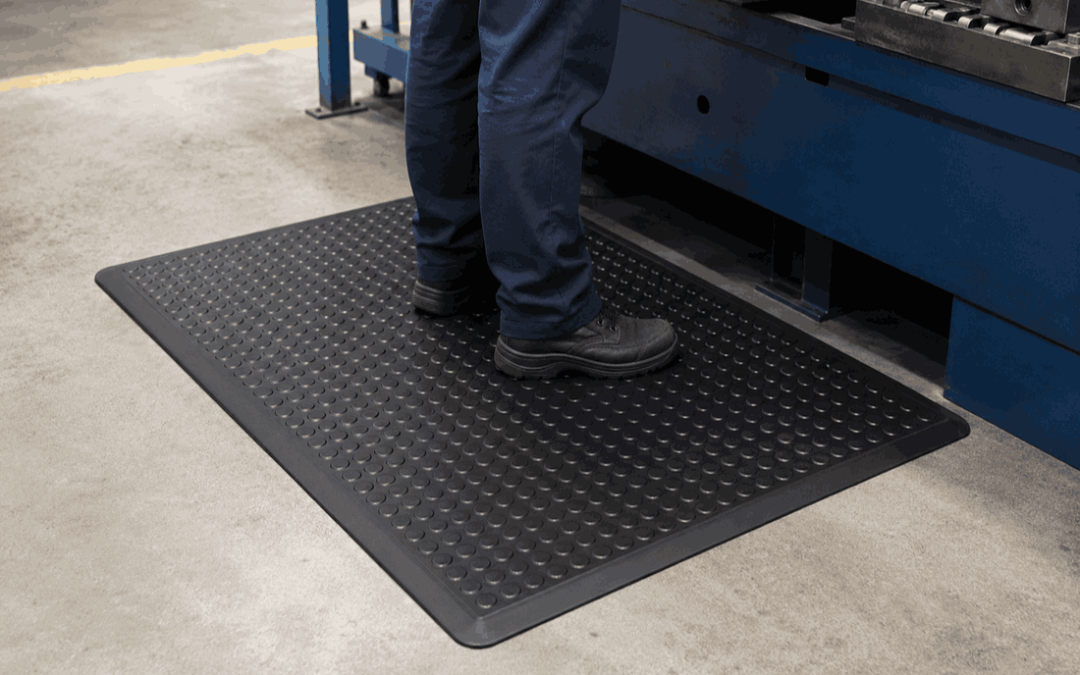
Anti-fatigue rubber mats for work areas are designed for spaces where people stand, move and work for long periods during the day. In factories, workshops, packing stations, assembly areas, tool rooms and industrial work zones, hard concrete floors can become uncomfortable and tiring over time. A practical comfort mat can help create a softer working surface while still supporting grip, movement and floor protection. For durable matting used in busy standing areas, view our comfortable rubber matting for standing areas.
Standing work areas place constant pressure on workers’ feet, legs and lower body. This is especially true in factories, production areas, warehouses, workshops and packing stations where staff may remain in one place for long periods. A hard floor can make the working area feel less comfortable, especially during long shifts or repetitive tasks.
Rubber mats are a practical solution because they can add a more forgiving layer between the worker and the hard floor. They also help protect the original floor from wear, tool drops, foot traffic and daily activity. When selected correctly, workplace comfort mats can support both the worker and the floor underneath.
Why Anti-Fatigue Rubber Mats for Work Areas Matter
Anti-fatigue rubber mats for work areas matter because many industrial and commercial jobs require people to stand while they work. Packing, sorting, machine operation, assembly, maintenance and inspection tasks often happen at fixed workstations. When the floor is too hard, workers may feel discomfort faster during the day.
A good rubber comfort mat can help reduce the harsh feeling of standing directly on concrete or tiles. It does not replace safe working practices, proper footwear or good workstation design, but it can make the floor surface more practical for long standing work.
These mats are also useful because they can be placed only where they are needed. Instead of covering the entire floor, businesses can install mats in high-use standing zones, such as packing tables, production benches, tool rooms, machine areas and service counters.
Rubber Mats for Long Standing Work in Industrial Spaces
Rubber mats for long standing work are useful in areas where staff remain in one place for extended periods. In a packing area, workers may stand at a bench for hours. In a workshop, technicians may stand near tools and machines. In a factory, operators may stand near production equipment or inspection tables.
The purpose of anti-fatigue rubber mats for work areas is to create a more comfortable surface that supports standing tasks. The mat should feel stable underfoot while offering enough support for daily use. It should not move easily, curl at the edges or become difficult to clean.
For busy industrial spaces, the mat must also be strong enough for the environment. A light mat may not last in a production zone where there is regular foot traffic, dust, moisture, tools or equipment movement. That is why it is important to choose mats based on the actual work area, not only the price.
Common standing work areas include:
- Packing and sorting stations
- Assembly lines and production benches
- Machine operation areas
- Tool rooms and maintenance spaces
- Workshops and repair areas
- Factory inspection points
- Warehouse picking or dispatch stations
- Commercial counters and service points
Workplace Comfort Mats for Standing, Grip and Floor Protection
Workplace comfort mats should do more than feel soft. They should support grip, floor protection and practical cleaning. A standing work area can become dusty, dirty or exposed to small particles from daily operations. The mat must be suitable for that environment.
Grip is important because staff need a stable surface when working, turning, lifting, packing or moving between stations. Rubber surfaces are often chosen because they provide more traction than many smooth floors. A textured surface can be especially useful in areas where movement is constant.
Floor protection is another benefit. Workstations often receive repeated pressure in the same spots every day. Over time, concrete, painted floors or tiled surfaces can become worn. Rubber mats can help reduce direct pressure and protect the original surface underneath.
Choosing the Right Anti-Fatigue Mat Thickness
Thickness is one of the most important parts of choosing a mat for long standing work. A mat that is too thin may not give enough support. A mat that is too soft may feel unstable. A mat that is too thick for a busy movement area may create a trip risk if the edges are not managed correctly.
The best choice depends on the type of work being done. Light standing areas may need a different mat from a factory workstation or tool room. Areas with tools, benches, machinery and daily traffic need mats that can handle more pressure.
Anti-fatigue rubber mats for work areas should be selected according to standing time, floor condition, traffic level, cleaning needs and the type of work done in the space. A mat used near a machine may need a tougher surface than one used at a simple service counter.
| Work Area | Main Need | Mat Recommendation | Best For |
|---|---|---|---|
| Packing station | Comfort and support | Workplace comfort mats | Standing, packing and sorting tasks |
| Workshop bench | Comfort and floor protection | Durable rubber standing mats | Tools, workbenches and repairs |
| Factory workstation | Grip and durability | Heavy-use anti-fatigue mats | Production and assembly areas |
| Machine area | Stability and protection | Industrial rubber comfort mats | Operators and fixed work points |
| Service counter | Long standing comfort | Standing support mats | Retail, reception and counter work |
Anti-Fatigue Rubber Mats for Work Areas vs Standard Floor Mats
Standard floor mats are usually designed for basic coverage, dirt control or simple floor protection. They may work well at entrances, walkways or light-use zones, but they are not always suitable for long standing work.
Anti-fatigue rubber mats for work areas are different because they are chosen for comfort, grip and support in standing zones. They are designed for people who spend time working on their feet, especially in industrial or commercial environments.
A standard mat may not provide enough support for a production bench or packing station. It may also wear faster if used in a heavy working area. For standing work, the mat should be strong, stable and suitable for repeated daily use.
Where to Use Anti-Fatigue Mats in Industrial Facilities
Before buying mats, look at the layout of your work area. Not every part of a factory, workshop or warehouse needs anti-fatigue matting. The most important places are the areas where workers stand for long periods or complete repetitive tasks.
Start by identifying fixed work points. These may include packing tables, inspection benches, machine controls, tool rooms and service areas. These are the places where comfort mats can make the biggest difference because people spend more time standing there.
For larger flooring upgrades or high-traffic industrial spaces, you can also explore our durable industrial flooring solutions for production, workshop and commercial work environments.
About Workplace Comfort Mats for Busy Work Areas
Workplace comfort mats are made to improve the standing surface in areas where people work on their feet. They are commonly used in industrial, commercial and workshop settings because they offer a practical balance of comfort and protection.
A good comfort mat should be firm enough to feel stable, but supportive enough to reduce the harsh feeling of a hard floor. It should also be easy to clean and suitable for the working conditions around it.
When choosing anti-fatigue rubber mats for work areas, businesses should consider the number of workers, the length of standing time, the type of footwear used, the work process, and whether the area is exposed to dust, moisture, tools or equipment.
Quick Buying Tip
Choose anti-fatigue mats according to the work area, not only the size. A packing station, tool room, machine zone and service counter may all need different levels of comfort, grip and durability.
How Anti-Fatigue Mats Support Safer Movement
A good standing mat can help create a more stable work surface, especially when the floor is hard or smooth. Grip is important in work areas where people turn, reach, pack, lift or move between nearby stations.
The mat should stay flat and secure. Edges should not curl, and the mat should not slide under normal use. Keeping mats clean and correctly positioned is important because poor placement can create problems in busy environments.
For general workplace safety guidance, you can read this external resource from the Health and Safety Executive on preventing slips and trips. This supports the importance of floor management, cleaning and slip prevention in working environments.
Cleaning and Maintaining Rubber Mats for Long Standing Work
Cleaning is important because standing mats are often placed in busy work areas. Dust, dirt, small particles, moisture and production residue can build up during the day. If mats are not cleaned properly, grip and appearance may be affected.
Regular sweeping helps remove loose dirt. Damp mopping can help clean surface marks. In areas where oil, grease or chemicals are present, always check whether the mat is suitable for that environment and clean spills quickly.
Anti-fatigue rubber mats for work areas should also be inspected regularly. Check for worn surfaces, damaged edges, movement, curling or areas where the mat no longer sits flat. Good maintenance helps keep the mat practical and safe for daily use.
Maintenance checklist:
- Sweep mats regularly to remove loose dirt
- Damp mop when needed using suitable cleaning products
- Clean spills as soon as possible
- Check that mats remain flat and secure
- Inspect edges for wear or curling
- Replace damaged mats in high-use standing areas
- Keep surrounding floors clean and clear
Common Mistakes When Choosing Workplace Comfort Mats
One common mistake is buying a mat only because it feels soft. A very soft mat may not always be suitable for a busy work area because it can feel unstable or wear quickly. The mat should offer comfort without losing support.
Another mistake is using the same mat in every area. A light-use counter, a packing station and an industrial machine zone do not always need the same mat. Each area should be assessed according to standing time, movement, cleaning and durability needs.
Some businesses also forget to plan the edges and layout. Mats should be positioned where workers stand, but they should not block movement or create awkward walking paths. A neat layout improves both comfort and practical use.
Simple Comfort Mat Advice
Choose standing mats based on comfort, grip, durability, cleaning needs and the type of work done in the area. The best mat is the one that supports the worker while still performing well in the working environment.
Final Advice on Anti-Fatigue Rubber Mats for Work Areas
Anti-fatigue rubber mats for work areas are a practical choice for factories, workshops, warehouses, packing stations, tool rooms and other places where people stand for long periods. They help create a more comfortable working surface while also supporting grip and floor protection.
The right mat can improve how a work area feels and functions. It can help protect the original floor, support standing tasks and make fixed workstations more practical for daily use.
Before choosing a mat, look carefully at the standing time, traffic level, floor condition, equipment nearby and cleaning routine. A well-planned comfort mat layout can help create a stronger, cleaner and more comfortable work area for the long term.
Need Help Choosing Anti-Fatigue Rubber Mats?
PVC Floor Tile supplies rubber mats and industrial flooring options for factories, workshops, packing areas, tool rooms, warehouses and standing work areas across South Africa. Speak to our team for help choosing the right mat type, thickness and layout for your workspace.
Contact Us