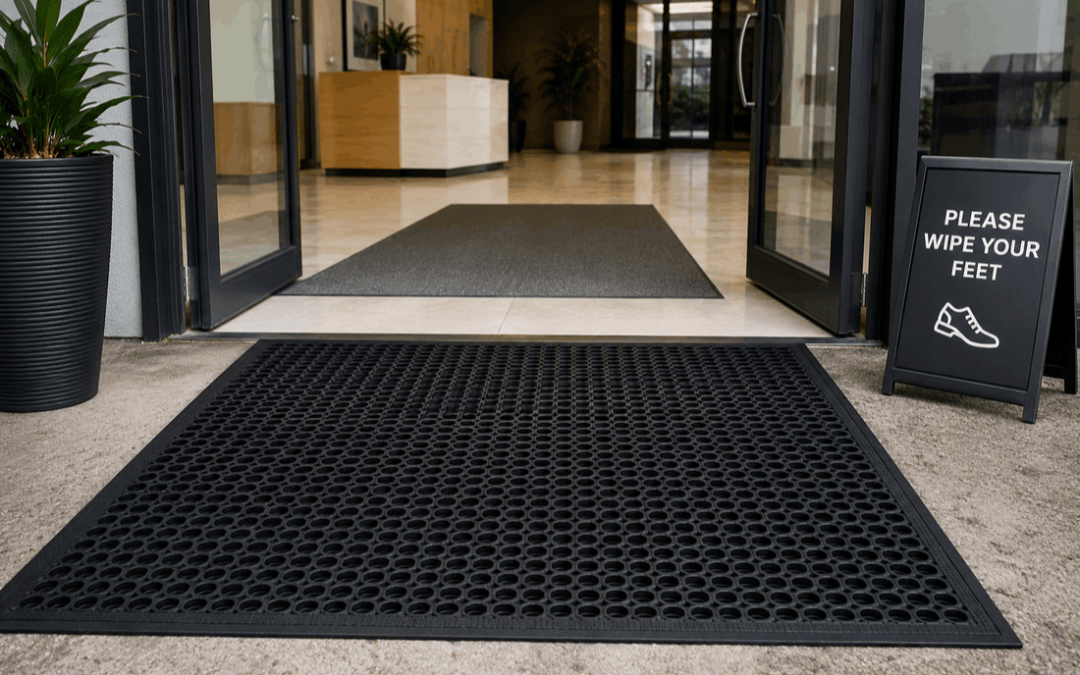
Rubber mats for entrance areas are a practical choice for buildings that need better dirt control, moisture management and floor protection at the point where people walk in. Entrances deal with shoes, rainwater, dust, grit, mud, foot traffic and daily cleaning, which means the floor can wear faster than other areas of a building. A strong entrance matting setup helps trap dirt before it spreads further inside and supports a cleaner, safer and more professional entrance. For durable floor protection at busy doorways, view our durable rubber matting for entrance areas.
An entrance is one of the busiest parts of any building. Whether it is a shop, office, school, warehouse, factory, gym, workshop or commercial property, people usually enter and leave through the same main points every day. This repeated movement brings dirt and moisture onto the floor, especially during wet weather or in areas with outdoor dust and grit.
Without proper matting, entrance floors can become dirty quickly. Moisture can spread into the building, grit can scratch the floor surface, and the entrance can look untidy even when the rest of the building is clean. Rubber entrance mats help reduce this problem by creating a practical first line of defence at the doorway.
Why Rubber Mats for Entrance Areas Matter for Dirt Control
Rubber mats for entrance areas matter because they help manage dirt before it moves deeper into a building. Dirt control is not only about appearance. Grit, sand and small stones can scratch tiles, vinyl, concrete coatings and other finished floors. Over time, this can make the floor look worn and harder to maintain.
Entrance matting gives people a place to wipe their shoes as they enter. The mat surface helps collect dirt, dust and debris from footwear, reducing the amount of material that is carried into reception areas, shops, corridors and workspaces.
For commercial buildings, this is especially important because first impressions matter. A dirty or wet entrance can make the whole business look poorly maintained. A proper rubber mat at the entrance helps keep the area cleaner and more controlled throughout the day.
Rubber Entrance Mats South Africa: Practical Use in Local Conditions
Rubber entrance mats South Africa are useful because many local buildings deal with a mix of dust, rain, outdoor grit and high foot traffic. In dry weather, entrances can collect dust and sand. In wet weather, water can be tracked inside. In industrial or commercial areas, shoes may also carry oil, dirt or fine particles from outside surfaces.
Rubber mats are a strong option because they can handle frequent movement and are practical for different entrance types. They can be used at shop doors, office entrances, warehouse access points, factory entrances, schools, gyms and public buildings.
Rubber mats for entrance areas also work well where the entrance needs both grip and dirt control. The right mat can help make the floor more practical by reducing loose debris and supporting a more stable walking surface.
Entrance areas that benefit from rubber mats include:
- Shop and retail entrances
- Office reception areas
- Warehouse and factory doorways
- Gym and fitness centre entrances
- Schools, clinics and public buildings
- Workshop and tool room access points
- Commercial kitchens and service entrances
- Indoor and covered outdoor entrance zones
Commercial Entrance Rubber Mats for High-Traffic Buildings
Commercial entrance rubber mats need to handle more than occasional foot traffic. In busy buildings, dozens or even hundreds of people may walk through the entrance each day. The mat must be strong enough to stay practical under repeated use.
A commercial entrance mat should sit flat, stay in place, manage dirt and be easy to clean. If the mat moves, curls or becomes overloaded with dirt, it can become less effective. This is why choosing the right size, material and placement is important.
For businesses that need a complete doorway solution, our commercial entrance matting solutions can help with dirt control, moisture management and floor protection in high-traffic areas.
How Entrance Mats Help Protect Floors from Wear
Floor protection is one of the biggest reasons to use entrance mats. Shoes can carry small stones, grit and sand into a building. When people continue walking, these particles can rub against the floor surface and cause scratches or dull marks.
Rubber mats for entrance areas reduce this problem by catching dirt at the door. This helps protect the main floor surface and reduces the need for constant cleaning throughout the day.
Entrance mats are especially useful on floors that are expensive or difficult to repair. Once a floor becomes scratched, stained or worn, it may need polishing, resurfacing or replacement. A good entrance matting system can help reduce that risk.
Quick Entrance Matting Tip
Place rubber mats where people naturally step when entering the building. A mat only works properly when it is positioned in the real walking path, not beside it.
Best Features to Look for in Rubber Entrance Mats
Choosing the right entrance mat is not only about size. The mat must suit the building, the entrance type and the amount of foot traffic. Some entrances need dirt scraping. Others need moisture control. Some need a strong commercial-grade mat that can handle constant use.
Important features to consider:
- A textured surface to help remove dirt from shoes
- Strong rubber material for repeated foot traffic
- Good grip to help the mat stay practical underfoot
- Easy cleaning for daily or weekly maintenance
- Suitable size for the width of the doorway
- Flat edges that reduce movement and curling
- Moisture control for rainy or wet entrances
- Durability for commercial and industrial use
A small mat may not give people enough space to wipe their shoes properly. A very light mat may move around in a busy entrance. A mat that is difficult to clean may quickly become dirty and unattractive. The best choice is one that matches the real conditions at the entrance.
Rubber Mats for Entrance Areas and Moisture Management
Moisture is a major issue at entrances. When people walk in during rain, water can be carried inside on shoes, umbrellas, bags and clothing. This moisture can spread across the floor and make the entrance harder to manage.
Rubber mats for entrance areas can help control moisture by giving people a defined place to step and wipe their shoes. Some rubber mats are designed with raised patterns or drainage features that help manage water more effectively.
Moisture management is especially important in high-traffic entrances where many people enter in a short time. A suitable mat can help reduce water tracking and keep the main floor area cleaner.
Where to Place Rubber Entrance Mats for Best Results
Mat placement matters. A good entrance mat should be positioned where people naturally walk. If the mat is too far from the door, too small, or placed to the side, people may step around it and carry dirt straight into the building.
For the best result, consider using matting both outside and inside the entrance where possible. An outdoor or covered mat can help remove larger dirt, while an indoor mat can help manage finer dirt and moisture.
Good entrance mat placement areas include:
- Directly inside the main entrance door
- Covered outdoor entrance points
- Reception entrances and waiting areas
- Factory or warehouse staff entrances
- Shopfront doorways
- Service entrances used by staff and suppliers
- High-use corridors near the entrance
Cleaning and Maintaining Commercial Entrance Rubber Mats
Entrance mats need regular cleaning because they collect dirt, grit and moisture. This is their job, but if the mat is not cleaned, it can become overloaded and less effective. A dirty mat can also make the entrance look poorly maintained.
The cleaning routine depends on the amount of traffic. A busy shop or office may need daily sweeping or vacuuming. A factory entrance may need more frequent cleaning because of dust and industrial dirt. Wet entrances may need mats to be lifted or dried when necessary.
Simple maintenance tips:
- Sweep or vacuum mats regularly
- Remove trapped dirt and grit before it builds up
- Clean wet mats after heavy rain or high traffic
- Check that edges stay flat and safe
- Shake smaller mats outside when needed
- Use suitable cleaning products for rubber surfaces
- Replace damaged mats that no longer perform properly
For general workplace floor safety and slip-prevention guidance, you can also read this external resource from the Health and Safety Executive on preventing slips and trips. Good mat placement, cleaning and entrance floor management all work together to support safer movement.
Common Mistakes When Choosing Rubber Entrance Mats
One common mistake is choosing a mat that is too small. If people only take one step on the mat, it may not remove enough dirt or moisture from footwear. Larger entrances often need longer matting to give shoes more contact with the surface.
Another mistake is buying only for appearance. A mat may look good, but if it cannot handle foot traffic, dirt or moisture, it may not perform well. Entrance mats should be practical first and decorative second.
Some businesses also forget about cleaning. Even a strong mat needs regular maintenance. If dirt is left to build up, the mat may become less effective and the entrance may still look dirty.
Simple Entrance Matting Advice
Choose entrance mats based on traffic, dirt level, moisture exposure and cleaning needs. The best mat is the one that protects the floor, controls dirt and stays practical in daily use.
Final Advice on Rubber Mats for Entrance Areas
Rubber mats for entrance areas are a smart choice for buildings that need better dirt control, moisture management and floor protection. They help trap dirt before it spreads, support a cleaner entrance and reduce wear on the floor surface.
For commercial and industrial buildings, entrance matting should be chosen carefully. Consider how many people use the entrance, how much dirt comes from outside, whether the entrance gets wet and how often the mat will be cleaned.
The right rubber entrance mat can make a building cleaner, safer and easier to maintain. By placing quality matting at the correct entrance points, you can protect your floors and create a more professional first impression.
Need Help Choosing Rubber Entrance Mats?
PVC Floor Tile supplies rubber mats and entrance matting solutions for shops, offices, warehouses, factories, gyms and commercial buildings across South Africa. Speak to our team for help choosing the right mat type, size and layout for your entrance area.
Contact Us