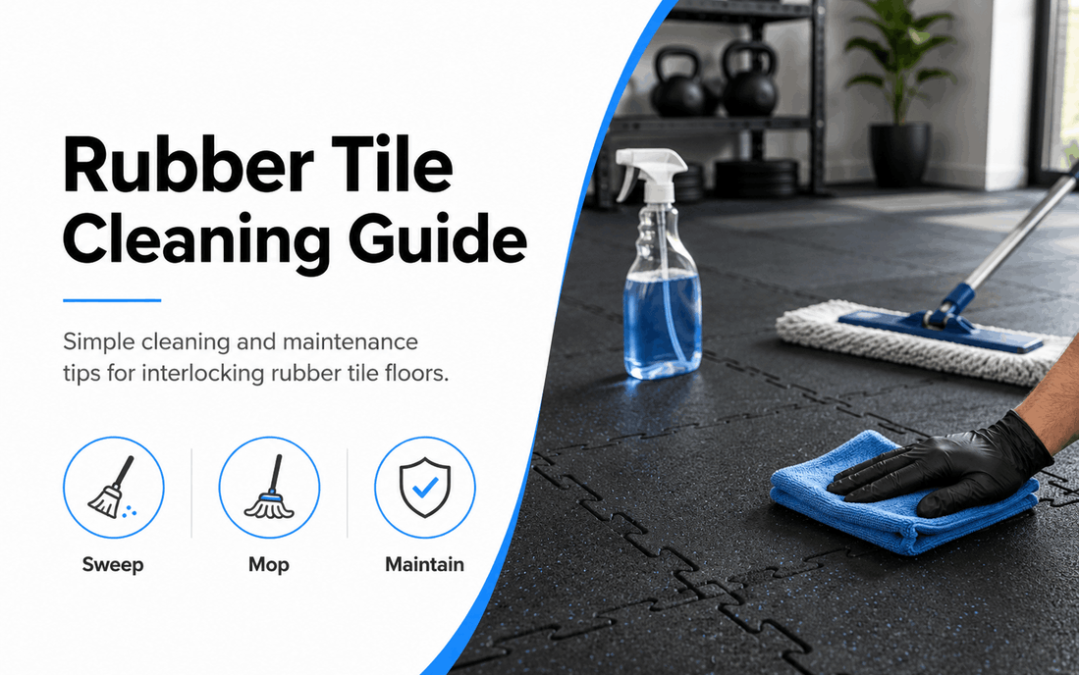
This rubber tile cleaning guide is written to help homeowners, gym owners, workshop managers and facility teams keep rubber floors clean, safe, attractive and longer lasting. Rubber tiles are strong and practical, but they still need regular care to protect their grip, appearance and daily performance.
If your floor is made from interlocking rubber tiles, the cleaning process should be simple, consistent and safe for the material. The goal is not to over-clean the floor with harsh products, but to remove dust, sweat, tyre dirt, mud and small debris before they damage the surface.
This rubber tile cleaning guide explains daily cleaning, weekly maintenance, products to avoid, stain control, safety checks and when rubber tiles should be repaired or replaced.
Why Rubber Floor Cleaning Matters
Rubber flooring is often used in busy spaces because it is durable, comfortable and practical. However, dirt and grit can build up on the surface over time. If the floor is not cleaned properly, it may start to look dull, feel slippery or collect odours in high-use areas.
A good rubber tile cleaning guide helps you protect the floor before problems become expensive. Cleaning also helps maintain hygiene in gyms, workshops, garages, warehouses, schools and commercial areas.
Better Grip
Removing dust, sweat and dirt helps the rubber surface perform better underfoot.
Longer Floor Life
Regular care helps reduce surface wear and keeps the tiles looking cleaner for longer.
Cleaner Spaces
A clean floor makes gyms, garages and work areas look more professional and easier to use.
Daily Cleaning Routine for Rubber Tiles
Daily cleaning is mainly about removing loose dirt before it scratches the surface or settles between the tile joints. This is especially important in areas with foot traffic, gym equipment, vehicles, tools or trolleys.
Step 1: Sweep the Floor
Use a soft broom, dust mop or vacuum to remove dust, sand, hair and small particles.
Step 2: Check the Joins
Look at the tile joints to make sure grit is not trapped between the edges.
Step 3: Spot Clean Marks
Use a damp cloth and mild cleaner to remove small marks before they become harder to clean.
Step 4: Let the Surface Dry
After cleaning, allow the floor to dry properly before heavy use continues.
This rubber tile cleaning guide recommends dry cleaning first because loose dirt should always be removed before damp mopping.
Weekly Maintenance for a Deeper Clean
Weekly cleaning is useful when the floor starts to look dusty, dull or marked. Busy gyms, workshops and commercial spaces may need this more often, while home spaces may only need it when the floor is visibly dirty.
Use Warm Water and a Mild Cleaner
Use warm water with a mild, pH-neutral cleaner. Avoid strong chemicals because they may damage the rubber surface or leave a slippery layer.
Damp Mop Instead of Soaking
Do not flood the floor with water. A damp mop is better because too much water can sit between the joints and slow down drying.
Dry the Floor Properly
Let the floor air dry, or wipe it with a clean towel if the area needs to be used quickly.
A weekly rubber tile cleaning guide routine helps keep the floor fresh without using unnecessary chemicals.
Cleaning Products to Avoid
Rubber floors should not be cleaned with harsh products unless the supplier confirms they are safe for the material. The wrong cleaner can dry out the surface, leave residue or reduce grip.
Avoid these products:
- Bleach
- Ammonia
- Strong solvents
- Acidic cleaners
- Oil-based cleaners
- Abrasive powders
- Very strong degreasers unless approved
- Steam cleaning unless recommended by the supplier
Mild cleaning products are normally enough for routine maintenance. Stronger cleaning should only be used when the product is safe for rubber flooring.
How to Remove Common Marks
Dust and Sand
Sweep or vacuum regularly. This prevents grit from sitting on the surface and causing wear.
Shoe Marks
Use a damp cloth and mild cleaner. Avoid rough scrubbing pads that may damage the finish.
Sweat and Gym Residue
Clean with warm water and a mild cleaner. Improve ventilation if odours are developing.
Light Oil Marks
Wipe quickly with an absorbent cloth. Use a rubber-safe cleaner if needed.
Safety Checks During Cleaning
Safety is an important part of any rubber tile cleaning guide. Cleaning should improve the floor, not create new slip or trip risks. Wet floors, soap residue, curled edges and loose tiles should be handled immediately.
General safety guidance on preventing slips and trips explains the importance of clean walking surfaces, good housekeeping and removing floor hazards. This fits well with rubber floor care because regular cleaning and inspection help keep the surface safer for daily use.
Cleaning safety checklist
- Clean spills quickly
- Do not leave soap residue
- Allow the floor to dry before use
- Check for loose or lifted tiles
- Keep walkways clear
- Replace damaged tiles early
Maintenance Tips for Gyms, Garages and Workshops
Different spaces need different cleaning habits. A gym floor may collect sweat and shoe marks, while a garage floor may collect tyre dirt, dust and light oil marks. Workshops may need more frequent sweeping because small debris can affect the tile surface.
Gym Areas
Sweep or vacuum daily, mop with a mild cleaner and clean sweat marks quickly. Free-weight areas and stretching zones may need more frequent cleaning.
Garage Areas
Sweep dust, sand and tyre dirt regularly. If you are upgrading a vehicle or DIY space, compare suitable garage flooring options for stronger floor protection and easier maintenance.
Workshop Areas
Remove grit, metal particles, sharp debris and packaging waste quickly. Avoid dragging sharp items across the rubber surface.
This rubber tile cleaning guide works best when the cleaning routine matches the type of space and how often the floor is used.
How to Keep Rubber Tiles Looking Good for Longer
Good maintenance is not only about cleaning. It also includes protecting the floor from unnecessary damage and checking the tiles regularly.
Use Entrance Mats
Entrance mats help reduce dust, stones and grit being carried onto the rubber floor.
Lift Heavy Items
Avoid dragging heavy tools, machines or sharp objects across the floor.
Check Edges
Inspect tile edges near doors, ramps and busy walkways.
Replace Damaged Tiles
Change cracked, curled or loose tiles before they affect nearby areas.
When Should Rubber Tiles Be Replaced?
Rubber tiles should be replaced when they are badly worn, cracked, curled, loose, slippery or damaged beyond cleaning. A damaged tile can affect the safety and appearance of the whole floor.
Replacement may also be needed when the space changes. For example, if a garage becomes a home gym or a workshop becomes a customer-facing area, you may need a different surface, thickness or layout.
Final Thoughts
This rubber tile cleaning guide is designed to support the article topic without competing directly with the main product collection. The article helps users understand how to clean and maintain rubber tiles, while the collection page can remain focused on buying and choosing flooring.
By sweeping regularly, using mild cleaners, avoiding harsh chemicals, drying the floor properly and inspecting tiles often, you can keep rubber flooring safer, cleaner and longer lasting.
Need Help Choosing or Maintaining Rubber Tiles?
Need practical guidance on rubber flooring, cleaning or replacement options? Contact PVC Floor Tile for product support and flooring advice.
