


Secure Payment
Your transactions are protected with encrypted SSL security. Payments are processed safely through verified South African payment gateways.
Warehouse Flooring
Price range: R122,96 through R376,67
Your payments are safe and protected.
Warehouse Flooring Tiles – 500 × 500 × 5 mm Interlocking Flooring
Warehouse Flooring Tiles – 500 × 500 × 5 mm provide a practical, modular flooring solution for warehouses, storage facilities, packing stations, pedestrian walkways and selected industrial workspaces across South Africa. Manufactured from durable PVC, these interlocking floor tiles create a connected surface over suitable existing floors while allowing individual sections to be replaced or extended when required.
Designed for indoor and covered warehouse environments, the tiles provide a flexible alternative to permanently bonded flooring in applications where a modular system is appropriate.
Key product features include:
- Tile dimensions: 500 × 500 mm.
- Thickness: 5 mm low-profile PVC.
- Coverage: Four tiles per square metre.
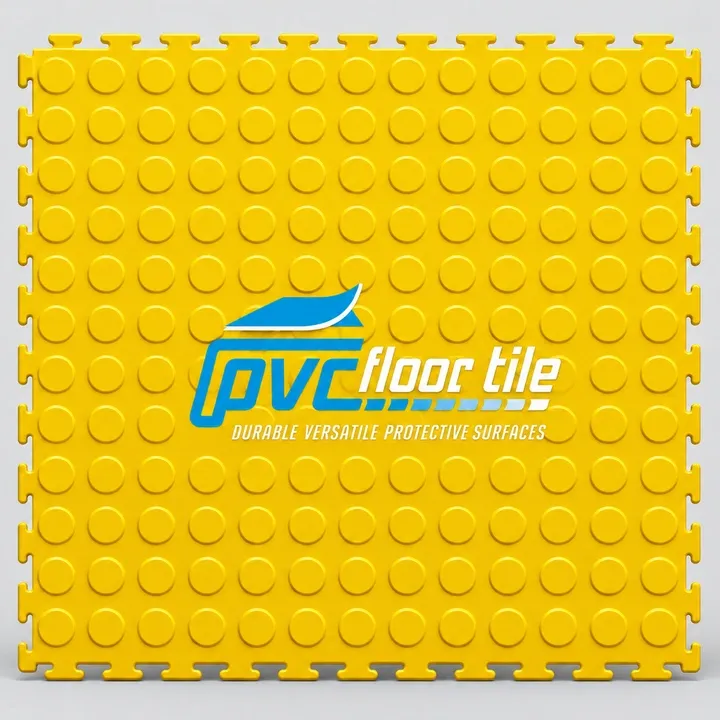
- Surface: Studded industrial finish.
- Installation: Interlocking edge connection.
- Material: Recycled PVC for black tiles and virgin PVC for coloured tiles.
- Minimum order: 50 tiles.
- Maintenance: Low-maintenance, replaceable modular sections.
For a broader selection of options, explore our Warehouse Flooring collection.
What Are Interlocking PVC Warehouse Flooring Tiles?
Interlocking PVC warehouse flooring tiles are modular floor coverings manufactured with connecting edges that allow compatible tiles to fit together across a prepared surface.
Unlike flooring systems that permanently bond every section to concrete, these tiles can often be installed using a dry-lay method where site conditions permit.
Their modular construction makes them useful for businesses requiring flooring that can be adjusted, repaired or expanded as operational needs change.
The system offers several practical benefits:
- Covers suitable existing concrete surfaces.
- Creates a consistent floor finish across selected areas.
- Allows individual tile replacement where practical.
- Supports phased installation across different work zones.
- Can be extended when warehouse layouts change.
- Reduces the need to replace an entire floor during localised repairs.
The flooring should always be selected according to the intended application, operating conditions and expected traffic.
Why Choose PVC Tiles for Warehouse Flooring?
Warehouse floors experience constant operational activity, from staff movement and stock preparation to storage and dispatch processes.
The right flooring solution must be suitable for the way each section of the facility operates.
1. Modular Flooring for Flexible Warehouse Layouts
Warehouse layouts may change as stock quantities, shelving arrangements or workstations are adjusted.
Interlocking flooring provides flexibility by allowing suitable sections to be installed progressively.
This can benefit businesses that:
- Expand packing or storage operations.
- Rearrange inventory areas.
- Introduce additional staff walkways.
- Upgrade selected concrete surfaces.
- Need access to individual flooring sections.
2. Practical Maintenance and Replacement
A major advantage of modular PVC flooring is that individual compatible tiles can be replaced when necessary.
Maintenance benefits include:
- Localised tile replacement.
- Easier access to selected floor sections.
- Reduced unnecessary removal of unaffected tiles.
- Simple routine surface cleaning.
- The option to retain matching spare tiles.
Actual replacement procedures depend on the condition of the installation and surrounding tiles.
3. Consistent Industrial Floor Appearance
The studded finish creates a uniform appearance across connected tiles.
This can help businesses establish more clearly defined operational surfaces in suitable packing, stockroom and pedestrian areas.
4. Low-Profile Flooring Construction
At 5 mm thick, these tiles provide a relatively low-profile floor covering.
This is useful when planning around existing structures, including:
- Doorway clearances.
- Fixed packing benches.
- Storage shelving.
- Floor transitions.
- Internal access routes.
- Existing equipment installations.
All clearances and operational requirements should be assessed before installation.
Suitable Applications for Warehouse Flooring Tiles
Different warehouse sections experience different types of movement, loading and daily activity.
These PVC tiles are intended for selected applications where their construction and the installation conditions are appropriate.
Warehouse Pedestrian Walkways
Warehouse staff frequently travel between shelving, inventory locations, packing benches and dispatch areas.
Interlocking tiles can provide a consistent finished surface across suitable pedestrian routes.
Typical applications include:
- Staff access walkways.
- Stock-picking routes.
- Inventory inspection areas.
- Internal storage passages.
- Walkways between operational sections.
Floor transitions must be planned carefully to prevent exposed edges from becoming hazards.
Packing and Order Preparation Areas
Packing stations require accessible workspaces for preparing goods, labelling parcels and organising outgoing orders.
PVC warehouse tiles can help create a clearly defined floor covering for suitable packing environments.
Common applications include:
- Order preparation stations.
- E-commerce packing rooms.
- Product inspection areas.
- Labelling and sorting workspaces.
- Dispatch preparation benches.
Where carts or wheeled equipment are used, the expected loading conditions must be assessed.
Storage and Inventory Areas
Storage facilities often contain sections with different flooring requirements.
Low-traffic stockrooms may have different operating demands from busy distribution aisles.
Potential applications include:
- Inventory management rooms.
- General stock storage areas.
- Picking and sorting zones.
- Equipment preparation spaces.
- Covered storage sections.
Shelving loads, fixed equipment and floor conditions should be considered before specifying the tiles.
Dispatch and Distribution Sections
Dispatch areas may involve repeated movement of packaged goods and staff throughout the day.
Modular PVC tiles may provide a practical flooring option for selected dispatch preparation spaces.
Possible locations include:
- Parcel sorting areas.
- Dispatch packing stations.
- Goods preparation sections.
- Staff access points.
- Temporary stock handling zones.
Heavy rolling equipment and concentrated loads require specific suitability assessment.
Selected Commercial and Industrial Workspaces
These tiles can also be considered for adjoining workspaces where a modular PVC surface is appropriate.
Examples include:
- Utility rooms.
- Light maintenance areas.
- Technical workspaces.
- Staff operational zones.
- Service preparation areas.
Areas involving specialist machinery, aggressive chemicals or extreme loads should be evaluated separately.
Studded Surface for Warehouse Environments
The Warehouse Flooring tile features a studded surface texture, creating a repeated raised pattern across the finished floor.
This provides a practical industrial appearance suited to a variety of general warehouse applications.
The surface offers:
- A consistent textured finish.
- A defined industrial appearance.
- Compatibility with routine surface cleaning.
- A modular covering for suitable operational areas.
The studded design should not automatically be interpreted as a certified slip-resistance rating.
Where documented slip resistance is required, the relevant technical information should be reviewed.
Warehouse Flooring Product Specifications
| Specification | Product Details |
|---|---|
| Product Name | Warehouse Flooring PVC Interlocking Tile |
| Material | PVC |
| Black Tiles Material | Recycled PVC |
| Coloured Tiles Material | Virgin PVC |
| Tile Size | 500 × 500 mm |
| Coverage | 4 Tiles ≈ 1 m² |
| Surface Texture | Studded Finish |
| Connection System | Interlocking Edge Design |
| Primary Application | Warehouse and Distribution Floor Protection |
| Secondary Applications | Packing Areas, Storage Walkways, Dispatch Areas and Selected Industrial Workspaces |
| Minimum Order Quantity | 50 Tiles |
| Standard Colour | Black |
| Premium Colours | Various |
| Recommended Environment | Indoor and Covered Warehouse Areas |
| Maintenance | Low |
| Warranty | 1-Year Limited Manufacturing Warranty |
How Many Warehouse Flooring Tiles Do You Need?
Each tile measures 500 × 500 mm, equivalent to 0.5 × 0.5 metres.
Coverage calculation:
- One tile covers approximately 0.25 m².
- Four tiles cover approximately 1 m².
- The number of tiles required equals the floor area multiplied by four, before wastage.
Warehouse Flooring Quantity Guide
| Floor Area | Tiles Required | Tiles With 5% Allowance |
|---|---|---|
| 5 m² | 20 | 21 |
| 10 m² | 40 | 42 |
| 25 m² | 100 | 105 |
| 50 m² | 200 | 210 |
| 100 m² | 400 | 420 |
Important: The minimum order quantity is 50 tiles, equal to approximately 12.5 m² of nominal coverage.
Factors Affecting Tile Quantities
Additional tiles may be required for:
- Irregular walls and floor shapes.
- Columns and structural supports.
- Fixed shelving installations.
- Doorways and perimeter cuts.
- Equipment bases and obstructions.
- Future replacement stock.
A 5% wastage allowance is a useful initial planning estimate for simple layouts, but complex installations may require more.
How to Install Interlocking Warehouse Flooring Tiles
Correct preparation helps achieve a consistent floor installation and reduces avoidable fitting problems.
The existing subfloor should be clean, dry, stable, firm and reasonably level.
Step 1: Inspect the Existing Floor
Before installation:
- Identify uneven or damaged sections.
- Remove loose materials and debris.
- Check the subfloor for stability.
- Confirm the surface is suitable for the intended installation.
Step 2: Measure and Plan the Layout
Measure the full installation area before placing the first tile.
Include allowances for:
- Floor boundaries.
- Columns and fixed structures.
- Existing shelving.
- Doorway transitions.
- Required perimeter cuts.
Step 3: Connect the PVC Tiles
Begin from a suitable reference line and place the first tile in position.
- Align the neighbouring tile.
- Connect the compatible interlocking edges.
- Continue progressively across the area.
- Check alignment as additional rows are installed.
- Avoid forcing connections that are incorrectly positioned.
Step 4: Complete the Floor Edges
Trim perimeter tiles where necessary and install suitable edging at exposed transitions.
Inspect the completed surface before returning the area to normal use.
Installation note: Many suitable installations can use a dry-lay approach, but the final method must suit the actual subfloor and operating conditions.
Cleaning and Maintaining Warehouse PVC Floor Tiles
Routine maintenance is important for warehouse environments where dust, packaging debris and everyday foot traffic are common.
A practical cleaning programme helps maintain the finished appearance and allows damaged sections to be identified.
Recommended Maintenance Practices
- Sweep or vacuum loose dust and grit.
- Remove packaging debris regularly.
- Use cleaning products compatible with PVC.
- Follow suitable cleaning procedures for the facility.
- Inspect exposed edges and tile connections.
- Replace damaged individual tiles where practical.
- Keep matching spare tiles for future maintenance.
Avoid using unverified industrial chemicals or aggressive cleaning methods without confirming compatibility.
Where repeated damage occurs, investigate the underlying cause rather than simply replacing the affected tile.
Important Considerations Before Selecting Warehouse Flooring
Warehouse flooring must be chosen according to the actual conditions in which it will operate.
A floor suitable for pedestrian movement may not be appropriate for frequent heavy equipment traffic.
Factors to Assess
- Pedestrian traffic: Frequency and concentration of staff movement.
- Equipment loads: Total weight and how loads are transferred to the floor.
- Wheel types: Material, size and contact pressure.
- Turning forces: Repeated movement or manoeuvring in the same location.
- Shelving loads: Concentrated weight beneath storage supports.
- Moisture exposure: Cleaning methods, spills and underlying dampness.
- Chemical exposure: Compatibility with substances present in the facility.
- Subfloor quality: Stability, levelness and existing surface defects.
Are 5 mm PVC Warehouse Tiles Suitable for Forklifts?
Forklift suitability cannot be determined from tile thickness alone.
Important considerations include:
- Forklift operating weight.
- Maximum carried loads.
- Wheel dimensions and composition.
- Frequency of traffic.
- Repeated turning movements.
- Condition of the supporting subfloor.
Facilities with regular forklift or concentrated rolling loads should be assessed before these tiles are specified.
Warehouse Flooring for South African Businesses
Warehouses throughout South Africa support manufacturing, logistics, retail distribution, online fulfilment and general storage operations.
Their flooring requirements can vary considerably between facilities and individual departments.
Interlocking PVC tiles provide a modular solution for selected applications where businesses need a practical, maintainable floor covering.
They may be relevant to:
- Small and medium-sized storage facilities.
- Retail distribution stockrooms.
- E-commerce packing operations.
- Inventory management areas.
- Selected manufacturing support spaces.
- Warehouse refurbishment projects.
PVC Floor Tile supplies modular flooring products across South Africa, including options for warehouse, storage and industrial applications.
For additional product choices, visit the Warehouse Flooring collection.
Frequently Asked Questions About Warehouse Flooring
What flooring is suitable for a warehouse?
Suitable flooring depends on traffic, equipment loads, moisture, chemicals and operational requirements. Interlocking PVC tiles can be considered for selected pedestrian, packing and storage areas where modular floor protection is appropriate.
What are warehouse flooring tiles made from?
These tiles are manufactured from PVC. Standard black tiles use recycled PVC, while coloured tiles are made from virgin PVC.
What size are the tiles?
Each Warehouse Flooring tile measures 500 × 500 mm.
How thick are the warehouse tiles?
The tiles are 5 mm thick.
How many warehouse tiles cover one square metre?
Four 500 × 500 mm tiles cover approximately one square metre before installation wastage.
Can PVC warehouse tiles be installed over concrete?
Yes. Installation is possible over suitable concrete that is clean, dry, stable, firm and reasonably level.
Do interlocking warehouse tiles require adhesive?
Many suitable installations can use a dry-lay interlocking method. Actual site conditions determine the appropriate installation approach.
Can damaged warehouse flooring tiles be replaced?
Yes. Compatible individual tiles can be replaced where practical without necessarily removing the complete floor.
Are warehouse PVC tiles waterproof?
PVC is water-resistant, but the connections between individual tiles do not automatically create a fully watertight flooring system.
Are these warehouse tiles suitable for heavy machinery?
Suitability depends on the equipment, operating loads, movement patterns and subfloor. Heavy machinery applications require assessment before installation.
What is the minimum order quantity?
The minimum order quantity is 50 tiles, providing approximately 12.5 m² of nominal coverage.
Are warehouse flooring tiles suitable for outdoor use?
This product is recommended for indoor and covered warehouse environments. Uncovered outdoor applications require separate suitability assessment.
Choose Practical Interlocking PVC Warehouse Flooring
Warehouse Flooring Tiles – 500 × 500 × 5 mm offer a modular flooring option for businesses that need a consistent, replaceable surface across suitable storage, packing, pedestrian and operational areas.
With a studded finish, interlocking edges and straightforward floor-area calculations, the tiles provide a practical solution for selected warehouse improvements and refurbishment projects.
Choosing the right product begins with understanding the facility's traffic, loading requirements, existing subfloor and installation conditions.
Additional information
| Weight | 5 kg |
|---|---|
| Dimensions | N/A |
| Dimension | 500 × 500 × 5 mm, 500 × 500 × 6 mm |
| Colour | Beige, Black, Blue, Brown, Green, Grey, Orange, Red, White, Yellow |
| Applications | Warehouse Flooring |
| Benefits | Anti-Slip Surface, Easy Installation |
| Durability | Industrial Strength |
| Material Types | PVC |
| Surface Texture | Coin Pattern |
| Wear Ratings | Best |
| Working Environment | Indoor Use |

Reviews
There are no reviews yet.