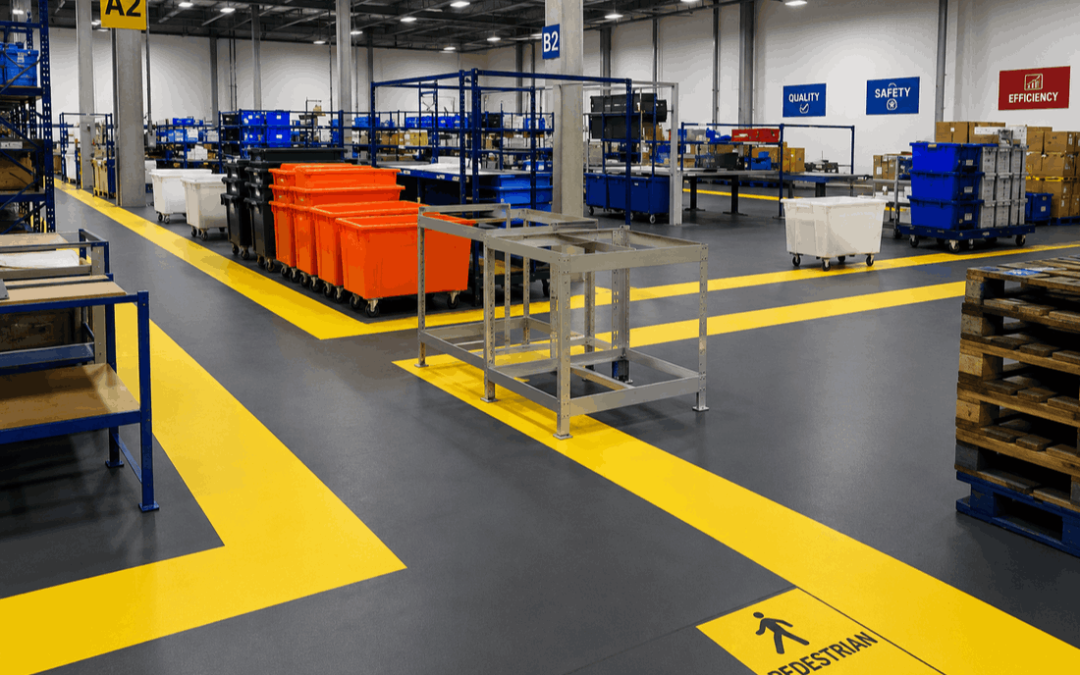
Choosing the best flooring for a warehouse is an important decision because the floor affects safety, workflow, cleanliness, durability and long-term maintenance costs. A warehouse floor must be able to handle daily traffic, stock movement, staff activity and, in some cases, trolleys, pallet jacks and other equipment.
The best flooring for a warehouse is one that matches the demands of the space while remaining practical, durable and easy to maintain. Depending on the use of the warehouse, options such as PVC tiles, rubber flooring, modular floor systems and sealed concrete can all be suitable solutions. For businesses looking for a practical modular surface, durable warehouse floor tiles can be a smart option for storage areas, packing zones, dispatch sections and commercial warehouse spaces.
Why Warehouse Flooring Matters
Warehouse flooring plays a major role in how efficiently a facility operates. In many warehouse environments, the floor is exposed to constant movement from workers, stock handling, shelving, packing activities and equipment. If the flooring is not suitable for the environment, it can become difficult to clean, wear down quickly or create unsafe walking and working conditions.
A well-chosen warehouse floor improves the overall function of the space. It helps maintain cleaner working conditions, supports safer movement and gives the warehouse a more organised and professional appearance. This is especially important in storage rooms, dispatch sections, order-picking zones, packing stations and workshop areas.
Key Factors to Consider Before Choosing Warehouse Flooring
Before selecting flooring for a warehouse, it is important to assess how the space is used every day. Not every warehouse has the same flooring requirements, so the decision should be based on practical operational needs.
Common Types of Flooring for a Warehouse
There are several flooring options available for warehouse environments, and each has its own benefits depending on how the space is used.
PVC Floor Tiles
PVC floor tiles are a practical warehouse flooring solution because they are durable, low-maintenance, easy to install and suitable for many commercial and industrial environments.
Rubber Flooring
Rubber flooring is useful in zones where comfort and anti-fatigue support are important, especially where employees stand for long periods.
Sealed Concrete
Concrete provides a strong base, but untreated concrete may become dusty, stained or harder to maintain over time.
Modular Flooring Systems
Modular flooring systems, including interlocking tiles, can be installed with less disruption and repaired section by section when needed.
Why PVC Tiles Are a Smart Choice for Warehouse Floors
For many businesses, PVC tiles are one of the best flooring options for a warehouse because they combine durability, practicality and a professional finish. They are especially suitable for warehouses that require a cleaner and more organised floor surface without the need for complex installation.
PVC tiles are known for their strength and ease of maintenance. They can handle daily movement in busy areas while remaining easy to clean. They also help improve the appearance of warehouse interiors, which is useful in spaces that may receive staff, clients, suppliers or visitors.
Another major advantage is modularity. If one section becomes damaged, it may be possible to replace only the affected tiles instead of redoing the entire floor. This makes warehouse interlocking tiles a practical long-term solution for businesses looking for cost-effective warehouse flooring.
Where Warehouse Interlocking Tiles Can Be Used
Warehouse interlocking tiles are suitable for different areas inside commercial and industrial spaces. They help create a neat, practical and easy-to-maintain surface for daily warehouse operations.
- Storage rooms and stock handling areas
- Packing stations and sorting zones
- Dispatch sections and order-picking areas
- Light industrial warehouse floors
- Commercial warehouse spaces
- Workshop and service sections
Rubber Flooring for Warehouse Work Zones
Rubber flooring is not always the main choice for full warehouse coverage, but it can be useful in selected work zones. In areas where workers stand for extended periods, rubber flooring can help provide more comfort underfoot and reduce fatigue.
This makes rubber flooring a good option for packing benches, sorting stations, workstation areas, service counters and multipurpose staff-use sections. However, for broader warehouse coverage, PVC or modular industrial tile systems are often the more practical solution.
Concrete Flooring in Warehouse Environments
Concrete remains one of the most common warehouse floor bases because of its strength and load-bearing capability. It is suitable for warehouses that handle heavy stock, machinery or shelving systems. However, bare concrete is not always the best finished floor surface.
- Untreated concrete can create dust over time
- It can develop stains in busy working areas
- It may become harder to maintain without sealing
- It can look less professional in customer-facing spaces
Best Warehouse Flooring by Area of Use
| Warehouse Area | Flooring Need | Recommended Option |
|---|---|---|
| Storage Areas | Durable surface for shelves, stock and regular movement | PVC tiles or modular flooring |
| Packing Stations | Easy cleaning and practical comfort for staff | PVC tiles or selected rubber flooring |
| Dispatch Zones | Surface for daily movement between storage and delivery | Warehouse interlocking tiles |
| Workshop Sections | Stronger surface for tools, equipment and heavier use | Heavy-duty modular flooring |
| Walkways | Clear movement, grip and safe staff routes | Durable floor tiles with planned walkways |
Cleaning and Maintenance of Warehouse Flooring
Warehouse flooring should always be chosen with maintenance in mind. Dust, packaging materials, dirt and occasional spills are common in warehouse environments, so the flooring should support a simple cleaning routine.
- Daily sweeping to remove loose dirt and debris
- Quick spill clean-up to reduce stains and slipping risks
- Routine inspection of high-traffic zones
- Periodic deep cleaning in busy working sections
Warehouse Safety and Floor Planning
A warehouse floor must do more than simply cover the ground. It should support a safe and efficient workflow. Flooring should be suited to the tasks being performed and the movement patterns inside the building.
When planning warehouse floors, consider staff walkways, pallet movement routes, trolley paths, loading areas, standing work zones and stock storage sections. For additional safety guidance, you can also read the official OSHA warehousing safety overview.
Common Mistakes to Avoid When Choosing Warehouse Flooring
Choosing warehouse flooring based only on price can lead to poor long-term results. Flooring should be selected based on functionality, durability and suitability for the actual working environment.
- Choosing flooring only by price instead of long-term performance
- Ignoring traffic, trolley movement and stock handling
- Forgetting daily cleaning and maintenance requirements
- Overlooking grip, floor stability and safe walkways
- Using the same flooring everywhere when different areas have different needs
Final Thoughts on the Best Flooring for a Warehouse
The best flooring for a warehouse depends on the type of work being carried out in the space. Warehouses used mainly for storage may need a durable and easy-to-clean surface, while packing stations and work zones may require added comfort and practicality. Dispatch areas, workshop sections and high-traffic routes may each have their own flooring demands.
For many businesses, PVC flooring and interlocking warehouse tiles offer an excellent balance of durability, easy maintenance, neat appearance and practical performance. Rubber flooring can work well in staff standing zones, while concrete remains a strong base in many industrial settings.
Need Help Choosing Warehouse Flooring?
Speak to PVC Floor Tile for practical advice on warehouse flooring, interlocking tiles and durable floor surfaces for storage areas, workshops, packing zones and commercial spaces.
Contact Us for Warehouse Flooring Advice