Warehouse Flooring as a Long-Term Investment
Warehouse flooring is more than just a surface people walk on. In a busy warehouse, workshop or factory, the floor carries daily pressure from staff movement, stock handling, tools, trolleys, machinery and general operations. When the floor is slippery, uneven, dusty or difficult to clean, it can affect safety, productivity and the professional appearance of the workplace.
Many businesses look at flooring as a cost, but the right warehouse flooring should be viewed as a long-term investment. A good floor helps protect the concrete surface, improves grip underfoot, reduces maintenance pressure and creates a safer working environment for employees and visitors.
Why Warehouse Flooring Matters
Warehouses are high-use spaces. Floors are exposed to constant movement, dirt, moisture, impact, cleaning chemicals and general wear. If the flooring is not suitable for these conditions, problems can develop quickly. These problems may include slippery surfaces, floor damage, dust build-up, difficult cleaning and unsafe working conditions.
Investing in the correct flooring solution helps reduce these risks. It also gives the business a more organised and professional working space. For companies that receive customers, suppliers, auditors or inspectors, a clean and safe warehouse floor can create a stronger impression of the business.
Interlocking Rubber Floor Tiles for Industrial Spaces
One practical solution for warehouses, factories and work areas is interlocking rubber floor tiles. These tiles are designed to fit together without complicated installation methods. Because of the interlocking system, they can be installed faster than many traditional flooring options and can often be replaced in sections when needed.
Interlocking tiles are useful because they create a modular floor surface. This means that if one section becomes worn or damaged, that section can be removed and replaced without disturbing the entire floor. This makes them a practical option for businesses that want a strong floor but also need flexibility over time.
Turning Flooring Cost into Long-Term Value
The cheapest flooring option is not always the most cost-effective option. A low-cost floor that wears quickly, becomes slippery, needs constant repair or affects safety can become expensive over time. A better flooring investment should be judged by its durability, safety, maintenance requirements and lifespan.
Good warehouse flooring can add value in several ways. It can help reduce the need for repeated repairs, protect the original floor, improve worker comfort and make cleaning easier. It can also support better movement across the warehouse, especially in areas where staff are standing or walking for long periods.
Key Benefits of Warehouse Flooring Tiles
- Improved safety: A slip-resistant surface helps reduce the risk of slipping in busy warehouse and workshop areas.
- Durability: Heavy-duty tiles are made to handle regular foot traffic and demanding commercial conditions.
- Easy installation: Interlocking tiles can be installed without glue, making the process faster and cleaner.
- Low maintenance: A practical floor surface is easier to sweep, mop and keep presentable.
- Sectional replacement: Damaged tiles can be replaced individually instead of removing the whole floor.
- Floor protection: Tiles help cover and protect concrete floors from daily wear.
- Better appearance: A neat floor improves the look and organisation of the working space.
Slip Resistance and Workplace Safety
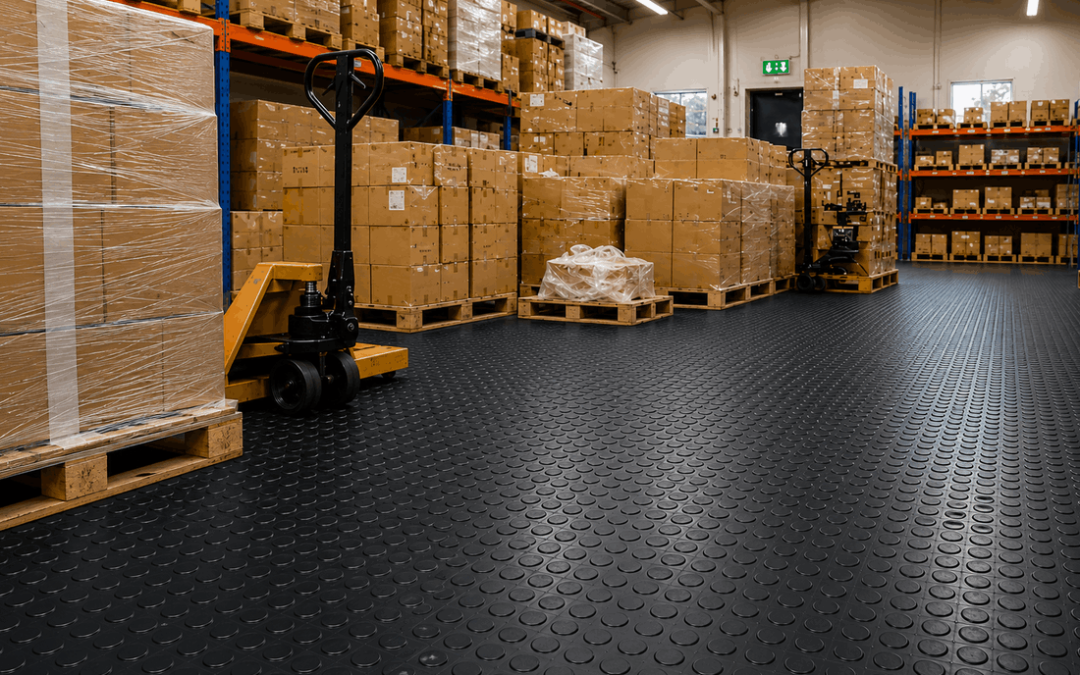
Safety is one of the most important reasons to invest in proper warehouse flooring. Slippery floors can increase the risk of workplace incidents, especially in areas where there is dust, moisture, oil, packaging material or constant movement. A textured flooring surface can help improve grip and give employees more confidence when moving through the workspace.
In warehouses, safety is not only about avoiding accidents. It is also about creating a controlled environment where employees can work efficiently. A dry, stable and slip-resistant floor contributes to better day-to-day operations.
Durability for Busy Warehouse Conditions
Warehouse floors must cope with daily use. Staff may move goods across the floor, equipment may be used in different areas and cleaning may happen regularly. A weak floor covering can wear out quickly under these conditions. Durable floor tiles help create a stronger surface that can handle regular operational demands.
Because interlocking tiles are modular, they are also practical for changing layouts. If the warehouse is reorganised or a specific area needs attention, the flooring can be adjusted more easily than permanent flooring systems.
Easy Cleaning and Maintenance
A warehouse floor should be simple to maintain. Floors that collect dirt, absorb moisture or require difficult cleaning can slow down operations and increase maintenance costs. Interlocking flooring tiles are designed to be practical for regular cleaning, helping businesses maintain a cleaner and more organised working area.
Regular sweeping and mopping can help keep the floor in good condition. In areas where there is heavier dirt or dust, a proper cleaning schedule will help extend the life and appearance of the flooring.
Where Warehouse Flooring Tiles Can Be Used
Warehouse flooring tiles are suitable for many commercial and industrial spaces, including warehouses, factories, storage areas, packaging areas, dispatch areas, receiving areas, industrial workspaces, basement storage floors, garage work areas and workshop flooring.
Why Modular Flooring Makes Business Sense
Modular flooring is valuable because it gives businesses flexibility. Traditional flooring can be expensive and time-consuming to repair. With interlocking floor tiles, sections can be replaced when necessary. This helps reduce downtime and makes maintenance more manageable.
For growing businesses, modular flooring also makes it easier to expand or change the floor layout. As warehouse operations change, flooring needs may also change. Interlocking tiles give the business more control over the floor surface.
Choosing the Right Warehouse Flooring Solution
Before choosing warehouse flooring, consider how the area is used. A warehouse that handles light storage may not need the same flooring as a workshop or high-traffic industrial area. Important factors to consider include foot traffic, moisture exposure, cleaning needs, impact resistance and the type of work being done on the floor.
Businesses should also consider whether they need full floor coverage or flooring only in selected high-use areas. Interlocking tiles can be used across a complete warehouse floor or in specific sections where extra grip, protection or comfort is needed.
Warehouse Flooring Product Option
If you need a direct product option for your facility, view our Warehouse Flooring product. It is a practical solution for businesses looking for durable, easy-to-maintain flooring for warehouse, workshop and industrial applications.
Final Thoughts
Warehouse flooring should not be seen only as an expense. The right flooring can improve safety, protect the floor underneath, reduce cleaning pressure and support a more professional working environment. For busy warehouses and workshops, interlocking flooring tiles offer a practical balance between strength, safety and long-term value.
Upgrade Your Warehouse Floor with PVC Floor Tile
Improve safety, durability and daily performance with a practical warehouse flooring solution. Speak to PVC Floor Tile for help choosing the right floor for your warehouse, workshop or industrial space.
