
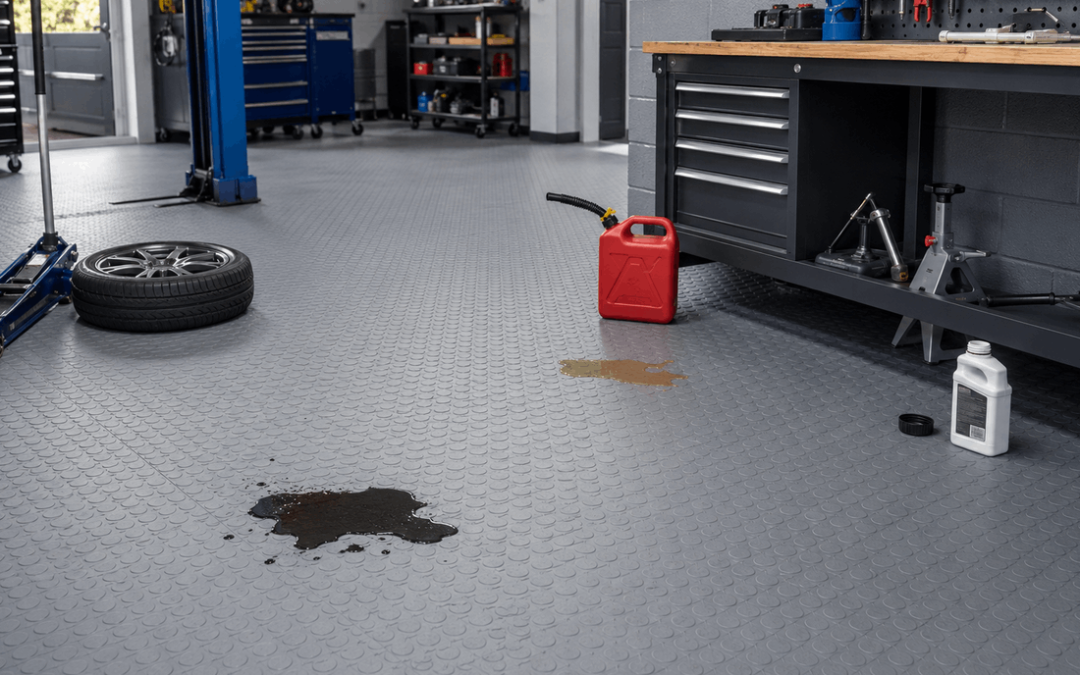
Chemical resistance PVC flooring matters because Oil, petrol and brake fluid spills are common in garages, workshops, vehicle bays and maintenance areas. When these spills land on the floor, buyers often want to know whether PVC flooring can handle the exposure, whether it will stain, and how quickly the surface should be cleaned.
This chemical resistance guide explains how PVC flooring behaves around common automotive fluids, what to clean immediately, and how to protect your floor in busy South African garages and workshops. For practical heavy-use areas, view our workshop garage flooring options.
Quick Answer: Can chemical resistance PVC flooring Handle Oil, Petrol and Brake Fluid?
chemical resistance PVC flooring PVC flooring can be a practical choice for garages and workshops where light oil spills, dirt, dust and daily vehicle activity are common. However, petrol, brake fluid and strong automotive chemicals should not be left standing on the floor for long periods.
The best approach is simple: wipe spills quickly, avoid harsh solvent cleaning, use drip trays under leaking vehicles, and follow a regular cleaning routine. PVC is durable, but chemical resistance always depends on the type of fluid, the exposure time, temperature and cleaning method.
Why Chemical Resistance Matters in Garages and Workshops
Garage and workshop floors deal with more than normal foot traffic. They may be exposed to motor oil, petrol, diesel, brake fluid, coolant, grease, cleaning chemicals, tyre marks, dust and water. If the wrong flooring is used, spills can create stains, odours, slippery areas or long-term surface damage.
This is why many buyers compare concrete, epoxy, rubber and PVC flooring before choosing a surface. For many South African workshops and garages, PVC floor tiles are attractive because they are easy to install, easy to clean, modular and suitable for practical daily use.
Important Note: PVC Is Resistant, Not Indestructible
PVC flooring should not be described as completely chemical-proof. A more accurate explanation is that PVC can manage many common workshop conditions when spills are cleaned quickly and the floor is maintained correctly.
The risk increases when strong chemicals are left on the surface for too long. Heat, direct sunlight, concentrated fluids, repeated spills and poor cleaning habits can all affect how the floor performs over time.
Oil, Petrol and Brake Fluid on PVC: Side-by-Side Guide
| Fluid Type | Risk Level | What Can Happen? | Best Action |
|---|---|---|---|
| Motor Oil | Low to Medium | Can leave a slippery film or dark mark if ignored | Wipe up quickly and clean with mild detergent |
| Gearbox Oil | Medium | Can be thicker, stickier and harder to clean than normal oil | Remove excess oil first, then wash the area properly |
| Petrol | Medium to High | Can affect the surface if left standing and may create strong odours | Clean immediately and ventilate the area |
| Brake Fluid | High | Can be aggressive and may mark or affect many flooring materials | Wipe immediately and rinse-clean with care |
| Coolant | Medium | May leave residue or staining depending on colour and additives | Clean quickly with mild detergent and water |
| Grease | Medium | Can create a slippery surface and attract dust | Scrape excess grease carefully and wash with degreaser-safe methods |
1. Motor Oil on PVC Flooring
Motor oil is one of the most common garage spills. In most normal situations, PVC flooring can handle small oil spills if they are cleaned quickly. The main problem is not always immediate damage, but the slippery film that oil can leave behind.
If oil remains on the floor for too long, it can collect dust, darken the area and make the surface harder to clean. In a workshop where vehicles are serviced often, oil drip trays and regular cleaning should be part of the floor care routine.
Best cleaning method for oil spills
- Absorb the oil first using a cloth, paper towel or absorbent material.
- Do not spread the oil across a larger area.
- Clean the area with warm water and mild detergent.
- Rinse lightly and dry the surface properly.
- Check that the floor is not slippery before walking or working on it.
2. Petrol Spills on PVC Flooring
Petrol is more aggressive than ordinary dirt or light oil. It can evaporate quickly, but it can also leave odour and may affect flooring materials if it is left standing. For this reason, petrol spills should be cleaned immediately.
If petrol is spilled in a closed garage, ventilation is important. Open doors and windows where possible and avoid leaving the spill unattended. The floor should be wiped clean and then washed with a mild cleaning solution.
Best cleaning method for petrol spills
- Act immediately and prevent the spill from spreading.
- Wipe the liquid with absorbent material.
- Ventilate the area properly.
- Wash the affected area with mild detergent and water.
- Dry the surface before returning vehicles or equipment.
3. Brake Fluid on PVC Flooring
Brake fluid should be treated as a high-risk spill. It can be harsh on many surfaces and should never be left sitting on PVC flooring. If your workshop handles brake repairs, keep cleaning materials nearby so spills can be removed immediately.
A PVC chemical resistance chart lists glycol-based brake fluid as having limited resistance, which means it is safer to treat brake fluid as a quick-clean spill rather than something the floor should soak in for long periods.
Best cleaning method for brake fluid spills
- Clean the spill immediately.
- Use absorbent material to lift the fluid from the surface.
- Wash the area with mild detergent and clean water.
- Avoid aggressive solvent cleaners unless approved by the flooring supplier.
- Inspect the area later for marking or surface changes.
4. Coolant and Antifreeze Spills
Coolant can leave visible marks because it often contains colourants and additives. Even if the fluid does not damage the floor immediately, it can leave residue if not cleaned properly.
Clean coolant quickly with a mild detergent solution. Avoid letting the liquid dry on the floor, especially on textured surfaces where residue can sit in small grooves.
5. Grease and Workshop Dirt
Grease is less about chemical attack and more about safety. It can make the floor slippery, hold dust and create dirty patches around workbenches, service bays and tool areas.
For greasy areas, remove thick residue first before washing. Do not use sharp tools that can damage the flooring surface. A regular cleaning schedule will help prevent grease build-up.
Best Cleaning Routine for PVC Workshop Flooring
A good cleaning routine protects the floor and helps the workspace look professional. It also reduces slip risks and keeps the surface safer for staff, customers and vehicles.
Daily Cleaning
Sweep dust, sand, loose stones and dirt. Wipe small spills before they spread.
Weekly Cleaning
Mop with mild detergent and water. Focus on vehicle bays, entrances and workstations.
Spill Response
Clean petrol and brake fluid immediately. Do not allow aggressive fluids to soak into joins or textured areas.
Prevention
Use drip trays, floor protection under leaking vehicles and good housekeeping around service areas.
What Cleaners Should You Avoid?
Avoid strong solvent cleaners unless your flooring supplier confirms they are suitable. Harsh chemicals can sometimes do more damage than the original spill, especially if they are left on the surface for too long.
For most cleaning, mild detergent and water is the safer starting point. If a stronger cleaner is needed, test it on a small hidden area first.
Can Automotive Fluids Leak Between Interlocking PVC Tiles?
Interlocking PVC tiles are practical because they are modular and easy to install. However, like most joined flooring systems, liquid can sometimes reach the joints if a spill is left unattended.
This is why quick cleaning is important. If oil, petrol or brake fluid is cleaned immediately, there is less chance of the fluid spreading under the tiles. In areas where spills happen often, extra care should be taken around joins and edges.
Is PVC Flooring Better Than Bare Concrete for Chemical Spills?
Bare concrete is porous and can absorb oil and automotive fluids, leaving deep stains that are difficult to remove. PVC flooring provides a more finished surface that is easier to clean when spills are handled quickly.
This makes PVC a practical upgrade for many garages, workshops and vehicle work areas where the owner wants a cleaner, more professional floor.
Is PVC Flooring Better Than Epoxy for Workshop Spills?
Epoxy can perform well in many industrial environments, but it normally requires careful floor preparation and professional installation. If the concrete cracks or the coating fails, repairs can become more complicated.
PVC tiles are different because they are modular. If one section becomes damaged or badly marked, that section can often be lifted and replaced without redoing the entire floor.
When Is PVC Flooring a Good Choice?
PVC flooring is a good option when you need a practical floor for daily garage or workshop use, especially where the main concerns are durability, easy cleaning, quick installation and section-by-section replacement.
- Home garages
- Vehicle storage areas
- Workshop floors
- Light industrial spaces
- Showrooms and service areas
- DIY maintenance spaces
- Commercial work bays
When Should You Be More Careful?
Be more careful if the floor will be exposed to frequent brake fluid spills, strong solvents, hot oils, concentrated chemicals or heavy chemical soaking. In these cases, it is best to discuss the application before choosing the flooring.
You can contact PVC Floor Tile for advice if you are unsure whether PVC flooring is suitable for your workshop conditions.
External Chemical Resistance Reference
For general technical background, you can also view this external PVC chemical resistance chart. Always remember that chemical charts are general guides, and real flooring performance depends on exposure time, cleaning, temperature and the exact product formulation.
Final Verdict: Can PVC Flooring Handle Garage Chemicals?
Yes, PVC flooring can be a practical choice for garages and workshops where oil, dirt and normal vehicle activity are expected. The key is to clean spills quickly and avoid leaving aggressive fluids such as petrol and brake fluid on the floor.
For most home garages, light workshops and vehicle work areas, PVC flooring offers a strong balance of durability, easy installation, cleaning convenience and modular replacement.
Frequently Asked Questions
Is PVC flooring resistant to oil?
PVC flooring can handle small oil spills when they are cleaned quickly. Oil should not be left on the floor because it can create slippery areas, attract dirt and cause staining over time.
Can petrol damage PVC flooring?
Petrol should be cleaned immediately. Short accidental exposure can often be managed with quick cleaning, but petrol should not be left standing on PVC flooring.
What happens if brake fluid spills on PVC flooring?
Brake fluid should be treated as a high-risk spill. Clean it immediately, rinse the area carefully and avoid allowing it to soak on the floor.
What is the best way to clean oil from PVC floor tiles?
Absorb the oil first, then clean the surface with warm water and mild detergent. Dry the floor properly before walking or working on it.
Can I use degreaser on PVC flooring?
A mild cleaner is usually safer. If you need a stronger degreaser, test it on a small hidden area first or ask the flooring supplier for advice.
Is PVC flooring suitable for a vehicle workshop?
PVC flooring can be suitable for many garages, service areas and light workshops. For heavy chemical exposure, frequent brake fluid spills or strong solvents, ask for product-specific advice before installation.
Will oil leak between interlocking PVC tiles?
Any joined flooring system can allow liquid to reach joints if spills are left unattended. Clean spills quickly to reduce the chance of liquid spreading under the tiles.
Is PVC flooring better than bare concrete for garage spills?
PVC flooring is often easier to clean than bare concrete because concrete can absorb oil and leave deep stains. PVC gives a more finished, practical surface for many garage applications.
Need Garage or Workshop Flooring Advice?
PVC Floor Tile supplies practical flooring solutions for garages, workshops, vehicle bays and commercial work areas across South Africa. Speak to our team if you need flooring that can handle daily traffic, cleaning routines and common workshop spills.
Request Flooring Advice