

Secure Payment
Your transactions are protected with encrypted SSL security. Payments are processed safely through verified South African payment gateways.
Pvc Interlocking Exposed Tiles
Price range: R122,96 through R376,67
Your payments are safe and protected.
What Are PVC Interlocking Exposed Tiles?
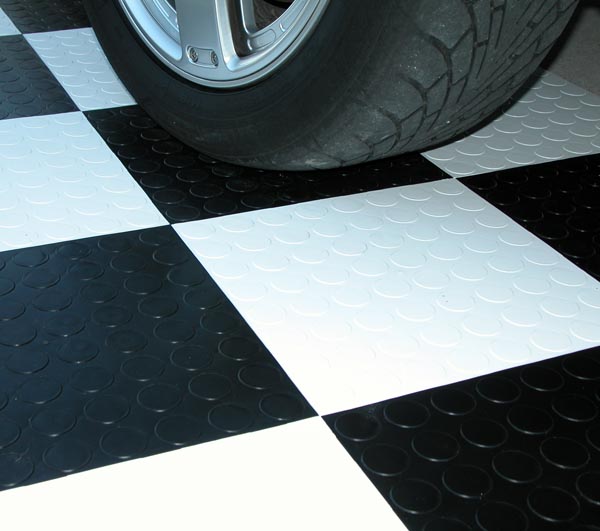
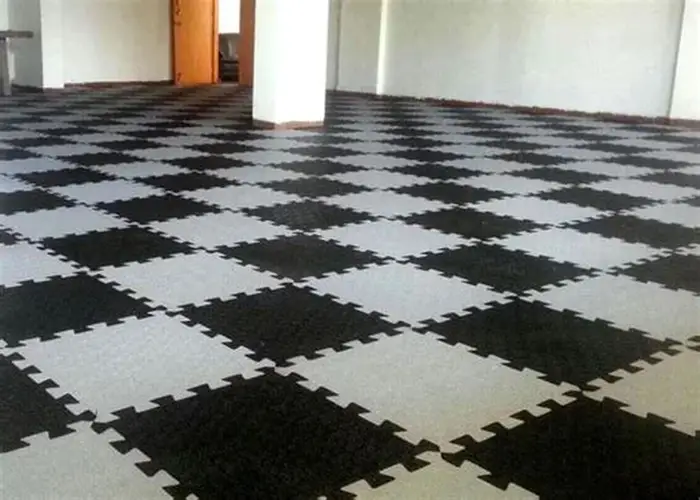
PVC Interlocking Exposed Tiles are modular recycled PVC flooring tiles designed with visible interlocking joints and a textured coin-pattern surface. Measuring 500 × 500mm per tile, they provide a practical flooring option for selected garages, workshops, commercial spaces and indoor work areas where customers want individual, replaceable floor sections.Available in 5mm and 6mm thickness options, these exposed-joint PVC tiles connect through their interlocking edges to create a continuous modular floor. Each tile covers approximately 0.25m², meaning only four tiles are required to cover one square metre, before cutting allowances.Their visible interlocking profile distinguishes them from concealed-joint PVC flooring. The exposed connections form part of the finished appearance, making these tiles suitable for customers who prefer clearly defined modular sections or multi-colour layouts.
Manufactured using recycled PVC, the tiles offer a reusable floor covering that can be installed over suitable, prepared substrates. Individual sections can also be removed and replaced when necessary, depending on the condition of the interlocking edges.
For more application-specific flooring options, browse our Garage Flooring collection, which includes products for garage floors, vehicle-related work areas and practical floor upgrades.
PVC Interlocking Exposed Tiles are square flooring panels manufactured from recycled polyvinyl chloride (PVC). They connect along their edges through a visible interlocking system, allowing multiple tiles to form a larger floor covering.Unlike traditional floor tiles that are installed using mortar or permanent adhesive, modular PVC tiles can often be assembled mechanically over a suitable prepared surface.
Key Features of Exposed Joint PVC Floor Tiles
- Recycled PVC construction: Manufactured using recycled polyvinyl chloride.
- 500 × 500mm tile dimensions: Standard modular square format.
- 5mm and 6mm options: Two listed thickness variations.
- Visible interlocking joints: Exposed connections form part of the flooring design.
- Coin-pattern surface: Textured upper finish.
- Four tiles per square metre: Straightforward coverage calculations.
- Multiple colours: Suitable for selected multi-colour installations.
- Replaceable sections: Individual tiles may be removed when required.
- Modular installation: Often suitable for installation without full-surface adhesive.
- Indoor applications: Suitable for appropriately assessed garages, workshops and commercial floors.
| Specification | Product Details |
|---|---|
| Product Name | PVC Interlocking Exposed Tiles |
| Material | PVC |
| Tile Dimensions | 500 × 500mm |
| Thickness Options | 5mm and 6mm |
| Coverage Per Tile | 0.25m² |
| Tiles Per Square Metre | 4 Tiles |
| Surface Texture | Coin Pattern |
| Interlocking Design | Visible / Exposed Joints |
| Available Colours | various |
| Black Tile Composition | Recycled PVC |
| Coloured Tile Composition | Virgin PVC |
| Primary Application | Garage Flooring |
| Suitable Areas | Selected Garages, Workshops and Commercial Interiors |
| Installation Method | Interlocking / Application-Specific |
| Cleaning Method | Sweeping and Damp Mopping |
Benefits of PVC Interlocking Exposed Tiles
Visible Interlocking Joints for a Modular Floor Design
- The defining feature of these tiles is their exposed interlocking edge.
- When installed, the joint profile remains part of the floor's appearance rather than being concealed beneath the surface.
- This creates a clearly defined modular design that can be used in garages, workshops, display spaces and selected commercial interiors.
Individual Tiles Can Be Replaced
- A modular flooring system allows individual sections to be accessed more easily than some permanently bonded floor coverings.
- If a tile becomes damaged, it may be possible to disconnect and replace that section without removing the entire floor.
- Replacement depends on the condition of adjoining joints, installation method and availability of matching products.
Practical Installation Over Suitable Existing Floors
- Interlocking PVC tiles can often be installed over firm, stable, prepared surfaces.
- Concrete is a common example, but the suitability of an existing floor depends on its levelness, strength, moisture condition and surface stability.
- Loose, uneven or damaged substrates should be repaired before installation.
Textured Coin-Pattern Surface
- The coin-pattern finish gives the tile a recognisable raised surface texture.
- It also provides a different appearance from smooth, leather-textured and checker-pattern PVC floor tiles.
- The product information references an R10 slip rating, but any safety-critical slip-resistance claim should be supported by an applicable test report identifying the product and test conditions.
Reusable Modular Flooring
- The interlocking format may allow tiles to be disconnected and reused where their condition permits.
- This can be useful when rearranging suitable workspaces or carrying out localised repairs.
- Because the tiles contain recycled PVC, they also provide a use for recovered plastic material.
- However, recycled content alone does not establish a quantified environmental benefit without appropriate supporting information.
Where Can PVC Interlocking Exposed Tiles Be Used?
PVC Exposed Joint Tiles for Garage Flooring
- Garage owners often want flooring that is straightforward to maintain and provides a finished appearance over existing concrete.
- PVC Interlocking Exposed Tiles can be considered for suitable garage floor areas, including pedestrian sections, storage zones and selected vehicle-related spaces.
- Before using them beneath parked vehicles, confirm the load rating, tyre compatibility and suitability for expected operating conditions.
- Jack stands and concentrated equipment loads require particular care because they can apply high pressure over a small contact area.
What Does an Exposed Joint Mean?
- An exposed joint is an interlocking connection that remains visible once the tiles have been assembled.
- Rather than hiding every connection, the finished floor shows the modular edge profile.
- This is a design characteristic of the product, not necessarily an installation defect.
Exposed Joints vs Concealed Interlocking Joints
- Concealed-joint tiles are designed to minimise the visibility of the connection.
- Exposed-joint tiles make the interlocking pattern part of the floor design.
- Neither type is automatically more suitable for every application. The correct choice depends on the preferred appearance, installation requirements and technical characteristics.
Can Different Colours Be Combined?
- Yes, compatible colour variations may be combined where the dimensions and interlocking profiles match.
- Confirm that the selected colours and thicknesses are compatible before mixing variations in one installation.
PVC Interlocking Exposed Tiles: 5mm vs 6mm
The product currently offers two listed thickness options.
500 × 500 × 5mm PVC Exposed Tiles
The 5mm variation has a nominal surface area of 0.25m² per tile.
It may be suitable for appropriate applications where this thickness meets the required conditions.
The approximate standard tile weight should be checked against the actual product variation.
500 × 500 × 6mm PVC Exposed Tiles
The 6mm variation has the same nominal length and width but is one millimetre thicker.
Greater thickness does not automatically establish a specific load rating or impact rating.
Customers should choose the thickness using verified product specifications and intended operating conditions.
Can 5mm and 6mm Tiles Be Mixed?
Mixing different thicknesses may create an uneven finished surface.
Even if the edge profiles are compatible, the height difference can affect transitions and the final floor.
For a continuous installation, use a consistent thickness unless a suitable transition detail has been designed.
PVC Interlocking Exposed Tiles Coverage Calculator
Each tile measures 500 × 500mm.
Converted to metres:
0.5m × 0.5m = 0.25m² per tile
Therefore:
1m² ÷ 0.25m² = 4 tiles
How to Measure an Irregular Floor
- Divide the floor into smaller rectangular sections.
- Calculate the area of each section and add the results together.
- Subtract permanent openings or uncovered sections where appropriate.
- Then calculate the number of tiles and account for cutting around walls, pillars and equipment.
How to Install PVC Interlocking Exposed Tiles
- PVC Interlocking Exposed Tiles use a modular connecting system, which may simplify installation compared with some permanently bonded flooring products.
- However, correct preparation and layout planning are essential.
Step 1: Prepare the Subfloor
- The underlying surface should be structurally sound, stable and sufficiently level.
- Remove loose dirt, grit, grease and other debris.
- Repair cracks, raised areas and unstable sections that could affect the installed floor.
- Moisture-related problems should be assessed before covering concrete.
Step 2: Measure the Floor Area
Measure the length and width of the installation area.
Calculate the required number of tiles using four tiles per square metre.
Allow additional material for edge cuts and layout adjustments.
Step 3: Plan the Tile Layout
Lay out a sample section before installing the entire floor.
Check the interlocking direction and the position of the visible joints.
Where multiple colours are used, plan the colour pattern before connecting the tiles.
Step 4: Connect the Tiles
Align the interlocking edges carefully.
Connect the tiles according to the product's installation instructions.
Do not force joints that are incorrectly aligned.
Check that adjoining tiles sit flat and form a consistent surface.
Step 5: Cut Tiles Around Edges
Measure the remaining spaces near walls, columns and fixed equipment.
Mark cutting lines accurately.
Use suitable cutting equipment and appropriate personal protective equipment.
The cutting method depends on the product thickness and installation conditions.
Step 6: Fit Compatible Edge Transitions
Exposed floor edges may require compatible edging or ramp transitions.
These accessories can help create a more gradual change in floor level when properly specified and installed.
They should not automatically be described as wheelchair-compliant without confirming the complete installation's accessibility requirements.
Step 7: Inspect the Finished Floor
Check the visible joints and edges.
Confirm that the tiles are seated correctly and that exposed connections do not create unintended raised sections.
Review movement, door clearance and the location of floor transitions before normal use.
Do PVC Exposed Joint Tiles Need Adhesive?
- Many interlocking PVC tile installations are designed to connect mechanically without full-surface adhesive.
- However, specific areas may require additional restraint or a suitable adhesive system depending on traffic, temperatures and operating conditions.
- Follow the manufacturer's installation guidance for the intended application.
Cleaning and Maintaining PVC Interlocking Exposed Tiles
Routine maintenance helps keep the textured coin-pattern surface clean and allows early identification of damaged sections.
Daily Cleaning
- Sweep away loose dust and grit.
- Vacuum where necessary.
- Remove debris from the coin-pattern surface.
- Clean spills promptly.
- Inspect heavily used pedestrian routes.
Periodic Deep Cleaning
- Use a mild PVC-compatible cleaning product.
- Follow the cleaner manufacturer's dilution instructions.
- Avoid excessive standing water.
- Remove cleaning residue.
- Allow the floor to dry before normal use.
Cleaning Around Exposed Joints
- Visible interlocking joints may collect small amounts of dirt or debris.
- Use an appropriate brush or cleaning attachment when necessary.
- Avoid harsh tools that could damage the connection profile.
Replacing a Damaged Tile
- Identify the affected tile and inspect the surrounding connections.
- Disconnect the damaged section using an appropriate method.
- Replace it with a matching tile of the correct thickness, colour and interlocking profile.
- Inspect the completed repair to ensure the connections remain properly seated.
Important Technical Buying Considerations
Can the Tiles Support Vehicles?
- Vehicle suitability depends on tyre loads, point loads, turning movements, temperature and substrate conditions.
- Although the product is marketed for garage applications, a verified loading specification is needed before promising compatibility with particular vehicles.
- Avoid relying on the previously published claim of more than five tonnes per square metre unless it is supported by an applicable test report.
Are PVC Exposed Tiles Waterproof?
- PVC is a material that generally resists water absorption.
- However, an interlocking tile floor is not necessarily a waterproof membrane.
- Water may enter through joints, perimeter gaps or other openings.
- The substrate and drainage conditions must therefore be considered.
Are They Chemical and Oil Resistant?
- PVC materials can tolerate some substances, but performance depends on the exact compound, chemical concentration and duration of exposure.
- Oil, fuel, solvents and industrial chemicals should be assessed individually.
- Do not assume universal chemical resistance without a relevant compatibility specification.
Are the Tiles Suitable for Outdoor Use?
- Outdoor suitability depends on UV exposure, temperature changes, drainage and installation conditions.
- Although outdoor applications appear in the product attributes, long-term weather performance should be confirmed for the selected variation.
- Covered applications may have different requirements from fully exposed sites.
Frequently Asked Questions About PVC Interlocking Exposed Tiles
What are PVC Interlocking Exposed Tiles?
- They are recycled PVC modular flooring tiles with visible interlocking connections and a coin-pattern surface.
What size are PVC Interlocking Exposed Tiles?
- Each tile measures 500 × 500mm.
What thickness options are available?
- The listed product variations are 5mm and 6mm.
How many PVC exposed tiles make one square metre?
- Four tiles cover one square metre before cutting wastage.
What is the difference between exposed and concealed joints?
- Exposed joints remain visible in the finished floor, while concealed joints are designed to minimise the appearance of the connection.
Are PVC Interlocking Exposed Tiles suitable for garages?
- They may be suitable for selected garage applications. Confirm vehicle loading, tyre contact and the intended operating conditions.
Can the tiles be used in workshops?
- They can be considered for suitable workshop areas where the product's load and environmental requirements are met.
Can forklifts drive over these tiles?
- Forklift use should only be approved when verified load and traffic performance specifications are available.
Are PVC Interlocking Exposed Tiles waterproof?
- The PVC material resists water absorption, but the complete interlocking floor should not be treated as a waterproof membrane.
Can different tile colours be combined?
- Yes, compatible colours of the same interlocking profile and thickness can be combined for selected layouts.
Can 5mm and 6mm tiles be installed together?
- Mixing thicknesses can create an uneven surface and is generally best avoided without an appropriate transition design.
Do these tiles require glue?
- Many suitable installations use the mechanical interlocking system, although some applications may need additional restraint.
Can the tiles be installed over concrete?
- They can often be installed over sound, stable and properly prepared concrete, subject to the installation requirements.
How do I clean PVC exposed joint tiles?
- Sweep regularly, remove loose grit and use a mild PVC-compatible cleaning product when needed.
Can damaged tiles be replaced individually?
- Individual tiles may be replaced if compatible replacements are available and the surrounding connections remain in suitable condition.
Are matching ramp edges available?
- Compatible edging and ramp accessories may be available. Confirm the required profile and thickness before ordering.
Buy PVC Interlocking Exposed Tiles in South Africa
PVC Interlocking Exposed Tiles provide a practical modular flooring option for customers seeking visible-joint recycled PVC tiles for selected garages, workshops, utility rooms and commercial environments.
Additional information
| Weight | 5 kg |
|---|---|
| Dimensions | N/A |
| Dimension | 500 × 500 × 5 mm, 500 × 500 × 6 mm |
| Colour | Beige, Black, Blue, Brown, Green, Grey, Orange, Red, White, Yellow |
| Applications | Garage Flooring |
| Durability | Heavy Duty |
| Material Types | PVC |
| Surface Texture | Coin Pattern |
| Wear Ratings | Best |
| Benefits | Easy Installation |
| Working Environment | Indoor Use |

Reviews
There are no reviews yet.