


Secure Payment
Your transactions are protected with encrypted SSL security. Payments are processed safely through verified South African payment gateways.
Tennis Sport Interlocking Tiles(100-Pack = 1m²)
Original price was: R785,00.R782,00Current price is: R782,00.
1210 in stock
Your payments are safe and protected.
1210 in stock
Tennis Sport Interlocking Tiles – 107 × 107 × 14 mm
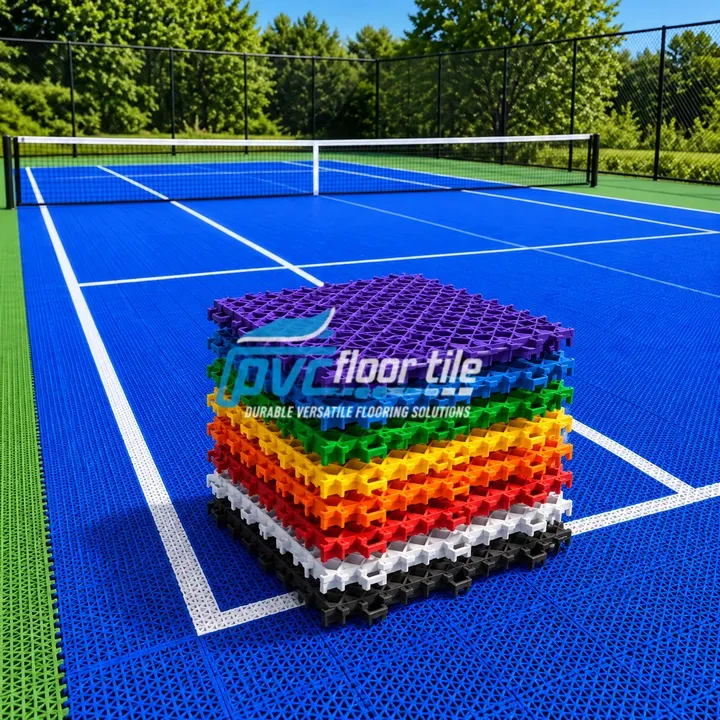
Tennis Sport Interlocking Tiles are modular recycled polypropylene (PP) sports tiles designed for tennis practice areas, school courts, club facilities, home training zones and selected indoor or covered multi-sport environments.
These Tennis Sport Interlocking Tiles are suitable for customers looking to create or expand:
- Tennis practice areas.
- School activity courts.
- Club training zones.
- Home tennis practice spaces.
- Multi-purpose recreation areas.
- Covered sports courts.
- Skills-development zones.
For additional modular sports surfaces, customers can browse our Sports Flooring collection.
Tennis Sport Interlocking Tiles Technical Specifications
| Specification | Product Details |
|---|---|
| Product Name | Tennis Sport Interlocking Tiles |
| Material | Recycled Polypropylene (PP) |
| Colour | Various |
| Surface | Open-Grid Micro |
| Interlocking System | Multi-Point Snap-Fit |
| Recommended Base | Reasonably Level |
| Typical Bases | Concrete |
| Edge Options | Straight Ramp Edging and Corner Pieces |
| Recommended Use | Indoor and Selected Covered Outdoor Areas |
| Installation | Modular Snap-Fit |
| Main Applications | Tennis Practice |
Recycled Polypropylene Tennis Flooring
These tennis tiles are made from recycled polypropylene, commonly referred to as PP.
Polypropylene provides the relatively rigid structure required for the multi-point interlocking system while keeping each tile lightweight enough for modular handling and installation.
The modular PP construction is useful where customers want a sports floor that can be:
- Installed in sections.
- Expanded at a later stage.
- Reconfigured.
- Repaired locally.
- Removed and reinstalled where appropriate.
Open-Grid Tennis Court Surface
The open-grid surface allows light moisture, dust and small debris to pass through the upper tile structure.
This can be useful in selected covered court environments where some airflow and surface drainage are desirable.
However, the tile system does not create drainage underneath the court.
The supporting base must still provide:
- Suitable falls.
- Adequate drainage.
- Stable surface conditions.
If water collects on the underlying concrete or asphalt, it may remain beneath the tiles.
Micro-Textured Sports Surface
The top surface has a micro-textured finish.
This provides more surface texture than a completely smooth polypropylene tile.
However, the product should not automatically be described as non-slip unless a formal slip-resistance rating has been supplied.
Actual traction can vary according to:
- Tennis footwear.
- Dust.
- Sand.
- Water.
- Cleaning residue.
- General surface contamination.
Routine cleaning therefore remains important.
Tennis Practice Flooring
Tennis Sport Interlocking Tiles are well suited to creating dedicated practice zones.
Possible applications include:
- Serving practice.
- Footwork drills.
- Ball-control exercises.
- Warm-up areas.
- Coaching stations.
- General recreational tennis.
A smaller area can be installed first and expanded later using additional compatible tiles.
Tennis Flooring for Schools
Schools may use modular tennis tiles for:
- PE lessons.
- Tennis coaching.
- After-school training.
- Skills-development areas.
- Multi-sport activity zones.
The modular design is particularly useful where one facility supports several sports or activities throughout the year.
Compatible sections can be added or reorganised as the space changes.
Tennis Flooring for Clubs
Tennis clubs and academies may use the tiles for selected:
- Practice zones.
- Coaching areas.
- Warm-up areas.
- Skills stations.
- Recreational courts.
If one section experiences more wear than another, compatible tiles can potentially be replaced individually rather than resurfacing the entire area.
Home Tennis Practice Areas
The tiles may also be used for smaller residential tennis practice zones.
Suitable locations may include:
- Garages.
- Covered patios.
- Hard courtyards.
- Existing concrete practice areas.
- Firm paved sports spaces.
The base should always be hard, stable and reasonably level.
The tiles should not be installed directly over loose soil, grass or unstable gravel unless a proper structural base is first installed.
Ball Bounce and Tennis Performance
The product states that the tiles provide clean or predictable ball bounce.
This is a strong sports-performance claim.
Ball behaviour may vary depending on:
- Tile design.
- Subfloor condition.
- Installation.
- Temperature.
- Ball type.
- Court layout.
Footwork and Traction Claims
The current content also refers to:
- Confident footwork.
- Fewer slips.
- Controlled lateral movement.
- Explosive split-steps.
These claims should be handled carefully.
The tile has a micro-textured surface, but no formal slip-rating data has been supplied.
A safer description is that the textured top is designed for active sports use while customers should maintain the floor properly and use suitable sports footwear.
Multi-Point Snap-Fit System
Each tile connects through multiple snap-fit points.
This creates a modular floor made up of individual sections rather than one permanent sheet.
Benefits include:
- Straightforward installation.
- Individual tile replacement.
- Future expansion.
- Reconfigurable layouts.
- Easier localised repairs.
Correct alignment is important during installation so the connection points engage fully.
Preparing the Base
Before installation, the supporting floor should be:
- Clean.
- Stable.
- Hard.
- Reasonably level.
- Free from loose debris.
Potential bases include properly prepared:
- Concrete.
- Asphalt.
- Structural plywood.
Large cracks, holes or unstable areas should be repaired before the tiles are installed.
The sports tiles should not be expected to correct major subfloor defects.
How to Install Tennis Sport Interlocking Tiles
Measure the Court Area
Determine the total square metres required.
Plan the Layout
Identify important areas such as:
- Playing zones.
- Practice areas.
- Entrances.
- Court boundaries.
- Equipment spaces.
Establish a Straight Starting Line
Use a chalk line or another straight reference point.
Keeping the first rows square makes the rest of the installation easier.
Snap the Tiles Together
Align the connectors and press each compatible tile into position.
Check the Alignment
Continue across the area while regularly checking that the rows remain straight.
Finish the Exposed Edges
Add compatible ramp edging or corner pieces where required.
Tennis Court Ramp Edging
Because the sports floor is approximately 14 mm thick, exposed sides create a height difference between the modular surface and the surrounding floor.
Compatible ramp edging can help create a more gradual transition.
Ramp edging may be considered around:
- Court entrances.
- Walkways.
- Practice-zone boundaries.
- Equipment access points.
Sports Tile Corner Pieces
Compatible inside and outside corner pieces may be used where ramp edging changes direction.
They can help create a cleaner finish around rectangular court and training layouts.
Planning the perimeter before installation can reduce cutting and improve the finished appearance.
Individual Tile Replacement
One of the practical advantages of modular tennis flooring is the ability to replace selected compatible tiles.
Areas that may experience higher use include:
- Baselines.
- Service areas.
- Court entrances.
- Practice stations.
If one tile becomes damaged, replacing the affected section may be easier than resurfacing an entire court.
Expand the Tennis Area Later
The modular design makes future expansion possible.
Customers can begin with a smaller tennis practice area and later add compatible tiles to create:
- A larger training surface.
- Additional practice lanes.
- Multi-sport sections.
- New colour zones.
This can be useful for schools and clubs developing facilities in phases.
Indoor and Covered Outdoor Use
The supplied specifications position the product for:
- Indoor use.
- Covered outdoor use.
- Selected sheltered sports environments.
Potential locations include:
- School sports halls.
- Covered club courts.
- Recreation facilities.
- Covered home practice areas.
Shock and Joint-Fatigue Claims
The existing content says that the tile construction helps reduce joint fatigue.
This implies measurable impact or shock-absorption performance.
No test data has been supplied for:
- Shock absorption.
- Impact attenuation.
- Force reduction.
- Joint-load reduction.
Cleaning Tennis Sport Interlocking Tiles
Routine maintenance is straightforward.
Cleaning may include:
- Dry sweeping.
- Vacuuming.
- Damp mopping.
- Rinsing where appropriate.
- Mild detergent.
Avoid harsh solvents or highly abrasive cleaners unless they have been confirmed as compatible with polypropylene.
Cleaning Beneath Open-Grid Tennis Tiles
Because the surface is open-grid, fine dust and debris may eventually collect underneath the floor.
Selected sections may be disconnected periodically so the base can be cleaned.
A practical cleaning process is:
- Lift the required tile section.
- Sweep or vacuum the base.
- Clean the floor underneath.
- Allow the surface to dry or drain.
- Reinstall the tiles.
- Check the interlocks.
Tennis Court Lines
Court markings can potentially be created using:
- Compatible sports-floor tape.
- Suitable floor paint.
- Contrasting tile colours.
Before applying permanent paint or adhesive tape, confirm that the product is compatible with polypropylene.
Contrasting tile colours may be useful for creating modular boundaries without applying coatings.
Tennis Tiles vs Solid Court Tiles
Different sports-tile formats may suit different installations.
Open-Grid Tennis Tiles
Useful where:
- Drainage is important.
- Covered outdoor use is planned.
- Airflow through the floor is useful.
- Modular court construction is preferred.
Closed-Top Sport Tiles
Useful where:
- Indoor use is the priority.
- A solid upper surface is preferred.
- Surface sweeping is important.
The right choice depends on the environment and intended use.
Tennis Tiles vs Rubber Flooring
Tennis tiles and rubber flooring serve different purposes.
Tennis Sport Interlocking Tiles
Better suited to:
- Tennis practice.
- Multi-sport areas.
- Court-style activity.
- Modular sports layouts.
Rubber Flooring
Better suited to:
- Weight-training areas.
- Equipment zones.
- Free-weight sections.
- Areas where thicker impact protection is needed.
Customers should choose flooring based on the activity rather than appearance alone.
Frequently Asked Questions About Tennis Sport Interlocking Tiles
What material are the tennis tiles made from?
- They are made from recycled polypropylene (PP).
Are these tiles suitable for tennis clubs?
- They can be considered for club practice areas, coaching spaces and general recreational tennis applications.
Can schools use these tennis tiles?
- Yes. They are suitable for school practice areas, PE activity zones and general multi-sport environments.
Can I install them at home?
- Yes, provided the installation area has a suitable hard, stable and reasonably level base.
Can they be installed on grass?
- Direct installation over grass is not recommended. The tiles require a firm, stable base.
Can damaged tiles be replaced individually?
- Yes. Compatible individual tiles can be removed and replaced where required.
Can I expand the tennis floor later?
- Yes. Additional compatible tiles can be added to increase the floor area.
Buy Tennis Sport Interlocking Tiles
Choose Tennis Sport Interlocking Tiles when you need a modular surface for a school tennis area, club practice court, community facility or home training zone.
Additional information
| Weight | 0,035 kg |
|---|---|
| Dimensions | 107 × 107 × 14 mm |
| Applications | Sports |
| Durability | High Impact Resistant |
| Dimension | 107 × 107 × 14 mm |

Reviews
There are no reviews yet.