
Secure Payment
Your transactions are protected with encrypted SSL security. Payments are processed safely through verified South African payment gateways.
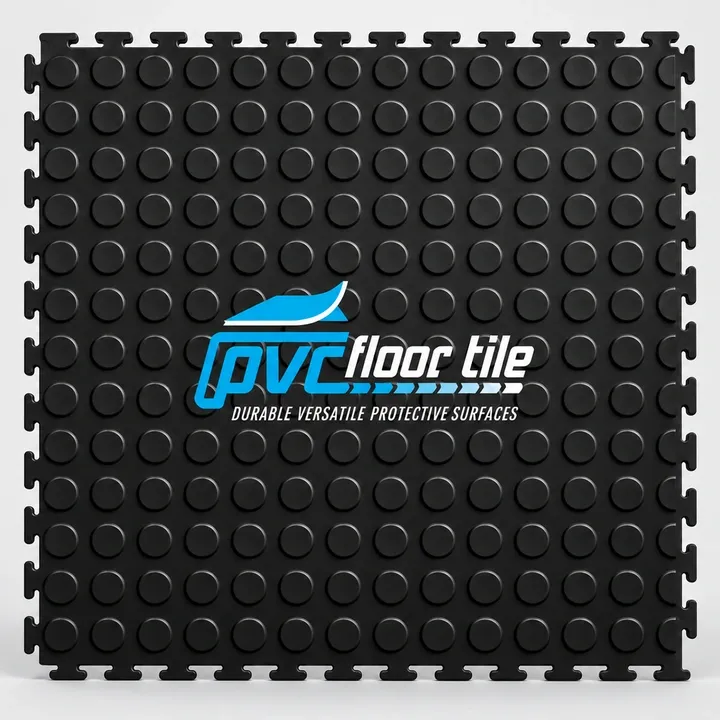
JointLock Studded Tile – 500 × 500 × 6mm
Original price was: R140,00.R135,25Current price is: R135,25.
2110 in stock
Your payments are safe and protected.
2110 in stock
JointLock Studded Rubber Tile – 500×500×6mm
The JointLock Studded Tile – 500×500×6mm is a modular rubber flooring tile designed for suitable indoor work areas, utility spaces and commercial environments where a practical surface finish and manageable installation are important. Featuring a raised studded pattern and connecting JointLock edges, it provides a distinctive flooring option for customers who want to cover an existing hard floor with individual, replaceable tiles.
Each tile measures 500 × 500mm, has a stated thickness of 6mm and covers 0.25m². Four tiles provide one square metre of nominal floor coverage, making it straightforward to calculate quantities for smaller rooms or larger installations.
The raised studs create a textured walking surface with a recognisable industrial appearance. Meanwhile, the JointLock connection allows compatible tiles to be assembled into a continuous modular layout without handling large flooring rolls.
Manufactured from rubber, this product may be considered for selected pedestrian and light-duty working areas where a relatively low-profile floor covering is preferred. Its suitability for concentrated machinery loads, vehicle traffic and specialist safety applications must be confirmed separately.
For alternative connecting designs and rubber flooring thicknesses, explore our Interlocking Rubber Floor Tiles Collection.
JointLock Studded Tile Technical Specifications
| Specification | Product Details |
|---|---|
| Product Name | JointLock Studded Tile |
| Product Type | Modular Interlocking Rubber Flooring Tile |
| Material | Rubber recylced |
| Tile Dimensions | 500 × 500mm |
| Stated Thickness | 6mm |
| Coverage per Tile | 0.25m² |
| Tiles per Square Metre | 4 |
| Surface Finish | Raised Studded Pattern |
| Connection Type | JointLock Edge System |
| Flooring Format | Modular Connecting Tiles |
| Primary Applications | Selected Indoor Working and Utility Areas |
| Potential Uses | Workshops, Storage Rooms and Commercial Utility Spaces |
| Installation | Over a Firm, Stable and Prepared Subfloor |
| Cleaning | Sweep, Vacuum or Damp Mop |
What Is a JointLock Studded Rubber Tile?
A JointLock Studded Tile is an individual rubber flooring panel that connects to neighbouring compatible tiles using a designated edge system.
Instead of installing one continuous sheet, the flooring is assembled progressively from separate square sections. This format allows customers to plan floor coverage according to the available space.
The product combines three main features: a raised studded surface, a JointLock connection and a 500×500mm modular tile format.
It is particularly relevant where customers need a practical indoor floor covering that can be maintained in sections.
Raised Studded Surface
The upper surface features a repeating raised stud pattern.
This creates visible texture across the floor and gives the installation a functional appearance. It also distinguishes the product from smooth, leather-textured and checkered flooring finishes.
Surface texture may influence how the floor feels underfoot, but it should not be treated as proof of certified slip resistance.
JointLock Connection System
The JointLock edges allow compatible tiles to join together and form a planned flooring layout.
This connection system is a defining feature of the product. It should be matched with the same compatible tile design when replacing or extending a floor.
Low-Profile Rubber Construction
At the stated 6mm thickness, the tile introduces a relatively thin rubber layer over a suitable supporting floor.
Customers should select the product according to their actual traffic, equipment and environmental requirements rather than assuming it provides heavy-duty industrial protection.
Key Benefits of JointLock Studded Tiles
The main advantage of this product is its combination of manageable dimensions, surface texture and connecting edges.
- Modular floor coverage: Tiles can be arranged according to the measured area.
- Distinct studded finish: Creates a consistent raised surface pattern.
- Connecting edges: The JointLock design joins compatible neighbouring tiles.
- Convenient handling: Individual 500×500mm panels are easier to position than large flooring rolls.
- Straightforward planning: Four tiles provide 1m² of nominal coverage.
- Individual maintenance: Damaged sections may be replaced using matching tiles.
- Practical floor appearance: Suitable for selected functional indoor spaces.
- Routine cleaning: Sweeping, vacuuming and material-compatible damp cleaning help maintain the surface.
These features make JointLock Studded Tiles worth considering for projects where modularity and ease of floor planning are priorities.
Where Can JointLock Studded Rubber Tiles Be Used?
Workshop Flooring Sections
Workshops may require flooring around selected pedestrian routes, workbenches or maintenance areas.
JointLock Studded Tiles can provide a defined floor covering over suitable prepared surfaces.
Before installation, assess the type of tools, equipment and loads involved. These tiles should not automatically be specified for heavy machinery, welding areas or vehicle traffic.
Commercial Utility Rooms
- Commercial buildings often contain service rooms, operational spaces and utility areas where practical flooring is important.
- The studded appearance can complement a functional interior, while the modular format allows the floor to be assembled in sections.
- Compatibility with cleaning products and equipment should be checked.
Storage and Stockrooms
Selected storage areas may benefit from a tiled surface over an existing firm floor.
The 500×500mm format allows quantities to be calculated accurately for defined storage sections.
Heavy shelving, pallet handling equipment and concentrated loads require separate technical assessment.
Maintenance Work Areas
- Some maintenance spaces contain designated areas for routine inspection or light operational activities.
- A modular rubber tile can provide an alternative to leaving a suitable hard floor uncovered.
- The installation must remain stable under the expected movement and equipment.
Commercial Back-of-House Spaces
Back-of-house environments may contain pedestrian access routes and practical work areas.
The raised stud pattern provides a visually distinctive surface, while the JointLock edges help organise the overall installation.
Consider cleaning frequency, foot traffic and exposure to spills when selecting the flooring.
Residential Utility Areas
- Certain indoor home utility areas may also benefit from a modular rubber floor covering.
- Examples include selected storage rooms, hobby areas and domestic workspaces.
- The supporting floor must be suitable, and the tiles should not be assumed waterproof or appropriate for every chemical exposure.
Why Choose a Raised Studded Surface?
A flooring surface affects both the appearance and everyday use of a room.
JointLock Studded Tiles feature a repeating pattern of raised circular studs, providing a distinctive finish compared with flat rubber flooring.
The pattern also gives customers a recognisable design when matching replacement tiles.
Raised profiles can collect dirt around the studs, so cleaning methods should account for the surface shape.
For locations exposed to water, oil or other contaminants, traction should be assessed under the actual operating conditions rather than assumed from the pattern alone.
JointLock Tiles vs Other Interlocking Rubber Tiles
Different connecting tile systems are not necessarily interchangeable.
JointLock Studded Tiles
- This product combines a raised studded surface with the specifically named JointLock edge design.
- It is best selected when customers need matching JointLock tiles or prefer this particular surface appearance.
Other Rubber Locking Systems
Other tiles may use different edge profiles, material formulations, thicknesses or textures.
Even where the dimensions appear identical, the connection shape may not match.
JointLock vs GripLock
- JointLock and GripLock are separate product identifiers and should not be assumed to use identical joining systems.
When Is Additional Wastage Needed?
Rooms with irregular corners, fixed equipment or numerous perimeter cuts may require additional tiles.
For a simple square room, less material may be wasted.
How to Install JointLock Studded Rubber Tiles
Step 1: Check the Subfloor
Ensure the supporting floor is firm, stable and sufficiently level.
Repair damaged or loose sections before installation.
Step 2: Prepare the Surface
Remove loose dirt, stones, oil and debris.
Allow the supporting floor to dry appropriately.
Step 3: Measure the Installation Area
Record the floor dimensions and identify fixed objects, entrances and exposed boundaries.
Plan where tiles will need cutting.
Step 4: Arrange the First Tiles
Start from a suitable straight reference line.
Check alignment before continuing across the area.
Step 5: Connect the JointLock Edges
Join compatible neighbouring tiles according to the product's connection design.
Do not force incompatible profiles together.
Step 6: Complete the Layout
Continue installing the tiles while checking that connections remain properly seated.
Trim perimeter pieces using tools appropriate to the confirmed material.
Step 7: Inspect the Finished Floor
Check for raised edges, loose tiles or unstable sections.
Confirm that the final installation is suitable for the planned activity before use.
Does JointLock Flooring Require Adhesive?
The correct fixing method depends on the tile connection, subfloor, room layout and expected use.
Some modular floors may be installed without full-surface adhesive, but this should not be assumed for every commercial application.
Use the approved installation method for the actual product and site conditions.
Cleaning and Maintaining the Studded Rubber Surface
Routine Sweeping
Sweep loose dust, dirt and grit regularly.
Pay attention to debris collecting around the raised studs.
Vacuuming
A suitable vacuum attachment can help clean between the surface features and around the tile joints.
Damp Mopping
Use a mild cleaning product confirmed as compatible with the rubber material.
Avoid excessive water and allow the floor to dry before regular use.
Spill Management
Clean spills promptly, particularly where the floor is used for walking or working.
Oils and other contaminants may affect surface traction and material condition.
Checking Tile Connections
Inspect the flooring periodically for movement, damaged edges or raised sections.
Replace affected pieces with matching compatible tiles when required.
Important Buying Considerations
- Before ordering JointLock Studded Tiles, verify the actual thickness, material grade, selling unit and connection profile.
- The product is described as 6mm thick, but the existing product attributes include a conflicting 5mm dimension.
- Also confirm whether the listed 5kg weight refers to one tile, a pack or the shipping unit.
- No verified maximum load capacity or slip-resistance classification has been supplied for this product.
- For specific industrial, wet-area or high-load applications, request product-specific technical guidance.
Frequently Asked Questions About JointLock Studded Tiles
1. What is a JointLock Studded Tile?
It is a modular rubber flooring tile with a raised studded surface and connecting JointLock edges. It is designed to join with compatible tiles to create a planned flooring area.
2. What size is each tile?
Each tile measures 500 × 500mm. The stated product thickness is 6mm, subject to correction of the conflicting WooCommerce attribute.
3. What material is the tile made from?
The supplied description identifies rubber as the material. The exact rubber grade and recycled-content specification have not yet been confirmed.
4. How many JointLock tiles cover 1m²?
Four 500×500mm tiles cover one square metre. This calculation assumes the full nominal dimensions of each tile.
5. What is the JointLock connection system?
JointLock refers to the product's connecting edge design. Compatible tiles join at their edges to create a modular flooring layout.
6. Are JointLock and GripLock tiles interchangeable?
Not necessarily. Their edge profiles, thicknesses and materials should be checked before attempting to connect different product types.
7. Does the raised studded surface provide better grip?
The raised studs create additional surface texture. However, the product should not be described as having a certified slip rating without supporting test documentation.
8. Are these tiles suitable for workshops?
They may be suitable for selected indoor workshop areas. The actual equipment loads, chemical exposure and working conditions must be assessed.
9. Can the tiles be installed over concrete?
A properly prepared concrete floor may provide a suitable supporting surface. It should be firm, stable, clean and sufficiently level.
10. Do JointLock tiles require glue?
The correct installation method depends on the product and site conditions. Mechanical connections may be used where approved, but additional fixing could be required.
11. Can these tiles be used outdoors?
Outdoor suitability has not been verified from the supplied specifications. Confirm UV resistance, weather performance and drainage requirements before using them outside.
12. Are the tiles waterproof?
The connected floor should not be treated as a waterproof membrane. Liquid may pass through tile joints, depending on the installation.
13. Can heavy machinery be placed on the tiles?
No verified heavy-machinery load rating has been provided. Customers should obtain technical confirmation before using the tiles beneath heavy or concentrated equipment loads.
14. How do I clean JointLock Studded Tiles?
Sweep or vacuum regularly and use a compatible mild cleaner when damp mopping. Remove spills promptly and avoid unsuitable chemicals.
15. Can damaged tiles be replaced individually?
Matching tiles may be replaced where the installation allows. Replacement pieces must have compatible dimensions, thickness and locking edges.
16. How many tiles do I need for a 20m² room?
A 20m² room requires 80 tiles before wastage. Including a 5% allowance, the estimated quantity is 84 individual tiles.
Buy JointLock Studded Rubber Tiles – 500×500×6mm in South Africa
JointLock Studded Tiles – 500×500×6mm provide a modular rubber flooring option for suitable indoor working areas, utility spaces and selected commercial applications.
The raised studded pattern creates a distinctive surface finish, while the JointLock edges allow compatible tiles to be assembled into a planned floor layout.
Additional information
| Weight | 5,8 kg |
|---|---|
| Dimensions | 500 × 500 × 6 mm |
| Dimension | 500 × 500 × 6 mm |
| Material Types | Rubber |
| Applications | Workshop Flooring |
| Colour | Black |
| Working Environment | Indoor Use |

Reviews
There are no reviews yet.