


Secure Payment
Your transactions are protected with encrypted SSL security. Payments are processed safely through verified South African payment gateways.
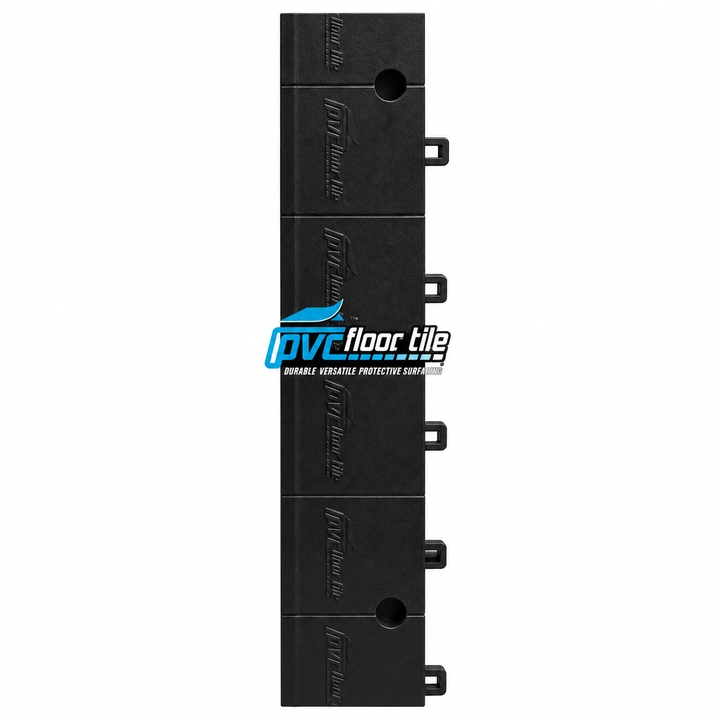
14mm Raised Tile Ramp Edging
Original price was: R20,00.R19,00Current price is: R19,00.
328 in stock
Your payments are safe and protected.
328 in stock
14mm Raised Tile Ramp Edging for Modular Sports Tile Systems
14mm Raised Tile Ramp Edging is a clip-on perimeter finishing piece designed for compatible modular sports tile systems measuring approximately 14 mm in finished height. It creates a sloped transition between the raised tile surface and the surrounding floor while covering exposed modular tile edges for a cleaner, more complete installation.
Manufactured from polypropylene, the edging connects to compatible sports tiles using a snap-fit system. This allows the perimeter to be finished without adhesive in many standard installations and makes individual edging sections easier to remove or replace if necessary.
The edging is particularly useful around entry points, sidelines, activity zones, school halls and other areas where people or light wheeled equipment move between a raised sports tile system and the surrounding floor.
Typical applications include sports courts, school activity areas, club facilities, indoor recreation spaces, covered activity areas, event flooring layouts, entrances to modular courts and selected equipment-access points.
14mm Raised Tile Ramp Edging Technical Specifications
| Specification | Product Details |
|---|---|
| Product Name | 14mm Raised Tile Ramp Edging |
| Material | Polypropylene |
| Profile | Bevelled Ramp Edge |
| Colour | Black |
| Connection System | Snap-Fit |
| Recommended Environment | Indoor |
| Replacement | Individual Compatible Pieces Can Be Replaced |
What Is Raised Tile Ramp Edging?
Raised Tile Ramp Edging is not a main flooring tile.
It is a finishing accessory that attaches to the perimeter of a compatible modular tile installation.
A sports flooring system that is approximately 14 mm high naturally creates a height difference between the tiled area and the surrounding floor.
The ramp edging introduces a gradual sloped profile at this boundary instead of leaving the vertical edge of the modular tile fully exposed.
This can make the perimeter easier to approach while giving the completed sports floor a more deliberate finished appearance.
Why Use Ramp Edging Around Sports Tiles?
A modular sports floor may function without edging in some contained installations, but exposed perimeter edges can look unfinished and may be more vulnerable to repeated contact.
Adding compatible ramp edging can help provide a cleaner boundary around the installation.
Practical advantages include:
- Finishing exposed modular tile edges.
- Creating a more gradual floor-level transition.
- Helping protect perimeter connectors from direct contact.
- Improving the visual appearance of the completed installation.
- Providing easier approach points for pedestrians and light wheeled items.
- Allowing damaged edging pieces to be replaced individually.
- Supporting temporary or reconfigurable modular layouts.
The edging should be treated as part of the flooring system rather than as a substitute for accessibility planning or site-specific safety measures.
Sloped Profile for Raised 14mm Sports Flooring
The main feature of the product is its bevelled or sloped outer profile.
Instead of the flooring ending at an abrupt vertical edge, the edging slopes from the surrounding floor level toward the approximately 14 mm-high sports surface.
This is especially useful around areas where users regularly enter or leave the tiled zone.
Suitable positions can include entrances, court sidelines, pedestrian access points and equipment routes.
The exact transition angle and suitability for a particular accessibility requirement should be confirmed from the physical product and relevant site standards rather than assumed from the ramp shape alone.
PP Construction for Modular Sports Flooring
The edging is made from polypropylene, commonly abbreviated as PP.
This material is widely used in modular sports flooring systems because it can be moulded into precise interlocking profiles while remaining relatively lightweight.
For this product, the PP construction supports the snap-fit connection and allows individual edging sections to form part of a modular floor system.
The material should be identified clearly as polypropylene rather than PVC or rubber so buyers can match it correctly with compatible sports flooring.
Snap-Fit Connection System
Each ramp edging piece is designed to connect to compatible tile edges using a snap-fit system.
This means the edging can be aligned with the appropriate tile connectors and pressed into place.
In standard installations, this may remove the need for:
adhesive, screws or permanent mechanical fixing.
The major advantage of a snap-fit system is that the floor remains modular.
If a perimeter section becomes damaged, it may be possible to remove and replace the individual edging piece rather than rebuilding the full installation.
Compatibility Is Important
One of the most important buying considerations is compatibility.
Not every 14 mm sports tile necessarily uses the same connector design.
Customers should confirm that:
the tile profile, connection points and edging attachment system are compatible before ordering.
Matching thickness alone does not guarantee that two products will connect correctly.
For installations using one of our modular court-tile systems, confirm the exact sports tile product before purchasing edging pieces.
Ramp Edging for Sports Courts
Sports courts are one of the main applications for this product.
A modular court may be installed within a larger hall, recreation space or covered activity area.
Where the sports surface ends before the surrounding floor, ramp edging can be used to finish exposed sides.
Potential court applications include recreational basketball areas, netball activity zones, volleyball layouts, multipurpose courts and school sports areas.
For formal competition environments, the complete flooring system should still be checked against the requirements of the relevant sport.
School and Activity Area Edging
Schools frequently use modular sports flooring in halls and activity zones because layouts can be created without permanently resurfacing the entire building.
Ramp edging can help finish these installations at entrances and boundaries where learners, staff and equipment move between floor levels.
Potential applications include school halls, indoor recreation areas, covered activity zones, multipurpose spaces and after-school sports areas.
The edging does not itself provide certified fall protection or guaranteed accessibility compliance.
Edging for Indoor Play and Recreation Areas
Modular floor systems may also be used in general recreation and play environments.
Where a 14 mm modular tile creates an exposed raised perimeter, compatible edging can provide a more complete transition.
This may be particularly useful in spaces where layouts are regularly changed.
Because the pieces are modular, the perimeter can potentially be adjusted if the floor is expanded or reconfigured.
Doorway and Entrance Transitions
Doorways can be important finishing points in a raised modular floor installation.
If the sports tile surface approaches an entrance, an exposed vertical edge may create an abrupt transition.
Compatible ramp edging can create a more gradual approach between floor levels.
Before installation, check:
door clearance, threshold height, surrounding floor level and available transition space.
Light Wheeled Equipment Access
The sloped profile may make it easier for some light wheeled items to move onto and off the modular floor compared with an exposed vertical tile edge.
Examples may include light sports equipment trolleys, storage carts or other suitable wheeled items.
However, this product should not automatically be described as wheelchair-compliant or accessibility-certified without relevant dimensional and compliance testing.
Accessibility requirements can depend on ramp gradient, width, surface conditions and local building regulations.
Protecting Exposed Tile Edges
Perimeter tiles are more exposed to direct contact than tiles positioned within the centre of an installation.
Foot traffic, equipment movement and general activity can repeatedly contact the outer connectors.
Ramp edging can provide an additional finishing component around these exposed boundaries.
This can help reduce direct contact with the tile connection profile while creating a more finished overall appearance.
Professional Perimeter Appearance
A modular sports surface can look incomplete when the locking edges remain visible around the entire perimeter.
Adding matching edging gives the installation a more deliberate finish.
This can be useful in environments such as schools, clubs, sports facilities, event venues and customer-facing recreation areas where presentation matters alongside functionality.
Individual Edging Replacement
Because the system is modular, a damaged compatible edging piece may be replaced individually.
This can make maintenance more manageable than replacing a long permanently bonded trim.
Keeping spare edging pieces from the original installation can be useful for larger courts or busy facilities.
- Installing 14mm Raised Tile Ramp Edging
Before fitting the edging, complete the main tile installation and check that the perimeter is straight and fully connected.
The supporting floor should be firm, clean and reasonably level.
Align the ramp piece with the correct connectors on the sports tile edge.
Press the edging into position until the compatible snap-fit connection is properly engaged.
Continue along the perimeter, checking alignment as each piece is fitted.
Where corner pieces are available, use the correct compatible corner accessory rather than forcing straight edging around a 90-degree turn.
Can Ramp Edging Be Trimmed?
Where necessary, some edging pieces may be trimmed to suit a perimeter length.
Before cutting:
measure carefully and confirm that removing part of the piece will not interfere with the required connection points.
After trimming, any sharp or rough cut edge should be finished appropriately.
Where possible, planning the tile layout to use complete compatible edging pieces can provide a cleaner finished result.
Base Surface Requirements
The modular flooring and edging should be installed over a suitable supporting floor.
The base should be:
firm, stable, reasonably level and free from loose debris.
Ramp edging should not be expected to compensate for major differences in floor level, damaged concrete or severe surface irregularities.
Significant subfloor problems should be corrected before installing the modular flooring system.
Indoor and Covered Applications
The supplied specification positions this edging for indoor and covered outdoor use.
Potential applications include school halls, sports facilities, covered courts, indoor recreation centres and sheltered activity spaces.
No specific UV or long-term exposed weather-performance data has been supplied for this edging.
It should therefore not automatically be marketed as permanently weatherproof or UV-stable unless supporting technical documentation is available.
Cleaning Raised Tile Ramp Edging
Routine maintenance is straightforward.
Dust and loose debris can be removed using sweeping or vacuuming.
For deeper cleaning, the edging can be wiped or washed with water and a mild compatible detergent.
Avoid aggressive solvents or abrasive cleaning methods that could affect the PP surface.
Cleaning frequency should increase around entrances and other high-traffic perimeter sections.
Inspecting the Snap-Fit Connections
Perimeter accessories should be inspected periodically, especially in busy environments.
Check that each piece:
remains properly connected, has not lifted and is not damaged.
If a piece becomes partially disconnected, it should be reseated correctly before the area continues to receive regular traffic.
Damaged pieces should be replaced where necessary.
14mm Ramp Edging vs Leaving Sports Tiles Unfinished
Leaving a modular court without perimeter edging may be acceptable in some fully contained installations.
However, compatible ramp edging provides several advantages where the floor has exposed sides.
An unfinished edge leaves the tile profile visible and creates a more abrupt transition.
A ramped edge creates a gradual profile and a cleaner visual boundary.
The best approach depends on the exact location and how users access the modular surface.
Straight Ramp Edging vs Corner Pieces
Straight edging is intended for linear perimeter sections.
Where the floor turns through a corner, a compatible corner accessory may be required.
Using the correct corner component can help maintain:
alignment, appearance and connection quality.
Customers planning an entire court perimeter should therefore calculate both straight edging and corner requirements before placing an order.
Planning How Much Edging You Need
The amount of edging required depends on which sides of the modular floor remain exposed.
A court installed against permanent walls may require edging only along selected open sides.
A freestanding modular area may need edging around most or all of its exposed perimeter.
Measure each exposed side separately and confirm the effective length of each compatible edging piece before calculating the final quantity.
Also identify the number of external corners so that suitable corner pieces can be included where available.
Frequently Asked Questions About 14mm Raised Tile Ramp Edging
What is 14mm Raised Tile Ramp Edging used for?
- It is used to finish exposed edges around compatible modular sports tile systems. The sloped profile creates a more gradual transition between the raised tile surface and the surrounding floor.
What material is the edging made from?
- The supplied specification lists the edging as polypropylene, or PP. This lightweight moulded material is designed to work with compatible modular sports tile systems.
Can the edging be used around sports courts?
- Yes. Sports courts and recreational activity zones are among the main intended applications, provided the edging matches the modular flooring system.
Can it be used at doorways?
- Yes, where the tile layout and surrounding floor level are suitable. The sloped profile can provide a more gradual transition at selected entrance points.
Is this wheelchair-accessible ramp edging?
- The sloped profile may provide easier roll-over movement than an exposed vertical tile edge, Wheelchair-accessible installations should be assessed against the applicable dimensional and building requirements.
Does the edging prevent trips?
- The sloped profile reduces the abruptness of the exposed tile edge, but it should not be marketed as guaranteeing prevention of trips. Correct installation, visibility and general site conditions remain important.
Can damaged edging pieces be replaced?
- Yes. The modular snap-fit system allows compatible individual pieces to be replaced without replacing the complete sports floor.
Can I cut the edging?
- It may be trimmed where necessary, provided the required connection points are not removed. Measure carefully and finish cut edges appropriately.
Can it be used outdoors?
- The recommendation is indoor and selected covered outdoor use. Fully exposed outdoor suitability should be confirmed if long-term UV and weather exposure is expected.
How should the edging be cleaned?
- Sweep or vacuum loose dirt and wipe or wash the surface using water and mild detergent. Avoid harsh solvents or abrasive tools.
Buy 14mm Raised Tile Ramp Edging
Choose 14mm Raised Tile Ramp Edging when you need to finish exposed perimeter sections around a compatible modular sports tile installation.
Each lightweight polypropylene piece uses a snap-fit connection and forms a sloped transition from the approximately 14 mm raised tile surface toward the surrounding floor.
Additional information
| Weight | 0,07 kg |
|---|---|
| Dimensions | 110 × 110 × 14 mm |
| Applications | Sports |
| Colour | Black |
| Durability | High Impact Resistant |

Reviews
There are no reviews yet.