

Secure Payment
Your transactions are protected with encrypted SSL security. Payments are processed safely through verified South African payment gateways.
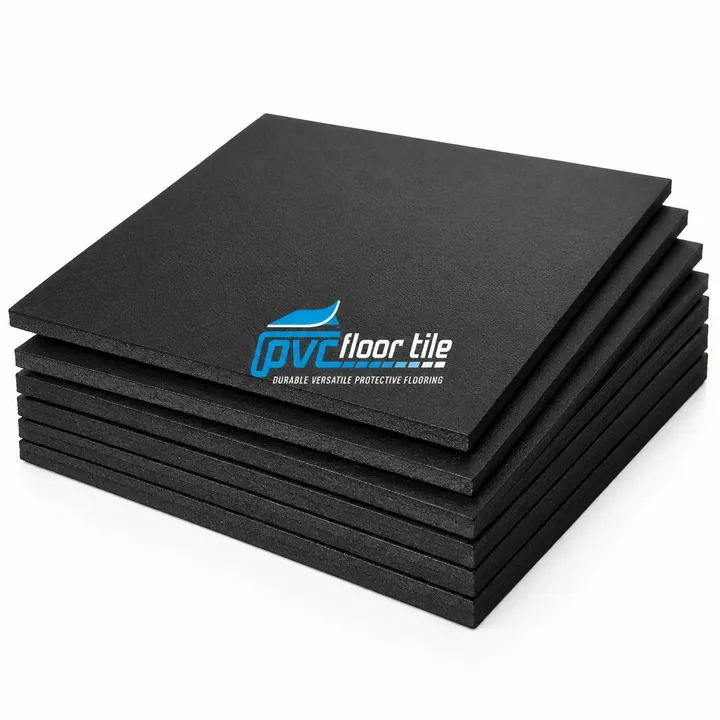
Fitness Studio Tiles – 1 Bundle (4 Tiles)
Price range: R2300,00 through R2645,00
Your payments are safe and protected.
What Are Fitness Studio Tiles?
Fitness Studio Tiles – 1 Bundle are recycled-rubber flooring tiles designed for personal training studios, indoor gyms, cardio areas, workout rooms and controlled strength-training spaces. Their smooth black surface provides a practical flooring solution for protecting suitable existing floors from everyday exercise activity, equipment movement and general wear.Manufactured in a 1m × 1m tile format, these fitness tiles are available in 15mm and 20mm thickness options, allowing customers to select flooring according to their intended training activities. The recycled-rubber construction creates a dedicated exercise surface for gym equipment, training benches, fitness machines and selected workout zones.Whether upgrading a personal training facility, protecting an equipment station or planning a larger exercise floor, Fitness Studio Tiles offer a modular approach to gym flooring. For additional thicknesses, formats and applications, explore our Gym Flooring collection.
Fitness Studio Tiles are modular recycled-rubber flooring products developed for suitable exercise and training environments. Their purpose is to provide a dedicated surface between fitness equipment, users and the existing floor while creating an organised training area.Unlike ordinary residential flooring, rubber gym tiles are selected with exercise activity, equipment placement and maintenance requirements in mind. Their smooth surface provides a consistent appearance across workout sections, particularly where several tiles are installed together.
Why Choose Recycled-Rubber Fitness Flooring?
Recycled rubber is widely used in exercise flooring because it can provide a resilient surface for suitable fitness applications. Actual performance depends on rubber composition, density, thickness and installation conditions.
Important benefits include:
- Floor coverage: Helps reduce direct contact between equipment and the underlying surface.
- Defined training zones: Creates dedicated areas for cardio, stretching and controlled strength exercises.
- Practical surface resilience: Provides a rubber flooring layer rather than direct contact with bare concrete.
- Professional appearance: The smooth black finish complements many fitness interiors.
- Straightforward maintenance: Supports routine sweeping, vacuuming and damp mopping.
- Modular planning: Allows installations to be planned according to available floor space.
Product Specifications – Fitness Studio Tiles
| Specification | Product Details |
|---|---|
| Product Name | Fitness Studio Tiles – 1 Bundle |
| Material | Recycled Rubber |
| Colour | Black |
| Tile Dimensions | 1000 × 1000mm |
| Available Thicknesses | 15mm and 20mm |
| Coverage Per Tile | 1m² |
| Bundle Contents | Confirm exact number of tiles before ordering |
| Total Bundle Coverage | Depends on confirmed bundle quantity |
| Surface Texture | Smooth |
| Flooring Type | Modular Rubber Gym Flooring |
| Primary Application | Fitness Studios and Workout Rooms |
| Other Applications | Cardio Areas, Personal Training and Controlled Strength Zones |
| Equipment Applications | Suitable Cardio Machines, Benches and Exercise Equipment |
| Recommended Environment | Indoor Training Areas |
| Installation | Loose-Lay or Secured Installation as Appropriate |
| Suitable Subfloor | Clean, Dry, Firm and Level |
| Maintenance | Sweeping, Vacuuming and Damp Mopping |
| Heavy Impact Use | Additional Protection Recommended for Repeated Weight Drops |
Why Choose Fitness Studio Tiles for Exercise Areas?
Protection for Existing Floors
Fitness equipment can create repeated contact pressure on concrete, screed, tiles and other underlying surfaces. Equipment legs, benches and regular foot movement may contribute to marking or surface wear.A suitable rubber flooring layer helps separate the equipment from the original floor. This can reduce direct surface contact during ordinary training activities.However, rubber flooring does not guarantee prevention of every type of damage. Heavy impacts, concentrated loads and equipment movement should still be evaluated according to the installation conditions.
A Defined Surface for Exercise
- Fitness studios often contain several types of training activity within the same room. Clients may move from a cardio machine to a stretching station or from a training bench to a controlled strength exercise.
- A dedicated tiled section makes it easier to organise the room according to these functions.
- This is particularly useful for smaller studios where equipment placement and clear movement routes are important.
Smooth Black Flooring Appearance
- The smooth black finish creates a consistent, understated appearance suitable for many studio interiors.
- Black rubber flooring can complement mirrors, gym equipment, storage racks and other common exercise-room features.
- The finish also allows facility managers to identify individual training areas without relying on elaborate floor designs.
Routine Cleaning and Maintenance
- Exercise facilities require regular cleaning because of foot traffic, perspiration, dust and general equipment use.
- Fitness Studio Tiles can be maintained using basic cleaning practices, provided products compatible with the rubber surface are used.
- Frequent maintenance also provides opportunities to identify tile movement, edge damage and accumulated dirt.
Where Can Fitness Studio Tiles Be Installed?
Personal Training Studios
Personal trainers often require flexible exercise areas for clients performing different activities during one session.
Fitness Studio Tiles can be considered for suitable spaces used for:
- Warm-up exercises and mobility work.
- Controlled strength training.
- Resistance-band activities.
- Fitness benches and selected dumbbell exercises.
- Suitable cardio equipment.
- General personal training sessions.
Facility owners should match the flooring to their equipment loads and training intensity.
Home Gym Rooms
- A home gym may contain an exercise bicycle, treadmill, adjustable bench or a selection of free weights.
- Rubber tiles can create a defined training surface within a spare room, enclosed garage or dedicated exercise area.
- For installation over timber, laminate or other sensitive flooring, customers should confirm whether additional protective layers are required.
Cardio Equipment Zones
- Treadmills, exercise bikes and rowing machines place repeated loads on the floor during operation.
- A suitable rubber flooring surface may help reduce direct contact between these machines and the original substrate.
- The flooring's compatibility with specific machines should be confirmed, particularly where equipment manufacturers provide minimum stability or support requirements.
Commercial Fitness Studios
- Commercial fitness environments often require surfaces suitable for regular pedestrian movement, scheduled exercise sessions and repeated cleaning.
- Fitness Studio Tiles may be considered for designated training sections where the verified product performance matches the operating conditions.
- For demanding commercial installations, confirm the required thickness, attachment method, movement resistance and maintenance procedure.
Stretching and Mobility Areas
Some facilities use rubber flooring for warm-up zones, mobility exercises and floor-based training.
The surface may provide a practical alternative to bare concrete, although the suitability of a particular thickness for kneeling or floor exercises depends on individual comfort and rubber properties.
Additional exercise mats may still be preferred for activities requiring specialised cushioning.
Choosing Between 15mm and 20mm Fitness Studio Tiles
Thickness is an important consideration when selecting rubber gym flooring because it influences finished floor height, weight and the amount of material beneath equipment.
15mm Rubber Fitness Tiles
The 15mm option may be considered for suitable cardio zones, personal training areas and controlled exercise environments.
Customers should evaluate the intensity of activities and the equipment used rather than assuming that all machines or weights are appropriate.
Important considerations include:
- Equipment footprint and stability.
- Ordinary training activity.
- Existing floor condition.
- Door and threshold clearance.
- Whether weights will be dropped.
20mm Rubber Fitness Tiles
- The 20mm variation provides a thicker rubber layer and may be considered where additional flooring depth is desired.
- However, greater thickness alone does not establish a particular impact rating or maximum supported weight.
- Rubber density, composition and testing remain important when selecting flooring for demanding exercise activities.
Which Thickness Is Better for Your Studio?
| Consideration | 15mm Tiles | 20mm Tiles |
|---|---|---|
| Tile dimensions | 1m × 1m | 1m × 1m |
| Material | Recycled rubber | Recycled rubber |
| Surface finish | Smooth | Smooth |
| Flooring thickness | 15mm | 20mm |
| Typical selection | Controlled training zones | Areas requiring a thicker rubber layer |
| Equipment suitability | Confirm for intended use | Confirm for intended use |
| Repeated heavy weight drops | Additional protection may be required | Additional protection may still be required |
For repeated heavy drops, weightlifting platforms or suitable drop pads should be considered rather than relying on tile thickness alone.
Understanding Bundle Quantity and Floor Coverage
- Accurate quantity information is essential when planning fitness flooring.
- Each tile is listed as measuring 1m × 1m, meaning an individual tile covers one square metre.
- Coverage per tile = 1m × 1m = 1m²
- The total coverage of a bundle depends on the number of individual tiles supplied.
Preparing the Floor Before Installation
Correct preparation is important for achieving a stable, neat and functional exercise floor.
Inspect the Subfloor
- Check for loose material, significant cracks, uneven areas and moisture problems.
- A rubber floor covering should not be used to conceal structural defects or unstable surfaces.
Clean the Installation Area
- Sweep or vacuum dust, grit and loose debris.
- Remove contamination that may interfere with tile stability or installation products.
- Ensure the floor is dry before placing the rubber tiles.
Plan Equipment Positions
- Determine where exercise machines, benches and training stations will be positioned.
- Consider walking routes, equipment clearance and whether individual tiles will require trimming.
Check Finished Floor Height
- The selected 15mm or 20mm thickness increases the finished floor height.
- Confirm door clearance, nearby thresholds and appropriate transition edging before installation.
How to Install Fitness Studio Tiles
The appropriate installation method depends on the room, level of activity and flooring manufacturer's requirements.
Basic Installation Steps
- Measure the area: Confirm total square metres and equipment positions.
- Prepare the floor: Ensure the underlying surface is clean, dry, firm and level.
- Plan the tile arrangement: Position full tiles strategically to minimise unnecessary cuts.
- Lay the tiles: Follow the approved installation method.
- Check alignment: Ensure tile edges meet correctly without excessive gaps.
- Finish the perimeter: Trim appropriate sections and consider suitable edging.
- Inspect the installation: Check for movement or raised corners before equipment is installed.
Loose-Lay Versus Secured Installation
Some rubber flooring systems may be suitable for loose-lay installation under particular conditions.
Other environments may require approved tape, adhesive or perimeter restraint to manage tile movement.
Commercial settings, rolling equipment and frequent changes of direction may require additional consideration.
Do not assume one installation method is appropriate for every room.
Cleaning and Maintenance of Fitness Studio Tiles
Consistent cleaning contributes to a professional exercise environment and helps maintain the appearance of recycled-rubber flooring.
Daily and Weekly Cleaning
- Sweep or vacuum loose dust, dirt and chalk.
- Remove debris around equipment feet and tile joints.
- Damp mop using a mild, rubber-compatible cleaning solution.
- Avoid excessive standing water.
- Remove perspiration and spills promptly.
- Inspect the flooring for movement or visible damage.
Cleaning Under Exercise Equipment
- Dirt may accumulate beneath treadmills, benches and other machines.
- Where safe and practical, access these areas during scheduled maintenance.
- Follow equipment manufacturer instructions when moving or lifting machines.
Products to Avoid
- Strong solvents, bleach and oily cleaning products may be unsuitable for certain rubber formulations.
- Use cleaning solutions approved for the actual flooring material.
- Avoid unverified chemicals or aggressive cleaning equipment.
Important Considerations Before Buying
Confirm the Bundle Contents
- The product title and listed tile dimensions should agree on the number of tiles supplied and the total floor area covered.
- Before paying, customers should confirm whether one purchase provides one tile or multiple tiles.
Select the Correct Thickness
- Choose between 15mm and 20mm based on the intended training activity, equipment requirements and installation conditions.
- Additional material thickness does not automatically guarantee suitability for repeated heavy weight drops.
Consider Equipment Loads
- Treadmills, weight benches, plate-loaded machines and free-weight areas have different loading characteristics.
- Product suitability should be verified for heavy or concentrated equipment loads.
Check the Working Environment
- Indoor studio use is the primary application described here.
- Outdoor and wet-area use should only be specified where environmental performance and installation suitability are confirmed.
Plan the Installation Carefully
- Measure the room, assess the subfloor and identify permanent structures.
- Confirm whether flooring accessories, adhesive or suitable perimeter finishing components will be required.
Frequently Asked Questions About Fitness Studio Tiles
What are Fitness Studio Tiles made from?
- Fitness Studio Tiles are manufactured from recycled rubber and feature a smooth black surface, according to the listed product specifications.
What size are Fitness Studio Tiles?
- Each tile measures 1m × 1m, with 15mm and 20mm thickness options available.
How much floor area does one tile cover?
- Each tile measuring 1m × 1m covers 1 square metre (1m²).
How many tiles are included in one bundle?
- The bundle quantity requires confirmation because the product title refers to four tiles while the existing description refers to 1m². Confirm the exact number of tiles and total coverage before ordering.
Are Fitness Studio Tiles suitable for personal training studios?
- Yes. They are suitable for personal training studios, cardio zones and controlled exercise areas, subject to equipment and installation requirements.
Can I install these tiles under a treadmill?
- They may be suitable for selected treadmills. Check the equipment manufacturer's requirements and confirm that the flooring can accommodate the machine's weight and movement.
What is the difference between 15mm and 20mm gym tiles?
- 15mm tiles: A thinner rubber flooring option for suitable controlled exercise environments.
- 20mm tiles: Provide a thicker rubber layer where additional flooring depth is required.
- Actual impact performance depends on rubber density, construction and product specifications.
Are these tiles suitable for dropping heavy weights?
- Repeated heavy weight drops require additional protection.
- Specialist weightlifting platforms, drop pads or verified heavy-impact flooring may be more appropriate.
Can Fitness Studio Tiles be installed over concrete?
- Yes. A clean, dry, stable and sufficiently level concrete floor is generally a suitable starting point, subject to installation requirements.
Do these rubber tiles require adhesive?
- Installation depends on the specific flooring system and operating conditions.
- Confirm whether loose-lay installation, flooring tape or adhesive is recommended.
Are Fitness Studio Tiles suitable for home gyms?
- Yes. They are suitable for selected home workout rooms, cardio equipment areas and controlled strength-training spaces.
How should recycled-rubber gym tiles be cleaned?
- Sweep or vacuum regularly to remove dirt, dust and loose debris.
- Damp mop using a mild, rubber-compatible cleaning solution.
- Remove spills promptly and avoid strong solvents or unapproved cleaning chemicals.
Can Fitness Studio Tiles be used outdoors?
- The product information mentions selected outdoor environments.
- Weather resistance, UV suitability and installation requirements should be verified before use in exposed areas.
Can I expand the flooring later?
- Yes, additional compatible tiles may be installed where the flooring system allows expansion.
- Confirm matching thickness, dimensions and surface construction before purchasing more tiles.
Buy Fitness Studio Tiles in South Africa
Fitness Studio Tiles – 1 Bundle provide a recycled-rubber flooring solution for personal training studios, home gyms, cardio sections and selected commercial exercise environments.
Available in 15mm and 20mm thicknesses, the smooth black tiles offer a modular way to create designated exercise areas while helping reduce direct contact between suitable gym equipment and the underlying floor.
Additional information
| Weight | 47,2 kg |
|---|---|
| Dimensions | N/A |
| Colour | Black |
| Dimensions | 1mx1mx0,015m, 1mx1mx0,020m |
| Applications | Gym Flooring |
| Material Types | Rubber |
| Surface Texture | Smooth |
| Working Environment | Indoor Use |

Mashudu Mudau –
More comfortable than the bed i sleep on, Now my knees can get a bit of relief. i loveeeeee thissssssssss mattttt.