

Secure Payment
Your transactions are protected with encrypted SSL security. Payments are processed safely through verified South African payment gateways.
Factory Flooring
Price range: R122,96 through R376,67
Your payments are safe and protected.
Factory Flooring Tiles – 500 × 500 × 5 mm Interlocking Flooring
Busy factories need flooring that can handle everyday activity while remaining practical to install, clean and maintain. Our Factory Flooring Tiles – 500 × 500 × 5 mm provide a modular PVC flooring solution for production areas, assembly sections, packing zones, factory walkways and other controlled industrial spaces.
The tiles connect through an interlocking edge system to create a continuous modular surface over a suitable prepared floor. Unlike a permanently bonded floor finish, individual tiles can be accessed and replaced when necessary, making the system practical for factory environments where layouts and working areas may change over time.
Explore our full range of Factory Flooring solutions for additional modular flooring options designed for production areas, assembly zones, factory walkways and industrial workspaces.
PVC Flooring Designed for Busy Factory Environments
Factory floors rarely have just one type of activity.
A typical facility may include production lines, assembly stations, packing tables, staff walkways, storage areas, maintenance sections and dispatch preparation zones. Each area places different demands on the floor.
Factory Flooring tiles provide a modular surface that can be used across suitable sections of the workplace without forcing the entire building to use one permanent flooring system.
They can be particularly useful in areas where businesses want to:
- Cover selected concrete floor sections
- Improve the appearance of older factory floors
- Create cleaner production or assembly areas
- Establish defined walkways and work zones
- Replace localised damaged flooring more easily
- Upgrade flooring without installing large continuous rolls
- Expand an existing modular floor when layouts change
The result is a flooring system that can adapt more easily to the changing needs of a working factory.
Studded Surface for a Practical Factory Floor Finish
Factory floors need to remain practical throughout the working day.
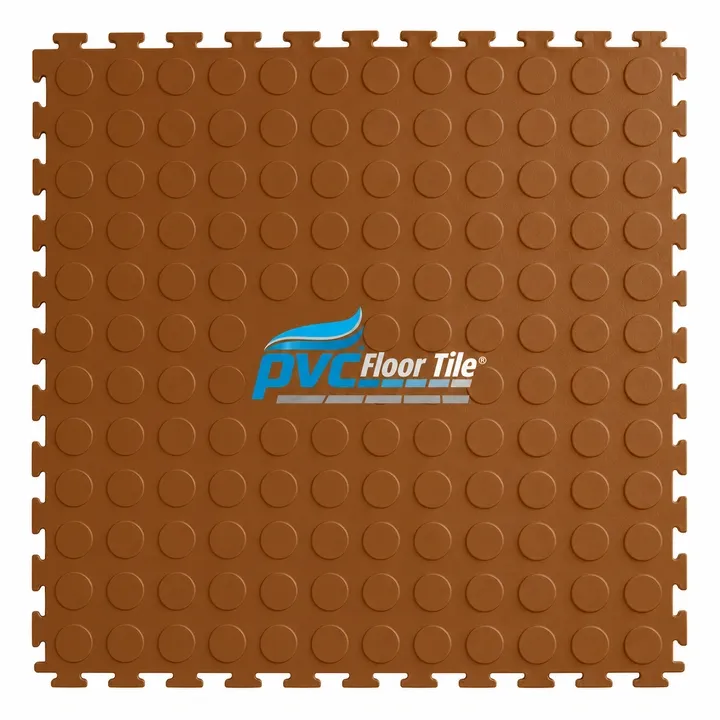
The Factory Flooring tile uses a studded surface finish, giving the installed floor a functional industrial appearance while providing surface texture for everyday pedestrian movement.
The repeated studded design creates a consistent look across connected tiles and suits environments where a smooth decorative floor is not the main priority.
The textured finish works particularly well in areas such as:
- Assembly stations
- Packing areas
- Production walkways
- Maintenance sections
- Staff work zones
- Utility areas
- General factory floor refurbishment
Good housekeeping remains important in any industrial environment. Spills, oils, loose materials and other contaminants should always be cleaned promptly.
500 × 500 mm Modular Tiles
Each Factory Flooring tile measures 500 × 500 mm.
The square format makes it simple to estimate how many tiles are required because approximately four tiles cover 1 m² before allowing for cuts and installation wastage.
For example:
- 5 m² requires approximately 20 tiles
- 10 m² requires approximately 40 tiles
- 25 m² requires approximately 100 tiles
- 50 m² requires approximately 200 tiles
The final quantity should always be calculated from the actual floor measurements.
Extra material may be needed around machinery, columns, doorways, irregular walls and perimeter cuts. For larger factory installations, keeping spare matching tiles can also be useful for future repairs or alterations.
5 mm Factory Flooring for Refurbishment Projects
The 5 mm thickness creates a relatively low-profile modular floor.
This can be useful when upgrading an existing factory floor because excessive changes in floor height may interfere with doorways, transitions, fixed equipment or adjoining surfaces.
A 5 mm PVC floor tile can therefore be a practical choice for selected production and work areas where the requirement is primarily for modular floor coverage and easier maintenance rather than a thick impact-absorbing floor system.
Businesses dealing with unusually heavy machinery, high concentrated loads or specialist industrial processes should always have the flooring requirements assessed before installation.
Interlocking Installation Without Complicated Floor Work
One of the key advantages of Factory Flooring tiles is the interlocking edge design.
Compatible tiles connect to neighbouring pieces to create a modular floor surface. In many suitable installations, this allows the floor to be dry-laid without permanently bonding every tile to the subfloor.
This can reduce disruption during refurbishment and makes it easier to work on the floor in sections.
Benefits of an interlocking system include:
- Straightforward installation
- No long curing period in normal dry-lay installations
- Easier handling of individual tiles
- Progressive installation across larger areas
- Individual tile replacement
- Flexible future expansion
- Easier access to localised damaged sections
Installation requirements still depend on the condition of the existing floor and the intended use of the area.
Factory Walkways and Staff Movement Areas
Walkways are among the busiest parts of many factories.
Employees may move continuously between production lines, storage areas, packing stations, maintenance sections and dispatch zones.
Interlocking PVC tiles can help create a more uniform surface across selected pedestrian routes while protecting the existing floor underneath from general everyday wear.
The modular format also means a walkway can be extended or altered if the internal factory layout changes.
This can be useful for businesses that regularly adjust equipment positions, production flow or storage arrangements.
Production and Assembly Areas
Production and assembly areas often combine staff movement, workstations, tools, trolleys and repetitive everyday activity.
Factory Flooring tiles provide a practical modular option for selected areas where the operating conditions suit a 5 mm PVC floor tile.
They can be used to create a cleaner finished surface around assembly stations, packing areas and general production workspaces.
Because individual tiles remain replaceable, localised damage does not automatically mean that the entire floor needs to be removed.
That can make maintenance more manageable in active work environments.
Packing and Dispatch Preparation Areas
Packing areas can become high-traffic zones, particularly where staff repeatedly move between stock, tables, shelving and dispatch points.
A modular PVC floor can provide a more uniform appearance while helping define these working areas within the factory.
The 500 × 500 mm tile format also makes it easier to extend the floor if the packing or dispatch area grows.
Where trolleys, pallet equipment or concentrated loads are involved, the actual operating conditions should be considered when selecting the flooring.
Selected Maintenance and Workshop Areas
Factory Flooring can also be used in selected maintenance and workshop sections where the floor conditions are suitable.
These may include:
- Tool preparation areas
- Light service sections
- Maintenance walkways
- Staff workstations
- Utility areas
- Technical rooms
The flooring should be selected according to the actual environment.
Areas exposed to specialist chemicals, very heavy machinery, unusually high point loads or other demanding industrial processes may require a different flooring specification.
For other industrial floor solutions, customers can also explore our broader Rubber Mats and related flooring ranges.
Easier Maintenance for Working Factories
A factory floor needs to be practical to maintain.
Routine cleaning of the PVC tiles is straightforward and can normally be incorporated into everyday housekeeping procedures.
Recommended maintenance includes:
- Sweeping away loose debris
- Vacuuming dust where appropriate
- Damp mopping when required
- Using a suitable mild PVC-compatible cleaner
- Cleaning spills promptly
- Inspecting interlocking joints periodically
- Replacing damaged tiles where necessary
Harsh solvents or aggressive chemicals should not be used unless their compatibility with the flooring has been confirmed.
Cleaning frequency will depend on the activity level of the factory.
High-traffic production or packing areas will naturally need more frequent attention than lower-use sections.
Replace Individual Tiles Instead of the Entire Floor
One of the biggest advantages of modular factory flooring is localised replacement.
If a tile becomes damaged or excessively worn, the affected section can be assessed without automatically removing the entire installation.
A compatible replacement tile can be installed where appropriate, helping businesses maintain the floor in smaller sections.
This may help:
- Reduce unnecessary replacement costs
- Limit disruption to surrounding areas
- Simplify future maintenance
- Extend the useful life of the overall installation
- Keep production areas looking more consistent
Product Specifications – Factory Flooring
| Specification | Product Details |
|---|---|
| Product Name | Factory Flooring PVC Interlocking Tile |
| Material | PVC |
| Black Tiles Material | Recycled PVC |
| Coloured Tiles Material | Virgin PVC |
| Tile Size | 500 × 500 mm |
| Thickness | 5 mm |
| Coverage | 4 Tiles ≈ 1 m² |
| Surface Texture | Studded Finish |
| Connection System | Interlocking Edge Design |
| Flooring Type | Interlocking PVC Floor Tile |
| Primary Application | Factory and Production Floor Protection |
| Contents | 4 Tiles Per 1 m² Pack |
| Minimum Order Quantity | 50 Tiles |
| Standard Colour | Black |
| Premium Colours | Various Approved Colours |
| Recommended Environment | Indoor and Covered Factory Areas |
| Installation | Modular Dry-Lay on Suitable Prepared Floors |
| Maintenance | Low |
| Warranty | 1-Year Limited Manufacturing Warranty |
How to Install Factory Flooring Tiles
A good installation starts with a suitable subfloor.
Before laying the tiles, make sure the existing surface is:
- Clean
- Dry
- Firm
- Reasonably level
- Free from loose debris
- Free from sharp objects
Start by measuring the area and planning the tile layout.
Using a straight wall or marked reference line can help keep the installation aligned.
Basic Installation Steps
- Clean and inspect the existing floor.
- Measure the complete installation area.
- Plan the tile direction and starting position.
- Place the first Factory Flooring tile.
- Connect the neighbouring interlocking edges.
- Continue installing the tiles row by row.
- Check alignment throughout the installation.
- Trim perimeter pieces where required.
- Add suitable edging to exposed sides where necessary.
- Inspect the completed floor before use.
The exact installation approach may vary depending on the existing subfloor and factory conditions.
Factory Flooring for South African Businesses
Factories across South Africa operate in very different environments, from manufacturing and assembly facilities to packing, maintenance and distribution operations.
A flooring system therefore needs to fit the way the actual workplace functions.
Factory Flooring tiles offer businesses a modular 500 × 500 × 5 mm PVC flooring option that can be installed across selected production areas and maintained section by section.
PVC Floor Tile supplies modular flooring products to businesses throughout South Africa and can assist with floor quantities, larger installations and bulk orders.
The minimum order for this product is 50 tiles, which covers approximately 12.5 m² before installation wastage.
For factories planning larger areas, measure the full space first so the required quantity and cutting allowance can be calculated correctly.
Frequently Asked Questions About Factory Flooring
What flooring is suitable for a factory?
The correct factory flooring depends on traffic, machinery, point loads, chemicals and working conditions. These 5 mm interlocking PVC tiles are designed for selected production, assembly, packing and factory walkway areas where modular floor protection is appropriate.
What are Factory Flooring tiles made from?
Standard black Factory Flooring tiles are manufactured from recycled PVC. Approved coloured versions are manufactured from virgin PVC.
What size are the tiles?
Each tile measures 500 × 500 mm.
How thick are Factory Flooring tiles?
This product is 5 mm thick.
How many tiles make 1 m²?
Approximately four 500 × 500 mm tiles cover 1 m² before cuts and installation wastage.
Do interlocking factory floor tiles need adhesive?
In many suitable installations the tiles can be installed using a modular dry-lay method. The subfloor and operating conditions should be assessed before installation.
Can individual Factory Flooring tiles be replaced?
Yes. Compatible individual tiles can be removed and replaced where necessary, which is one of the main advantages of modular flooring.
Can these tiles be installed over concrete?
They can be installed over a suitable concrete subfloor provided the surface is clean, dry, stable and reasonably level.
Are these tiles suitable for heavy machinery?
Suitability depends on the machinery, concentrated loads, movement and operating conditions. Heavy equipment applications should be assessed before the flooring is specified.
Are Factory Flooring tiles waterproof?
The PVC material is water-resistant, but moisture can pass through the joints between interlocking tiles. The installed floor should therefore not automatically be treated as a completely watertight system.
Where can I buy Factory Flooring in South Africa?
PVC Floor Tile supplies Factory Flooring and other modular flooring solutions across South Africa, with support for bulk orders and larger commercial or industrial flooring projects.
Additional information
| Weight | 5 kg |
|---|---|
| Dimensions | N/A |
| Dimension | 500 × 500 × 5 mm, 500 × 500 × 6 mm |
| Colour | Beige, Black, Blue, Brown, Green, Grey, Orange, Red, White, Yellow |
| Benefits | Anti-Slip Surface, Easy Installation, Shock Absorption |
| Material Types | PVC |
| Surface Texture | Coin Pattern |
| Durability | High Impact Resistant |
| Wear Ratings | Best |
| Working Environment | High-Traffic Zones |

Reviews
There are no reviews yet.