
Secure Payment
Your transactions are protected with encrypted SSL security. Payments are processed safely through verified South African payment gateways.
Duckboard Lock (1 Peace)
Original price was: R110,00.R85,27Current price is: R85,27.
700 in stock
Your payments are safe and protected.
700 in stock
What Are Duckboard Interlocking Tiles?
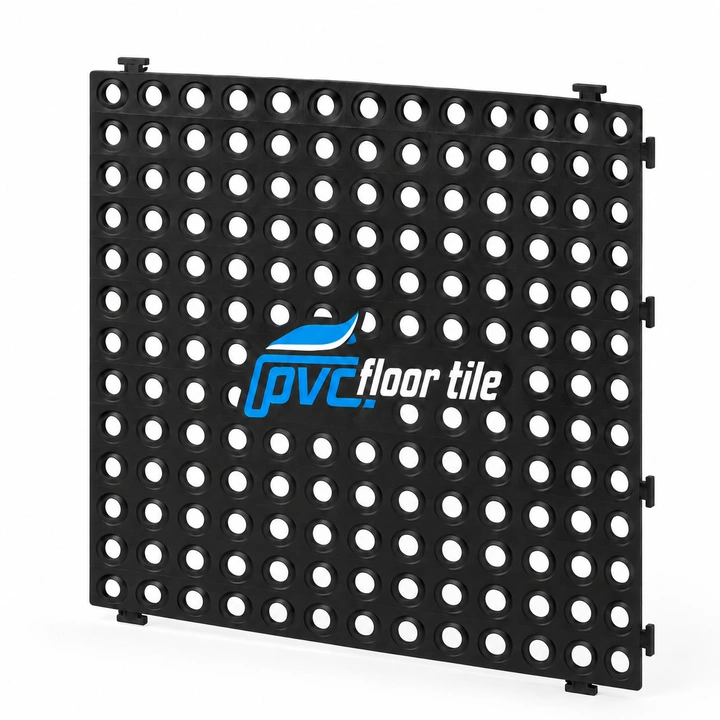
Duckboard Interlocking Tiles – 450×450×16mm are black recycled-rubber drainage floor tiles designed for suitable wet areas, washrooms, changing rooms, covered walkways and selected commercial utility spaces. Their open-grid duckboard construction creates a raised walking surface with openings that allow water to pass towards the underlying floor.Unlike solid PVC floor tiles, these duckboard tiles are manufactured from recycled rubber. The open-grid design makes them particularly relevant to applications where surface water, regular cleaning and the condition of the underlying drainage system are important considerations.
Each tile measures 450 × 450mm, with a listed thickness of 16mm. One tile covers approximately 0.2025m², meaning about five tiles are required for one square metre before allowing for cutting and layout differences.The tiles are supplied individually, making it possible to calculate quantities according to the size of the intended installation.
For other drainage flooring products and compatible wet-area options, explore our Duckboard Tiles and Mats collection.
Duckboard Interlocking Tiles are modular rubber flooring panels designed with an open-grid or raised drainage structure.Rather than forming a completely solid floor covering, their openings allow suitable liquids and small amounts of water to pass below the walking surface.
Key Features of Duckboard Interlocking Tiles
- Recycled-rubber construction: Manufactured from recycled rubber.
- Black colour: Practical finish for compatible wet-area installations.
- 450 × 450mm dimensions: Modular square tile format.
- 16mm listed thickness: Raised duckboard profile.
- Open-grid structure: Openings allow water to pass below the surface.
- Interlocking design: Compatible tiles connect to form larger sections.
- Individual tile sales: Supplied per tile.
- Modular replacement: Individual compatible tiles may be replaced.
- Wet-area applications: Suitable for consideration in selected washrooms and changing rooms.
- Routine maintenance: Surface and underlying drainage areas require cleaning.
Duckboard Interlocking Tiles Technical Specifications
| Product Name | Duckboard Interlocking Tiles |
| Material | Recycled Rubber |
| Colour | Black |
| Tile Dimensions | 450 × 450mm |
| Listed Thickness | 16mm |
| Selling Unit | One Tile |
| Listed Weight | 1.7kg |
| Surface Design | Open-Grid Duckboard |
| Connection Type | Interlocking |
| Primary Function | Raised Drainage Flooring |
| Potential Applications | Washrooms, Changing Rooms and Suitable Wet Walkways |
| Installation | Over a Suitable Stable, Draining Subfloor |
| Maintenance | Regular Surface and Underfloor Cleaning |
Why Choose Duckboard Interlocking Tiles?
Open-Grid Drainage Surface
- The defining characteristic of duckboard flooring is its open structure.
- Water can pass through the surface openings rather than remaining entirely on the upper walking area.
- However, effective drainage depends on the condition and slope of the underlying floor.
Recycled-Rubber Material
These tiles are manufactured from recycled rubber.
This distinguishes them from solid PVC floor tiles and plastic vented flooring products.
Recycled content should not automatically be presented as proof of a particular environmental certification or performance rating.
Raised Modular Flooring
The raised duckboard design creates separation between the upper walking surface and the underlying floor.
This can be useful in suitable wet environments.
The exact amount of clearance depends on the tile construction and installation.
Interlocking Installation
The connecting system allows individual tiles to form larger floor sections.
This can support modular installation and localised replacement.
The correct method depends on the tile's interlocking profile and manufacturer instructions.
Individual Tile Replacement
Damaged tiles may be replaced individually where the installation permits.
This can simplify maintenance of localised sections.
Replacement tiles must match the original dimensions and joining profile.
Practical Wet-Area Maintenance
The open-grid structure allows access to drainage paths but also creates places where debris may collect.
Regular cleaning of both the upper surface and the underlying floor is important.
Where Can Duckboard Interlocking Tiles Be Used?
Commercial Changing Rooms
Changing rooms may experience moisture from footwear, showers and adjacent wash areas.
Duckboard tiles can be considered where a raised open-grid floor is appropriate.
The underlying floor must provide suitable drainage.
Washroom Floor Sections
Selected washrooms may use drainage flooring in areas exposed to routine water.
The tile openings allow liquid to move towards the underlying surface.
Cleaning procedures must prevent the accumulation of soap residues and debris.
Covered Wet Walkways
Covered pedestrian areas may be exposed to moisture and regular cleaning.
Duckboard flooring may be suitable where the surface and subfloor meet the location's requirements.
Certified wet-slip performance should be confirmed where necessary.
Pool Facility Changing Areas
Pool facilities may include changing sections and wet pedestrian routes.
Open-grid rubber tiles may provide a suitable raised floor finish in selected areas.
Chlorine exposure, cleaning chemicals and wet-slip requirements must be evaluated.
Commercial Utility Areas
Some commercial premises need flooring in washdown or cleaning-related sections.
Duckboard tiles can be considered where drainage, hygiene and equipment requirements are compatible.
Covered Entrance Utility Sections
Covered entrance areas sometimes experience water tracked in from outside.
Drainage tiles may be considered where sufficient underlying water management exists.
Appropriate entrance matting may be more suitable for other applications.
Selected Light-Duty Workstations
Some utility or service areas may benefit from raised drainage flooring.
Equipment loads, dropped objects and other operating conditions must be checked.
These tiles should not automatically be specified for heavy industrial machinery.
Duckboard Flooring Application Guide
| Application | Potential Benefit | Key Requirement |
|---|---|---|
| Changing Rooms | Raised open-grid floor | Drainage and cleaning |
| Washrooms | Water passage through openings | Functional floor drains |
| Covered Wet Walkways | Modular surface | Verified traction |
| Pool Changing Areas | Suitable drainage sections | Chemical compatibility |
| Commercial Utility Areas | Raised floor covering | Hygiene and loading |
| Covered Entrance Areas | Water-management option | Suitable drainage |
| Light Utility Workstations | Modular flooring | Load compatibility |
How Does Duckboard Drainage Flooring Work?
The open-grid surface contains openings through which water may pass.
Liquid then reaches the underlying floor.
If the substrate has suitable falls and working drainage outlets, water can move towards the intended drainage points.
If the underlying floor is uneven or does not drain correctly, water may remain beneath the tiles.
This means the duckboard flooring and the existing drainage system must be considered together.
Does Duckboard Flooring Remove Standing Water?
Not automatically.
The open-grid design allows water to pass through its openings.
It does not pump water away or correct an unsuitable floor slope.
Can Debris Collect Under Duckboard Tiles?
Yes.
Dust, hair, soap residue and other debris may collect underneath an open-grid installation.
Periodic lifting or cleaning access may be necessary.
Is Duckboard Flooring a Waterproofing System?
No.
Duckboard tiles are a floor-covering product, not a waterproofing membrane.
Waterproofing and structural drainage must be handled separately where required.
Duckboard Tiles vs Other Wet-Area Flooring
Duckboard Tiles vs Solid Rubber Mats
Solid rubber mats provide a continuous or mostly closed surface.
Duckboard tiles contain openings that allow water to pass through.
The correct product depends on the intended drainage and walking-surface requirements.
Duckboard Tiles vs Rubber Ring Mats
Rubber ring mats also contain openings but may have different dimensions, thicknesses and surface designs.
Both product types should be selected according to their specific construction and intended use.
Duckboard Tiles vs Vented Plastic Tiles
Vented plastic tiles are manufactured from plastic materials and may use an open drainage design.
Duckboard tiles in this product listing are made from recycled rubber.
Material, flexibility and fitting systems may differ.
Duckboard Tiles vs Solid PVC Flooring
Solid PVC tiles primarily form a modular floor covering.
Duckboard tiles provide an open-grid surface intended for suitable drainage applications.
They should not be treated as identical flooring systems.
Duckboard Tiles vs Loose Drainage Mats
Loose drainage mats may be supplied in larger sections or rolls.
Interlocking duckboard tiles are modular square panels.
The choice depends on the required layout, fitting method and cleaning access.
Wet-Area Flooring Comparison
| Flooring Type | Main Characteristic | Buying Consideration |
|---|---|---|
| Duckboard Interlocking Tiles | Open-grid recycled rubber | Drainage and cleaning |
| Solid Rubber Mats | Predominantly closed surface | Application-specific use |
| Rubber Ring Mats | Open rubber mat design | Dimensions and drainage |
| Vented Plastic Tiles | Open plastic floor structure | Material and compatibility |
| Solid PVC Tiles | Modular solid flooring | Surface covering |
| Drainage Mat Rolls | Larger continuous sections | Installation and maintenance |
Measure Before Ordering
Measure the length and width of the installation area.
Identify floor drains, structural posts and fixed fixtures.
Consider whether the layout will require full rows of tiles or perimeter cutting.
For accurate purchasing, a scaled layout is preferable to relying only on square-metre estimates.
How to Install Duckboard Interlocking Tiles
Correct installation begins with a suitable base and a functioning drainage system.
Inspect the Existing Subfloor
Check that the surface is firm, stable and sufficiently level for the selected tile system.
Identify damaged areas, loose coverings and unsuitable uneven sections.
Confirm Drainage
- Locate drainage outlets and inspect water-flow paths.
- Correct any blockages before installing the tiles.
- Ensure the flooring will not obstruct the existing drainage system.
Clean the Floor
Remove dust, grit, hair and other debris.
Clean accumulated residues.
Allow the floor to be prepared according to the applicable fitting instructions.
Plan the Layout
- Measure the intended installation area.
- Select a suitable starting point.
- Consider perimeter cuts and the location of drainage outlets.
Connect the Tiles
Align adjoining tiles according to the manufacturer's connection design.
Join the compatible edges.
Maintain consistent rows and check that the panels lie correctly.
Trim Where Required
Measure the remaining spaces carefully.
Use equipment suitable for cutting the rubber product.
Follow appropriate safety procedures.
Inspect Exposed Edges
Exposed tile edges may require suitable edging or another finishing method.
Confirm that any accessories are compatible with the 16mm product profile.
Check the Completed Installation
Inspect joints, floor stability and access to drains.
Confirm that the installation does not obstruct required cleaning or water flow.
Do Duckboard Interlocking Tiles Require Adhesive?
- Some interlocking rubber flooring systems rely on mechanical connections.
- However, the appropriate fitting method depends on the installation, tile profile and operating environment.
- Do not assume every installation can be completed without tools, adhesive or other restraint.
- Follow the actual product installation instructions.
Cleaning and Maintaining Duckboard Tiles
Open-grid flooring requires attention to both the exposed surface and the area beneath the tiles.
Regular Surface Cleaning
- Remove loose dirt and debris.
- Sweep or brush accessible surfaces.
- Clean visible residues.
- Inspect the tile connections.
- Check for damaged or raised edges.
Cleaning Under the Tiles
Debris can collect beneath the raised duckboard structure.
Where the installation allows, lift suitable sections periodically to access the underlying floor.
Clean the substrate and drainage points.
Allow the area to be returned to a suitable condition before refitting.
Cleaning Drainage Openings
Inspect the open-grid channels.
Remove trapped hair, leaves and other material.
Avoid allowing debris to block water movement.
Using Cleaning Products
- Use products compatible with the specific recycled-rubber formulation.
- Avoid aggressive solvents and chemicals unless compatibility has been verified.
- Follow the cleaner manufacturer's instructions.
Inspecting the Interlocking Connections
Check joints for damage or unwanted movement.
Replace incompatible or damaged sections.
Maintaining the Black Finish
Black duckboard tiles may show dust, soap residues or other deposits.
Routine cleaning helps maintain their appearance.
Do not guarantee permanent colour stability under sunlight without technical evidence.
Important Duckboard Flooring Buying Considerations
Wet-Slip Performance
- The product's open-grid design does not automatically establish a particular slip-resistance classification.
- Wet traction depends on the rubber surface, footwear and contamination.
- Use verified testing where a certified classification is required.
Drainage Requirements
The underlying floor must allow water to move towards the intended drainage outlets.
Duckboard tiles cannot correct inadequate drainage.
Cleaning Access
Choose an installation that permits necessary cleaning and maintenance.
Trapped debris may affect hygiene and drainage.
Heavy Equipment Loads
No verified heavy-vehicle or machinery-loading capacity has been established here.
Do not assume suitability for forklifts, heavy machinery or vehicle parking.
Outdoor Exposure
Outdoor installation requires verification of UV stability, temperature performance and weather suitability.
Covered wet areas are not equivalent to unrestricted outdoor exposure.
Chemical Compatibility
Cleaning chemicals, oils and other substances can affect rubber differently.
Check compatibility for the intended location.
Thickness Verification
The product description states 16mm, while the WooCommerce dimensions show 15mm.
Confirm the actual thickness before publishing the final technical specifications.
Frequently Asked Questions About Duckboard Interlocking Tiles
What are Duckboard Interlocking Tiles?
- They are black recycled-rubber open-grid tiles used for suitable drainage and wet-area flooring applications.
Are Duckboard Interlocking Tiles made from PVC?
- No. This product is manufactured from recycled rubber.
What size is each Duckboard Tile?
- Each tile measures 450 × 450mm.
How thick are Duckboard Interlocking Tiles?
- The description specifies 16mm, but the WooCommerce 15mm dimension must be reconciled.
How much area does one tile cover?
- One tile covers approximately 0.2025m².
Do four duckboard tiles cover one square metre?
- No. Four tiles cover 0.81m².
How many duckboard tiles are needed for 1m²?
- Approximately five tiles are required before cutting allowances, although the actual layout may require more.
How many tiles are needed for 10m²?
- The area-based estimate is 50 tiles, or 52 tiles with a 5% allowance.
Do Duckboard Tiles allow water to drain?
- Their open-grid structure allows water to pass through, but the underlying floor must have functioning drainage.
Are Duckboard Tiles waterproof?
- They should not be described as a waterproof membrane. Water can pass through their openings.
Can Duckboard Tiles be installed in changing rooms?
- They may be suitable where the drainage, hygiene and installation requirements are compatible.
Can the tiles be installed over concrete?
- They can be considered over firm, stable and suitably prepared concrete with appropriate drainage.
Do Duckboard Interlocking Tiles require glue?
- The fitting method depends on the tile design and installation requirements.
Are these tiles suitable for forklift traffic?
- Forklift suitability has not been established and requires appropriate technical verification.
How should Duckboard Tiles be cleaned?
- Clean the exposed rubber surface, remove debris from the openings and maintain the underlying floor and drainage outlets.
Can individual damaged tiles be replaced?
- Compatible individual tiles may be replaced where the installation permits.
Buy Duckboard Interlocking Tiles in South Africa
Duckboard Interlocking Tiles – 450×450×16mm provide a modular recycled-rubber flooring option for suitable washrooms, changing rooms, covered wet walkways and commercial utility areas.Their open-grid construction allows water to pass through the walking surface towards an appropriately draining subfloor.
Additional information
| Weight | 1,7 kg |
|---|---|
| Dimensions | 450 × 450 × 15 mm |
| Colour | Black |
| Material Types | Rubber |
| Wear Ratings | Best |
| Working Environment | Wet Areas |

Reviews
There are no reviews yet.