


Secure Payment
Your transactions are protected with encrypted SSL security. Payments are processed safely through verified South African payment gateways.
Anti-static ESD Rubber Roll
Price range: R633,88 through R5244,00
Your payments are safe and protected.
What Is an Anti-Static ESD Rubber Roll?
Anti-Static ESD Rubber Roll is a specialist rubber sheeting product intended for electronics workbenches, component assembly areas, technical laboratories and industrial workplaces where electrostatic discharge (ESD) must be controlled. Manufactured from rubber, the sheeting offers a smooth surface that can be cut and fitted to suitable workstations or flooring areas.Electrostatic discharge can occur when electrical charge transfers between objects at different electrical potentials. Sensitive electronic components may be damaged by discharges that are not noticeable to workers. For this reason, electronics manufacturers and technical facilities often incorporate specially tested work surfaces, grounding accessories and personnel controls into their ESD protection programmes.
This anti-static rubber roll is offered in selectable dimensions and colours, allowing customers to plan their intended application. Its actual electrical classification, grounding compatibility and suitability for a particular ESD-controlled environment must be established using verified technical data.
Explore our Rubber Mats collection for additional rubber matting and industrial surface protection options.
An anti-static ESD rubber roll is a sheet material intended for use in environments where controlling electrostatic charge is important. Depending on its tested electrical characteristics, ESD rubber may be used as part of a static-control system for workbenches, floors or specialised industrial work surfaces.
The material is different from ordinary general-purpose rubber sheeting because the intended application involves electrical performance, not only abrasion resistance, thickness or cushioning.
For electronics workstations, choosing suitable rubber sheeting is only one part of establishing a controlled environment. Grounding connections, personnel procedures, regular testing and compatible accessories may also be necessary.
For a better understanding of electrostatic discharge protection, explore our ESD Anti-Static Rubber Sheeting Guide to learn about anti-static rubber materials, their applications in electronics workstations, and important considerations when choosing flooring or work surfaces for static-sensitive environments.
Key Features of Anti-Static ESD Rubber Sheeting
- SBR/NBR rubber construction: Material identified in the supplied technical specifications.
- Smooth surface: Both sides are described as smooth in the technical information.
- 2mm technical-sheet option: A 10m × 1.2m × 2mm configuration is documented.
- Selectable dimensions: WooCommerce lists multiple size options.
- Cut-to-size format: Sheet material can be measured and trimmed for suitable installations.
- Workbench applications: Relevant to electronics assembly and component-handling stations.
- Industrial applications: Can be evaluated for selected technical and manufacturing environments.
- Maintenance: Routine cleaning can be planned around the surface and its electrical requirements.
Anti-Static ESD Rubber Roll Technical Specifications
| Specification | Supplied Technical Information |
|---|---|
| Product Name | Anti-Static ESD Rubber Roll |
| Material | Rubber |
| Technical-Sheet Roll Length | 10m |
| Technical-Sheet Roll Width | 1.2m |
| Technical-Sheet Thickness | 2mm |
| Technical-Sheet Colour | Green Top / Black Bottom |
| Surface Finish | Smooth on Both Sides |
| Tensile Strength | 3 MPa (3 N/mm²) |
| Hardness | 70 Shore A ±5 |
| Listed Working Temperature | −25°C to +80°C |
| Electrical Resistance | Requires Verification of Full Value and Test Method |
| Other Listed Dimension Attribute | 1m × 1.5m × 3mm |
| Installation | Application-Specific Cutting, Fitting and Grounding Assessment |
| Main Applications | Selected ESD Workbenches and Technical Work Areas |
Explore our Rubber rolls for additional rubber matting and industrial surface protection options.
How Anti-Static Rubber Sheeting Supports ESD-Controlled Workspaces
Understanding Electrostatic Discharge
Electrostatic discharge occurs when accumulated electrical charge transfers between objects or surfaces at different electrical potentials.
In electronics handling environments, this can be a concern because certain components are sensitive to electrical discharge. Damage may not always be immediately visible.
Appropriate ESD control therefore focuses on managing charge generation, providing controlled discharge paths and maintaining effective grounding or equipotential bonding arrangements.
The Role of ESD Work Surfaces
A properly specified ESD work surface forms part of a larger static-control programme.
Depending on its tested resistance and installation, a suitable work surface may help provide a controlled electrical path for charge management.
However, an ESD-labelled rubber sheet should not automatically be assumed to meet a particular resistance classification or industry standard.
Why Grounding Matters
Electrical performance depends on more than the rubber sheet itself.
A complete ESD workstation may require approved grounding accessories, a verified grounding connection, compatible personnel-grounding measures and regular testing.
The grounding arrangement should be developed according to the site's ESD control requirements and relevant electrical safety procedures.
Where Can Anti-Static ESD Rubber Sheeting Be Used?
Electronics Assembly Workbenches
Electronics assembly stations may require controlled surfaces where workers handle circuit boards, electronic parts and other sensitive components.
An appropriately tested rubber sheet can be evaluated for these work surfaces, provided the material and grounding arrangement meet the facility's requirements.
Electronics Testing and Repair Areas
- Technical workshops often contain equipment used to inspect, test and repair electronic products.
- A correctly specified ESD work surface may form part of the protection arrangements used during component handling and equipment servicing.
Component Packaging and Inspection Stations
- Packaging and inspection areas handling sensitive electronic components may require ESD control procedures.
- The suitability of the rubber roll should be assessed alongside packaging materials, operator grounding, equipment and the workbench design.
Laboratories and Technical Facilities
- Some laboratories and technical facilities use ESD-controlled work areas for electronics-related tasks.
- Product selection should reflect the actual electrical requirements, cleaning procedures and chemicals present in the working environment.
- Laboratory use does not automatically establish chemical resistance, cleanroom compatibility or compliance with specialist hygiene requirements.
Industrial Assembly and Manufacturing
- Manufacturing environments may contain stations where sensitive electronic parts are assembled or inspected.
- Rubber sheeting can be considered as part of a broader workplace ESD control system where its tested performance and installation are suitable.
Why the Electrical Resistance Value Must Be Verified
The original technical information lists electrical resistance as 10 Ω, but this is not enough to establish the material's ESD classification.
Electrical resistance specifications require the complete numerical value, appropriate units, measurement conditions and applicable test method.
An incomplete figure may lead to an incorrect purchasing decision, especially when the material is intended for electronics manufacturing.
Customers requiring a particular ESD performance level should request a current technical data sheet or relevant electrical test report.
Anti-Static ESD Rubber Roll Dimensions and Coverage
The product listing contains more than one dimension option. Coverage is calculated by multiplying the selected length by the width.
Coverage (m²) = Length (m) × Width (m)
Choosing the Correct Roll Width
A suitable roll width depends on the intended workbench or floor layout.
For workbench installations, measure the top surface and allow for any required trimming or edge finishing.
For larger flooring applications, consider the direction of the roll, number of joins, surrounding fixtures and the approved installation system.
Ordering the Correct Quantity
Before ordering, confirm:
- The required length and width.
- The selected thickness.
- The exact colour and layer configuration.
- Whether the product is sold as a full roll or a selected length.
- The intended electrical performance requirements.
- Any cutting or installation allowance.
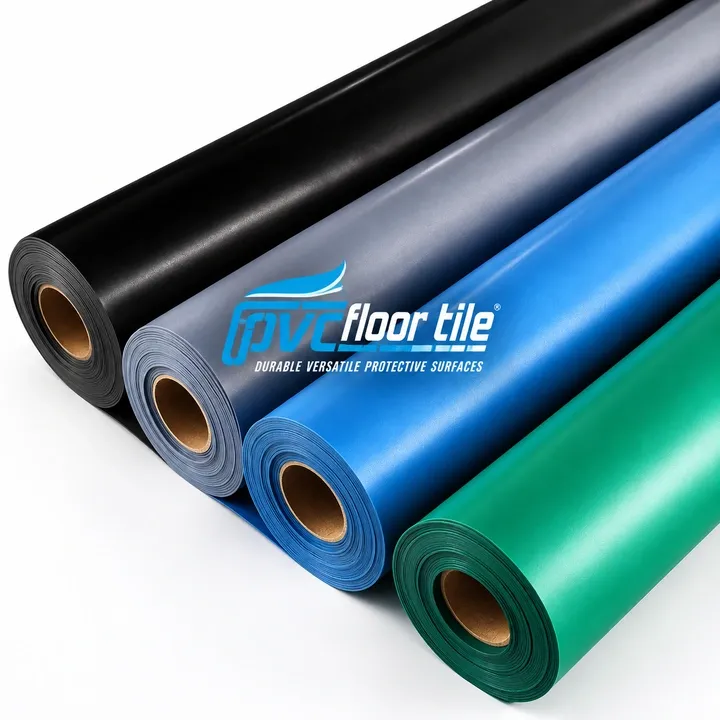
Green and Black ESD Rubber Roll Construction
The supplied technical specification describes a green upper surface with a black lower surface.
This layered colour description may be relevant to customers planning an electronics workbench or technical surface installation.
However, the WooCommerce variation selector also lists black and blue colours. These should be checked against the physical products and their corresponding technical sheets.
Why Colour Consistency Matters
Customers need accurate colour information when planning a new installation or extending an existing ESD work area.
Colour should not be used as proof of electrical classification. Two rubber sheets with similar appearances may have different electrical properties.
Always select the variation using the confirmed product specifications rather than appearance alone.
Anti-Static Rubber Roll vs Standard Rubber Sheeting
Ordinary industrial rubber sheeting is often selected according to thickness, flexibility, wear resistance and general surface protection.
ESD applications require additional consideration because electrical performance can be essential to the intended use.
| Selection Factor | ESD Rubber Sheeting | Standard Rubber Sheeting |
|---|---|---|
| Primary Consideration | Electrical performance and application suitability | General material performance |
| Electrical Resistance | Requires verified measurements | May not be specified |
| Grounding | May form part of an approved system | Not necessarily designed for ESD use |
| Typical Application | Selected electronics and technical work areas | General industrial protection |
| Product Verification | Relevant ESD testing and specifications | Material and mechanical specifications |
Customers should not substitute ordinary rubber sheeting where a verified ESD protective surface is required.
How to Install Anti-Static ESD Rubber Sheeting
Installation requirements depend on whether the material will be used on a workbench, floor or another specialised surface.
A static-control installation should follow the applicable ESD programme and the manufacturer's approved installation instructions.
Preparing the Surface
- Clean the workbench or floor before fitting.
- Remove dust, grease and loose material.
- Check that the substrate is firm, dry and suitable.
- Measure the required area accurately.
- Identify cable openings, equipment supports and edges.
- Confirm the required grounding system before installation.
Basic Fitting Procedure
- Confirm the selected variation: Check the dimensions, colour and thickness.
- Inspect the rubber sheet: Look for damage before cutting.
- Measure the installation area: Allow for required trimming.
- Position the material: Check alignment and the intended surface orientation.
- Cut using suitable tools: Follow safe cutting procedures.
- Fit the sheet: Use only the installation method approved for the product.
- Install grounding components: Follow the site's documented ESD control requirements.
- Test the completed installation: Verify the relevant electrical characteristics using suitable equipment and procedures.
Is an ESD Grounding Kit Required?
Grounding arrangements depend on the intended application and the electrical characteristics of the material.
Some ESD work surfaces use compatible ground cords, grounding points and other accessories.
The correct arrangement should be specified by the facility's ESD control programme. An ordinary electrical connection must not be improvised as a substitute for approved grounding equipment.
Cleaning and Maintaining ESD Rubber Sheeting
Cleaning should preserve both the physical surface and the electrical performance required by the application.
Recommended Maintenance
- Remove loose dust and debris regularly.
- Use cleaning products approved for the particular rubber and ESD system.
- Avoid leaving excessive moisture beneath the sheet.
- Remove spills promptly.
- Inspect cuts, joins and exposed edges.
- Check grounding connections according to the site maintenance programme.
- Conduct periodic electrical performance tests when required.
- Replace damaged or unsuitable material.
Why Ordinary Cleaners May Be Unsuitable
Some cleaning products can leave residues or surface treatments that alter the behaviour of an ESD work surface.
For this reason, customers should follow the manufacturer's cleaning recommendations and their organisation's ESD testing procedures.
Do not assume that every solvent, polish or general-purpose floor cleaner is compatible with ESD rubber sheeting.
Important Safety Considerations for ESD Rubber Rolls
ESD control must be distinguished from other electrical, fire and workplace safety requirements.
An ESD-labelled rubber sheet is not automatically an electrical insulating mat, nor does it necessarily provide protection against electric shock.
What Should Be Verified Before Industrial Use?
- Electrical resistance and test method.
- Intended ESD classification.
- Grounding compatibility.
- Material and colour configuration.
- Chemical compatibility where relevant.
- Substrate and installation requirements.
- Required workplace certifications.
- Cleaning and inspection procedures.
Can This Rubber Roll Be Used in Flammable Areas?
No hazardous-area suitability should be assumed from the product name alone.
Facilities handling flammable liquids, gases, vapours or combustible dust may require specialised risk assessments, equipment certification and additional static-control measures.
Only materials and complete systems that satisfy the relevant hazardous-area requirements should be selected for these environments.
Frequently Asked Questions About Anti-Static ESD Rubber Rolls
What is an Anti-Static ESD Rubber Roll?
- It is rubber sheeting intended for applications where electrostatic discharge control may be required. Its actual electrical performance must be verified.
What material is the rubber roll made from?
- The supplied technical specifications identify SBR/NBR rubber.
What dimensions are available?
- The listing includes 1m × 1.2m × 2mm and 10m × 1.2m × 2mm options, with another 1m × 1.5m × 3mm dimension appearing in the product attributes.
How much area does a 10m × 1.2m roll cover?
- The nominal coverage is 12m² before cutting or trimming.
Is this rubber roll suitable for electronics workbenches?
- It can be considered for electronics workbench applications when its verified electrical performance and installation meet the required ESD control specifications.
Does ESD rubber sheeting prevent all static discharge?
- No. Effective ESD control depends on the complete system, including suitable materials, grounding, procedures and testing.
What is the electrical resistance of this product?
- The original specification lists 10 Ω, but the complete value and test method require verification before the product can be assigned a specific ESD classification.
Does the rubber roll need grounding?
- Grounding requirements depend on the application and product characteristics. Follow the approved ESD control programme and manufacturer's instructions.
What is the difference between anti-static and conductive rubber?
- Anti-static is a broad term, while conductive refers to a particular electrical behaviour. Specific classifications require measured electrical properties.
Can the sheeting be cut to size?
- Rubber sheeting can generally be trimmed using suitable tools and methods, provided cutting does not compromise the approved installation or grounding arrangement.
Is this product suitable for laboratories?
- It may be appropriate for selected technical laboratories where its verified specifications meet the facility's requirements.
Is the rubber resistant to oils and chemicals?
- The supplied information does not establish a verified chemical-resistance rating. Compatibility should be confirmed for the substances involved.
Can the rubber roll be used in flammable storage areas?
- Suitability for hazardous or potentially explosive environments must be assessed and certified as required. ESD branding alone is not sufficient.
How should Anti-Static ESD Rubber Rolls be cleaned?
- Use approved ESD-compatible cleaning products and follow the manufacturer's maintenance and electrical testing instructions.
Buy Anti-Static ESD Rubber Rolls in South Africa
Anti-Static ESD Rubber Roll is an SBR/NBR rubber sheeting product offered for customers planning suitable electronics workbenches, technical assembly areas and specialised industrial surfaces.The product listing includes selectable dimensions and colours, with a documented 10m × 1.2m × 2mm technical-sheet configuration. Before purchasing, confirm the exact variation, electrical resistance, grounding requirements and suitability for the intended application.
Additional information
| Weight | 3 kg |
|---|---|
| Dimensions | 1000 × 100 × 2 mm |
| Dimension | 1mx1,2mx2mm, 10mx1,2mx2mm |
| Colour | Black, Blue |
| Surface Texture | Smooth |

Lucky Nxumalo –
We got this ESD rubber roll for our electronics workbench, and it’s been doing the job really well. Static is no longer an issue, and it feels tough enough to last a while. It was a bit tricky to cut cleanly to size, but once laid down, it looks neat and professional. Happy with it overall.