


Secure Payment
Your transactions are protected with encrypted SSL security. Payments are processed safely through verified South African payment gateways.
Studded Workbench Area Tiles – 500×500×5mm
Price range: R122,96 through R376,67
Your payments are safe and protected.
What Are Studded Workbench Area Tiles?
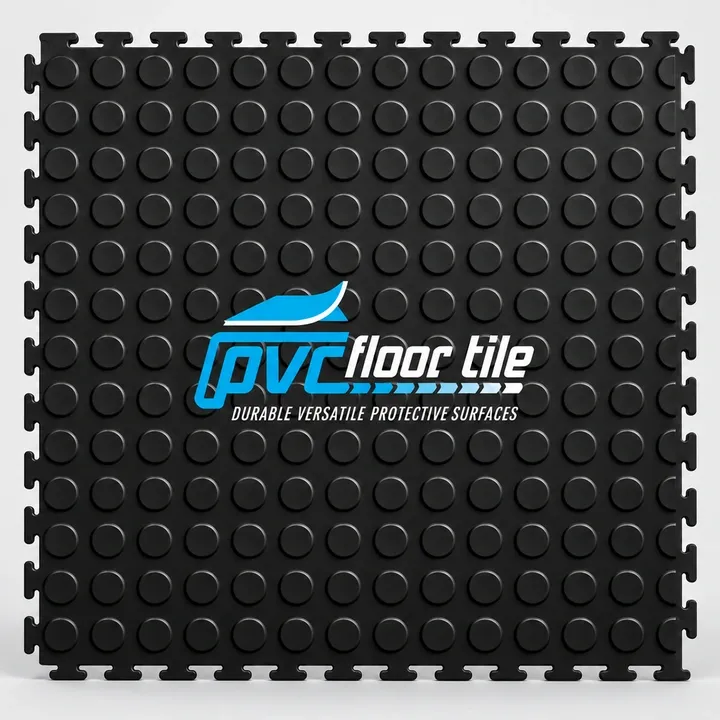
Studded Workbench Area Tiles – 500×500mm are interlocking PVC flooring tiles designed for suitable workbench stations, repair corners, tool preparation areas and technical workspaces. Their raised textured finish provides a practical working-floor appearance, while the modular connection system allows compatible tiles to form a connected floor covering.Each tile measures 500 × 500mm, providing 0.25m² of nominal coverage. Four tiles cover one square metre before cutting allowances. The product listing includes 5mm and 6mm thickness options, making it important to select the appropriate variation for the intended work area.
Material composition depends on colour. Black tiles are manufactured from recycled PVC, while other coloured tiles are manufactured from virgin PVC. Studded Workbench Area Tiles are particularly relevant where staff regularly stand, move between tools and benches, and perform light repair or assembly tasks. They may provide a practical floor covering over suitable prepared concrete, screed or other stable indoor substrates.
For larger projects, explore our Workshop Flooring collection for additional flooring options for workstations, repair areas and industrial support spaces.
Studded Workbench Area Tiles are modular PVC flooring panels intended for selected areas surrounding workbenches and technical workstations.
The interlocking edges connect individual tiles into a larger floor covering without conventional tile grout.
Key Features of Studded Workbench Area Tiles
- 500 × 500mm dimensions: Modular floor panels with simple coverage calculations.
- 5mm and 6mm options: Select the available thickness that matches the intended installation.
- Black recycled PVC: Material used for black variations.
- Coloured virgin PVC: Material used for other colour variations.
- Raised textured surface: Studded finish described in the product content.
- Interlocking design: Compatible tiles connect mechanically.
- Workbench applications: Suitable for selected bench and repair-station surroundings.
- Replaceable panels: Individual compatible tiles may be replaced.
- Flexible layouts: Install within defined workstation areas.
- Routine maintenance: Sweep, vacuum and damp mop with suitable cleaning products.
Studded Workbench Area Tiles Technical Specifications
| Specification | Product Details |
|---|---|
| Product Name | Studded Workbench Area Tiles |
| Material – Black Tiles | Recycled PVC |
| Material – Other Colours | Virgin PVC |
| Tile Dimensions | 500 × 500mm |
| Thickness Options | 5mm and 6mm |
| Coverage Per Tile | 0.25m² |
| Tiles Per Square Metre | 4 |
| Surface Finish | Raised Textured Finish – Confirm Stud vs Coin Pattern |
| Connection Type | Interlocking Edges |
| Flooring Format | Modular PVC Floor Tiles |
| Listed Colours | various |
| Primary Applications | Workbench Areas and Repair Stations |
| Additional Applications | Tool Stations, Technical Rooms and Light Workshop Sections |
| Installation | Over a Suitable Prepared Subfloor |
| Maintenance | Sweeping, Vacuuming and Damp Mopping |
Why Choose Studded Workbench Area Tiles?
Practical Flooring Around Workbenches
Workbench areas often experience regular movement, tool handling and everyday workshop activity.
Staff may repeatedly move between a bench, tool storage and nearby equipment.
A modular floor covering can provide a defined working surface over a suitable substrate.
The actual suitability depends on the expected activity, loading and operating conditions.
Protection for Existing Floors
- Workbenches and repair stations may be installed over concrete or screed that experiences routine scuffing and tracked-in dirt.
- PVC tiles introduce a replaceable covering between everyday activity and the existing floor.
- However, the tiles cannot repair structural defects or guarantee protection against heavy impacts, sharp tools or chemical damage.
Interlocking Modular Construction
The connection design allows adjoining panels to form a larger floor section.
This may make installation more manageable than some permanently bonded flooring methods.
The tiles can also be installed in phases where the layout and fitting requirements permit.
Textured Working-Floor Appearance
- The raised surface gives the floor a recognisable working-area appearance.
- It may complement tool benches, shelving and workshop equipment.
- Surface texture should not automatically be treated as proof of a certified slip-resistance rating.
Individual Tile Replacement
If a section becomes damaged, compatible tiles may be removed and replaced.
This can support localised maintenance without replacing the entire floor.
Replacement tiles must match the original thickness and locking profile.
Colour Options for Workstation Layouts
- Available colours can be used to distinguish selected workstation areas.
- For example, a business may choose a neutral floor around benches and a contrasting colour for another section.
- Colour alone must not replace mandatory workplace safety markings.
Where Can Studded Workbench Area Tiles Be Used?
Repair Bench Surroundings
Repair benches are used for inspecting, assembling and maintaining components.
The surrounding floor may experience regular pedestrian movement and tool handling.
These tiles may provide a practical modular covering where loads and work activities are compatible.
Tool Preparation Stations
- A tool preparation station may include storage drawers, benches and frequently used hand tools.
- A defined floor section can help create a consistent workspace.
- Sharp debris and spills must be removed regularly.
Technical Workspaces
Selected technical workrooms may use modular flooring around benches and support equipment.
However, ordinary PVC flooring does not automatically provide electrical insulation or certified ESD protection.
Where electrical performance matters, specify a product with appropriate test evidence.
Light Assembly Areas
- Small assembly stations may benefit from a practical floor covering surrounding the workbench.
- The installation should be evaluated according to component handling, traffic and equipment weight.
Home Workshops
Home workshops often combine storage, occasional repairs and hobby projects.
Interlocking tiles can be considered for selected indoor bench areas where the supporting floor is suitable.
Maintenance Corners
Commercial premises may contain dedicated areas for minor servicing or equipment checks.
A modular tile section may help distinguish these areas from surrounding floors.
Training Workshops
Practical training rooms may have multiple workbenches and designated learner stations.
Different compatible colours can help visually distinguish sections.
The installation must meet the facility's accessibility and safety requirements.
Commercial Utility Rooms
Utility rooms may contain storage cabinets, maintenance supplies and light workstations.
These tiles may suit compatible areas with routine pedestrian use.
Workbench Flooring Application Guide
| Application | Potential Purpose | Key Consideration |
|---|---|---|
| Repair Bench | Defined working-floor section | Tool and equipment loads |
| Tool Station | Practical pedestrian surface | Sharp debris |
| Technical Room | Modular floor covering | Electrical requirements |
| Assembly Station | Workbench surroundings | Repeated movement |
| Home Workshop | Small project area | Subfloor condition |
| Maintenance Corner | Service work section | Oil and chemical exposure |
| Training Workshop | Workstation zoning | Accessibility and safety |
| Utility Room | General floor covering | Storage loads |
Choosing Between 5mm and 6mm Tiles
Both thickness options have the same 500 × 500mm footprint.
Their coverage is identical, but their installed heights differ.
5mm Studded Workbench Tiles
- The 5mm variation provides a lower-profile modular floor covering.
- It may be considered for compatible workbench and light-duty repair areas.
- Check furniture, equipment and traffic requirements before ordering.
6mm Studded Workbench Tiles
The 6mm variation provides an additional millimetre of nominal thickness.
This may matter when matching an existing installation or selecting compatible edging.
However, the additional thickness does not automatically establish a higher certified load capacity.
Workbench Floor Tiles vs Other Workshop Flooring
Studded Tiles vs Smooth PVC Tiles
Smooth tiles provide a comparatively even surface appearance.
Studded tiles have more pronounced raised features.
The appropriate choice depends on cleaning, appearance and expected activity.
Studded Tiles vs Coin-Pattern Tiles
Coin-pattern tiles feature raised circular details.
Studded tiles may use a different raised pattern.
The actual finish of this product must be confirmed because its existing description and surface attribute are inconsistent.
Studded Tiles vs Rubber Anti-Fatigue Mats
Rubber anti-fatigue mats are designed for particular standing-workstation applications.
Studded PVC tiles provide a modular floor covering.
They should not be promoted as equivalent to tested ergonomic anti-fatigue products without relevant evidence.
Studded Tiles vs Specialist Industrial Flooring
Heavy industrial flooring may need verified performance for machinery, forklifts and aggressive chemicals.
General workbench tiles should only be specified for such demands when supported by technical documentation.
Step 2: Clean the Work Area
Remove loose dust, grit, metal fragments and other debris.
Clean any oil or grease contamination.
Step 3: Measure and Plan
Measure the intended floor section.
Identify benches, fixed equipment, columns and doorways.
Establish a straight reference line.
Step 4: Connect the Tiles
Align compatible interlocking edges according to the fitting instructions.
Join adjoining tiles while keeping rows straight.
Inspect connections regularly as the installation progresses.
Step 5: Cut Around Fixed Objects
Measure perimeter spaces carefully.
Use cutting equipment appropriate for the selected PVC thickness.
Follow safe cutting procedures.
Step 6: Fit Compatible Edging
Exposed boundaries may need suitable transition profiles.
Choose edging that matches the actual tile thickness and connection design.
Step 7: Inspect the Completed Area
Check for raised joints, unwanted movement and uneven transitions.
Verify suitability before returning equipment to the work area.
Do Workbench Area Tiles Require Adhesive?
Some interlocking installations can be completed without full-surface adhesive.
However, small isolated sections, heavy lateral movement or particular subfloor conditions may require additional restraint.
Follow the manufacturer's installation guidance for the intended environment.
Cleaning and Maintaining Studded Workbench Tiles
Routine Cleaning
- Sweep or vacuum dust and grit.
- Remove sharp fragments and metal shavings.
- Wipe spills promptly.
- Inspect tile connections.
- Check exposed edges.
Cleaning the Raised Texture
Raised surface features may collect fine dirt around their edges.
Use a suitable soft brush where required.
Avoid aggressive abrasive cleaning tools.
Damp Mopping
Use a mild PVC-compatible detergent.
Remove dirty water and cleaning residue.
Allow the surface to dry before resuming work.
Oil and Chemical Spills
Clean spills promptly.
Chemical compatibility depends on the actual formulation and exposure conditions.
Do not assume unrestricted resistance to workshop solvents or oils.
Replacing a Damaged Tile
Where the installation permits, disconnect the affected section.
Replace the damaged panel with a compatible tile.
Check surrounding connections after refitting.
Important Buying Considerations
Material Composition
Black tiles are manufactured from recycled PVC.
Other coloured variations are manufactured from virgin PVC.
The selected variation should reflect the correct material.
Surface Pattern
The description states a studded finish, but the product attribute lists coin pattern.
This requires correction before publishing final surface specifications.
Equipment Weight
The tile thickness alone does not establish a maximum load capacity.
Heavy benches, narrow equipment feet and machinery require assessment.
Static Electricity
Ordinary PVC tiles should not be assumed to provide certified ESD control.
Select a tested ESD system where necessary.
Slip Resistance
A textured surface does not automatically establish an R10 classification.
Use product-specific test results where certified slip resistance is required.
Water Exposure
PVC resists ordinary water absorption, but water may pass through tile joints.
The floor is not a waterproof membrane.
Frequently Asked Questions About Studded Workbench Area Tiles
1. What are Studded Workbench Area Tiles?
They are modular interlocking PVC floor tiles intended for suitable workbench stations, repair areas and technical workspaces.
2. What size are the tiles?
Each tile measures 500 × 500mm.
3. What thicknesses are available?
The product listing includes 5mm and 6mm variations.
4. What material are black tiles made from?
Black tiles are manufactured from recycled PVC.
5. What material are coloured tiles made from?
Other coloured variations are manufactured from virgin PVC.
6. What surface pattern do the tiles have?
The description identifies a studded texture, while the WooCommerce attribute lists a coin pattern. The physical surface must be confirmed.
7. How many tiles cover 1m²?
Four tiles provide one square metre of nominal coverage.
8. How many tiles are needed for a 10m² work area?
The base requirement is 40 tiles. With a 5% cutting allowance, the estimate is 42 tiles.
9. Can these tiles be used around repair benches?
They may suit compatible repair-bench surroundings, subject to equipment and traffic requirements.
10. Are the tiles suitable for home workshops?
They may be appropriate for selected home workshop sections where the subfloor and intended activities are compatible.
11. Can the tiles be installed over concrete?
They can be considered over firm, stable and sufficiently level concrete.
12. Do the tiles require adhesive?
Some installations use mechanical interlocking connections. Additional restraint may be necessary depending on site conditions.
13. Are the tiles suitable for heavy machinery?
Heavy-machinery suitability requires product-specific load and installation verification.
14. Are these tiles anti-static?
No certified anti-static or ESD-control performance has been established for this product.
15. How should the tiles be cleaned?
Sweep or vacuum regularly, remove workshop debris and damp mop using a mild PVC-compatible cleaner.
16. Can individual damaged tiles be replaced?
Compatible damaged tiles may be replaced where the installation permits. Match the original thickness and connection profile.
Buy Studded Workbench Area Tiles in South Africa
Studded Workbench Area Tiles – 500×500mm provide a modular PVC flooring option for suitable workbench surroundings, repair stations, tool preparation areas and technical workspaces.Their raised textured finish gives the floor a practical working appearance, while the interlocking edges allow compatible tiles to connect into larger sections.
Choose from the listed 5mm and 6mm variations and available colours. Black tiles are manufactured from recycled PVC, while coloured variations use virgin PVC.Each tile covers 0.25m², with four tiles required per square metre before cutting allowances.
Additional information
| Weight | 5 kg |
|---|---|
| Dimensions | 500 × 500 × 5 mm |
| Dimension | 500 × 500 × 5 mm, 500 × 500 × 6 mm |
| Colour | Beige, Black, Blue, Brown, Green, Grey, Orange, Red, White, Yellow |
| Applications | Workshop Flooring |
| Benefits | Heavy-Duty Durability |
| Durability | Industrial Strength |
| Material Types | PVC |
| Surface Texture | Coin Pattern |
| Wear Ratings | Best |
| Working Environment | High-Traffic Zones |

Reviews
There are no reviews yet.