
Secure Payment
Your transactions are protected with encrypted SSL security. Payments are processed safely through verified South African payment gateways.
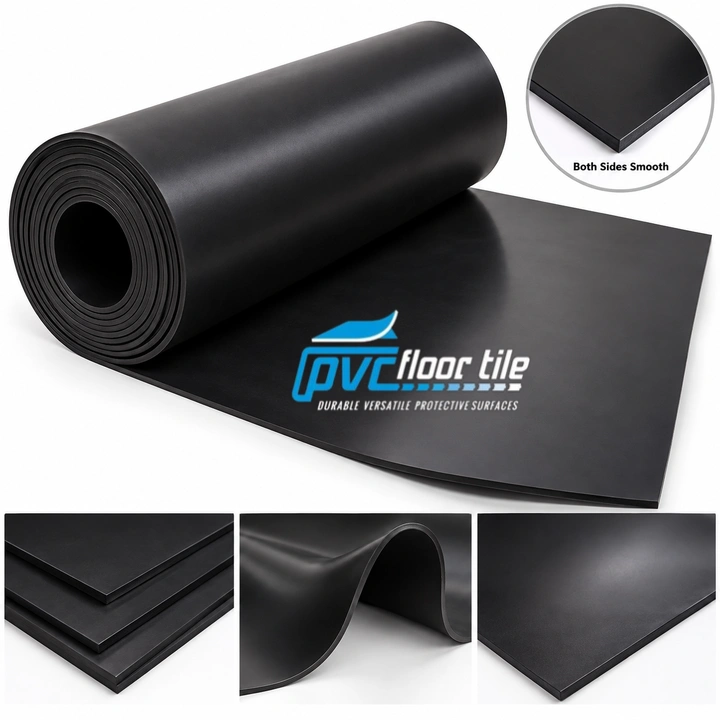
Nitrile Rubber Sheeting – Both Sides Smooth
Price range: R719,21 through R1206,81
Your payments are safe and protected.
Nitrile Rubber Sheeting – Both Sides Smooth for Oil, Fuel and Industrial Protection
Nitrile Rubber Sheeting – Both Sides Smooth is designed for industrial, automotive and mechanical environments where resistance to oils, fuels, lubricants and petroleum-based fluids is important. Manufactured from Virgin Nitrile Butadiene Rubber, this black rubber sheet provides a smooth, practical surface for gasket cutting, sealing, lining, workstation protection and general industrial fabrication.
The smooth finish on both sides makes the sheeting easy to cut, shape, wipe and position. It is suitable for workshops, factories, engineering departments, maintenance areas and service bays where ordinary general-purpose rubber may not provide the same level of resistance to petroleum-based liquids.
The sheet is available in 3 mm and 5 mm thicknesses, with a full roll measuring 10,000 mm long × 1,200 mm wide. This gives buyers flexibility when planning larger lining, sealing or protective applications.
For customers comparing broader floor-protection options, explore our rubber mats range for additional workshop, industrial and commercial rubber products.
Nitrile Rubber Sheeting Specifications
| Specification | Product Details |
|---|---|
| Material | Virgin Nitrile Butadiene Rubber |
| Thickness Options | 3 mm and 5 mm |
| Roll Width | 1,200 mm |
| Roll Length | 10,000 mm |
| Surface Finish | Smooth on Both Sides |
| Colour | Black |
| Oil Resistance | Excellent |
| Fuel & Hydrocarbon Resistance | Suitable for contact with fuels, lubricants and hydrocarbons |
| Primary Applications | Workstation protection |
| Warranty | One Year |
Why Choose Nitrile Rubber Sheeting for Oil and Fuel Applications?
The main advantage of nitrile rubber is its suitability for environments where oils, lubricants, fuels and other petroleum-based fluids may be present.
This makes it particularly useful in automotive workshops, mechanical service areas, factories and engineering departments where rubber components are regularly exposed to fluids that may affect ordinary general-purpose rubber.
Nitrile Rubber Sheeting can be used for:
- Oil-resistant protective pads.
- Gasket cutting.
- Sealing strips.
- Workshop bench protection.
- Equipment liners.
- Machine-contact pads.
- Mechanical repair work.
- Protective barriers.
- Custom-cut rubber components.
Its smooth surface also makes it easier to wipe down after use, helping workshops and maintenance teams keep working areas cleaner.
Smooth Nitrile Rubber Sheeting for Gaskets and Seals
One of the most common applications for nitrile sheeting is gasket and seal fabrication.
Because the rubber is supplied in sheet form, it can be measured and cut according to the shape and dimensions required for a particular component.
This makes it useful for:
- Mechanical covers.
- Access panels.
- Equipment housings.
- Machinery seals.
- Vehicle-related repairs.
- Maintenance replacements.
- Custom sealing strips.
For buyers searching for nitrile rubber sheet for gasket cutting, the both-sides-smooth finish provides a clean surface that can be marked and cut accurately.
The correct thickness should be selected according to the sealing requirement and the dimensions of the component.
Both-Sides-Smooth Rubber Sheet for Easier Fabrication
The smooth finish on both sides is one of the key features of this product.
Unlike patterned or textured rubber products, both surfaces are flat and uniform.
This makes the sheet practical where buyers need to:
- Cut clean custom shapes.
- Create strips or pads.
- Bond the rubber to a suitable surface.
- Use the sheet as a protective liner.
- Wipe away oils and residue.
- Fit the rubber into mechanical assemblies.
The smooth finish can also help create neater contact surfaces when the sheet is used for sealing or protective applications.
Nitrile Rubber Sheeting for Automotive Workshops
Automotive workshops regularly work with engine oil, gearbox oil, lubricants, grease, diesel and petrol.
A rubber product used in these environments needs to be selected with fluid exposure in mind.
Nitrile Rubber Sheeting is particularly useful in selected automotive applications because of its resistance to petroleum-based fluids.
Potential workshop uses include:
- Bench protection.
- Oil-resistant pads.
- Gasket fabrication.
- Tool-tray lining.
- Protective equipment pads.
- Mechanical repair components.
- Service-bay liners.
- Custom rubber inserts.
It can also be cut into smaller pieces for ongoing workshop repairs, giving maintenance teams a flexible material that can be adapted to different tasks.
Nitrile Rubber Sheet for Engineering and Maintenance Areas
Engineering and maintenance departments often need general-purpose fabrication materials that can be cut and adapted quickly.
Nitrile rubber sheeting can be useful where the working environment includes oil, lubricants or mechanical fluids.
It may be used for:
- Equipment protection.
- Sealing strips.
- Maintenance repairs.
- Replacement pads.
- Machine liners.
- Protective barriers.
- Custom-cut components.
The sheet can be stored and cut as required, making it practical for maintenance departments that regularly create or replace rubber parts.
Nitrile Rubber Sheeting for Workbench Protection
Workbenches in automotive and engineering environments may be exposed to oils, lubricants, grease and metal components.
A smooth nitrile sheet can be used as a protective surface over suitable workbenches.
Potential benefits include:
- Reducing direct contact between tools and the workbench.
- Creating an oil-resistant working surface.
- Making routine wiping easier.
- Providing a softer contact layer for parts.
- Helping protect the underlying bench surface.
The sheet should still be cleaned regularly to prevent oil, grit or sharp metal particles from building up on the surface.
Oil-Resistant Rubber Sheeting for Industrial Linings
Nitrile Rubber Sheeting may also be useful for selected lining applications where petroleum-based fluids or lubricants may be present.
Possible lining uses include:
- Equipment trays.
- Tool compartments.
- Workstation surfaces.
- Mechanical areas.
- Protective panels.
- Service sections.
The material can help provide a protective separation layer between the base surface and the fluids or components being handled.
For specialised tanks or continuous chemical immersion, compatibility with the exact substance should be confirmed before installation.
Cutting Nitrile Rubber Sheeting to Size
One of the advantages of rubber sheeting is that it can be cut into custom shapes.
Before cutting, measure the required dimensions carefully and mark the sheet clearly.
A typical cutting process includes:
- Lay the sheet on a stable surface.
- Measure the required section.
- Mark the cutting line.
- Use a sharp suitable cutting blade.
- Make controlled cuts.
- Test-fit the piece.
- Trim where necessary.
Rounded gaskets or complex shapes may require more specialised cutting methods.
Installing Nitrile Rubber Sheeting
The installation method depends on how the sheet will be used.
Some applications may only require the rubber to be positioned as a removable pad or liner.
Other applications may require adhesive or mechanical fixing.
Installation considerations include:
- Clean the supporting surface.
- Remove grease, dust and loose debris.
- Measure before cutting.
- Test-fit before permanent fixing.
- Use a suitable compatible adhesive where required.
- Avoid stretching the rubber during installation.
- Keep edges flat.
- Confirm alignment before final fixing.
Where adhesive is used, confirm that it is compatible with both nitrile rubber and the supporting surface.
Cleaning and Maintaining Nitrile Rubber Sheeting
The smooth surface makes routine cleaning relatively straightforward.
Where the sheeting is used in workshops or mechanical areas, oil and fuel residue should be removed regularly rather than being left on the surface unnecessarily.
A practical maintenance routine may include:
- Wiping spills promptly.
- Cleaning with mild detergent and water.
- Removing grit and sharp debris.
- Avoiding harsh solvents unless confirmed suitable.
- Inspecting high-use sections.
- Replacing damaged areas when necessary.
- Storing unused rubber correctly.
Sharp metal tools should not be dragged across the surface because they may cut or damage the rubber.
Regular cleaning also helps keep the sheeting easier to inspect.
Nitrile Rubber Sheeting vs General-Purpose Rubber Sheet
Not every rubber material is equally suited to contact with oils and petroleum-based fluids.
Nitrile Rubber Sheeting
Nitrile is generally selected when resistance to oils, fuels and lubricants is an important requirement.
It is therefore particularly useful in:
- Automotive work.
- Mechanical maintenance.
- Engineering.
- Machinery servicing.
- Oil-handling environments.
General-Purpose Rubber Sheeting
General-purpose rubber may be suitable for cushioning, lining, protection and other applications where oil resistance is not the main requirement.
The correct product should be selected according to the actual operating environment.
If the project involves regular petroleum-based fluid contact, nitrile sheeting is generally the more appropriate option.
Frequently Asked Questions About Nitrile Rubber Sheeting
What is Nitrile Rubber Sheeting used for?
Nitrile Rubber Sheeting is used for gaskets, seals, linings, workstation protection, machine pads and industrial applications where oils, fuels or lubricants may be present.
What size is a full roll?
- A full roll measures 10,000 mm long × 1,200 mm wide.
What thicknesses are available?
- The product is available in 3 mm and 5 mm thicknesses.
Is the sheet smooth on both sides?
- Yes. Both sides have a smooth finish, making the material useful for sealing, lining, cutting and easy cleaning.
Is Nitrile Rubber Sheeting oil resistant?
- Yes. Oil resistance is one of the main reasons nitrile rubber is selected for automotive, engineering and industrial applications.
Can Nitrile Rubber Sheeting be used around fuel?
- The product is intended for applications involving fuels, lubricants and hydrocarbons. The exact fluid and exposure conditions should still be considered when selecting material.
Can the sheet be glued down?
- Yes, where permanent installation is required, provided a suitable adhesive compatible with nitrile rubber and the supporting surface is used.
Buy Nitrile Rubber Sheeting – Both Sides Smooth in South Africa
Choose Nitrile Rubber Sheeting – Both Sides Smooth when your project requires a practical rubber sheet for oil-resistant protection, sealing, gasket cutting, lining or mechanical fabrication.
Available in 3 mm and 5 mm thicknesses and supplied in rolls measuring 10,000 mm × 1,200 mm, the product can be cut and adapted for workshop, automotive, engineering and maintenance applications.
For larger roll-format floor protection and commercial rubber surfaces, explore our rubber roll flooring for additional rubber flooring options.
Additional information
| Weight | 49 kg |
|---|---|
| Dimensions | N/A |
| Colour | Black |
| Dimension | 10mx1,20mx3mm, 10mx1,2mx5mm |
| Surface Texture | Smooth |
| Applications | Workshop Flooring |
| Working Environment | Indoor Use |

Reviews
There are no reviews yet.