
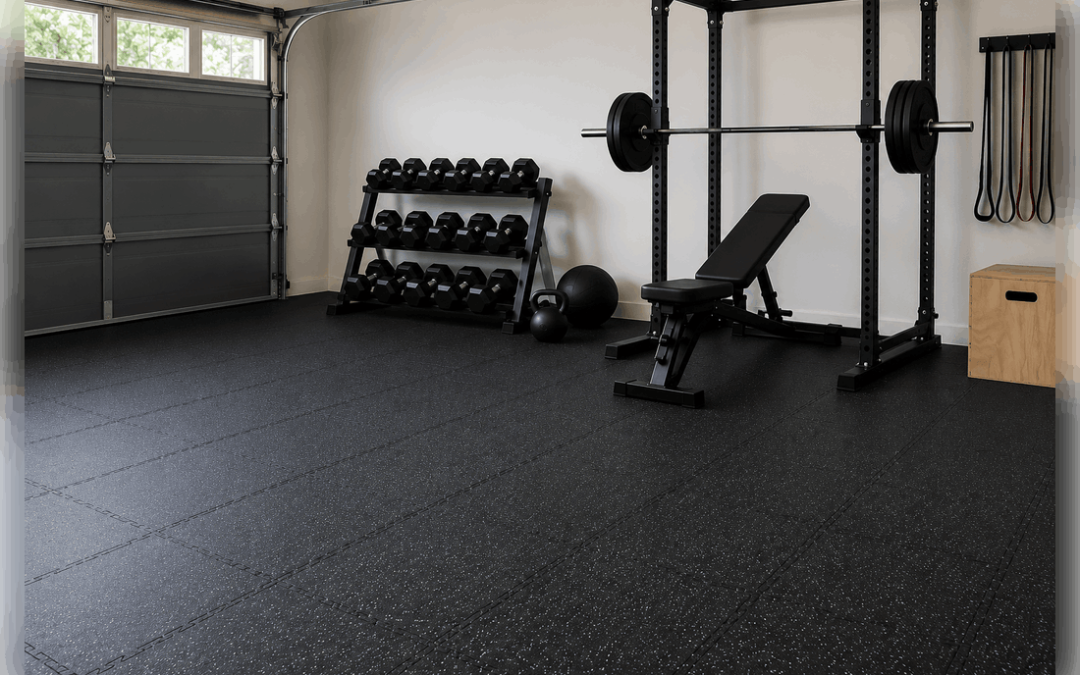
Choosing the best flooring type for garage gym areas depends on how the space will be used, how heavy the equipment is and whether the garage must still support storage, parking or daily household movement. A garage gym needs a surface that can protect the concrete, support exercise equipment, clean easily and feel safe underfoot. At PVC Floor Tile, we supply durable PVC flooring solutions for homes, garages, gyms, workshops and commercial spaces across South Africa.
Why Garage Gym Flooring Needs Careful Planning
A garage gym is different from a normal indoor exercise room because it often has more than one job. The same room may be used for workouts, storage, tools, bicycles, parking or household tasks. This means the flooring type must be practical enough for daily garage use while still being comfortable and safe for training.
The wrong surface can make the gym harder to clean, less comfortable to train on or more likely to move under equipment. A good garage gym floor should match the activity level, equipment weight and maintenance needs of the space.
PVC Flooring for Garage Gym Spaces
PVC flooring can be a practical choice for garage gyms used for light to medium training, cardio equipment, stretching, bodyweight workouts and general home exercise. PVC tiles are usually easy to clean, water-resistant and suitable for modular installation, which makes them useful in garages that need to stay neat and functional.
This type of surface is especially useful where the garage gym is also used for other purposes. If the room still needs to support storage, movement, occasional parking or household activities, PVC can offer a clean and organised finish without turning the whole garage into a heavy lifting zone.
When PVC Works Well in a Garage Gym
- Light to medium home workout areas.
- Cardio machine sections with bikes, rowers or walking machines.
- Stretching, warm-up and mobility spaces.
- Garages that still need a clean multi-purpose floor.
- Areas where easy sweeping and mopping are important.
Rubber Flooring for Garage Gym Spaces
Rubber is usually the better flooring type for garage gyms that include heavy weights, benches, racks, dumbbells, kettlebells and strength equipment. Rubber offers better impact absorption than many lighter flooring options and helps protect the concrete from repeated pressure.
It can also improve grip and comfort underfoot, especially in areas where people train regularly. For strength zones and heavier equipment sections, rubber is normally the safer long-term option.
For heavier training areas, you can explore our training area flooring solutions.
When Rubber Works Well in a Garage Gym
- Weight training sections with dumbbells or barbells.
- Garage gyms with squat racks and benches.
- Equipment zones where impact protection matters.
- Functional training areas with repeated movement.
- Home gyms used often for strength workouts.
Foam Flooring for Garage Gyms
Foam flooring can feel comfortable and soft, but it is usually better for light exercise rather than demanding garage gym use. It can work for stretching, bodyweight movement, temporary workout spaces or children’s activity areas.
The concern with foam is that it can compress under heavy equipment. Benches, racks, machines and weights may leave dents or cause the surface to shift. For this reason, foam should be used carefully in garage gyms and should not be treated as a heavy-duty flooring type.
Epoxy Flooring for Garage Gyms
Epoxy can create a clean sealed surface over concrete and may work well in garages where appearance and easy cleaning are important. It can be suitable for garages that are used for parking, light storage and general movement.
However, epoxy does not offer the same cushioning or impact protection as rubber. If the garage gym includes weights or repeated equipment pressure, an additional mat or protective surface may still be needed. Epoxy also requires proper concrete preparation before installation.
Bare Concrete for Garage Gyms
Bare concrete is strong, but it is not always comfortable or practical for a garage gym. It can be hard on joints, noisy during workouts and more likely to show stains or dust. It also offers limited protection for equipment and may not provide the grip or comfort most people want in a training space.
Concrete may be acceptable as a basic base surface, but for regular workouts, adding a suitable flooring layer is usually better.
Garage Gym Flooring Types Compared
| Flooring Type | Best For | Main Benefit | Possible Limitation |
|---|---|---|---|
| PVC Flooring | Light to medium garage gym use. | Clean, modular and easy to maintain. | Not ideal for repeated heavy impact. |
| Rubber Flooring | Weights, racks and equipment zones. | Strong impact protection and grip. | Can be heavier and more costly. |
| Foam Flooring | Stretching and light bodyweight activity. | Soft and comfortable underfoot. | Can dent under heavy equipment. |
| Epoxy Flooring | Clean garages and light-use areas. | Smooth sealed finish. | Limited cushioning for training. |
| Bare Concrete | Basic garage use. | Strong existing base. | Hard, dusty and uncomfortable. |
Best Flooring Type for Weight Training
For weight training, rubber is usually the best flooring type because it gives better impact protection and support under heavy gym equipment. Strength training creates more pressure on the floor than general exercise, especially when dumbbells, barbells or plates are used regularly.
If the garage gym has a dedicated lifting section, rubber should be considered for that area. PVC can still be useful in the surrounding space, especially where easy cleaning and general movement are more important.
Best Flooring Type for Cardio and General Fitness
For cardio and general fitness, PVC or rubber can both work depending on the equipment and activity level. PVC is practical where the surface must be clean, neat and easy to maintain. Rubber is useful when equipment stability, grip and vibration control are important.
For example, a walking machine or exercise bike may work well on a firm, cleanable surface, while heavier machines or more active training areas may benefit from rubber support.
Best Flooring Type for Multi-Purpose Garage Gyms
Many garage gyms are not used only for exercise. They may also support storage, tools, household items or occasional vehicle access. In these cases, a practical modular surface can make the space easier to manage.
PVC is often useful for the wider garage area because it is cleanable and suitable for day-to-day movement. Rubber can then be used in specific high-impact zones where heavier training happens. For garages that need a practical surface, view our garage floor surface options.
Common Mistakes When Choosing Garage Gym Flooring
- Using foam mats under heavy equipment.
- Choosing only by price instead of training activity.
- Ignoring whether the garage still needs to support storage or parking.
- Forgetting about dust, moisture and tyre marks.
- Using one material everywhere when different zones need different surfaces.
- Not checking how easy the floor will be to clean after regular workouts.
Helpful Planning Before Setting Up a Garage Gym
Before choosing the floor, it also helps to plan equipment spacing, storage, ventilation and safe movement around the garage. A well-planned room is easier to train in and easier to keep clean. For general fitness planning guidance, you can read these home gym setup recommendations.
Final Verdict: What Type of Flooring Is Best for a Garage Gym?
The best flooring type for garage gym areas depends on the type of training and the way the garage is used. Rubber is usually best for heavy weights, racks, strength training and impact protection. PVC is a practical choice for light to medium workouts, cardio areas, stretching zones and multi-purpose garage spaces.
Foam can work for light activity, epoxy can improve appearance and cleaning, and concrete can act as a strong base surface. However, for regular garage gym use, most spaces benefit from a proper floor covering that matches the activity level.
For many garage gyms, the best solution is to use the right material in the right zone. Choose PVC where easy cleaning and daily movement matter, and choose rubber where heavy equipment and impact protection are the priority.
Need Help Choosing Garage Gym Flooring?
Contact PVC Floor Tile for practical advice on garage gym flooring options for home workouts, strength training areas and multi-purpose garage spaces.
Contact Us