
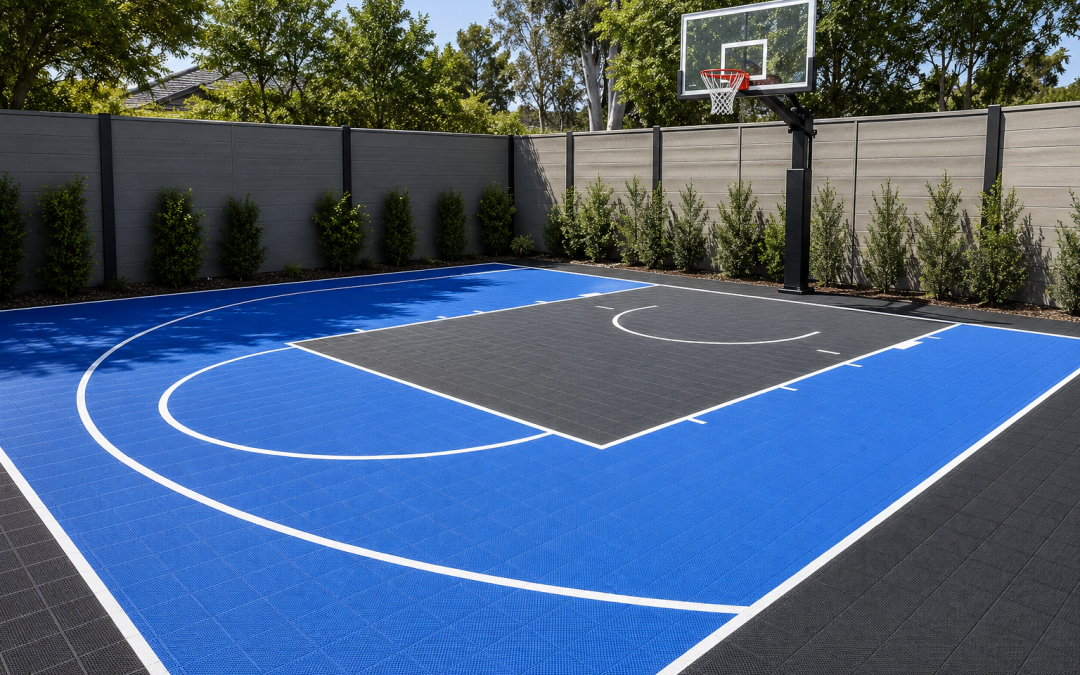
Sports flooring cost in South Africa is influenced by much more than the price of the tiles alone. Court dimensions, product type, base preparation, drainage, delivery, installation, markings and edging can all affect the final quotation. Understanding these factors helps schools, clubs, homeowners and recreation facilities compare proposals more accurately and avoid unexpected project expenses. Begin by reviewing our modular sports flooring options.
Two sports courts with similar dimensions can receive different quotations because the existing site conditions and project requirements may be completely different.
One facility may already have a clean, stable concrete base, while another may require crack repairs, drainage improvements, levelling and removal of old flooring before installation can begin.
This guide explains the main factors affecting sports flooring cost in South Africa and the information needed to request a more accurate court flooring quotation.
Why Sports Flooring Prices Vary
A sports flooring quotation is normally based on the complete project rather than one standard rate that applies to every court.
The supplier must calculate how much flooring is required, whether wastage should be included, how the tiles will be delivered and whether the site is ready for installation.
Extra project requirements such as several colours, custom markings, ramps, edging, drainage work or difficult access can also change the final price.
Product quantity
The total square metres and required allowance for cutting, borders or spare tiles affect the product cost.
Project complexity
Simple single-colour layouts usually require less planning than detailed multi-colour court designs.
Site preparation
Damaged concrete, drainage problems and removal of old surfaces may add work before installation.
1. Total Court Size
The total court size is one of the most important court flooring price factors. Larger courts require more tiles, additional transport capacity and more installation time.
Measure both the length and width of the complete area that will receive flooring. Do not calculate only the central playing zone if borders, run-off areas or walkways will also be tiled.
Measurements should identify:
- The complete court length
- The complete court width
- Run-off areas around the playing zone
- Entrances and walkways
- Areas around fixed sports equipment
- Sections excluded from the installation
- Any future expansion area
2. Tile Size and Coverage Rate
Different modular flooring products may use different tile dimensions and coverage rates. The number of tiles needed per square metre therefore depends on the selected product.
A quotation should clearly identify the tile size, total quantity and area covered. This allows buyers to compare proposals based on the same court dimensions.
Ordering only the exact mathematical quantity may not always be suitable. Additional tiles may be recommended for cuts, future repairs or accidental damage.
Planning advice: Confirm whether the quoted quantity includes spare tiles, cutting allowance and any sections outside the main playing area.
3. Tile Type and Material Specification
The chosen product specification affects sports flooring cost in South Africa. Not every modular sports tile has the same construction, thickness, surface design or intended application.
Outdoor open-grid tiles may be designed to allow rainwater through the upper surface, while indoor tiles may use a different construction because regular rainwater drainage is not required.
The supplier should confirm whether the product is suitable for the intended sport, traffic level, base and environment.
Product specifications may differ by:
- Tile dimensions
- Tile thickness
- Open-grid or closed surface
- Connection system
- Indoor or outdoor suitability
- Available colours
- Intended sports applications
Ask the supplier to confirm:
- The exact product model
- The material specification
- The coverage rate
- The recommended base
- The maintenance requirements
- Whether edging is required
- Whether installation is included
4. Indoor Versus Outdoor Installation
Indoor and outdoor projects have different requirements. An enclosed sports hall normally does not need to manage rainfall, while an outdoor court must be planned around water movement, sunlight and changing temperatures.
Outdoor flooring may require drainage-friendly tile construction, greater attention to the base slope and suitable perimeter clearance.
These additional site considerations can influence both product selection and installation cost.
Environment Changes the Quotation
A product suitable for a protected indoor hall may not be suitable for an exposed outdoor court. The quotation should reflect the correct flooring system for the actual installation environment.
5. Condition of the Existing Base
The condition of the existing floor can have a major effect on the final quotation. Modular tiles generally need a firm, stable and reasonably even base.
A clean concrete slab in good condition may require limited preparation. A court with loose concrete, moving cracks, deep low spots or drainage failures may need repair work before flooring is installed.
Lower preparation requirement
- Firm concrete surface
- No major structural cracks
- No loose or crumbling sections
- Suitable outdoor slope
- Clear drainage outlets
- Easy access to the site
Higher preparation requirement
- Large cracks or movement
- Deep low sections
- Standing water
- Uneven previous repairs
- Loose surface material
- Old flooring that must be removed
6. Concrete Repairs and Levelling
A new modular floor should not be used to hide serious problems underneath the court. If the base is unstable, repairs may be required before installation.
Small cosmetic imperfections may have limited impact, but major height differences or movement can affect the final surface.
The quotation should explain whether base repairs are included, excluded or priced separately after a site assessment.
Possible base-preparation work includes:
- Removing loose material
- Repairing selected cracks
- Correcting uneven transitions
- Filling suitable low sections
- Cleaning the slab
- Removing old adhesives or coatings
- Testing drainage after repairs
7. Drainage Requirements
Outdoor court drainage can affect the project price when the existing slab does not direct water away correctly.
Open-grid flooring can allow water through the tile surface, but the supporting concrete still needs a suitable slope and clear outlets.
Where drainage channels, base repairs or edge modifications are needed, the cost may be separate from the tile installation.
Important: Modular flooring can support surface drainage, but it cannot reverse an incorrect concrete slope or repair blocked stormwater infrastructure.
8. Colour Layout and Court Design
A simple single-colour court may require less design preparation than a detailed layout containing several playing zones, borders and contrasting sections.
Multiple colours can create a strong finished appearance, but they also require accurate quantity calculations for each colour.
Changes made after tiles have been ordered may cause delays or create additional delivery requirements.
Simple court layout:
- One main tile colour
- One border colour
- Limited marked zones
- Standard court dimensions
- Simple installation pattern
More detailed layout:
- Several tile colours
- Multiple sports zones
- Custom borders
- Logos or branded sections
- Special court measurements
9. Court Lines and Markings
Court markings may be created through contrasting tile colours, applied lines or a combination of both, depending on the selected system.
A multi-sport facility may require several sets of markings. This takes additional planning because the lines must remain clear without making the court difficult to understand.
The quotation should state whether line marking is included and which sports are covered.
Marking information should include:
- The sports requiring lines
- The colour of each line set
- The required dimensions
- Whether markings are painted or integrated
- Surface-preparation requirements
- Drying or curing time
- Future maintenance responsibilities
10. Edging, Ramps and Court Transitions
Some installations require edging or ramp sections to create a finished transition between the modular tiles and surrounding floor.
The number of exposed sides affects the amount of edging required. A court installed between fixed walls may have different needs from a freestanding court with four open sides.
Outdoor edging must also be planned so that it does not block the route used by rainwater.
11. Installation Labour
Sports tile installation cost depends on the court size, tile system, layout complexity, site access and condition of the base.
A simple rectangular court with one or two colours may take less time than an irregular space requiring many cuts, detailed patterns or several sporting zones.
Site preparation
The installer checks that the working area is clean, stable and ready for the modular system.
Layout preparation
Starting lines, court colours and important zones are planned before the full installation begins.
Tile installation
The flooring is connected, aligned, cut where necessary and finished around the court perimeter.
12. DIY Installation Versus Professional Installation
Some modular systems may be suitable for experienced customers to install themselves over a prepared base. This may reduce labour charges, but the buyer remains responsible for measurements, layout, base assessment and final installation quality.
Professional installation may be preferable for larger courts, multi-colour designs, public facilities and projects requiring accurate sports layouts.
For more information about the system itself, read our article explaining how modular court tiles affect project costs.
DIY installation may suit:
- Small rectangular areas
- Simple colour layouts
- Prepared concrete bases
- Customers with installation experience
- Projects without complex markings
Professional installation may suit:
- Full sports courts
- Schools and public facilities
- Multi-colour layouts
- Detailed court markings
- Irregular or complex areas
13. Removal of Existing Flooring
Old flooring, loose coatings, damaged tiles or bonded materials may need to be removed before the new sports floor can be installed.
Removal adds labour, handling and disposal requirements. It may also reveal base damage that was not visible during the first inspection.
Ask whether removal and disposal are included in the quotation or will be charged separately.
14. Delivery Location
Delivery costs may vary according to the total tile quantity, pallet size, project location and ease of site access.
A large court may require several pallets or a dedicated delivery vehicle. Remote locations, restricted access points or sites requiring special unloading arrangements may affect transport costs.
Provide these delivery details:
- The full delivery address
- The province and town
- Access restrictions
- Available unloading space
- Stairs or narrow entrances
- Whether storage is available
- The required delivery date
15. Project Location and Site Access
Installation teams need sufficient access to move flooring, tools and equipment to the court.
A ground-level court beside a parking area may be easier to service than a rooftop, enclosed school courtyard or area reached through narrow passages.
Site-access information should be provided before the quotation is finalised.
16. Spare Tiles for Future Repairs
Including spare tiles in the original order may slightly increase the project total, but it can make future repairs easier.
Matching colours and tile designs may change over time. Keeping a small quantity from the original production batch can help maintain a consistent appearance.
Spare Tiles Are Part of Long-Term Planning
- Keep replacements for accidental damage.
- Record the tile model and colour.
- Store spare tiles in a dry, protected area.
- Do not use all spare stock for unrelated projects.
- Check compatibility before future expansion.
17. VAT and Quote Inclusions
When comparing quotations, confirm whether VAT is included or excluded from the displayed total. Also check whether delivery, installation, edging and markings are part of the quoted amount.
Two quotations may appear different simply because one includes more project elements than the other.
For general official information about Value-Added Tax, refer to the South African Revenue Service VAT information.
A complete quotation should clarify:
- Whether VAT is included
- The product quantity
- The tile specification
- Delivery charges
- Installation labour
- Edging and markings
- Base preparation and exclusions
18. Timing and Product Availability
Product availability may affect project timing, particularly when a court requires several colours or a large quantity of tiles.
Custom colour combinations may need more planning than a project using regularly stocked colours.
Confirm lead times before scheduling concrete work, closing a sports facility or arranging installation labour.
19. Project Changes After Quotation
Changing the court dimensions, colours or line-marking plan after the quotation has been approved may affect product quantities and installation time.
Finalise the layout before ordering wherever possible. This reduces the risk of shortages, duplicate deliveries and unused tiles.
Cost-control advice: Approve the final dimensions, colour layout, markings and installation scope before the tiles are ordered.
How to Compare Sports Flooring Quotations
Do not compare only the final totals. Compare what each supplier has included and whether the quotations use the same dimensions and product specification.
A lower quotation may exclude delivery, installation, line markings, edging or base preparation.
Check the product details
- Tile model and dimensions
- Total square metres
- Number of tiles
- Colour quantities
- Indoor or outdoor suitability
- Spare-tile allowance
Check the service details
- Delivery
- Installation
- Base preparation
- Court markings
- Edging
- VAT and exclusions
Information Needed for an Accurate Quote
The more complete the project information, the more useful the initial quotation will be.
Court dimensions, photographs and the intended application help the supplier recommend the correct tile and identify areas that may require further assessment.
Send the supplier:
- The court length and width
- Clear photographs of the full area
- Close-up photographs of cracks or damage
- The project location
- The sports that will be played
- Whether the area is indoors or outdoors
- The preferred colours and markings
- Whether installation is required
Can You Estimate Sports Flooring Cost From Photographs?
Photographs can help a supplier understand the court condition and prepare an initial estimate, but they may not reveal every base or drainage problem.
A site inspection may still be recommended for large projects, damaged slabs, complex court layouts or areas with standing water.
Measurements supplied by the customer should also be checked before the final product quantity is ordered.
How to Control the Final Project Cost
Careful planning can reduce unnecessary changes and repeat deliveries. Begin with accurate measurements and a clear list of the sports and activities planned for the space.
Keep the layout practical
Use a clear colour design that supports the main sports without unnecessary complexity.
Prepare the base early
Identify repairs and drainage problems before the flooring reaches the site.
Confirm the full scope
Approve delivery, installation, edging and markings before accepting the quotation.
Common Sports Flooring Budget Mistakes
One common mistake is budgeting only for the tiles and forgetting the cost of delivery, preparation, installation and finishing.
Another is using approximate court dimensions. A small measurement error across a large court can change the required quantity significantly.
Avoid these budgeting mistakes:
- Using estimated dimensions
- Ignoring base repairs
- Forgetting delivery charges
- Not checking whether VAT is included
- Changing colours after ordering
- Leaving out edging or line markings
- Comparing different product specifications
Final Advice on Sports Flooring Cost in South Africa
Sports flooring cost in South Africa depends on the complete project scope rather than one universal tile price.
Court size, tile specification, base condition, drainage, layout, markings, delivery and installation all contribute to the final quotation.
The best way to obtain an accurate price is to provide clear measurements, photographs, location details and a description of how the court will be used.
Compare quotations carefully and confirm exactly what each proposal includes before making a final decision.
Request a Sports Flooring Quote
PVC Floor Tile supplies modular sports flooring for schools, clubs, recreation centres, community courts and home practice areas across South Africa. Send our team the court dimensions, project location, photographs of the existing base and your preferred colours so we can prepare a suitable quotation.
Contact Us