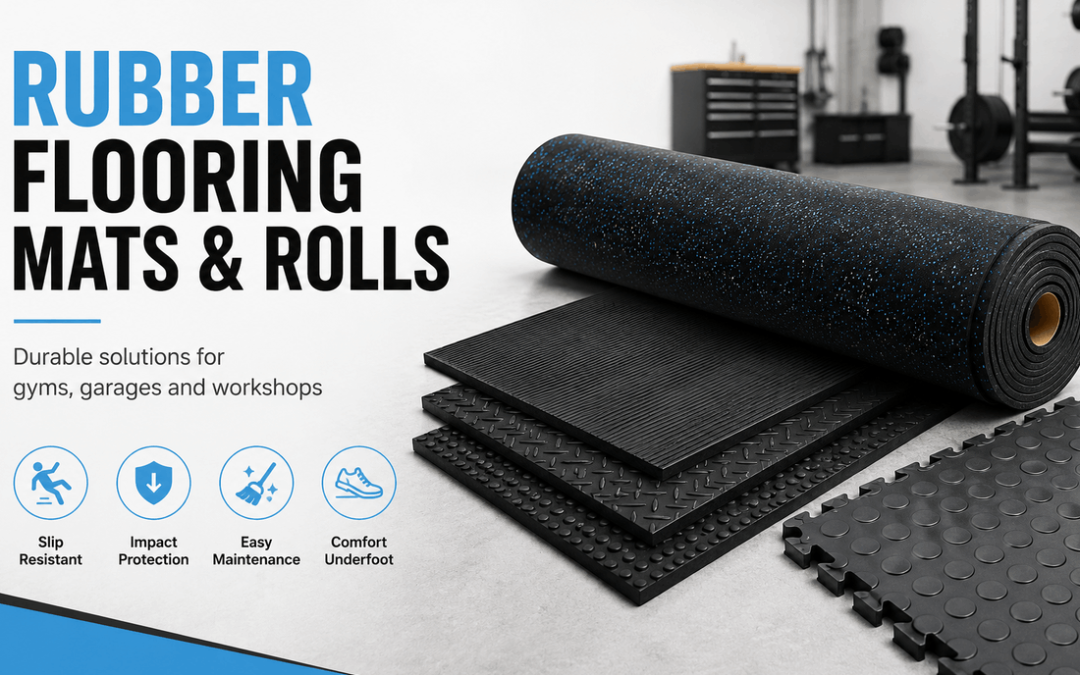
Rubber flooring has become one of the most practical and trusted flooring solutions for gyms, garages, workshops, warehouses, schools, commercial areas and high-traffic spaces. It is strong, slip-resistant, comfortable underfoot and designed to protect both people and floors.
Unlike bare concrete, ceramic tiles or thin domestic flooring, rubber flooring is made to handle impact, movement, pressure, noise and daily wear. This makes it ideal for spaces where safety, durability and long-term value are important.
At PVC Floor Tile, our rubber flooring range includes heavy-duty rubber mats, interlocking rubber tiles and rubber rolls suitable for different environments. Whether you are creating a home gym, upgrading a garage, protecting a workshop floor or improving safety in a commercial facility, rubber flooring gives you a reliable surface that works hard every day.
Why Rubber Flooring Is Becoming the New Gold
Rubber flooring is often called the “new gold” in practical flooring because of its high value across many industries. It is no longer used only in gyms. Today, rubber flooring is used in homes, businesses, factories, schools, workshops, retail spaces and sports facilities.
The reason is simple: rubber solves many flooring problems at once. It provides grip, comfort, floor protection, sound reduction and impact resistance. It can help protect concrete from damage, reduce the risk of slips and make working or training areas more comfortable.
Rubber flooring can be supplied as:
- Rubber mats
- Rubber rolls
- Interlocking rubber tiles
- Gym rubber flooring
- Anti-fatigue mats
- Commercial rubber flooring
- Heavy-duty rubber floor mats
What Is Rubber Flooring Made From?
Rubber flooring is usually made from natural rubber, synthetic rubber, recycled rubber or a combination of these materials. The exact composition depends on the product type, intended use and required performance.
Natural Rubber
Natural rubber comes from latex harvested from rubber trees. It is known for flexibility, elasticity and comfort.
Synthetic Rubber
Synthetic rubber is manufactured using industrial compounds and is designed to offer strength, resistance and durability.
Recycled Rubber
Many rubber flooring products are made from recycled rubber, often from processed tyres or industrial rubber materials.
Rubber Compounds
Rubber flooring may include pigments, binders and additives to improve colour, grip, UV stability, density and durability.
Main Benefits of Rubber Flooring
Rubber flooring is designed to handle daily use in demanding spaces. It can withstand foot traffic, gym equipment, tool movement, light machinery, trolleys and repeated impact.
A textured rubber surface can also help improve traction underfoot, especially in gyms, workshops and wet areas where people may move quickly or where floors may be exposed to sweat, dust, water or oil.
Types of Rubber Flooring
Rubber flooring is available in different forms. The two most common options are rubber rolls and rubber mats. Both are useful, but they serve different needs.
Rubber Rolls
Rubber rolls are long continuous sheets of rubber flooring. They are commonly used to cover large areas with fewer joints and a cleaner visual finish.
Rubber Mats
Rubber mats are individual flooring pieces used for targeted protection, high-impact areas, gym equipment zones, garages and workshop workstations.
Rubber Rolls
Rubber rolls are best for large spaces where a smooth, continuous floor finish is needed. They are ideal for commercial gyms, fitness studios, cardio areas, school gyms, walkways, large training zones and open-plan commercial floors.
If you need wide-area coverage with fewer joins, view our continuous rubber rolls for practical flooring solutions suitable for gyms, studios, walkways and large floor areas.
Choose rubber rolls when:
- You need to cover a large area
- You want fewer joints
- You want a professional floor finish
- The space has regular foot traffic
- You need a continuous floor surface
Rubber Mats
Rubber mats are best for targeted protection and high-impact areas. They are ideal for weightlifting zones, home gyms, garage gyms, workshop floors, under gym machines, free-weight areas, bench press areas, squat rack zones and tool workstations.
Rubber mats are very practical because they can be moved, replaced or added where needed. They are the better option when the floor must handle pressure, impact and equipment weight in specific areas.
Choose rubber mats when:
- You need heavy impact protection
- You are working with a smaller area
- You want a flexible layout
- You need mats under machines
- You need protection in weightlifting zones
- You want easy replacement of individual sections
Rubber Rolls vs Rubber Mats: Which One Should You Choose?
Both rubber rolls and rubber mats are excellent flooring options, but the best choice depends on the purpose of the space.
Use Rubber Rolls for Full Coverage
Rubber rolls are best when you want to cover an entire floor area with a continuous finish. They work well in commercial gyms, studios, walkways and large open areas.
Use Rubber Mats for Targeted Protection
Rubber mats are best when you need extra protection in selected areas such as weightlifting zones, home gyms, garages and workshops.
In many gym and commercial spaces, the best solution is to use both. Rubber rolls can cover the general floor area, while thicker rubber mats can protect free-weight, machine and high-impact zones.
Best Places to Use Rubber Flooring
Gyms and Fitness Areas
Rubber flooring supports safe movement, protects equipment and reduces impact noise in commercial gyms, home gyms, school gyms and free-weight zones.
Garages
Rubber flooring protects the garage floor and creates a safer, more usable surface for training, storage or workshop use.
Workshops
Rubber mats provide comfort and protection where people stand for long hours or work around tools, oils and equipment.
Warehouses and Industrial Spaces
Rubber flooring can be used in selected warehouse areas, packing zones, workstations and walkways to improve comfort and safety.
Schools and Public Facilities
Rubber flooring is suitable for sports rooms, activity areas and multipurpose spaces because it is durable and easy to maintain.
Retail and Commercial Spaces
Rubber flooring is useful behind counters, in service areas and in staff work zones where durability and comfort are important.
Why Rubber Flooring Is Better Than Bare Concrete
Bare concrete is strong, but it is not always suitable as a finished working or training floor. Concrete can be hard underfoot, noisy, dusty, slippery when wet or dusty, uncomfortable for long standing and expensive to repair when damaged.
Rubber flooring creates a protective layer over concrete. It improves comfort, reduces impact, protects the floor and creates a safer surface for movement.
Rubber Flooring and Safety
Safety is one of the biggest reasons customers choose rubber flooring. A proper rubber surface can help reduce slips, improve grip and support stable movement.
For additional safety information, you can review flooring and slip resistance guidance when planning safer floors for busy or high-use spaces.
Rubber Flooring and Noise Reduction
Noise is a major issue in gyms, garages and workshops. Dropped weights, moving machines, footsteps and equipment vibration can make a space loud and uncomfortable.
Rubber flooring helps absorb some of this impact. Thick rubber mats are especially useful for reducing noise in weightlifting areas, while rubber rolls can reduce general footstep and movement noise in larger spaces.
Rubber Flooring and Maintenance
Rubber flooring is easy to maintain when cleaned regularly. Good maintenance helps keep the flooring looking clean and performing well for longer.
Basic cleaning tips include:
- Sweep or vacuum loose dust daily
- Mop with mild detergent when needed
- Wipe spills quickly
- Avoid harsh chemicals unless approved
- Keep sharp objects away from the surface
- Check mats or edges for movement
- Replace damaged sections when necessary
How to Choose the Right Rubber Flooring
Thickness
Thicker rubber generally provides better impact protection and noise reduction.
Format
Choose rolls for large areas and mats for targeted protection.
Surface Texture
Textured rubber flooring improves grip and is better for active spaces.
Area Size
Large spaces may be more cost-effective with rubber rolls, while smaller spaces may work better with mats.
Type of Use
A gym, garage, workshop and commercial area will each need different flooring strength.
Budget
Flooring should be selected for long-term value, not only the lowest price.
Why Buy Rubber Flooring from PVC Floor Tile?
PVC Floor Tile supplies practical flooring solutions for South African homes, businesses, gyms and commercial spaces. Our rubber flooring range is selected to help customers create safer, stronger and more durable surfaces.
Whether you need a few mats for a home gym or a larger rubber flooring solution for a commercial space, our team can help you choose the right option.
FAQs About Rubber Flooring
What is rubber flooring used for?
Rubber flooring is used in gyms, garages, workshops, warehouses, schools, fitness studios and commercial spaces. It provides grip, impact protection, comfort and floor protection.
Is rubber flooring good for gyms?
Yes. Rubber flooring is one of the best options for gyms because it helps reduce impact, protects the subfloor, improves grip and reduces noise.
Are rubber rolls better than rubber mats?
Rubber rolls are better for large areas that need full coverage, while rubber mats are better for targeted protection and heavy-impact zones.
Where should I use rubber rolls?
Rubber rolls are best for commercial gyms, fitness studios, walkways, cardio areas and large open spaces.
Where should I use rubber mats?
Rubber mats are best for weightlifting zones, home gyms, garage gyms, workshops and under gym equipment.
Can rubber flooring reduce noise?
Yes. Rubber flooring can help reduce impact noise and vibration, especially when thicker mats are used in weightlifting or machine areas.
Is rubber flooring easy to clean?
Yes. Rubber flooring can usually be swept, vacuumed and mopped with mild detergent.
Is rubber flooring suitable for garages?
Yes. Rubber flooring is suitable for garages because it protects concrete, improves comfort and creates a safer surface for training, storage or workshop use.
Upgrade Your Space with Durable Rubber Flooring
Whether you need rubber rolls for a large gym, rubber mats for a weightlifting area, or practical rubber flooring for a garage, workshop or commercial space, we can help you choose the right solution.
Speak to our flooring team for expert advice, square-metre estimates and rubber flooring options built for safety, durability and long-term value.
