
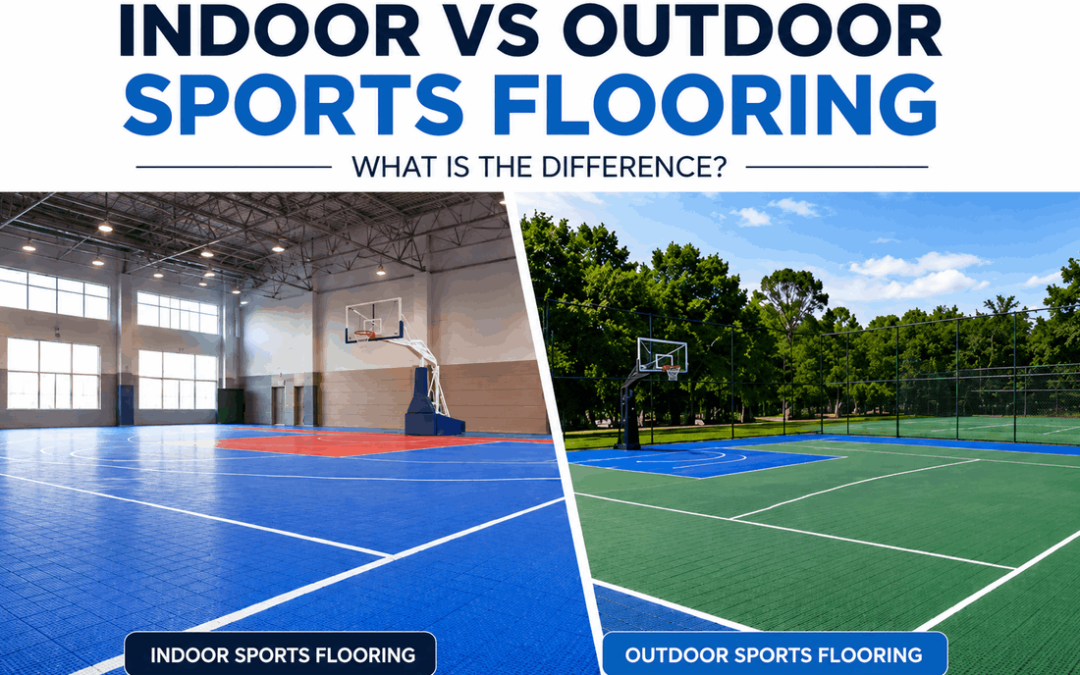
Indoor vs outdoor sports flooring should be chosen according to the environment, type of activity, weather exposure and maintenance requirements of the facility. Although indoor and outdoor court surfaces may look similar, they are designed to manage very different conditions. For suitable modular options, explore our sports flooring for indoor and outdoor courts.
An indoor court is protected from direct rain and strong sunlight, while an outdoor court must handle changing weather, standing water, dust, leaves and temperature changes. These differences influence tile design, drainage, surface texture, base preparation and long-term maintenance.
This sports flooring comparison explains the most important differences between indoor court tiles and outdoor court tiles so that schools, clubs, gyms, training centres and community facilities can choose a surface that suits the intended space.
What Is Indoor Sports Flooring?
Indoor sports flooring is designed for courts and activity areas located inside enclosed buildings. These spaces are generally protected from rain, direct weather exposure and large amounts of outdoor debris.
Indoor flooring may be selected for comfort, controlled movement, noise management, appearance and the type of sport played. The surface may be used in school halls, gyms, training studios, community centres or indoor club facilities.
Indoor sports flooring
Indoor surfaces are usually selected for controlled environments where temperature, cleaning and moisture exposure are easier to manage.
- Protected from direct rain
- Reduced UV exposure
- Less outdoor debris
- Controlled court conditions
- Greater focus on comfort
- Suitable for halls and gyms
Outdoor sports flooring
Outdoor surfaces must handle changing weather, water, temperature changes and regular exposure to dust and leaves.
- Exposed to rain and sunlight
- Needs drainage planning
- Requires outdoor durability
- Must handle temperature changes
- Needs regular debris removal
- Suitable for exposed courts
What Is Outdoor Sports Flooring?
Outdoor sports flooring is designed for open-air courts, school play areas, club training spaces and community sports facilities. These surfaces must cope with conditions that indoor floors do not usually experience.
Rainwater, direct sunlight, temperature changes, soil and leaves can all affect the way an outdoor court performs. Outdoor flooring should therefore be assessed together with the base, drainage slope, court edges and planned maintenance routine.
The Main Difference
Indoor flooring is designed mainly for controlled playing conditions. Outdoor flooring must combine court performance with drainage, weather exposure and regular maintenance.
Indoor Court Tiles vs Outdoor Court Tiles
Indoor court tiles and outdoor court tiles may both use modular installation systems, but their design requirements are different. The correct option depends on where the flooring will be installed and how the court will be used.
Indoor
Generally protected from rain, direct sunlight and changing outdoor conditions.
Outdoor
Must handle sunlight, rainfall, temperature changes and outdoor dirt.
Indoor
Drainage is usually less important unless the area is washed regularly or exposed to moisture.
Outdoor
Drainage is a major consideration because rainwater must leave the surface and base.
Indoor
Cleaning usually focuses on dust, shoe marks, indoor dirt and routine court care.
Outdoor
Cleaning must also manage leaves, mud, soil, water and material carried onto the court.
Indoor
May use a more closed surface because regular rainwater drainage is not normally required.
Outdoor
May use an open-grid or vented construction to support water movement through the surface.
Weather Resistance
Weather resistance is one of the biggest differences in an indoor vs outdoor sports flooring comparison. Indoor flooring is protected by the building, while outdoor flooring is exposed throughout the year.
Outdoor tiles should be selected for their intended environment. The supplier should confirm whether the product is designed for outdoor use and whether it can handle the expected weather conditions.
Rain exposure
Outdoor surfaces need a plan for water movement, drainage and inspection after heavy rain.
Sun exposure
Outdoor flooring may remain in direct sunlight for long periods, depending on the court location.
Temperature changes
Outdoor court materials may experience greater temperature changes than flooring inside a building.
Drainage Requirements
Indoor courts normally do not need to manage rainfall. Outdoor courts, however, need a clear system for allowing water to leave the playing surface and the base below.
Open-grid outdoor tiles can allow water to pass through the upper surface. The concrete underneath must still be sloped so that water can flow toward a drain or court edge.
For more detail on this system, read our article about fast-draining outdoor court tiles.
Outdoor drainage planning should include:
- The condition of the concrete base
- The slope of the existing court
- The location of drainage outlets
- The design of the court edges
- Areas where water currently collects
- The amount of rainfall in the area
- Access for cleaning beneath or around the tiles
Grip and Player Movement
Grip is important for both indoor and outdoor sports flooring, but the conditions affecting grip are different.
Indoor courts may collect dust, shoe marks and cleaning residue. Outdoor courts may also collect water, mud, leaves and loose debris. The surface should therefore be cleaned and inspected according to the environment.
The type of sport also matters. Basketball, netball, tennis, multi-sport training and general fitness activities may place different movement demands on the floor.
Indoor grip can be affected by:
- Dust
- Shoe marks
- Cleaning residue
- Spilled liquids
- Worn high-traffic areas
Outdoor grip can be affected by:
- Rainwater
- Mud and soil
- Leaves and seeds
- Dust
- Drainage blockages
Comfort and Shock Management
Indoor court users may spend long periods training inside halls and gyms. Comfort, movement and impact management may therefore be important depending on the activity.
Outdoor court flooring also needs to support regular sport, but weather resistance and drainage may become bigger priorities. The best balance depends on the facility and the sports played.
Planning advice: Do not choose flooring only according to whether it feels softer or harder. Consider the sport, base, traffic level, footwear, weather exposure and maintenance routine together.
Noise and Indoor Court Acoustics
Noise is usually more noticeable inside enclosed halls. Ball impact, running, footwear and group activity can create sound that reflects from walls and ceilings.
Indoor sports flooring should therefore be considered as part of the full building environment. The flooring alone may not solve every acoustic issue, but the material and installation system can influence how the space feels during use.
Outdoor facilities normally have fewer enclosed acoustic concerns, although nearby homes, classrooms or offices may still need to be considered.
Base Preparation
Both indoor and outdoor flooring need a firm, stable and suitably prepared base. Installing tiles over badly damaged concrete can affect the final result.
Indoor bases should be checked for cracks, moisture, uneven areas and loose material. Outdoor bases require the same checks, together with drainage slope and water movement.
Check for cracks
Large or moving cracks should be assessed before flooring is installed.
Check for low areas
Uneven sections can affect tile stability and may collect water outdoors.
Check the court edges
Edges should support a neat installation without blocking drainage routes.
Cleaning and Maintenance
Indoor and outdoor sports flooring both need a planned cleaning routine. The difference is the type and amount of dirt that reaches the court.
Indoor floors may need regular sweeping and cleaning of shoe marks. Outdoor courts may need more frequent clearing of leaves, dust, soil and drainage openings.
Basic maintenance tasks may include:
- Sweeping loose dirt and debris
- Removing leaves from outdoor surfaces
- Cleaning court markings carefully
- Inspecting high-traffic areas
- Checking tile joints
- Keeping drainage openings clear
- Replacing damaged modular sections
For general information about managing wet or contaminated walking surfaces, refer to the Health and Safety Executive guidance on preventing slips and trips.
Where Indoor Sports Flooring Works Best
Indoor flooring is usually the better choice for enclosed courts, gym halls, studios, club training rooms and school activity spaces that are protected from outdoor weather.
Common indoor applications include:
- School sports halls
- Indoor basketball courts
- Indoor netball courts
- Training studios
- Community halls
- Club fitness areas
- Multi-purpose indoor spaces
Where Outdoor Sports Flooring Works Best
Outdoor flooring is intended for exposed sports areas where rain, sunlight and changing weather are part of the normal operating conditions.
Common outdoor applications include:
- School playground courts
- Outdoor basketball courts
- Netball training courts
- Tennis practice areas
- Community sports courts
- Club training spaces
- Multi-purpose outdoor courts
Can the Same Tiles Be Used Indoors and Outdoors?
Some modular sports tiles may be suitable for more than one environment, but this should never be assumed. A product designed for indoor use may not have the drainage design or outdoor suitability required for an exposed court.
Similarly, an open-grid outdoor tile may not provide the exact surface feel, appearance or acoustic characteristics expected inside a hall.
Always confirm the intended application with the supplier before installation.
Simple Selection Rule
- Choose indoor flooring for controlled, enclosed sports spaces.
- Choose outdoor flooring for areas exposed to rain and sunlight.
- Use open-grid flooring where drainage through the surface is required.
- Confirm the tile is suitable for the intended sport and location.
Common Selection Mistakes
One common mistake is choosing a tile because it has the right colour without checking whether it is suitable for the environment.
Another mistake is installing indoor flooring outdoors and expecting it to manage rainwater. Outdoor courts must be planned as complete systems that include the surface, base slope, edges and drainage outlets.
Avoid these mistakes:
- Using indoor-only flooring outside
- Ignoring the condition of the base
- Choosing only according to colour
- Failing to plan drainage
- Ignoring outdoor cleaning needs
- Assuming all sports require the same surface
- Not confirming the supplier’s installation requirements
How to Choose Between Indoor and Outdoor Sports Flooring
Begin by identifying where the court will be installed. If the area is fully enclosed and protected from weather, an indoor flooring system may be suitable.
If the court is exposed to rain, sunlight and outdoor dirt, choose a surface designed for outdoor conditions. Drainage, tile construction and base preparation should then become important parts of the decision.
Choose indoor flooring when:
- The court is enclosed
- Rainwater is not expected
- Comfort and indoor use are priorities
- The environment is controlled
Choose outdoor flooring when:
- The court is exposed to weather
- Drainage is required
- The area collects outdoor debris
- The surface must handle sunlight
Ask for advice when:
- The court is partly covered
- The base has drainage problems
- Several sports share the area
- You are unsure about tile suitability
Final Indoor vs Outdoor Sports Flooring Comparison
Indoor vs outdoor sports flooring differs mainly in weather exposure, drainage, cleaning requirements and the type of environment in which the floor must perform.
Indoor court tiles are normally designed for enclosed, controlled spaces. Outdoor court tiles must handle rain, sunlight, debris and changing conditions while allowing the facility to maintain the surface effectively.
The correct choice should be based on the court location, sports played, traffic level, base condition and maintenance plan. Choosing flooring for its actual environment can help create a more practical and manageable sports area.
Contact Us About Your Sports Flooring Project
PVC Floor Tile supplies modular sports flooring for indoor halls, outdoor courts, schools, clubs, community facilities and multi-purpose training areas across South Africa. Contact our team with the size of your court, the condition of the base, the planned sports and whether the area is indoors or exposed to outdoor weather.
Contact Us