
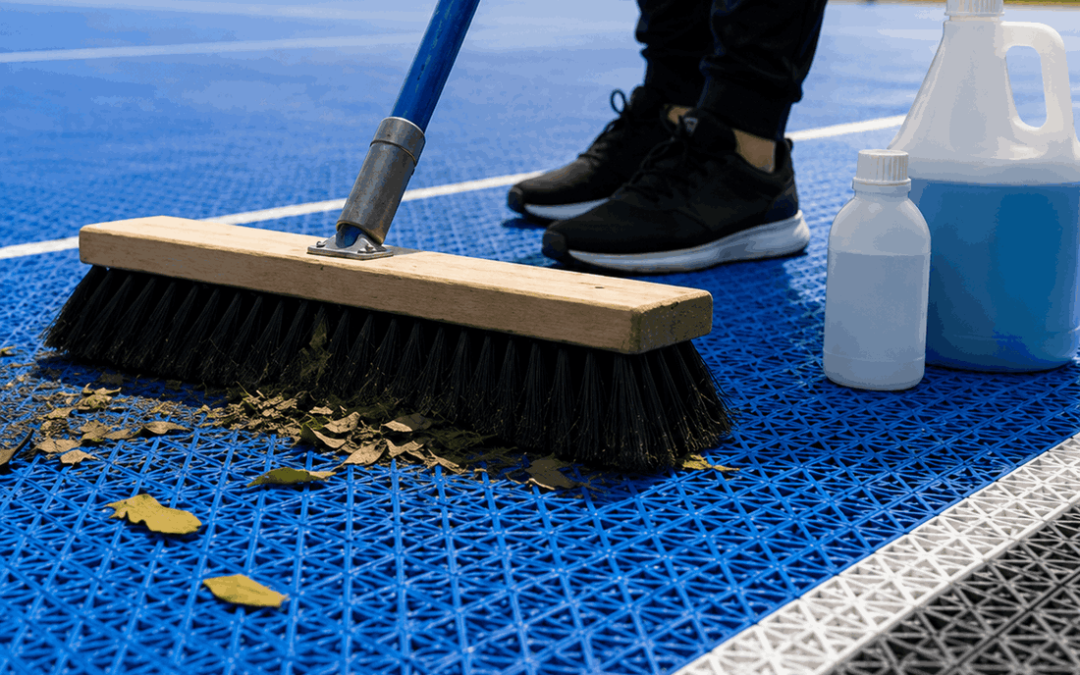
Learning how to clean sports tiles can help outdoor courts remain presentable, easier to inspect and ready for regular training or recreation. Rain, dust, mud, leaves and repeated foot traffic can gradually affect the appearance and drainage of a modular court. A consistent maintenance routine helps remove contaminants before they become compacted into the tile surface. For suitable outdoor court products, explore our outdoor sports flooring tiles.
Outdoor sports tiles are designed for exposed environments, but they are not maintenance-free. The court still needs regular sweeping, occasional washing, drainage inspection and attention to damaged or loose sections.
This sports flooring cleaning guide explains how to clean sports tiles, how often outdoor courts should be maintained and which common mistakes can reduce the performance of a modular surface.
Why Outdoor Court Tile Maintenance Matters
Outdoor courts collect more environmental dirt than indoor sports halls. Wind can carry dust onto the surface, nearby trees can drop leaves and rain can move mud from surrounding ground into court entrances.
If this material is not removed regularly, it may collect inside tile openings, along perimeter edges and around drainage outlets. This can make the surface look neglected and may slow water movement after rain.
Regular maintenance can help with:
- Keeping drainage openings clear
- Removing loose dirt and leaves
- Identifying damaged tiles early
- Maintaining a cleaner court appearance
- Reducing mud accumulation
- Protecting court markings
- Keeping perimeter areas manageable
Poor maintenance may lead to:
- Blocked tile openings
- Dirt collecting in low areas
- Slow drainage after rain
- Loose debris across the court
- Worn sections going unnoticed
- Damaged joints becoming worse
- More difficult deep cleaning
How Often Should Sports Tiles Be Cleaned?
Cleaning frequency depends on the court location, number of users, nearby vegetation, weather and the amount of dirt entering from surrounding paths.
A court beside trees, soil or unpaved walkways may need more frequent cleaning than a court surrounded by clean paving. Busy school and community courts may also need daily visual inspections.
A Practical Cleaning Schedule
- Inspect the court before organised use.
- Sweep loose debris as often as necessary.
- Check drainage openings after rain.
- Wash heavily used areas when dirt becomes visible.
- Inspect tile joints and edges every month.
- Complete a deeper seasonal inspection.
What You Need to Clean Outdoor Sports Tiles
Most routine court cleaning does not require complicated equipment. Begin with simple tools that can remove loose dirt without damaging the modular surface.
Soft outdoor broom
Use it to remove dry leaves, dust, seeds and loose soil from the playing surface.
Water and suitable cleaner
Use products approved for the tile material and follow the supplier’s instructions.
Soft brush or mop
Use gentle cleaning tools for stubborn marks without scratching or coating the surface.
Important: Avoid harsh solvents, oily products and floor polishes unless the flooring supplier has confirmed that they are suitable for the tiles.
Step 1: Remove Loose Leaves and Debris
Begin by removing dry surface material. Sweep leaves, seeds, paper, dust and loose soil toward the court edge without pushing debris into tile openings.
Pay particular attention to corners, fencing lines, benches and the lowest side of the court. Wind often moves loose material into these sections.
Areas that need extra attention include:
- Perimeter fencing
- Court corners
- Drainage outlets
- Tile edges
- Entrance paths
- Areas below trees
- Sections behind benches or equipment
Step 2: Clear Open-Grid Tile Openings
Open-grid tiles depend on clear openings to allow water and small particles to move through the upper surface. Mud, compacted soil and plant material can reduce the effectiveness of these openings.
Sweep the surface thoroughly before washing. Where dirt is trapped inside the grid, use a suitable brush or cleaning method recommended by the supplier.
Do not force large amounts of debris below the tiles without confirming that the base and drainage route can be cleaned properly.
Step 3: Wash the Court Surface
After removing loose debris, wash the court where necessary. The correct method depends on the tile material, court size and level of dirt.
Use clean water and a mild cleaning solution approved for the flooring. Work in manageable sections so that dirty water does not dry across the court.
Good cleaning practice
- Remove dry dirt first
- Use suitable cleaning products
- Work in small sections
- Rinse where required
- Keep drainage routes clear
- Inspect the court after cleaning
Avoid these methods
- Using oily cleaners
- Applying floor polish
- Leaving soap residue
- Using harsh solvents
- Scraping with sharp tools
- Washing debris into blocked drains
Step 4: Rinse Away Cleaning Residue
Cleaning residue may change the way footwear contacts the sports surface. Where the cleaning product requires rinsing, use clean water and make sure residue is not left behind.
Check low spots and perimeter areas where dirty water may collect. The court should not be reopened until the surface has been inspected and is suitable for use.
Step 5: Check Drainage After Cleaning
Washing provides a useful opportunity to observe how water moves through and around the court. Watch whether it flows through the tile surface, across the supporting base and toward the intended outlet.
Water that remains in the same area may indicate a blocked route, low spot or unsuitable base slope. For more information, read our guide to outdoor sports court drainage.
After washing, check:
- Whether water leaves the tile surface
- Whether the base directs water correctly
- Whether perimeter drains are clear
- Whether low spots remain wet
- Whether mud has collected at the edges
- Whether any tiles moved during cleaning
- Whether the court needs further inspection
How to Remove Mud From Sports Tiles
Mud should be removed before it dries and hardens inside the tile texture or drainage openings. Begin by clearing loose soil from the surrounding entrance so that more dirt is not carried back onto the court.
Where possible, allow excess wet mud to be removed carefully before washing. Avoid spreading it over a larger area.
When mud is fresh:
- Remove excess material carefully
- Clean the source near the entrance
- Use water in controlled amounts
- Keep drainage outlets clear
- Inspect nearby tile openings
When mud has dried:
- Loosen it with a suitable soft brush
- Sweep away dry particles first
- Wash the remaining marks
- Inspect drainage below the area
- Avoid sharp scraping tools
How to Clean Sports Tiles After Rain
After rain, inspect the court before sweeping or washing. Wet leaves, mud and debris may collect around fencing and drainage outlets.
Remove material that is blocking water movement. Wait until remaining water has drained or been managed before reopening the court.
Post-rain inspection checklist:
- Check for standing water.
- Remove wet leaves.
- Clear drainage channels.
- Inspect muddy entrances.
- Check low court sections.
- Look for lifted or damaged tiles.
- Confirm the surface is ready before use.
Cleaning Court Edges and Perimeter Areas
The perimeter often receives less attention than the main playing surface, but it plays an important role in drainage and overall court maintenance.
Leaves, weeds and soil may collect against fencing or edging. These materials should be removed before they block water routes.
Keep the Court Perimeter Clear
- Remove leaves from the lowest court edge.
- Clear weeds from drainage routes.
- Do not store equipment over outlets.
- Keep surrounding paving clean.
- Inspect edging after heavy rain.
Inspect Tile Joints During Cleaning
Routine cleaning is a good time to inspect tile joints. Look for sections that have separated, lifted or shifted from their original position.
Movement may be caused by damage, base problems, installation issues or pressure around the perimeter. Loose sections should be assessed before they become more difficult to repair.
Check modular tile joints for:
- Visible separation
- Raised corners
- Broken connectors
- Movement during foot traffic
- Damage near court edges
- Changes around repaired base sections
- Sections affected by heavy equipment
Replace Damaged Sports Tiles
One benefit of modular sports flooring is that damaged sections may be replaceable without removing the entire court surface.
Tiles with broken connections, major cracks or severe surface damage should be assessed. Replacement tiles should match the existing product, size, connection system and intended use.
Before replacing a tile, check whether the damage was caused by a problem in the supporting base. Repeated damage in the same location may indicate movement underneath the flooring.
Protect Court Markings During Cleaning
Court markings help define the layout for sport and training. Aggressive scrubbing or unsuitable chemicals may affect painted or integrated lines.
Use gentle cleaning methods around markings and confirm whether the lines form part of the tile or were applied after installation.
Planning tip: Test any unfamiliar cleaning product in a small, less visible area before using it across the full playing surface.
Managing Dirt at Court Entrances
Many outdoor court cleaning problems begin at the entrance. Users may carry soil, mud, grass and small stones onto the playing surface.
Improve the surrounding approach by keeping paths clean and directing users through a controlled entrance. Where practical, install suitable entrance matting outside the playing area.
Clean the approach
Keep nearby paving, steps and paths free from mud and loose soil.
Control the entrance
Encourage users to enter through one or two maintained access points.
Inspect after busy use
Check entrances after events, school breaks and heavy training sessions.
Seasonal Outdoor Court Maintenance
Outdoor court conditions change during the year. Rainy periods may create more mud and drainage problems, while dry or windy periods may increase dust and leaves.
Adjust the cleaning schedule according to the season instead of using the same routine throughout the year.
Rainy-season priorities:
- Clear drains more frequently
- Inspect standing-water areas
- Remove mud from entrances
- Check perimeter water flow
- Inspect tiles after storms
Dry-season priorities:
- Sweep dust more often
- Manage wind-blown leaves
- Clean unpaved approaches
- Inspect dry dirt inside openings
- Schedule deeper washing
Outdoor Court Maintenance for Schools
School courts can experience heavy use during lessons, break periods and after-school activities. A simple maintenance system should assign responsibilities clearly.
The court should be visually checked before organised use, particularly after rain or strong wind.
School maintenance teams should monitor:
- Loose litter and leaves
- Muddy learner entrances
- Standing water
- Damaged modular joints
- Drainage outlets
- High-use court sections
- Edges close to gardens or soil
Outdoor Court Maintenance for Clubs
Club courts may receive concentrated use during evenings, weekends, matches and public events. More users often mean more dirt, litter and wear around entrances.
Complete a basic inspection before and after major events. This helps identify damage early and makes the next cleaning session easier.
Can You Pressure-Wash Sports Tiles?
Pressure washing may be suitable for some products, but it should not be assumed to be safe for every modular sports tile.
Excessive pressure may affect joints, force dirt underneath the surface or disturb loose sections. Confirm the recommended pressure, distance and cleaning method with the supplier before using a pressure washer.
Before pressure washing
- Confirm supplier approval
- Inspect tile joints
- Remove loose debris
- Test a small section
- Protect court markings
Stop if you notice
- Tiles lifting
- Connections separating
- Damage to markings
- Water collecting below
- Debris being forced into joints
Cleaning Products to Avoid
Avoid using products that leave oily, waxy or polished coatings unless specifically approved for the flooring. These coatings may affect surface texture and attract more dirt.
Strong solvents may also damage the tile material or change its appearance. Always follow the manufacturer’s cleaning guidance.
Avoid using:
- Oil-based cleaners
- Floor wax
- Unapproved polish
- Harsh industrial solvents
- Abrasive metal brushes
- Sharp scraping tools
- Unknown chemicals without testing
How Maintenance Supports Court Grip
Dust, water, leaves and cleaning residue can create a layer between footwear and the tile surface. Regular cleaning helps expose the original texture of the flooring.
No surface is completely slip-proof, so courts should be inspected before active use, especially after rain or cleaning.
For general information about managing wet or contaminated surfaces, refer to the Health and Safety Executive guidance on preventing slips and trips.
Common Outdoor Court Cleaning Mistakes
One common mistake is washing the court before removing dry debris. This can turn loose dust and soil into mud that becomes more difficult to remove.
Another mistake is cleaning only the playing surface while ignoring the drains, entrances and perimeter. Dirt from these areas can quickly return to the court.
Avoid these maintenance mistakes:
- Washing before sweeping
- Using too much cleaning product
- Leaving soap residue
- Ignoring drainage openings
- Using sharp cleaning tools
- Failing to inspect tile joints
- Allowing mud to dry inside the grid
Outdoor Court Tile Maintenance Checklist
Final Maintenance Checklist
- Sweep loose debris regularly.
- Keep court entrances clean.
- Remove mud before it hardens.
- Use suitable cleaning products.
- Rinse residue where necessary.
- Clear drainage openings and outlets.
- Inspect joints, corners and edges.
- Replace damaged modular tiles.
- Check the court after rain.
- Adjust cleaning frequency by season.
Final Advice on How to Clean Sports Tiles
Learning how to clean sports tiles begins with regular sweeping, careful washing and consistent inspection. Removing loose dirt early can prevent it from becoming compacted inside the tile texture or drainage openings.
Outdoor court tile maintenance should also include the surrounding entrances, perimeter edges and drainage routes. Cleaning only the centre of the court will not solve problems caused by mud, leaves or blocked outlets.
Use suitable products, follow supplier instructions and inspect the modular surface regularly. A planned maintenance routine can help keep an outdoor court cleaner, easier to manage and ready for regular use.
Contact Us About Outdoor Sports Flooring
PVC Floor Tile supplies modular outdoor sports flooring for schools, clubs, recreation facilities and community courts across South Africa. Send our team the court dimensions, photographs of the existing surface and details of how the area is used so we can help you identify a suitable flooring option.
Contact Us