
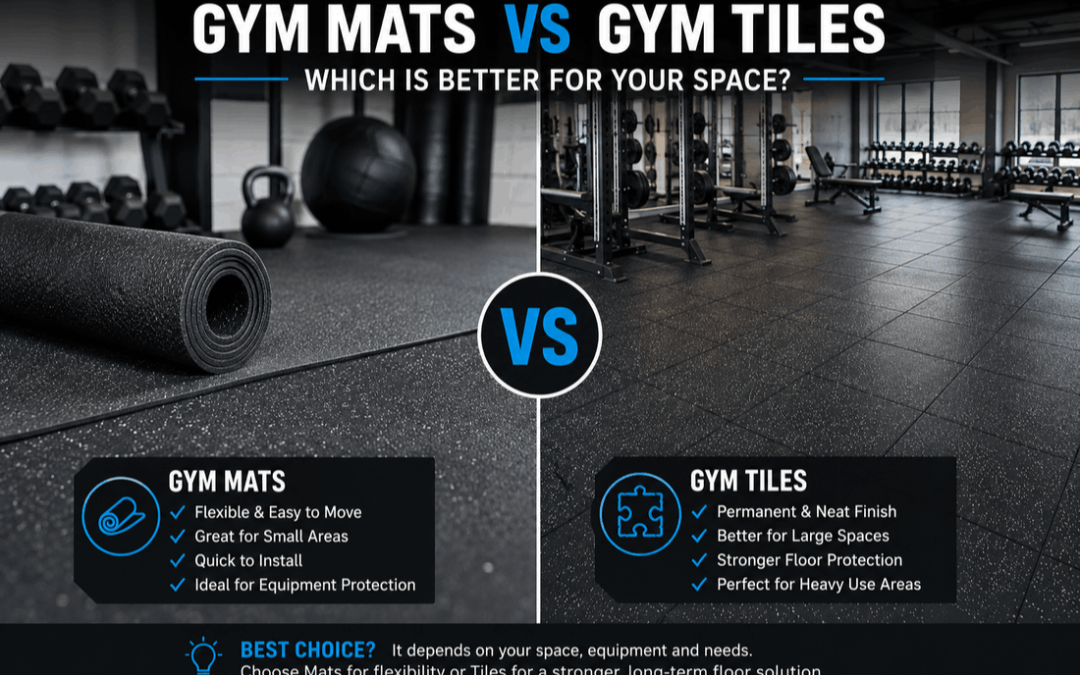
Gym mats vs gym tiles is a common question for homeowners, gym owners, schools, fitness studios and commercial training spaces. Both options can protect floors, improve comfort and create a better workout area, but they are not always used for the same purpose. The best choice depends on your space, equipment, traffic level, installation needs and long-term floor protection goals. For full training-space solutions, explore our gym flooring options for different training spaces.
Some gyms need loose mats that can be moved, cleaned or replaced easily. Other gyms need more structured tiles that create a neater and more permanent surface. This is why comparing gym mats vs gym tiles before buying is important.
The right answer is not the same for every space. A small home gym, a commercial gym, a personal training studio and a school fitness room may all need different flooring solutions.
Choose Gym Mats When You Need
- Flexible placement
- Simple floor protection
- Easy movement or replacement
- Protection under selected equipment
- A quick solution for smaller zones
Choose Gym Tiles When You Need
- A cleaner fitted layout
- Better coverage across larger areas
- More organised training zones
- Heavy-duty floor protection
- A more professional gym finish
Gym Mats vs Gym Tiles: The Main Difference
The main difference between gym mats and gym tiles is how they are used. Gym mats are usually placed in selected areas, while gym tiles are often used to cover larger sections of the gym floor in a more organised layout.
Gym mats are practical when you only need protection under a treadmill, bench, dumbbell area or stretching space. Gym tiles are better when you want a stronger floor system across a full gym, weight zone or commercial training area.
Coverage
Mats are good for selected areas. Tiles are better for wider gym floor coverage.
Layout
Mats are flexible. Tiles give a more planned and structured gym floor finish.
Use
Mats suit smaller zones. Tiles suit heavier training spaces and commercial gyms.
When Gym Mats Are the Better Choice
Gym mats are a good choice when you want simple floor protection without covering the entire room. They work well in home gyms, small studios, personal training spaces and equipment zones.
A gym mat can be placed under a treadmill, bike, bench, squat rack, dumbbell area or stretching zone. This makes mats useful when you only need protection in specific parts of the room.
Gym mats work well for:
- Home gyms
- Small workout rooms
- Treadmills and cardio machines
- Stretching and warm-up zones
- Temporary training spaces
- Under benches and light equipment
- Areas where mats may need to be moved
When Gym Tiles Are the Better Choice
Gym tiles are often better when the space needs a stronger and more permanent-looking floor. They are useful in commercial gyms, school gyms, fitness studios and weight training areas where the floor is used every day.
Tiles can create a more professional finish because they cover the floor in a planned layout. They are also useful when you want to separate training zones, weight areas and equipment sections.
For stronger fitted options, view our durable gym tiles for weights and equipment.
Gym Mats vs Gym Tiles for Floor Protection
Floor protection is one of the biggest reasons people compare gym mats vs gym tiles. Both can help protect the surface underneath, but tiles are usually better for larger areas while mats are better for targeted zones.
If you only need to protect one section under a treadmill or bench, a mat may be enough. If you need to protect a full gym area, gym tiles normally make more sense.
| Feature | Gym Mats | Gym Tiles |
|---|---|---|
| Best use | Selected zones and equipment areas | Full gym floors and heavy-use sections |
| Installation | Simple to place and move | More structured and planned layout |
| Floor protection | Good for targeted protection | Better for larger floor coverage |
| Appearance | Practical and flexible | Cleaner, neater and more professional |
| Commercial use | Useful in selected zones | Better for high-traffic gym spaces |
Gym Mats vs Gym Tiles for Commercial Gyms
For commercial gyms, gym tiles are usually the stronger option because they create a more consistent floor surface across larger areas. Commercial gyms deal with more users, more machines, more cleaning and more daily pressure.
Gym mats can still be useful in commercial gyms, especially under machines or in selected protection zones. However, for full weight rooms, walkways and training zones, gym tiles often create a more professional and durable solution.
Commercial gym advice
Use gym tiles for full training areas and high-traffic spaces. Use gym mats where you need extra protection under specific equipment or smaller workout zones.
Gym Mats vs Gym Tiles for Home Gyms
For home gyms, both options can work well. Gym mats are often enough for smaller rooms, spare rooms and garage gyms with limited equipment. They are easy to place and can be moved if the room layout changes.
Gym tiles may be better if the home gym is larger or includes heavier equipment. If you have dumbbells, racks, benches and regular training activity, tiles can give the room a cleaner and more permanent gym feel.
Which Option Is Easier to Clean?
Both gym mats and gym tiles should be easy to clean if they are used correctly. Gym floors collect dust, sweat, shoe marks and dirt, so regular cleaning is important.
Mats can be lifted or moved for cleaning underneath. Tiles can be easier to manage across a larger area because the floor surface is more consistent. The best choice depends on how often the space is cleaned and how much of the floor is covered.
- Sweep or vacuum loose dirt regularly.
- Damp mop with a mild cleaner when needed.
- Clean sweat marks after busy sessions.
- Check tile joins or mat edges often.
- Keep walkways dry and clear.
- Avoid harsh chemicals unless approved by the supplier.
Grip and Safety in Gym Flooring
Grip is important in any gym space. Whether you choose mats or tiles, the flooring should support movement and help users feel stable during normal training.
For general guidance on safer indoor floors, read the Health and Safety Executive guide on preventing slips and trips. Clean surfaces, clear walkways and suitable flooring all help support safer movement in gyms and training areas.
Which Is Better for Your Space?
The best answer depends on your space. If you need a quick, flexible and targeted solution, gym mats are usually better. If you need a stronger, neater and more complete floor system, gym tiles are usually better.
For a small workout corner, mats may be enough. For a full home gym, school gym, fitness studio or commercial gym, tiles are usually the better long-term option.
Small space
Use mats for selected equipment, stretching areas or temporary workout zones.
Medium gym
Use tiles for the main floor and mats for extra equipment protection if needed.
Commercial gym
Use gym tiles for larger floor areas, high traffic and heavy equipment zones.
Final Advice on Gym Mats vs Gym Tiles
Gym mats vs gym tiles comes down to flexibility, coverage and how the space is used. Gym mats are practical for smaller areas and selected equipment zones. Gym tiles are better for larger spaces, commercial gyms and areas that need a cleaner fitted finish.
For home gyms, mats may be enough if the room is small and the equipment is light. For commercial gyms, gym tiles are usually the better choice because they can handle more traffic, more equipment and more daily use.
The best gym flooring choice is the one that matches your training area, equipment weight, cleaning routine and long-term floor protection needs.
Need Help Choosing Between Gym Mats and Gym Tiles?
PVC Floor Tile supplies gym mats, gym tiles and gym flooring options for home gyms, commercial gyms, fitness studios, schools and indoor training spaces across South Africa. Speak to our team for help choosing the right option for your space.
Contact Us