
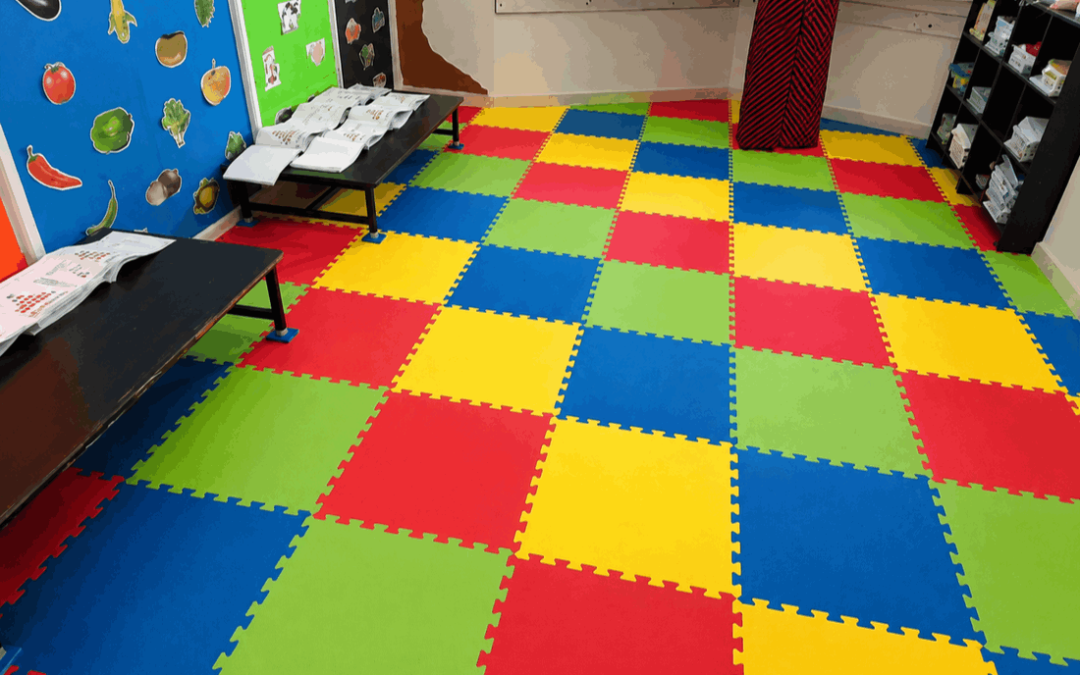
EVA foam mats for schools and classrooms can create a softer indoor surface for reading corners, group activities, supervised play and lessons that take place close to the floor. Their interlocking design allows schools to cover a selected learning zone without permanently replacing the existing floor, making them practical for classrooms that serve several purposes during the day. The correct mat should be selected according to the learners’ ages, room traffic, furniture layout, planned activities and cleaning routine. Schools can compare suitable modular options in our EVA Foam Mats collection.
Are EVA Foam Mats Suitable for Schools and Classrooms?
Yes. EVA foam mats can be suitable for dry indoor school areas used for reading, floor learning, supervised play, stretching, quiet activities and light movement. They provide a cushioned layer over hard permanent floors and can be arranged according to the available room size. However, EVA is primarily comfort-focused flooring and should not automatically be used in busy corridors, entrances, laboratories, workshops, heavy-equipment areas or beneath raised playground structures.
Comfort for floor learning
The foam reduces direct contact with hard tiled, concrete, laminate and similar permanent classroom floors.
Flexible learning zones
Interlocking mats can define reading, activity, play or movement sections without permanent room dividers.
Modular maintenance
Individual pieces can normally be lifted for inspection, cleaning or replacement when the room requires attention.
Why Classroom Flooring Matters
School floors support much more than ordinary foot traffic. In early-learning and primary-school environments, learners may sit for story time, kneel during group projects, crawl while completing play-based activities or lie down during quiet movement sessions.
A permanent hard floor can provide durability and easy sweeping, but it may feel cold and uncomfortable when children spend extended periods close to the surface. A selected foam section can improve everyday comfort without requiring the school to replace the entire classroom floor.
Flooring also influences how a classroom is organised. A clearly defined mat area can show learners where reading, group discussion or supervised floor activities take place. This supports room organisation without installing permanent partitions that limit future changes.
Different classrooms will still require different solutions. A Grade R activity room has different flooring demands from a science laboratory, computer room or busy passage. Schools should select each surface according to the most demanding normal use of that space.
EVA foam mats for schools and classrooms work best where softness, flexibility and light indoor use are the main priorities. Other materials may be more appropriate where the floor must support concentrated loads, outdoor dirt or heavy daily traffic.
What Are EVA Foam Classroom Mats?
EVA stands for ethylene-vinyl acetate, a lightweight material commonly formed into cushioned foam products. For flooring applications, the foam is usually manufactured as modular tiles with puzzle-shaped edges.
The shaped edges allow several tiles to connect and create a larger continuous floor section. Schools can begin with a small reading corner or cover a broader activity room using compatible pieces.
Some systems include straight border strips that cover the outside puzzle teeth. These can create a neater finish, although they must remain securely connected and should be inspected regularly.
EVA is softer and lighter than dense rubber flooring and rigid interlocking PVC tiles. This makes it practical for classroom zones that may need to be moved, reduced or expanded as room layouts change.
The material should remain within its intended use. Ordinary classroom foam is not a replacement for industrial flooring, specialist sports surfacing or certified playground impact protection.
Best Uses for EVA Foam Mats in Schools
Suitable indoor areas
- Early-learning and Grade R classrooms.
- Reading and storytelling corners.
- Supervised floor-learning sections.
- Classroom puzzle and building activities.
- Quiet sensory and relaxation spaces.
- Indoor play and recreation rooms.
- School stretching and movement zones.
- Aftercare and homework activity rooms.
- Temporary holiday programme rooms.
- Selected soft zones within larger classrooms.
Areas requiring another flooring type
- Busy corridors and stairways.
- Main school entrances.
- Kitchens and food-preparation rooms.
- Science laboratories.
- Woodwork and technical workshops.
- Outdoor areas exposed to weather.
- Wet changing rooms and showers.
- Heavy gym-equipment sections.
- Raised playground-equipment zones.
- Areas requiring specialist certified surfacing.
The most effective school flooring plan may use several materials. EVA can cover a soft learning section, while firmer flooring supports entrances, furniture zones and high-traffic routes.
Comfort flooring is not automatically fall-protection flooring
Ordinary EVA classroom mats can improve comfort during floor-level activities, but they should not automatically be used beneath climbing frames, slides or raised equipment. Those installations require a surface selected for the equipment, potential fall height and relevant product documentation.
Benefits of EVA Foam Mats for Schools and Classrooms
Comfort during seated learning
Reading, storytelling and group discussions often take place on the floor in early-learning classrooms. EVA provides a cushioned layer that can make tiled or concrete surfaces more comfortable for these activities.
The mat should be treated as classroom comfort flooring rather than a substitute for supervision or other age-appropriate safety measures.
Flexible classroom organisation
Interlocking tiles make it possible to create a dedicated activity zone without permanently changing the entire room. The section can be extended, reduced or repositioned when teaching requirements change.
Different tile arrangements can help distinguish a quiet reading area from a larger group-activity section. A simple pattern is normally easier to maintain and expand than a complicated design.
Lightweight handling
EVA is generally easier to lift and move than dense rubber flooring. Staff can disconnect selected tiles when the substrate requires inspection or when the classroom is being rearranged.
Care should still be taken not to stretch or damage the puzzle teeth during repeated removal.
Modular replacement
If one tile becomes permanently marked or damaged, a compatible replacement can often be installed without removing the full classroom floor.
Schools should keep several matching spare tiles because colour shades and puzzle-joint patterns may vary between production batches.
Separation from cold floors
Concrete and ceramic tiles can feel cold during activities performed close to the ground. Foam adds a layer of separation that may improve the everyday floor experience.
The mats are not a complete thermal-insulation system, but they can make selected activity areas feel more comfortable.
Support for multipurpose rooms
Many schools have rooms that serve several functions. A hall, aftercare room or unused classroom may alternate between learning, indoor recreation and quiet activities.
Modular mats allow schools to create temporary sections without permanently committing the entire room to soft flooring.
Reduced noise from light activities
Foam may soften some ordinary sounds caused by lightweight toys, building blocks and controlled floor movement.
This should not be interpreted as complete soundproofing. Structural noise and louder impacts may require specialist acoustic measures.
Choosing the Right Mat Thickness
Thickness influences cushioning, floor height and how the mat feels during standing, sitting or kneeling activities. A very thin mat may provide limited separation from the hard floor, while extremely soft thick foam may compress more noticeably.
For many dry classroom and activity-room applications, a 12mm EVA mat can provide a practical balance between cushioning, manageable height and lightweight installation.
Thickness should not be considered on its own. Foam firmness and density affect how the tile responds to movement and pressure. Two mats with the same listed thickness may feel different when their internal construction varies.
Before purchasing, schools should check:
- The stated mat thickness.
- The tile dimensions.
- The foam firmness and intended use.
- The age group using the room.
- The position of classroom doors.
- The clearance beneath cupboards.
- The type of furniture in the room.
- The interlocking-joint design.
- The availability of compatible edging.
- The supplier’s cleaning instructions.
A thicker tile is not automatically more durable or suitable for heavier loads. Product construction and application remain equally important.
Planning Classroom Activity Zones
Reading zone
Use a defined foam section for story time, quiet reading and supervised group discussions close to the floor.
Activity zone
Create an open section for puzzles, building blocks, floor learning and controlled classroom movement.
Furniture zone
Keep heavy cupboards, shelving, desks and permanent storage on the firm original floor wherever possible.
Heavy furniture can compress soft foam, especially where narrow legs concentrate the load onto a small area. Permanent cupboards and shelving should normally remain on the existing floor.
Avoid positioning furniture partly on the foam and partly on the permanent surface. Uneven support may cause an item to lean or become unstable.
The outside edge of the activity zone should remain visible and should not create an unexpected transition across a busy doorway.
Layout tip: Mark the proposed mat area with removable floor tape before ordering. This helps staff check walking routes, supervision lines, furniture placement and whether classroom doors can open freely.
EVA Foam Compared With Other School Flooring
| Flooring Type | Best School Use | Main Advantage | Important Limitation |
|---|---|---|---|
| EVA foam mats | Reading corners, play sections and light activity rooms | Soft, lightweight and easy to rearrange | Can compress beneath heavy furniture |
| Rubber flooring | Gym sections and more demanding movement areas | Dense, stable and generally more resilient | Heavier and firmer than EVA foam |
| PVC interlocking tiles | Busy classrooms, passages and multipurpose rooms | Firm, durable and modular | Less cushioned for extended floor-level activities |
| Carpet | Libraries, quiet rooms and reading spaces | Warm and familiar textile surface | Spills may require deeper cleaning |
| Ceramic tiles | Passages, kitchens and permanent hard-floor areas | Firm and straightforward to sweep | Hard and cold for floor-level learning |
| Specialist sports flooring | Formal courts and dedicated sports facilities | Designed for a particular sporting application | Requires purpose-specific selection and installation |
EVA foam mats for schools and classrooms are strongest as soft, modular surfaces for light indoor activities. They should not be expected to replace every flooring type used across a school campus.
How Much EVA Flooring Does a School Need?
Begin by deciding whether the complete room or only a selected activity section will be covered. Full-room coverage may not be necessary when desks, cupboards and walking routes require a firm permanent surface.
Measure the length and width of the proposed area in metres, then multiply the figures to calculate the square metres.
For example, a classroom activity zone measuring 4 metres by 3.5 metres covers 14 square metres:
4 m × 3.5 m = 14 m²
Measure alcoves, pillars and irregular room sections separately. Add these measurements only when the mats will extend into those areas.
Check the actual tile dimensions and pack coverage provided by the supplier. Similar-looking foam tiles may use different sizes and quantities.
Schools may also wish to order several matching spare pieces for future replacements. A later manufacturing batch may have a small shade difference even when the product name remains the same.
How to Install Classroom Foam Mats
Most puzzle-style EVA mats are designed for straightforward loose-lay installation in dry indoor rooms. Proper preparation helps the joints remain connected and prevents debris from becoming trapped underneath.
Clear the proposed area
Remove toys, chairs, storage boxes and lightweight classroom items from the installation section.
Inspect the permanent floor
Check for sharp objects, loose ceramic tiles, raised edges, unstable boards and unexplained moisture.
Sweep or vacuum thoroughly
Remove dust, sand, crumbs and small stones that could create uneven points beneath the foam.
Clean and dry the substrate
Use a cleaning method suitable for the existing floor and allow all moisture to dry before placing the mats.
Plan the colour and tile layout
Arrange several tiles loosely to check the pattern, room direction and position of the final outside edges.
Connect the first row
Align the puzzle edges and press evenly along each complete joint. Avoid stretching or forcing the foam.
Continue section by section
Work in an organised direction and check the alignment regularly as additional tiles are connected.
Install compatible borders
Add straight edge strips where supplied and confirm that every border remains properly connected.
Complete a final inspection
Check every joint, corner and transition. Confirm that doors open correctly and normal classroom walking routes remain clear.
Cleaning EVA Foam Mats in Schools
School flooring can collect dust, crumbs, craft material, drink spills and dirt transferred from toys or shoes. A clear maintenance routine helps staff manage the mats consistently.
Remove loose dirt first
Use a soft broom or suitable vacuum setting to remove dust and particles. Pay attention to outside borders and puzzle joints.
Treat spills promptly
Blot liquids before they move through several joints. Lift the affected pieces when moisture reaches the permanent floor.
Use controlled moisture
Clean with a soft cloth or damp mop and a product approved for the mat. Avoid pouring water across the flooring.
Allow complete drying
Do not reconnect lifted tiles until both the foam and the substrate are completely dry. Learners should return only once the floor is dry and stable.
Inspect during cleaning
Check for split puzzle teeth, lifting corners, loose borders, compressed areas and permanent damage. Replace affected sections promptly.
Schools can also review the external CDC guidance on everyday cleaning actions for schools for broader information about routine cleaning, sanitising and disinfecting frequently used school surfaces and shared learning items.
Cleaning and disinfecting are different processes
Routine cleaning removes dirt and residue. Additional sanitising or disinfecting should follow the school’s procedures, the cleaning-product label and the flooring supplier’s care instructions.
Important Limitations of Classroom Foam Flooring
Heavy furniture may compress the mats
Desks, cupboards and shelving with narrow legs may leave lasting impressions. Keep heavy permanent items on the original floor wherever possible.
Puzzle joints require inspection
Room changes and cleaning can cause joints or borders to move. Reconnect them promptly and replace pieces with damaged edges.
EVA is mainly intended for dry indoor use
Rain, standing water and continuous direct sunlight can affect products designed for classrooms and other interiors.
The mats are not designed for sharp equipment
Workshop tools, damaged furniture and sharp classroom equipment can cut or puncture foam.
Ordinary classroom mats are not sports-court flooring
Formal courts and demanding sports applications require surfaces selected for the activity, footwear, movement and facility requirements.
Comfort mats are not automatically playground surfacing
Raised climbing structures and equipment zones require purpose-specific products with suitable documentation.
School EVA Foam Mat Buying Checklist
- Identify the learners’ age group.
- List the main activities planned for the room.
- Decide between full-room coverage and a selected zone.
- Measure the available floor area accurately.
- Check the tile dimensions and pack coverage.
- Review the foam thickness and firmness.
- Confirm the recommended indoor applications.
- Inspect the interlocking-joint design.
- Check whether straight borders are included.
- Measure clearance beneath doors and cupboards.
- Keep heavy furniture off soft foam.
- Prepare a clean, stable and dry substrate.
- Review the supplier’s cleaning instructions.
- Keep matching spare tiles for replacement.
- Use specialist flooring for heavy-use or raised-equipment areas.
Common Buying and Installation Mistakes
Choosing colour before application
Colour influences classroom appearance, but mat thickness, tile dimensions, firmness and intended use should be considered first.
Assuming every puzzle tile is compatible
Interlocking patterns can differ between brands. Similar-looking mats may not connect correctly.
Installing over dirt or dampness
Debris can create raised points, while trapped moisture may lead to odours or damage below the mats.
Ignoring the finished floor height
The mats may interfere with classroom doors, low cupboard panels or transitions to adjoining surfaces.
Placing cupboards directly on the foam
Heavy units can compress the tiles and make sections difficult to remove for cleaning.
Using EVA in a busy entrance
Outdoor dirt, moisture and high traffic may require firmer entrance flooring rather than soft classroom foam.
Using ordinary foam beneath climbing equipment
Everyday classroom mats should not automatically be treated as tested impact surfacing.
Frequently Asked Questions
Are EVA foam mats suitable for classrooms?
Yes. They can suit dry indoor reading corners, supervised play areas, floor-learning sections and light activity rooms.
Can EVA mats cover an entire classroom?
They can cover a light-activity room, but selected zones may be more practical when heavy furniture and busy walking routes are present.
What thickness is suitable for school activity rooms?
A 12mm EVA mat can provide a practical balance for many indoor applications. Firmness, age group and intended use should also be checked.
Do classroom foam mats need glue?
Many puzzle-style products are designed for loose-lay installation. Their interlocking edges connect the tiles without permanent adhesive.
Can EVA mats be installed over ceramic tiles?
They can generally be installed over ceramic tiles that are clean, dry, level and stable.
Can classroom desks stand on EVA foam?
Light items may be suitable, but heavy desks and narrow legs can compress the foam. Furniture placement should be planned carefully.
Can one damaged tile be replaced?
Individual pieces can often be replaced when a compatible tile with the same dimensions and puzzle pattern is available.
Are EVA mats waterproof?
The foam surface may resist minor spills, but puzzle joints are not necessarily watertight. Moisture can reach the floor underneath.
Can EVA mats be used in school corridors?
They are generally better suited to defined soft activity areas. Busy corridors may require firmer and more durable flooring.
Can school foam mats be used outdoors?
Most classroom EVA mats are intended for dry indoor spaces. Use them outdoors only when the exact product is specified for exterior conditions.
Are EVA mats suitable for a school gym?
They may suit stretching or light movement zones, but heavy equipment and demanding training require denser flooring.
Can EVA mats be installed beneath climbing structures?
Ordinary classroom mats should not automatically be used as fall-protection surfacing beneath raised equipment.
Final Advice on EVA Foam Mats for Schools and Classrooms
EVA foam mats for schools and classrooms provide a practical way to create softer indoor areas for reading, floor learning, supervised play, stretching and quiet activities.
Their modular interlocking design allows schools to cover a selected section without permanently replacing the existing floor. This can be particularly helpful in classrooms and activity rooms that serve several purposes during the day.
Before ordering, identify the learners’ age group and list the main activities planned for the space. Measure the room and compare the tile thickness, dimensions, firmness, surface texture and intended application.
Keep heavy cupboards, desks and permanent shelving on the original floor wherever possible. A selected foam zone is often more practical than covering furniture and high-traffic routes.
Install the tiles over a clean, dry and stable substrate. Connect every puzzle joint carefully and inspect the outside edges before learners enter the area.
Routine maintenance should include sweeping, controlled damp cleaning and prompt attention to spills. Lift affected pieces whenever moisture passes through the joints and allow both surfaces to dry fully.
EVA remains a comfort-focused indoor material. Busy entrances, workshops, wet rooms, heavy-equipment areas and raised playground structures may require other flooring selected for those specific conditions.
By matching each flooring material to the activity and traffic level, schools can create organised learning zones while protecting the performance of the floor over time.
Plan a Comfortable School Activity Area
Measure the classroom, consider the learners’ ages and decide which floor-based activities will take place in the space. Compare modular foam flooring options for reading corners, classrooms, activity rooms and supervised indoor play.
View EVA Foam Mats