
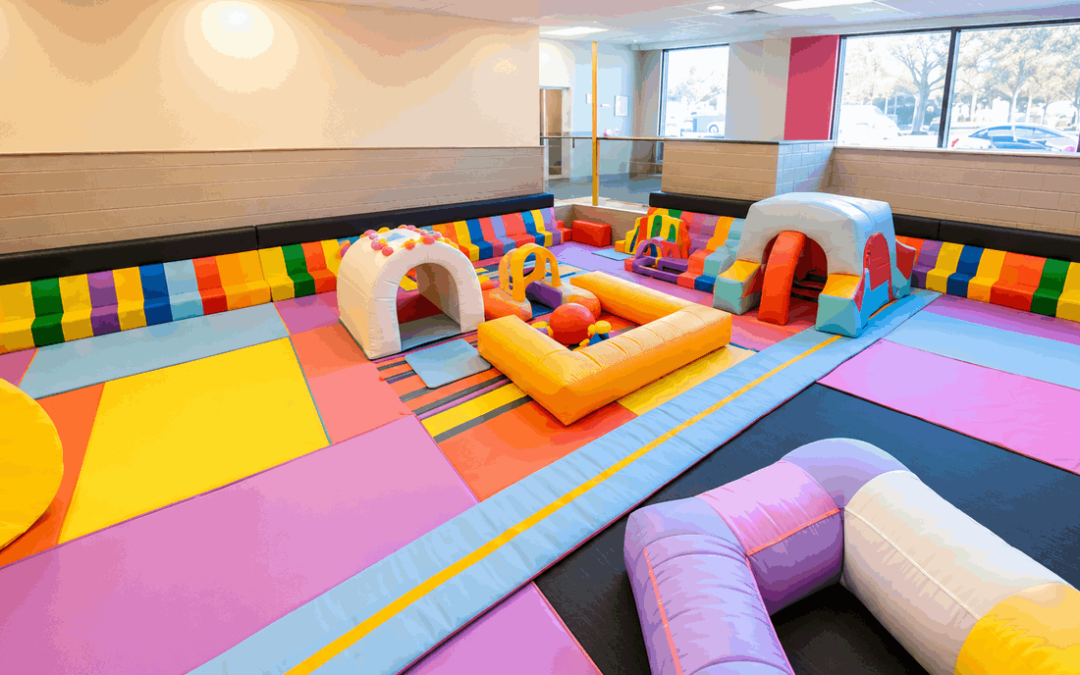
Choosing the best soft flooring for toddlers and indoor playroom areas requires more than selecting an attractive colour. Toddlers spend a large part of their playtime sitting, crawling, kneeling and moving close to the floor, so the surface should provide everyday comfort while remaining practical to install, clean and inspect. Interlocking EVA foam mats are a popular option because they create a cushioned indoor section without permanently replacing the existing floor. To compare suitable sizes, colours and modular options, browse our EVA Foam Mats collection.
What Is the Best Soft Flooring for Toddlers and Indoor Playroom Areas?
For dry indoor playrooms used for supervised floor-level activities, interlocking EVA foam mats are one of the most practical soft flooring options. They can make tiled, concrete, laminate and wooden floors feel more comfortable for sitting, crawling, reading and playing. The ideal choice should have secure interlocking joints, a manageable thickness, a suitable surface texture and dimensions that fit the planned activity area.
Cushioned floor feel
Soft foam creates separation between toddlers and hard permanent surfaces during ordinary indoor play.
Flexible room layout
Interlocking mats can cover a complete playroom or define a smaller activity section within the room.
Manageable maintenance
Individual tiles can normally be wiped, inspected, disconnected and repositioned when necessary.
Why Toddlers Need a Comfortable Playroom Floor
Toddlers use a room differently from adults. An adult may only walk across a floor, while a toddler may sit on it for story time, crawl across it to reach toys, kneel while building blocks and lie down during quiet play.
This means the floor becomes an important part of the activity area rather than simply a background surface. A hard tile or concrete floor may be durable and easy to sweep, but it can feel cold and uncomfortable during longer periods of floor-level play.
Soft flooring adds a comfort-focused layer over the permanent surface. It can make an ordinary bedroom, lounge or spare room more suitable for supervised play without requiring the entire floor to be removed.
The flooring can also help define where toys and activities belong. A selected mat area may become the reading corner, building-block section or general play zone. This can make it easier to organise the room while leaving passages and furniture areas on the original floor.
However, soft flooring does not replace appropriate supervision, suitable toys or careful room planning. The floor should form part of a complete indoor play environment in which furniture is stable, sharp objects are removed and walking routes remain clear.
Main Benefits of Soft Indoor Playroom Flooring
Improved comfort over hard floors
The main purpose of foam playroom flooring is to reduce the hard feel of the existing surface. Toddlers can sit, crawl and kneel on a softer layer rather than making direct contact with ceramic tiles, concrete or laminate.
The cushioning should be viewed as everyday comfort for floor-based activities. It does not turn the room into a completely padded area and should not be treated as specialist fall-protection surfacing.
A warmer floor experience
Hard floors often feel cold, particularly during winter or in rooms built over concrete slabs. Foam provides separation from the substrate and can make the activity zone feel more comfortable for children playing close to the ground.
The overall room temperature will still depend on the building, ventilation, sunlight and heating. Foam flooring should therefore be considered one part of creating a comfortable indoor environment.
Flexible coverage
Interlocking mats can be arranged according to the available space. A few tiles may create a small play corner, while additional compatible pieces can cover a larger room.
This flexibility is useful for growing families. The play area can be extended as more space is needed or reduced when the room must serve another purpose.
Simple loose-lay installation
Many puzzle-style foam mats connect without permanent glue. Their shaped edges lock together to form a larger surface, allowing the mats to be installed over an existing clean and dry floor.
Loose-lay installation can be helpful in rental properties and multipurpose rooms because the mats can normally be removed without permanently altering the underlying surface.
Lightweight handling
EVA foam tiles are lighter than dense rubber mats and many rigid flooring products. This makes individual sections easier to carry, reposition and lift for inspection.
The lightweight construction also makes it possible to replace a damaged section rather than removing the entire playroom floor. Matching spare pieces should be kept when possible.
Softening ordinary play noise
Foam may soften some sounds caused by lightweight toys, crawling and ordinary movement. This can be useful in bedrooms, upstairs rooms and shared family spaces.
It should not be presented as a complete soundproofing solution. Noise travelling through walls, ceilings and building structures may require specialist acoustic treatment.
Best Flooring Options for an Indoor Toddler Playroom
Several materials can be used in children’s rooms, but they do not all provide the same balance of softness, durability, maintenance and flexibility.
| Flooring Type | Best Use | Main Benefit | Important Limitation |
|---|---|---|---|
| EVA foam mats | Dry playrooms, bedrooms and floor-level activity sections | Soft, lightweight and easy to rearrange | Can compress beneath heavy furniture |
| Rubber flooring | Busier activity spaces requiring firmer support | Dense and generally more resilient | Heavier and firmer than EVA foam |
| PVC interlocking tiles | Higher-traffic rooms and multipurpose spaces | Firm, modular and durable | Less cushioned for crawling and sitting |
| Carpet | Bedrooms, reading areas and quiet rooms | Warm and familiar textile feel | Spills may require deeper cleaning |
| Hard flooring | Passages, kitchens and permanent room surfaces | Firm and generally easy to sweep | Cold and uncomfortable for extended floor play |
For many home playrooms, EVA foam provides the most useful combination of comfort, modular coverage and easy handling. Rubber may be better where stronger resilience is required, while PVC tiles may suit areas with heavier foot traffic.
A room can also use more than one flooring material. Foam may cover the central toddler activity zone, while the permanent floor remains exposed below cupboards, tables and busy walking routes.
Where Soft Foam Flooring Works Best
Suitable indoor applications
- Toddler bedrooms and family playrooms.
- Supervised crawling and movement areas.
- Reading and storytelling corners.
- Puzzle and building-block sections.
- Quiet sensory activity spaces.
- Indoor toy and learning zones.
- Crèche and daycare play sections.
- Temporary family activity rooms.
- Light stretching and movement areas.
- Selected soft sections within larger rooms.
Areas needing another floor type
- Outdoor spaces exposed to rain and sunlight.
- Bathrooms and wet rooms with standing water.
- Garages, workshops and vehicle areas.
- Kitchens and food-preparation sections.
- Entrances carrying outdoor dirt and moisture.
- Rooms containing heavy exercise machines.
- Areas with sharp tools or equipment.
- Raised climbing and playground equipment zones.
- Industrial or commercial heavy-use areas.
- Applications requiring tested impact surfacing.
Indoor comfort flooring has limits
Ordinary EVA foam mats are designed primarily to make dry indoor floors more comfortable. They should not automatically be used as protective surfacing beneath raised climbing frames, slides or other playground equipment.
How to Choose the Best Soft Flooring for Toddlers and Indoor Playroom Areas
The right floor should be selected according to the room, the child’s age and the activities planned. Colour is important for the appearance of the space, but practical specifications should be considered first.
Check the mat thickness
Thickness affects both cushioning and finished floor height. A thicker mat creates more separation from the hard floor, but it can also interfere with doors, low cupboards and transitions to nearby surfaces.
For many light indoor play areas, a 12mm EVA foam mat can provide a useful balance between cushioning and manageable height. Suitability still depends on the foam firmness and intended application.
Consider firmness and density
Two mats with the same thickness may feel different. A very soft mat can compress more easily, while a firmer product may provide greater stability during standing and walking.
The mat should feel comfortable for sitting and crawling without becoming excessively unstable during normal toddler movement.
Review the tile dimensions
Larger tiles create fewer joints across the completed surface, while smaller pieces may offer more flexibility around irregular room shapes. Check the actual tile dimensions before calculating the required quantity.
Do not assume that puzzle tiles from different brands will connect. The puzzle pattern and measurements may differ even when the tiles look similar in photographs.
Check the interlocking joints
The tiles should connect evenly and remain flat. Poorly aligned joints can separate during use and create raised edges.
Connect several pieces before completing the installation. If the edges do not fit correctly, check the direction of the tiles and confirm that every piece belongs to the same compatible system.
Choose a manageable surface texture
A lightly textured finish can provide a practical play surface. Very deep patterns may collect crumbs, dust and craft materials, increasing the time required for cleaning.
Consider how toy cars, building blocks and other play items will interact with the surface. A heavily patterned floor may not suit every activity.
Look at border pieces
Some puzzle mat systems include straight edge strips that attach to the outside of the play area. These can create a neater appearance and cover exposed puzzle teeth.
Loose border pieces should be corrected promptly, particularly in rooms used by younger children. Inspect them regularly during cleaning.
Check the recommended application
Read the product information before ordering. Confirm whether the mats are intended for playrooms, classrooms, home activity areas or light exercise.
A colourful appearance alone does not show whether a product is suitable for the intended environment.
Choosing Colours for an Indoor Playroom
Colour can make a toddler playroom feel more organised and welcoming. The flooring can use one consistent shade, a simple two-colour pattern or several colours to identify different activity sections.
A two-colour checkerboard can provide visual interest without making the floor appear overly busy. A single-colour border can also help define the outside of the play zone.
When choosing shades, consider natural light, wall colours, furniture and how easily marks will be visible. Very light surfaces may show spills more clearly, while dark tiles may reveal dust and crumbs.
Practicality should remain more important than creating a complicated design. A simple layout is usually easier to extend when additional matching tiles are needed.
Layout tip: Arrange several tiles without fully connecting them before completing the floor. This allows you to review the colour pattern, room direction and position of the finished outside edges.
How Much Soft Playroom Flooring Do You Need?
Begin by deciding whether the entire room or only a selected activity zone will be covered. A smaller defined section may be sufficient when furniture, doors and passages need to remain on the permanent floor.
Measure the length and width of the proposed area in metres and multiply the two figures to calculate the total square metres.
For example, a play section measuring 3 metres by 2.5 metres covers 7.5 square metres:
3 m × 2.5 m = 7.5 m²
Measure alcoves, pillars and irregular sections separately. Check the stated dimensions of the selected tiles and calculate how many complete pieces or packs are needed.
Add a reasonable allowance for unusual room shapes and future replacement. Keeping several matching spare tiles is useful because later production batches may have small colour differences.
| Planning Question | What to Check | Why It Matters |
|---|---|---|
| Full room or play zone? | Decide exactly where soft flooring is needed. | Prevents ordering unnecessary material. |
| What size is each tile? | Confirm the listed length and width. | Different tiles provide different coverage. |
| How many tiles are supplied? | Check the quantity or square metres per pack. | Helps calculate the required number of packs. |
| Are border strips included? | Check the product specification. | Borders may affect the final dimensions. |
| Will the room layout change? | Consider future expansion or repositioning. | Extra compatible pieces may be useful. |
| Are there fixed obstacles? | Measure cupboards, pillars and doorways. | These influence the completed layout. |
How to Install Toddler Playroom Mats
Most interlocking foam mats are designed for straightforward loose-lay installation. Proper preparation helps the joints remain aligned and prevents dirt or sharp objects from becoming trapped underneath.
Clear the room
Remove toys, storage containers, lightweight furniture and loose items from the installation area.
Inspect the permanent floor
Check for loose tiles, raised edges, sharp objects, unexplained dampness and unstable sections. Repair significant problems before covering the floor.
Sweep or vacuum thoroughly
Remove dust, sand, crumbs and small stones. Debris trapped below the mats may create raised points or mark the foam.
Clean and dry the substrate
Use a cleaning method suitable for the existing floor and allow all moisture to dry before installing the mats.
Plan the layout
Place several tiles loosely to test the colour arrangement, room direction and position of the outside borders.
Connect the first row
Align the puzzle edges carefully and press evenly along each joint. Avoid stretching or forcing the foam.
Continue section by section
Work in an organised direction and check the alignment regularly. Reconnect any joint that begins to separate.
Fit compatible border pieces
Add straight edge strips where supplied and confirm that every piece remains securely attached.
Complete a final inspection
Check every joint, edge and corner. Make sure the mats remain clear of doors, heaters and normal walking routes.
Furniture and Playroom Layout Considerations
Heavy cupboards, shelving units and furniture with narrow legs can compress soft foam. Permanent storage should remain on the original floor wherever possible.
Avoid positioning furniture partly on the foam and partly on the hard floor. Uneven support may make the item unstable or cause it to lean.
Toddler playrooms should maintain clear walking routes. The edge of the mat should not create an unexpected obstruction across a doorway or busy passage.
Keep the play area away from open heaters, hot equipment and sharp furniture edges. Secure tall storage units according to the furniture manufacturer’s instructions and keep heavier items on lower shelves.
The central foam section should have enough open space for the activities planned. Avoid filling the floor with too many storage boxes and toys at the same time.
Cleaning Soft Flooring in a Toddler Playroom
Playroom mats can collect dust, crumbs, drink spills, paint marks and dirt transferred from toys. A regular cleaning and inspection routine helps keep the area manageable.
Remove loose dirt first
Use a soft broom or suitable vacuum setting to remove dust and crumbs. Pay particular attention to puzzle joints, borders and areas close to furniture.
Wipe spills promptly
Food, drinks and craft materials are generally easier to remove before they dry. If liquid enters a joint, lift the affected section and check the permanent floor underneath.
Use compatible cleaning products
Follow the flooring supplier’s instructions. A mild cleaning solution and damp cloth may be suitable for routine care, while strong solvents or abrasive products may affect some foam surfaces.
Avoid flooding the mats
Interlocking puzzle joints are not necessarily watertight. Excess water can travel between the tiles and remain trapped below the floor.
Allow the floor to dry fully
Children should return only when the surface is dry, the joints are connected and no cleaning residue remains. Mats lifted for deeper cleaning should not be placed over a damp substrate.
Parents, crèches and childcare facilities can also consult the external CDC guidance for cleaning early-care and education settings for broader information about routine cleaning and when additional disinfecting may be appropriate.
Inspect while cleaning
Check the mats for split edges, lifting corners, separated joints, damaged surfaces and loose border strips. Remove a damaged section from the activity area until it can be replaced.
Common Mistakes When Choosing Playroom Flooring
Choosing by colour alone
A colourful floor may look attractive, but suitability depends on thickness, firmness, tile dimensions, surface texture and intended use.
Assuming all foam mats are identical
Products can differ in construction, puzzle design and quality. Similar-looking tiles may not connect with one another.
Installing over a damp floor
Foam should not be used to conceal unexplained moisture. Correct the source of dampness before covering the substrate.
Ignoring door clearance
The completed floor height may prevent doors or low cupboard panels from opening. Measure clearances before ordering.
Placing heavy furniture on soft mats
Concentrated pressure from narrow legs can leave impressions. Keep heavy permanent items on the original floor where possible.
Using indoor foam outdoors
Rain, direct sunlight and temperature changes may affect mats designed for dry indoor use. Choose purpose-specific exterior flooring for outdoor spaces.
Using ordinary mats beneath raised equipment
Comfort-focused indoor foam should not automatically be treated as tested fall-protection surfacing beneath climbing structures or slides.
Failing to inspect loose edges
Puzzle joints and border strips may move during cleaning or room changes. Reconnect them promptly and replace damaged sections.
Toddler Playroom Flooring Checklist
- Measure the room or selected activity zone accurately.
- Decide whether full-room coverage is necessary.
- Check the thickness and firmness of the mats.
- Confirm the dimensions of each tile.
- Review the recommended indoor applications.
- Choose a surface texture that is manageable to clean.
- Check whether compatible border strips are included.
- Measure clearance beneath doors and cupboards.
- Keep heavy furniture off soft foam where possible.
- Prepare a clean, stable and dry permanent floor.
- Inspect joints and edges regularly.
- Keep matching spare tiles for future replacement.
Frequently Asked Questions
What is the best soft flooring for a toddler playroom?
Interlocking EVA foam mats are a practical option for dry indoor playrooms because they provide cushioning, modular coverage and straightforward installation.
Can foam mats be installed over ceramic tiles?
They can generally be placed over ceramic tiles that are clean, dry, level and stable. Repair loose or raised tiles before installation.
Do toddler playroom mats require glue?
Many puzzle-style EVA mats are designed for loose-lay installation. Their interlocking edges connect the tiles without permanently bonding them to the floor.
What thickness should playroom mats be?
A 12mm EVA mat can provide a practical balance for many indoor playrooms. The final choice should also consider firmness, density and intended use.
Can foam mats cover the entire playroom?
Yes, provided the room is dry and the mats suit the expected activities. A selected play zone may be more practical where heavy furniture is present.
Can heavy cupboards stand on EVA foam?
Heavy cupboards and narrow legs may compress the material. Permanent furniture should remain on a firm floor wherever possible.
Can one damaged mat be replaced?
Individual puzzle tiles can often be disconnected and replaced. The new piece must match the dimensions and connection pattern of the existing mats.
Are foam puzzle mats waterproof?
The surface may resist small spills, but puzzle joints are not necessarily watertight. Moisture can pass through the gaps and reach the floor below.
Can indoor foam mats be used outside?
Most EVA playroom mats are designed for dry indoor spaces. Use them outdoors only when the specific product is intended for exterior conditions.
Are playroom mats suitable beneath climbing equipment?
Ordinary indoor foam mats should not automatically be used as fall-protection surfacing beneath raised equipment. Specialist flooring is required for those applications.
Final Advice on the Best Soft Flooring for Toddlers and Indoor Playroom Areas
The best soft flooring for toddlers and indoor playroom spaces should make the existing floor more comfortable while remaining practical for everyday family use. Interlocking EVA foam mats offer a useful combination of cushioning, lightweight handling and flexible coverage.
They are particularly suitable for dry indoor activities such as reading, crawling, building toys, puzzles, storytelling and supervised floor play. The mats can cover an entire room or create a selected activity zone without permanently replacing the original surface.
Before ordering, measure the room and review the mat thickness, firmness, dimensions, surface texture and recommended application. Check that the finished floor will not interfere with doors, cupboards or normal walking routes.
Install the mats over a clean, dry and stable substrate. Connect each joint carefully, secure the compatible borders and complete a final inspection before the play area is used.
Regular cleaning should remove loose debris and spills without flooding the puzzle joints. Lift affected sections when moisture reaches the substrate and allow both surfaces to dry completely.
Keep EVA foam within its intended role as lightweight indoor comfort flooring. Heavy furniture, outdoor exposure, wet rooms and raised playground equipment may require another type of surface.
By matching the flooring to the room layout, toddler activities and cleaning routine, families and childcare facilities can create an organised and comfortable play area that remains simple to maintain.
Create a Comfortable Indoor Play Area
Measure the available space, identify the activities that will take place on the floor and choose a mat thickness that suits the room. The EVA Foam Mats collection linked in the opening paragraph provides modular options for toddler playrooms, bedrooms, crèches and supervised indoor activity areas.
