
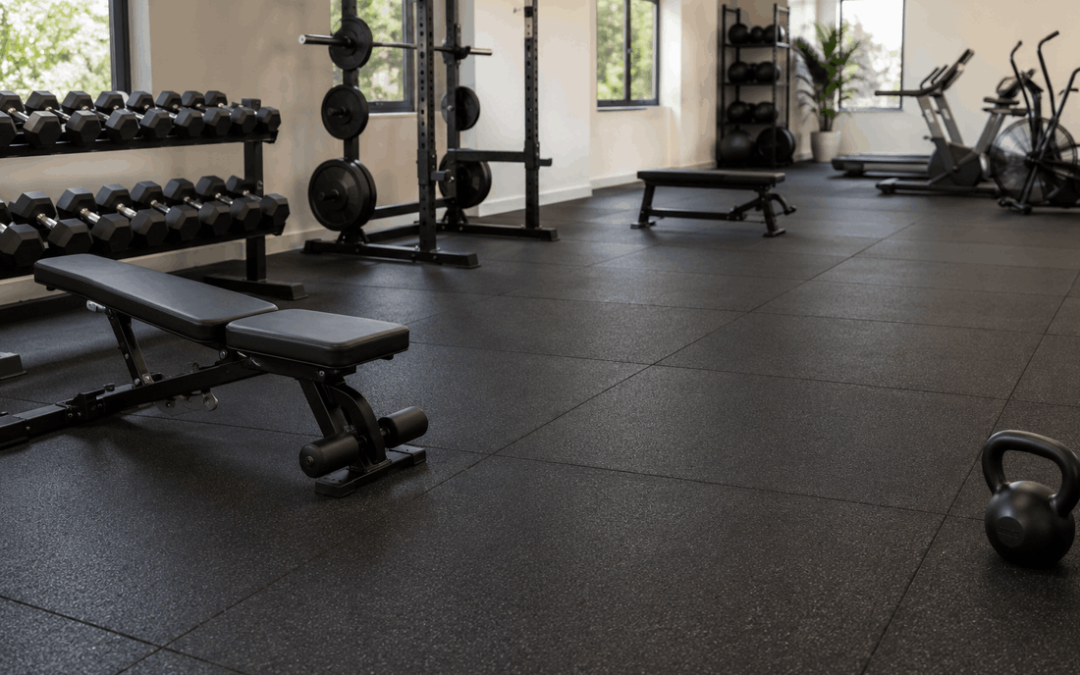
Best gym flooring for indoor gyms South Africa should be chosen according to comfort, grip, equipment use, floor protection and daily training activity. Indoor gyms need flooring that can handle weights, benches, cardio machines, movement, sweat, cleaning and repeated foot traffic without damaging the surface underneath. The right gym floor can make a training space safer, neater and easier to maintain. For durable options, explore our indoor gym flooring options in South Africa.
Choosing gym flooring is not only about how the floor looks. A home gym, school gym, commercial fitness studio and indoor training room all place different pressure on the floor. Some spaces need comfort for bodyweight training, while others need stronger flooring for dumbbells, kettlebells, treadmills and heavy equipment.
This guide explains how to choose the best gym flooring for indoor gyms South Africa by looking at floor protection, grip, thickness, comfort, cleaning and the type of training space you are building.
Why Indoor Gym Flooring Matters
Indoor gym flooring matters because normal floors are not always designed for exercise. Tiles, concrete, screed and laminate can become uncomfortable, slippery or marked when used for fitness activities. Gym equipment can also leave pressure marks if it sits directly on the floor.
A proper indoor gym floor creates a protective layer between the activity and the original surface. This helps reduce wear, improves comfort underfoot and makes the room feel more professional.
Indoor gym floors should support:
- Weights and strength training
- Cardio machines and treadmills
- Stretching and warm-up areas
- Group training and movement
- Floor protection under equipment
- Easy cleaning after workouts
Good gym flooring helps with:
- Better grip during movement
- Comfort underfoot
- Reduced direct floor wear
- Cleaner training zones
- Equipment stability
- Longer-lasting floor protection
Best Gym Flooring for Indoor Gyms South Africa: What to Look For
Best gym flooring for indoor gyms South Africa should be practical before anything else. The floor must suit the type of training, the equipment weight and the number of people using the space.
If the gym is used for light stretching, a softer surface may be enough. If the gym includes benches, racks, dumbbells, kettlebells or machines, stronger rubber gym mats or gym flooring tiles are usually a better option.
Quick Gym Flooring Tip
Choose indoor gym flooring based on the heaviest activity in the room. Weight areas and equipment zones need stronger flooring than light stretching or mobility spaces.
Rubber Gym Mats for Indoor Training Spaces
Rubber gym mats are one of the most practical choices for indoor gyms because they are strong, comfortable and suitable for high-use training areas. They work well in home gyms, commercial gyms, school gyms and fitness studios.
Rubber gym mats can be placed under equipment, across training zones or in selected areas where impact and movement happen often. They are especially useful for weight training and equipment areas because they provide better floor protection than ordinary household flooring.
Rubber gym mats are useful for:
- Weight training zones
- Home gym floors
- Indoor commercial gyms
- Treadmills and cardio equipment
- Dumbbell and kettlebell areas
- Stretching and warm-up zones
- Training rooms and fitness studios
Indoor Gym Flooring Options for Different Training Areas
The best gym flooring for indoor gyms South Africa depends on how the room is divided. A complete gym may have different zones for cardio, strength training, stretching and free movement. Each zone may need a slightly different flooring approach.
For cardio areas, the floor should support machine stability and help protect the surface underneath. For weight zones, the floor should be thicker and stronger. For stretching areas, comfort and grip become more important.
Cardio zones
Use stable gym flooring under treadmills, bikes, rowers and elliptical machines.
Weight zones
Choose stronger rubber flooring where dumbbells, benches and racks are used.
Movement zones
Use comfortable flooring with good grip for stretching, warm-ups and bodyweight training.
How Thick Should Indoor Gym Flooring Be?
Thickness is one of the most important parts of choosing gym flooring. Light activity areas may only need moderate floor protection, while weight zones and equipment areas usually need stronger, thicker flooring.
For indoor gyms with weights, the flooring should be chosen for impact and pressure. For gyms with mainly cardio machines, the flooring should support stability and reduce direct wear under the machine feet.
Choose thicker gym flooring for:
- Free-weight areas
- Garage gyms
- Commercial gym zones
- Benches and racks
- Treadmills and heavy equipment
- High-use training areas
Best Gym Flooring for Indoor Gyms South Africa for Home Gyms
Best gym flooring for indoor gyms South Africa is also important for home gyms because many home spaces were not designed for exercise. A garage, spare room or enclosed patio may have concrete, tiles or screed that needs protection.
Home gym flooring should be easy to clean, comfortable to train on and strong enough for the equipment used. If the space includes dumbbells, benches or a treadmill, rubber gym flooring is usually a practical choice.
Best Gym Flooring for Indoor Gyms South Africa for Commercial Gyms
Commercial gyms need flooring that can handle more people, more equipment and more cleaning. The floor must be durable enough for daily use while still looking professional.
For commercial gyms, the best flooring often includes rubber surfaces in weight areas, machine areas and training zones. These areas take the most pressure and usually need stronger protection than general walkways.
Commercial gym flooring should handle:
- Daily foot traffic
- Weights and machines
- Regular cleaning
- Sweat and shoe marks
- Movement and impact
- Long-term floor protection
Home gym flooring should offer:
- Easy installation
- Comfort underfoot
- Protection for tiles or concrete
- Support under equipment
- Low-maintenance cleaning
- A neat training area
Floor Protection for Fitness Spaces
Floor protection is one of the biggest reasons to install gym flooring. Weights, machines, benches and movement can damage the original floor over time. Even when users are careful, repeated pressure can still leave marks.
A proper gym floor helps reduce direct contact between the equipment and the surface underneath. It also helps define the workout area so the gym looks more organised.
Simple buyer advice: Choose gym flooring based on training activity first, then match thickness, comfort and floor protection to the equipment being used.
Grip and Safety for Indoor Gym Floors
Indoor gym floors should provide reliable grip during movement. Training spaces can become risky when the floor is smooth, dusty or wet from sweat. A textured rubber surface can help support better traction during normal workouts.
For general guidance on reducing slips and trips in busy spaces, read the Health and Safety Executive on preventing slips and trips. Good flooring, clean surfaces and clear walkways all help create a safer training environment.
Cleaning and Maintaining Indoor Gym Flooring
Gym floors should be cleaned regularly because they collect dust, sweat, shoe marks and dirt from equipment. A simple cleaning routine helps keep the space looking professional and ready for daily use.
Simple gym floor maintenance tips:
- Sweep or vacuum loose dirt often.
- Damp mop with a mild cleaner when needed.
- Clean sweat marks after busy sessions.
- Check mats under equipment regularly.
- Avoid harsh chemicals unless approved by the supplier.
- Allow the floor to dry before heavy use.
- Replace damaged sections when needed.
Common Mistakes When Choosing Indoor Gym Flooring
One common mistake is choosing the cheapest flooring without checking whether it can handle the activity. A light floor may work for stretching, but it may not survive under heavy weights or machines.
Another mistake is choosing the same flooring for every part of the gym. Weight zones, cardio zones and movement areas may each need different thickness, comfort and protection.
Avoid these mistakes:
- Choosing gym flooring only by price
- Using thin mats under heavy equipment
- Ignoring cleaning and maintenance needs
- Not measuring the full training area
- Forgetting about doorway heights and edges
- Using soft flooring in heavy weight zones
- Not planning separate gym zones
Final Advice on the Best Gym Flooring for Indoor Gyms South Africa
Best gym flooring for indoor gyms South Africa should be selected according to the type of training, equipment weight, traffic level and cleaning needs. A good gym floor should protect the surface underneath while giving users a practical, comfortable and stable place to train.
For home gyms, focus on comfort, easy cleaning and floor protection. For commercial gyms, choose stronger flooring that can handle daily traffic, weights and equipment. For schools and studios, balance comfort, grip and durability.
The right indoor gym flooring helps create a cleaner, safer and more professional training space for long-term use.
Need Help Choosing Indoor Gym Flooring?
PVC Floor Tile supplies gym flooring options for home gyms, commercial gyms, fitness studios, schools and indoor training spaces across South Africa. Speak to our team for help choosing the right mat type, thickness and layout for your gym floor.
Contact Us