
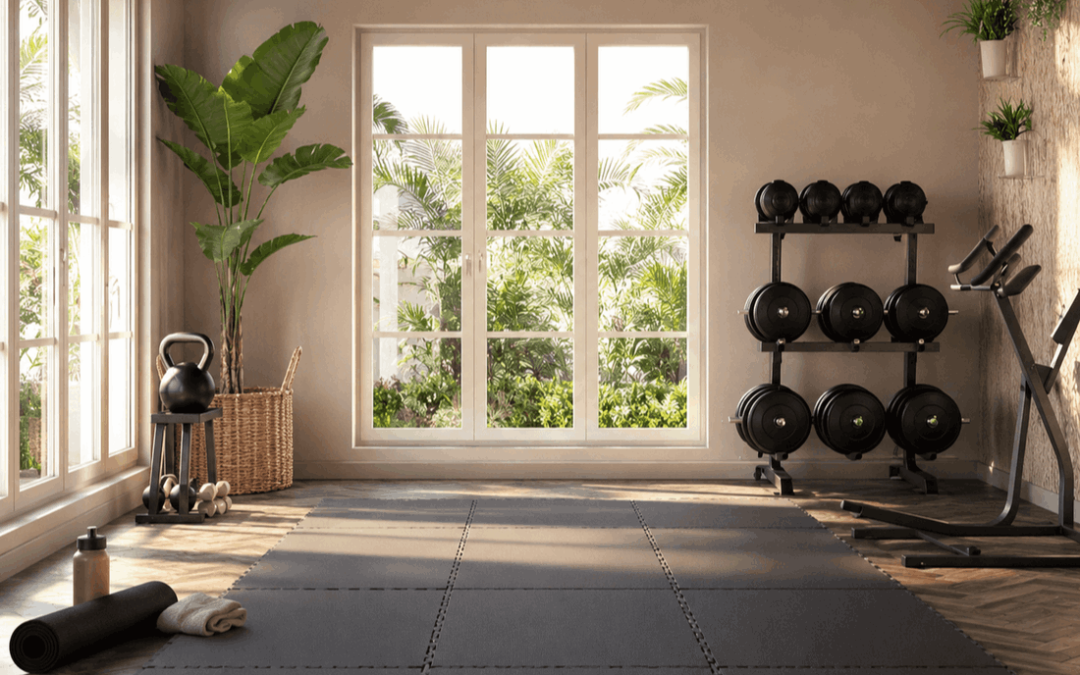
Choosing flooring for yoga Pilates and light training at home requires a balance between cushioning, stability, easy maintenance and the type of exercises planned for the room. A surface that feels comfortable during seated stretches may not be suitable beneath a heavy treadmill or loaded weight rack, so the flooring should match the most demanding normal activity. Interlocking EVA tiles are particularly useful for stretching, mobility work, floor exercises and controlled home workouts because they can create a dedicated activity zone without permanently replacing the existing floor. Compare suitable soft flooring options in our EVA Foam Mats collection.
What Is the Best Flooring for Yoga, Pilates and Light Training at Home?
For a dry indoor room used mainly for yoga, Pilates, stretching, mobility work and controlled bodyweight exercises, interlocking EVA foam mats are one of the most practical flooring options. They provide a softer surface over concrete, ceramic tiles, laminate and other hard floors while remaining lightweight and straightforward to install. Heavy gym machines, loaded racks and dropped-weight areas require denser flooring selected for those more demanding applications.
Cushioned floor feel
The foam provides separation from hard floors during exercises performed while sitting, kneeling, lying down or supporting weight through the hands.
Flexible home layout
Interlocking tiles can cover a complete exercise room or create a smaller activity section within a bedroom, lounge or spare room.
Simple installation
Many EVA systems use puzzle-style joints and can be loose laid over a clean, dry and stable permanent floor.
Why Flooring Matters for Home Yoga and Pilates
Yoga and Pilates involve more direct contact with the floor than many other forms of exercise. A session may include kneeling positions, seated stretches, lying movements, planks and exercises performed on the hands and knees.
When these activities take place on bare ceramic tiles or concrete, the floor may feel hard and cold. A personal yoga mat can provide cushioning for one person, but it does not cover the surrounding area or create a complete room surface.
Installing soft modular flooring can make the broader exercise area feel more comfortable. It creates a defined space for warming up, moving between exercises and placing light accessories such as yoga blocks, resistance bands and foam rollers.
The floor also affects how easily the room can serve more than one purpose. A home office, guest bedroom or family room may only become an exercise space at certain times of the day. Lightweight interlocking tiles allow the layout to be changed more easily than a permanently bonded floor.
However, softness must be balanced with stability. A floor that compresses excessively may feel less stable during standing poses or controlled balance exercises. This is why thickness, firmness and intended use must be considered together.
What Are EVA Foam Exercise Mats?
EVA stands for ethylene-vinyl acetate. When manufactured as flooring, it is formed into lightweight foam tiles that often include puzzle-shaped edges.
The puzzle edges allow several tiles to connect and create a continuous floor area. Users can install enough pieces to cover a small stretching corner or a larger home exercise room.
EVA is softer and lighter than dense rubber gym flooring. This makes it particularly useful where floor comfort, portability and straightforward handling are more important than resistance to heavy equipment.
The material is generally best suited to dry indoor areas. It can help soften the feel of tiled, concrete, wooden or laminate floors during ordinary light activity.
EVA should not be expected to perform like industrial flooring or a heavy-duty free-weight surface. Its main role is to support light, controlled exercise rather than machines, loaded racks or repeated impact.
Best Activities for EVA Foam Home Flooring
Suitable light home activities
- Yoga and gentle movement sessions.
- Pilates and mat-based exercises.
- Warm-up and cool-down routines.
- Stretching and flexibility work.
- Mobility and range-of-motion exercises.
- Controlled bodyweight movements.
- Core exercises performed on the floor.
- Meditation and breathing sessions.
- Resistance-band exercises.
- Light recreational movement.
Activities requiring stronger flooring
- Heavy barbell training.
- Dropped dumbbells and kettlebells.
- Loaded squat and power racks.
- Large treadmills and rowing machines.
- Heavy exercise bikes.
- Commercial gym equipment.
- Repeated high-impact training.
- Equipment containing sharp feet.
- Workshop or industrial activity.
- Outdoor exercise exposed to weather.
The strength of EVA lies in light floor-based use. When the room includes machines, weights or demanding training, different sections should be assigned different flooring materials.
One room can use more than one flooring type
EVA can cover the yoga, stretching and Pilates section, while denser rubber flooring supports machines and weights. This approach allows each surface to perform within its intended application.
Benefits of EVA Flooring for Home Activities
Comfort during kneeling and seated movements
Yoga and Pilates often require the knees, hips, hands and elbows to contact the floor. EVA adds a cushioned layer that can make these positions feel more comfortable than an uncovered hard surface.
Users may still place a personal exercise mat over the EVA floor when they prefer additional cushioning, familiar grip or a separate personal surface.
More complete coverage than a single yoga mat
A standard exercise mat only covers a narrow section of the room. Interlocking floor tiles create a wider movement area, which can be helpful when exercises require side-to-side movement or changes in position.
The wider floor also provides space for warm-ups, light accessories and movement between different exercises.
Lightweight modular design
EVA tiles are normally easier to handle than dense rubber flooring. Individual pieces can be disconnected and moved when the room needs to be rearranged.
This modular construction also makes it possible to replace one damaged tile instead of removing the complete floor. Replacement pieces must match the original tile dimensions and puzzle connection.
Suitable for multipurpose rooms
Not every home has a permanent gym. A spare bedroom, study or lounge may need to serve several purposes.
Interlocking EVA flooring can define a home activity section without permanently altering the existing surface. The tiles may be left in place or lifted when the room layout changes.
Separation from cold permanent floors
Ceramic tiles and concrete can feel cold during floor-based exercise. Foam creates a layer between the user and the substrate, helping the room feel more comfortable during seated and lying movements.
This does not turn the mat into a complete building-insulation system, but it can improve the everyday floor experience.
Reduced sound from light movement
Foam may soften some ordinary sounds created by light exercise accessories and controlled floor movement. This may be useful in bedrooms, apartments and shared family spaces.
EVA should not be described as a complete soundproofing system. Structural noise and heavy impact may require specialist acoustic or flooring solutions.
Flexible room expansion
Additional compatible tiles can be connected when a larger exercise area is required. This enables the floor to grow with the available space.
Keeping spare matching tiles is helpful because colours and puzzle patterns may differ between later production batches.
Choosing the Right Thickness
Thickness influences cushioning, stability and the finished height of the exercise floor. A very thin mat may not provide enough separation from a hard surface, while an excessively soft thick mat may feel unstable during standing movement.
For many home yoga, Pilates and stretching areas, a 12mm EVA mat offers a practical balance. It provides noticeable cushioning without creating an excessively high floor in many standard rooms.
Thickness should not be considered alone. Foam density and firmness affect how much the floor compresses under pressure. Two products with the same stated depth may feel different if their internal construction varies.
Before ordering, check:
- The stated mat thickness.
- The firmness and density of the foam.
- The intended exercise applications.
- The height below doors and cupboards.
- The condition of the permanent floor.
- Whether furniture will stand on the mats.
- The size and shape of the puzzle joints.
- The availability of compatible edge pieces.
A thicker mat is not automatically more durable. Soft foam can still compress beneath narrow furniture legs or heavy equipment.
Flooring Requirements for Yoga
Yoga flooring should provide comfort while remaining stable enough for controlled standing and floor poses. A surface that feels excessively soft may be less suitable for balance-focused movements.
EVA can create a comfortable room base, but many users will continue to use a personal yoga mat over the interlocking floor. The personal mat provides a familiar surface while the EVA tiles cushion the broader area.
The room should provide enough open space for the user to extend the arms and legs without contacting furniture, walls or storage units. The outside edge of the foam area should remain clear of normal walking routes.
A lightly textured EVA surface can be practical for general room use. The exact grip experienced during yoga may vary according to footwear, socks, moisture and whether a personal mat is used.
Flooring Requirements for Pilates
Mat-based Pilates includes exercises performed while lying, sitting, kneeling and supporting the body through the hands. A cushioned room floor can reduce direct contact with hard tiles or concrete.
The floor should still feel stable during controlled movement. Extremely soft foam may compress more noticeably under the hands, feet or elbows.
EVA works best for mat-based Pilates and light accessories. Large Pilates machines or reformers create different flooring requirements and may require a firmer, denser surface.
Do not place heavy specialised equipment on soft foam without confirming that the flooring is suitable for the concentrated load. Equipment must remain stable and level during use.
Flooring Requirements for Light Training
Light training can include stretching, mobility work, resistance bands, controlled bodyweight exercises and small hand-held accessories. These activities are generally compatible with comfort-focused EVA flooring.
Exercises involving jumping, dropped weights or heavy equipment create greater demands. The term “light training” should therefore describe controlled activities rather than simply a short workout.
Suitable light exercises may include:
- Glute bridges.
- Modified push-ups.
- Controlled planks.
- Floor-based core exercises.
- Resistance-band movements.
- Gentle mobility drills.
- Warm-up sequences.
- Cool-down stretches.
- Breathing and recovery sessions.
People planning a balanced activity routine can review the external ACSM physical activity guidelines for general information about physical activity and exercise. Activities should still be selected according to personal ability and appropriate guidance where required.
EVA Foam Compared With Other Home Exercise Flooring
| Flooring Type | Best Use | Main Advantage | Important Limitation |
|---|---|---|---|
| EVA foam tiles | Yoga, Pilates, stretching and light floor workouts | Soft, lightweight and easy to rearrange | Can compress beneath heavy equipment |
| Rubber gym flooring | Weights, machines and demanding training | Dense, stable and resilient | Heavier and firmer for floor exercises |
| PVC interlocking tiles | Multipurpose rooms and higher-traffic interiors | Firm, durable and modular | Less cushioning for kneeling and lying movements |
| Carpet | Quiet rooms and basic stretching | Warm and familiar surface | May be harder to clean after exercise |
| Ceramic tiles | Permanent household floors | Firm and straightforward to sweep | Hard and cold for floor-level exercise |
| Wood or laminate | General home interiors and light movement | Firm and visually attractive | May require an additional cushioned surface |
There is no single material that is best for every home workout. Flooring for yoga Pilates and light training at home should be chosen according to the activities taking place in each section of the room.
Planning a Home Exercise Room
Floor-exercise zone
Use EVA for yoga, Pilates, stretching, mobility work, breathing exercises and controlled bodyweight movement.
Equipment zone
Use denser flooring beneath machines, loaded benches, racks and equipment with narrow pressure points.
Clear movement zone
Maintain open space around the exercise area so users can move without contacting walls, furniture or storage.
A mixed training room does not need to use the same flooring everywhere. The surface beneath each section should match the heaviest normal activity taking place there.
Keep heavy equipment completely within its assigned zone. Placing a machine partly on EVA and partly on a hard surface may create uneven support.
Storage units should remain on the permanent floor where possible. Narrow furniture legs can leave lasting impressions in soft foam.
How Much EVA Flooring Do You Need?
Begin by deciding whether the complete room or only a selected activity section will be covered. Many home exercise spaces only require enough foam for yoga, Pilates and stretching.
Measure the length and width of the proposed area in metres. Multiply the two measurements to calculate the total square metres.
For example, an activity section measuring 3 metres by 2.5 metres covers 7.5 square metres:
3 m × 2.5 m = 7.5 m²
Measure alcoves, pillars and irregular room sections separately. Add them only when the foam will extend into those areas.
Check the actual dimensions and coverage of the selected tiles. Similar-looking products may use different tile sizes and quantities.
Planning tip: Mark the proposed exercise area using removable floor tape. Lie down and extend your arms and legs within the marked zone to check that sufficient movement space is available before ordering.
How to Install EVA Foam Tiles at Home
Most puzzle-style EVA mats are designed for straightforward loose-lay installation in dry indoor rooms. Preparing the permanent floor properly helps the joints remain aligned and prevents dirt from becoming trapped underneath.
Clear the room
Remove exercise accessories, storage containers and lightweight furniture from the planned installation area.
Inspect the existing floor
Check for sharp objects, loose ceramic tiles, raised edges, unstable boards and unexplained moisture.
Sweep or vacuum thoroughly
Remove sand, dust, stones and other debris that may create uneven points beneath the foam.
Clean and dry the substrate
Use a cleaning method suitable for the permanent floor and allow all moisture to dry before installing the mats.
Plan the tile arrangement
Place several tiles loosely to check the direction, pattern and final position of the outside edges.
Connect the first row
Align the puzzle edges and press evenly along each joint. Do not stretch or force incorrectly positioned pieces.
Continue section by section
Build the floor in an organised direction and check the alignment regularly as more tiles are added.
Add compatible border pieces
Fit straight edges where supplied and confirm that each piece remains properly connected.
Complete a final inspection
Check every joint, edge and corner. Make sure doors open correctly and the mat does not obstruct normal walking routes.
Cleaning and Maintaining Home Exercise Mats
Home exercise flooring can collect dust, sweat, shoe marks and residue from exercise accessories. A regular cleaning routine helps maintain the surface and provides an opportunity to inspect the interlocking joints.
Remove loose dirt
Use a soft broom or suitable vacuum setting to remove dust and particles. Pay attention to outside edges and puzzle connections.
Wipe the surface after exercise
Use a damp cloth or controlled mop with a cleaning product approved for the foam. Strong solvents and abrasive tools may damage the surface.
Avoid excessive water
Puzzle connections are not necessarily watertight. Flooding the mat may allow water to travel between the tiles and remain beneath the floor.
Lift affected pieces when necessary
If moisture enters a joint, disconnect the affected tiles and allow both the foam and permanent floor to dry completely.
Inspect the floor regularly
Look for separated joints, split puzzle teeth, lifting borders and permanent compression. Replace damaged tiles before continuing to use the area.
Allow the surface to dry
Do not begin yoga, Pilates or floor exercises while the surface is wet or cleaning residue remains.
Common Flooring Mistakes
Choosing according to thickness alone
Thickness affects cushioning, but firmness, density and intended use also influence how the flooring performs.
Placing heavy machines on soft foam
Treadmills, loaded racks and other machines may compress EVA or become less stable. Use flooring designed for concentrated equipment loads.
Dropping weights onto EVA mats
Ordinary comfort-focused foam is not designed for repeated dumbbell, kettlebell or barbell impact.
Installing over debris
Sand, stones and sharp objects can create raised points beneath the mats and may damage the foam.
Covering a damp floor
EVA should not be used to conceal moisture. Identify and correct the source before installing the mats.
Ignoring door clearance
The finished floor height may prevent doors or low cupboards from opening correctly.
Mixing incompatible tiles
Puzzle patterns and dimensions can differ between suppliers. Similar-looking products may not connect securely.
Using indoor mats outdoors
Rain, direct sunlight and temperature changes may affect EVA products intended for dry indoor use.
Covering the entire room unnecessarily
A selected floor-exercise zone may be more practical when the room also contains furniture or equipment requiring firmer support.
Home Exercise Flooring Checklist
- Identify the main activities planned for the room.
- Separate floor exercises from heavy equipment.
- Measure the proposed EVA area accurately.
- Check the tile thickness, firmness and density.
- Confirm the dimensions and coverage per pack.
- Review the intended indoor applications.
- Inspect the interlocking joint design.
- Measure clearance beneath doors and cupboards.
- Keep heavy furniture and machines off soft foam.
- Do not use ordinary EVA in dropped-weight zones.
- Prepare a clean, dry and stable substrate.
- Use compatible border pieces where available.
- Follow the supplier’s cleaning instructions.
- Keep matching spare tiles for replacement.
- Inspect the floor regularly for movement or damage.
Frequently Asked Questions
Is EVA flooring suitable for yoga at home?
Yes. It can create a comfortable room surface for yoga and stretching. Many users may still place a personal yoga mat over the EVA floor.
Can EVA foam mats be used for Pilates?
They can suit mat-based Pilates and controlled floor exercises. Heavy reformers or specialised machines may require firmer flooring.
What thickness works for home exercise?
A 12mm EVA tile can provide a practical balance for many yoga, Pilates and stretching areas. Firmness and intended use should also be checked.
Do I still need a yoga mat over EVA flooring?
A personal mat is optional but may provide additional cushioning, grip, hygiene separation and a familiar exercise surface.
Can weights be used on EVA flooring?
Small hand-held accessories may be used carefully, but weights should not be dropped. Heavy free-weight zones require stronger flooring.
Can EVA mats support a treadmill?
Soft EVA is generally not the preferred flooring beneath a heavy treadmill. Use a surface designed for concentrated equipment loads.
Do EVA exercise tiles require glue?
Many puzzle-style mats are designed for loose-lay installation. Their interlocking edges connect the tiles without permanent adhesive.
Can EVA tiles be laid over ceramic floors?
They can generally be installed over ceramic tiles that are clean, dry, stable and free from sharp or raised sections.
Can the whole home gym be covered with EVA?
A room used only for light activities may be covered. Mixed gyms should use stronger flooring beneath machines, racks and weight-training areas.
Are EVA foam tiles waterproof?
The foam may resist minor surface spills, but puzzle joints are not necessarily watertight. Moisture can reach the permanent floor underneath.
Can EVA flooring be moved later?
Yes. The lightweight modular tiles can generally be disconnected, lifted and repositioned when the room layout changes.
Can damaged EVA tiles be replaced?
Individual pieces can often be replaced when a compatible tile with the same dimensions and interlocking pattern is available.
Final Advice on Flooring for Yoga, Pilates and Light Training at Home
Flooring for yoga Pilates and light training at home should provide enough cushioning for floor exercises while remaining stable and practical for everyday use. Interlocking EVA foam tiles offer a useful balance for stretching, mobility work, yoga, mat-based Pilates and controlled bodyweight activities.
The tiles create a softer layer over hard permanent floors and can cover a complete light-activity room or only a selected exercise section. Their modular construction makes them particularly useful in bedrooms, studies and multipurpose family rooms.
Before purchasing, measure the area and review the mat thickness, firmness, density, tile dimensions and recommended applications. Check that the finished floor will remain clear of doors, cupboards and normal walking routes.
A mixed home gym should use different flooring zones. EVA can support floor-level movement, while denser rubber or purpose-specified flooring protects areas containing machines, loaded racks and weights.
Install the mats over a clean, dry and stable substrate. Connect every puzzle joint carefully, add compatible border pieces and inspect the completed surface before exercising.
Routine maintenance should include removing loose dirt, wiping the surface with compatible cleaning products and checking for separated joints or compressed sections. Avoid flooding the mats because moisture can pass through the puzzle connections.
When selected for the correct application, EVA foam can help create a comfortable and flexible home activity area without expecting lightweight flooring to perform like a heavy-duty commercial gym surface.
Plan Your Home Yoga and Pilates Area
Measure your available space, identify the exercises you plan to perform and keep heavy equipment in a separate flooring zone. Compare modular soft flooring options for yoga, Pilates, stretching, mobility work and controlled home activities.
View EVA Foam Mats