
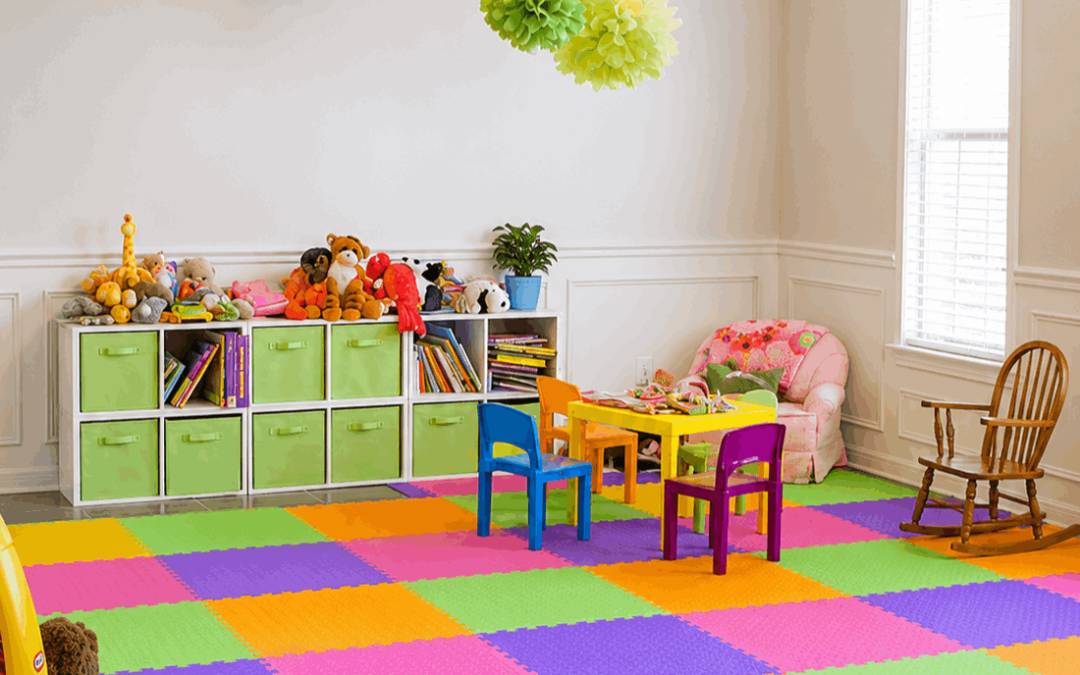
Choosing the best flooring for kids bedrooms and play corners means balancing comfort, cleaning, durability and the way the room is used every day. Children may sit, crawl, read, build toys, complete puzzles or play close to the floor, so a hard ceramic, concrete, laminate or wooden surface may not always provide the most comfortable activity zone. A modular foam section can create a softer play corner without permanently replacing the complete bedroom floor. For cushioned options designed for dry indoor children’s spaces, explore our EVA Foam Mats collection.
What Is the Best Flooring for a Child’s Bedroom?
The most suitable floor depends on the room’s activities, furniture, traffic and cleaning routine. EVA foam mats can work well for selected play corners, reading sections and supervised floor activities because they are cushioned, lightweight and modular. Carpet may suit a warm full-room finish, while PVC, vinyl or laminate may be preferred where firmness and everyday durability are more important. Many bedrooms benefit from keeping the existing firm floor and adding a removable soft play section.
Start with the activities
Choose the floor according to reading, crawling, building toys, crafts and the normal movement expected in the room.
Plan for cleaning
Consider crumbs, dust, drink spills, toy marks and how easily the surface can be inspected and maintained.
Separate furniture and play
Keep heavy cupboards and beds on the firm original floor while creating a softer section for floor-level activities.
Why Flooring Matters in Kids Bedrooms
A child’s bedroom often serves more than one purpose. It may be used for sleeping, dressing, homework, reading, toy storage, crafts and active indoor play.
Unlike an adult bedroom, a large part of a child’s activity may take place directly on the floor. Younger children may crawl or sit while playing, while older children may kneel to build models, arrange toys or complete puzzles.
The floor therefore needs to support several practical requirements. It should be comfortable for floor-level use, manageable to clean and suitable for the furniture and traffic in the room.
No single material performs every role perfectly. A very soft surface may feel comfortable but compress beneath cupboards. A firm, durable floor may support furniture well but feel hard during extended play.
This is why zoning can work better than covering the entire bedroom with one material. A firm main floor can support the bed, shelving and walking routes, while foam mats create a dedicated play or reading corner.
How to Choose the Best Flooring for Kids Bedrooms and Play Corners
Before comparing colours and patterns, identify how the room is currently used and how its purpose may change as the child grows.
A nursery may need a supervised crawling section. A preschooler’s room may require an open area for toys and picture books. An older child may need a smaller reading or hobby corner beside a desk.
Ask the following questions:
- How old is the child using the room?
- Which activities take place on the floor?
- Will snacks or drinks be allowed in the room?
- How frequently are toys and furniture moved?
- Does the room experience cold floors?
- How much direct sunlight reaches the floor?
- Does the room have recurring dampness?
- Which cleaning equipment is normally used?
- Will the room’s purpose change in the near future?
- Is full-room coverage necessary?
The answers help determine whether the room needs permanent flooring or a removable play-corner solution.
Main Flooring Options for Children’s Rooms
| Flooring Type | Best Use | Main Benefit | Important Limitation |
|---|---|---|---|
| EVA foam mats | Play corners, reading sections and light floor activities | Soft, lightweight and modular | Can compress beneath heavy furniture |
| Carpet | Warm full-room bedroom flooring | Continuous textile surface | Spills may require deeper cleaning |
| Carpet tiles | Bedrooms needing a modular textile finish | Individual sections may be replaceable | Still requires regular vacuuming |
| Laminate flooring | Firm residential floors and furniture areas | Neat appearance and stable surface | Can feel hard or cold during floor play |
| Vinyl flooring | Bedrooms requiring a continuous practical finish | Available in many designs | Comfort depends on product construction and subfloor |
| PVC interlocking tiles | Multipurpose rooms and higher-traffic areas | Firm, modular and durable | Less cushioned than EVA foam |
| Rubber flooring | More demanding movement and activity areas | Dense and resilient | Heavier and firmer than EVA |
| Ceramic tiles | Permanent firm floors | Stable and straightforward to sweep | Hard and cold for extended floor-level use |
Why EVA Foam Mats Work Well for Play Corners
EVA foam mats are manufactured as lightweight interlocking pieces that connect through puzzle-shaped edges. They can cover a small section or a wider activity area depending on the room layout.
The foam creates a cushioned layer over an existing hard floor, making the section more comfortable for reading, puzzles, toy building and supervised indoor play.
They create a defined activity zone
A different floor texture or colour can help separate the play corner from sleeping, storage and homework areas without installing a permanent divider.
They can be rearranged
The layout can be expanded, reduced or repositioned when the bed, cupboards or desk are moved.
Individual pieces can be lifted
If a spill reaches the joints, selected tiles can be disconnected so the foam and permanent floor can be inspected and dried.
Damaged tiles may be replaceable
A marked or damaged tile can often be replaced when a compatible piece with the same dimensions and puzzle pattern is available.
They add separation from cold floors
Foam can make a selected corner feel more comfortable than sitting directly on ceramic tiles or concrete.
EVA remains a light indoor flooring material. It should not automatically be used beneath heavy cupboards, sharp furniture, raised climbing equipment or dropped weights.
Where to Position a Play Corner
Reading corner
Place the mats near accessible bookshelves while keeping shelves stable and suitable for the room.
Toy activity area
Create an open section for puzzles, building toys and supervised floor-level play.
Quiet corner
Use a smaller mat area for calm activities, soft toys and age-appropriate relaxation.
The play section should remain visible and easy to supervise. Avoid placing it behind a large cupboard or where the room layout blocks a clear view.
Do not position a raised foam edge directly across a doorway. Children and adults should be able to enter the room without encountering an unexpected floor-height change.
Keep the play corner away from heaters, open flames, trailing electrical cords and unstable furniture.
Planning tip: Use removable floor tape to outline the proposed play corner before ordering. This helps confirm that doors open freely and that the section does not interfere with beds, drawers or walking routes.
Planning the Room Around Furniture
Soft foam is not normally the best base for heavy permanent bedroom furniture. Cupboards, shelving, beds and desks may compress the surface, especially where narrow legs concentrate the weight.
Keep these items on the original firm floor wherever possible. This also makes the play mats easier to lift for cleaning and inspection.
Avoid placing furniture partly on the foam and partly on the surrounding floor. The difference in height may cause uneven support.
Furniture stability is part of the wider room plan. The external CPSC guide to childproofing the home provides broader information about reducing household hazards and reminds caregivers that no safety product replaces appropriate supervision.
Flooring is only one part of room preparation
A cushioned play corner does not remove hazards from cords, windows, furniture, toys or storage units. Review the complete room rather than relying on the floor alone.
Choosing the Right EVA Mat Thickness
Thickness affects the amount of separation between the child and the original hard floor, but it should not be the only feature considered.
Foam firmness and density influence how much the mat compresses. Two tiles with the same thickness may feel different when their construction varies.
For many indoor play corners, a 12mm EVA mat can provide a useful balance between cushioning and manageable floor height. Product suitability should still be confirmed for the exact activity.
Before buying, compare:
- The listed thickness in millimetres.
- The tile length and width.
- The foam firmness.
- The intended indoor applications.
- The surface texture.
- The quality of the puzzle joints.
- The availability of border pieces.
- The finished height near doors.
- The cleaning instructions.
- The availability of matching replacement tiles.
A thicker mat is not automatically more durable and should not be described as fall-protection flooring without relevant product-specific documentation.
Colour and Design for Children’s Rooms
Colour can influence how clearly the play section is separated from the rest of the room. Bright combinations may suit an energetic activity corner, while blue, grey or neutral shades can support a calmer reading space.
Technical suitability should be checked before colour. The tile dimensions, thickness, firmness and cleaning requirements remain more important than the pattern.
Simple colour layouts are usually easier to expand. If many colours are arranged in a complicated design, photograph the finished floor before lifting tiles for cleaning.
Remember that later production batches may vary slightly in shade. Ordering a few matching spare tiles with the original purchase can make future replacement easier.
How to Measure a Kids Bedroom or Play Corner
Decide on full or partial coverage
A selected play corner is often more practical than covering the entire bedroom and placing furniture over the foam.
Measure the length
Measure the proposed activity section in metres from one finished edge to the opposite side.
Measure the width
Check the width at several points when walls or fixed cupboards are not perfectly straight.
Calculate the square metres
Multiply the length by the width. A play area measuring 3 metres by 2 metres requires 6 square metres of coverage.
Check pack coverage
Confirm the actual tile dimensions and the square metres supplied per pack rather than estimating from photographs.
Add replacement pieces
Include several matching spare tiles for future damage, marks or room changes.
Installing Play Corner Foam Mats
Most puzzle-style EVA mats are designed for straightforward loose-lay installation over a clean, dry and stable hard floor.
- Move toys, storage boxes and lightweight furniture out of the proposed section.
- Inspect the permanent floor for sharp objects, loose tiles and damaged sections.
- Check for unexplained dampness before covering the floor.
- Sweep or vacuum dust, crumbs and small particles.
- Clean the original floor and let it dry completely.
- Lay several foam pieces loosely to check the direction and colour pattern.
- Connect the first row by pressing evenly along each puzzle joint.
- Continue one organised row at a time.
- Add compatible border pieces where supplied.
- Inspect the perimeter and every connection before the area is used.
Do not stretch or force incompatible pieces together. Tiles from different brands or product ranges may not connect even when their stated dimensions appear similar.
Check whether the product instructions require a small allowance near fixed walls. Avoid forcing the complete floor tightly between permanent objects.
Cleaning Kids Bedroom Floor Mats
Children’s bedroom floors can collect dust, hair, crumbs, drink spills, craft materials and dirt transferred from shoes or toys.
Remove loose particles regularly
Use a soft broom or suitable vacuum setting. Pay attention to the outside edges and puzzle joints.
Treat spills quickly
Blot liquid before it spreads across additional tiles. Lift the affected section when moisture reaches the connections.
Use controlled moisture
Wipe the surface with a soft cloth or controlled damp mop and a mild cleaner approved by the supplier.
Avoid flooding the floor
EVA surfaces may resist small spills, but interlocking joints are not necessarily watertight. Water can reach the substrate below.
Dry both surfaces fully
Do not reconnect lifted pieces while the foam or original floor remains damp.
Inspect while cleaning
Look for separated joints, torn foam, lifting corners, loose borders and compressed areas. Replace damaged pieces where necessary.
EVA Mats Compared With Carpet for Kids Bedrooms
EVA may be better when you need
- A removable play corner.
- A surface that can be wiped.
- Individual tile replacement.
- A flexible room layout.
- A DIY interlocking installation.
- Easy access to inspect underneath.
- A defined crawling or reading zone.
- Lightweight flooring that can be stored.
Carpet may be better when you need
- A continuous textile finish.
- Full-room warmth.
- A permanent bedroom appearance.
- No interlocking puzzle joints.
- A wide choice of piles and fibres.
- Flooring installed beneath room furniture.
- A surface maintained mainly through vacuuming.
- A traditional residential bedroom finish.
The best flooring for kids bedrooms and play corners may be a combination. A firm main floor can support furniture, while EVA creates a cushioned and removable activity zone.
Important Limitations of Soft Foam Flooring
Heavy furniture can cause compression
Bed frames, cupboards and shelving with narrow legs may leave permanent impressions in soft foam.
Sharp objects can damage the surface
Broken toys, furniture edges, craft knives and damaged equipment may cut or puncture the tiles.
The joints require inspection
Puzzle connections and removable borders may separate during cleaning or room changes.
The floor is not automatically waterproof
Liquid can pass through interlocking joints even when the top surface is easy to wipe.
Ordinary EVA is not playground impact surfacing
Do not place normal bedroom foam beneath raised climbing frames, indoor slides or other equipment involving a fall height unless the exact system is tested and documented for that application.
Indoor mats are not automatically suitable outdoors
Weather, prolonged sunlight and standing water may affect products intended for dry interior use.
Kids Bedroom Flooring Buying Checklist
- Identify the child’s age and planned activities.
- Decide between full-room flooring and a play corner.
- Measure the proposed area accurately.
- Check the tile dimensions and pack coverage.
- Compare the mat thickness and firmness.
- Confirm the product’s intended indoor use.
- Inspect the puzzle connections.
- Check whether straight borders are included.
- Review the surface texture.
- Read the cleaning instructions.
- Measure door and cupboard clearance.
- Keep heavy furniture on the firm original floor.
- Plan clear walking routes around the play corner.
- Check the room for cords and unstable furniture.
- Order matching spare pieces.
- Prepare a clean, dry and stable substrate.
- Avoid unsupported waterproof or safety claims.
- Use specialist flooring beneath raised equipment.
Frequently Asked Questions
What is the best floor for a kids bedroom?
The best option depends on the room’s use. A firm main floor with a removable EVA play corner can provide a practical balance between furniture support and floor-level comfort.
Are EVA foam mats suitable for children’s rooms?
They can suit dry indoor play corners, reading areas and light floor activities when the product is used according to its specifications.
Can foam mats cover the entire bedroom?
They can cover a light activity room, but selected coverage may be more practical when the bedroom contains heavy beds, cupboards and desks.
Can EVA mats be installed over ceramic tiles?
They can normally be installed over tiles that are clean, dry, stable and free from sharp or raised sections.
Do interlocking foam mats need glue?
Many EVA puzzle mats are designed for loose-lay installation. Follow the instructions supplied with the exact product.
Can foam mats go over carpet?
They may work over firm low-pile carpet, but soft or deep carpet can allow the tiles to move and separate.
Can bedroom furniture stand on EVA mats?
Heavy furniture can compress the foam. Keep permanent cupboards, beds and narrow furniture legs on the original floor where possible.
Are EVA foam tiles waterproof?
The surface may resist small spills, but the puzzle joints are not necessarily watertight.
How should kids bedroom foam mats be cleaned?
Sweep or vacuum loose dirt, then wipe the surface with controlled moisture and a mild cleaner approved for the mat.
Can one damaged tile be replaced?
Yes, when a compatible replacement has the same dimensions, thickness and puzzle-joint design.
What thickness is suitable for a play corner?
A 12mm mat can work well for many indoor play areas, but firmness, product construction and intended use should also be considered.
Are soft bedroom mats suitable beneath climbing equipment?
Ordinary EVA play mats should not automatically be used as impact protection beneath raised equipment.
Final Advice on the Best Flooring for Kids Bedrooms and Play Corners
The best flooring for kids bedrooms and play corners should match the way the room is used rather than being selected according to colour alone.
Begin by identifying the child’s age, normal floor activities, spill frequency, furniture arrangement and likely future room changes.
A firm permanent floor may provide better support for beds, cupboards and desks. A selected EVA foam section can then create a comfortable area for reading, puzzles, toys and supervised indoor play.
Compare the mat thickness, firmness, tile dimensions, texture, puzzle connections and cleaning requirements before ordering. Avoid relying on broad marketing claims that are not supported by product-specific information.
Measure the room carefully and check doors, drawers and walking routes. Install the mats only over a clean, dry and stable surface.
Manage spills promptly and lift the affected pieces when liquid reaches the joints. Allow the foam and original floor to dry completely before reconnecting the tiles.
Inspect the play corner regularly for separated joints, loose borders, tears and permanent compression. Replace damaged individual pieces where compatible tiles remain available.
By combining appropriate flooring with a carefully planned room layout, families can create a practical children’s space that supports sleep, storage, learning and everyday floor activities.
Create a Comfortable Kids Bedroom or Play Corner
Measure the available floor space, consider the child’s activities and compare modular foam flooring for bedrooms, reading corners, playrooms and other dry indoor children’s areas.
View EVA Foam Mats