
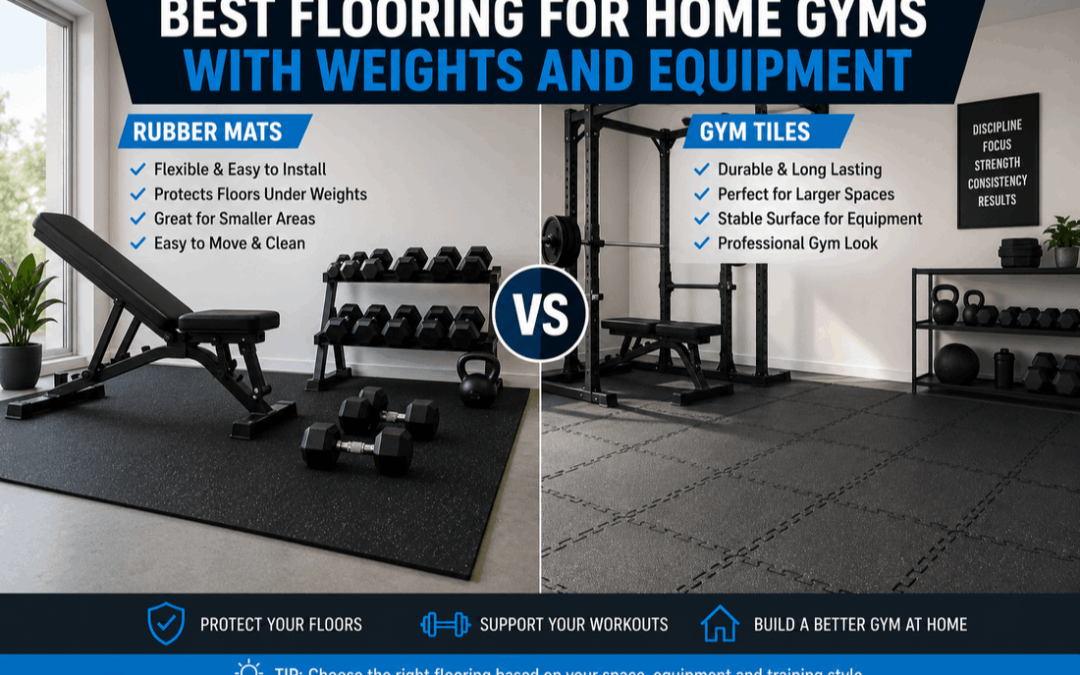
Best flooring for home gym with weights should protect your floor from dumbbells, benches, treadmills, racks and daily training movement. A home gym can put heavy pressure on tiles, concrete, screed or laminate, especially when equipment is used in the same area every day. The right flooring helps create a stronger, cleaner and more comfortable workout space without damaging the surface underneath. For complete home training areas, explore our home gym flooring options.
A home gym with weights needs more than a normal floor covering. Weights can mark the floor, machines can create pressure points, and repeated exercise can make smooth surfaces feel uncomfortable. That is why choosing the right floor from the beginning is important.
This guide explains how to choose the best flooring for home gym with weights by looking at equipment type, room size, floor protection, comfort, grip and long-term maintenance.
Why Home Gym Flooring Matters When You Use Weights
Weights and gym equipment can damage ordinary floors if they are used without protection. Dumbbells, kettlebells, benches and treadmills can leave marks, dents or pressure points over time.
Good home gym flooring creates a protective layer between the equipment and the floor underneath. It also helps make the training area feel more stable and comfortable during workouts.
Protect the Floor
- Helps reduce marks from weights
- Protects tiles, concrete and screed
- Useful under benches and machines
- Supports long-term floor care
Support Training
- Better comfort underfoot
- More practical grip during movement
- Stable surface for equipment
- Cleaner workout zones
Improve the Space
- Creates a proper gym feel
- Defines the workout area
- Makes cleaning easier
- Gives the room a neater finish
Best Flooring for Home Gym With Weights: What to Look For
Best flooring for home gym with weights should be strong enough for the heaviest activity in your training space. A room used only for stretching does not need the same floor protection as a room with dumbbells, benches, a treadmill and a squat rack.
When choosing home gym floor mats or rubber flooring, check the thickness, density, grip, size and cleaning needs. The right option should match the equipment you use most often.
Quick buyer tip
Choose flooring based on the heaviest equipment in your home gym first. Weight areas and machine zones need more protection than light stretching spaces.
Home Gym Floor Mats for Weights and Equipment
Home gym floor mats are useful when you want to protect selected parts of the room. They can be placed under a treadmill, bench, dumbbell rack, kettlebell area or workout station.
Mats are a flexible choice because they can be moved, cleaned or replaced when needed. They are especially helpful in small home gyms where you only need protection in certain zones.
Best places for home gym mats
Use them under: treadmills, bikes, benches, dumbbell areas, kettlebell zones, stretching areas and small workout corners.
Best reason to use mats
They are practical: easy to place, simple to clean and useful when your gym layout may change later.
Rubber Flooring for Home Gyms With Weights
Rubber flooring is one of the most practical choices for a home gym with weights. It offers better floor protection than many standard room surfaces and can handle regular training activity.
For weight training, rubber flooring can help protect the floor under dumbbells, benches, racks and machines. It also makes the space more comfortable for standing, stretching and daily exercise.
For targeted floor protection, view our rubber mats for gym floor protection.
Best Flooring for Home Gym With Weights in a Garage
Best flooring for home gym with weights is especially important in a garage because garage floors are often concrete, screed or painted surfaces. These floors may be strong, but they can still become marked, dusty or uncomfortable during training.
A garage gym usually needs flooring that can handle weights, shoes, equipment and sometimes vehicles or storage items. Rubber mats or gym flooring can help define the workout area and protect the floor from direct pressure.
Measure the training zone
Measure the space where your weights, bench, rack or cardio machine will be used most often.
Match flooring to equipment
Choose stronger flooring under heavy machines, benches and free-weight areas.
Plan cleaning and movement
Leave enough room to clean around equipment and move safely between exercises.
Gym Tiles for Weight Training at Home
Gym tiles for weight training can be a good option when you want a neater and more fitted home gym floor. Tiles work well when you want to cover a larger area instead of only placing mats under selected equipment.
They are useful for spare rooms, garages, fitness corners and dedicated training rooms where the gym will stay in one place long-term. A tiled gym floor can also make the room look more finished and professional.
Gym tiles are useful when you want:
- More complete floor coverage
- A neater home gym layout
- Better protection in weight areas
- A more permanent training surface
- Flooring for benches, racks and dumbbells
- Easy replacement of selected sections if needed
How Thick Should Home Gym Flooring Be?
Thickness depends on how the home gym is used. Light exercise areas may need less protection, while weight training areas usually need stronger flooring.
When comparing the best flooring for home gym with weights, always think about dumbbell use, equipment weight and whether the floor will receive impact or only standing pressure.
Simple Thickness Advice
- Use lighter flooring for stretching and bodyweight training.
- Use stronger rubber flooring under benches and machines.
- Use thicker protection where dumbbells and kettlebells are used.
- Use full coverage when the whole room is a dedicated gym.
Floor Protection Under Treadmills and Machines
Treadmills, bikes, rowers and other machines can put constant pressure on the floor. Even if they are not dropped like weights, their feet can mark the surface underneath over time.
A proper mat or rubber floor section under machines helps spread pressure and makes the gym area easier to clean. It also helps define where cardio equipment should stay in the room.
Common Mistakes When Choosing Home Gym Flooring
One mistake is choosing flooring only because it is cheap. A low-cost mat may work for light exercise, but it may not protect the floor properly under weights or machines.
Another mistake is using one small mat for too many activities. If your equipment is spread across the room, you may need larger coverage or a proper flooring layout.
Avoid these mistakes:
- Using thin mats under heavy weights
- Ignoring the weight of machines
- Forgetting to measure the full workout area
- Choosing flooring only by colour
- Not planning space around benches and racks
- Leaving hard floors exposed in weight zones
- Using soft foam where heavy equipment is placed
Cleaning and Maintaining Home Gym Flooring
Home gym floors should be cleaned regularly because they collect dust, sweat, shoe marks and equipment dirt. A simple cleaning routine helps keep the gym neat and ready for daily use.
Sweep or vacuum loose dirt first, then damp mop with a mild cleaner when needed. Avoid harsh chemicals unless the flooring supplier confirms they are suitable for the material.
Clean regularly
Sweep or vacuum often, especially around dumbbell racks, cardio machines and high-use training areas.
Check the floor
Inspect mats or flooring sections under heavy equipment to make sure they remain flat and stable.
Best Flooring for Home Gym With Weights: Final Buyer Advice
Best flooring for home gym with weights should be chosen according to your equipment, room size and training style. If you only have one treadmill or a small dumbbell set, mats may be enough. If you have benches, racks, machines and regular weight training, stronger gym flooring or rubber mats are usually better.
The best flooring for home gym with weights should protect the surface underneath while making the workout area more comfortable and easier to clean. It should also support the way you train now and the equipment you may add later.
For extra safety when planning a home workout area, read the Health and Safety Executive guide on preventing slips and trips. It is useful when choosing flooring for areas with weights, machines, sweat and regular movement.
For long-term value, the best flooring for home gym with weights is the option that matches your heaviest equipment, covers the right area and gives your home gym a stable surface for daily workouts.
Need Help Choosing Home Gym Flooring?
PVC Floor Tile supplies gym flooring and rubber mats for home gyms, garage gyms, fitness rooms and weight training spaces across South Africa. Speak to our team for help choosing the right mat type, thickness and layout for your gym floor.
Contact Us