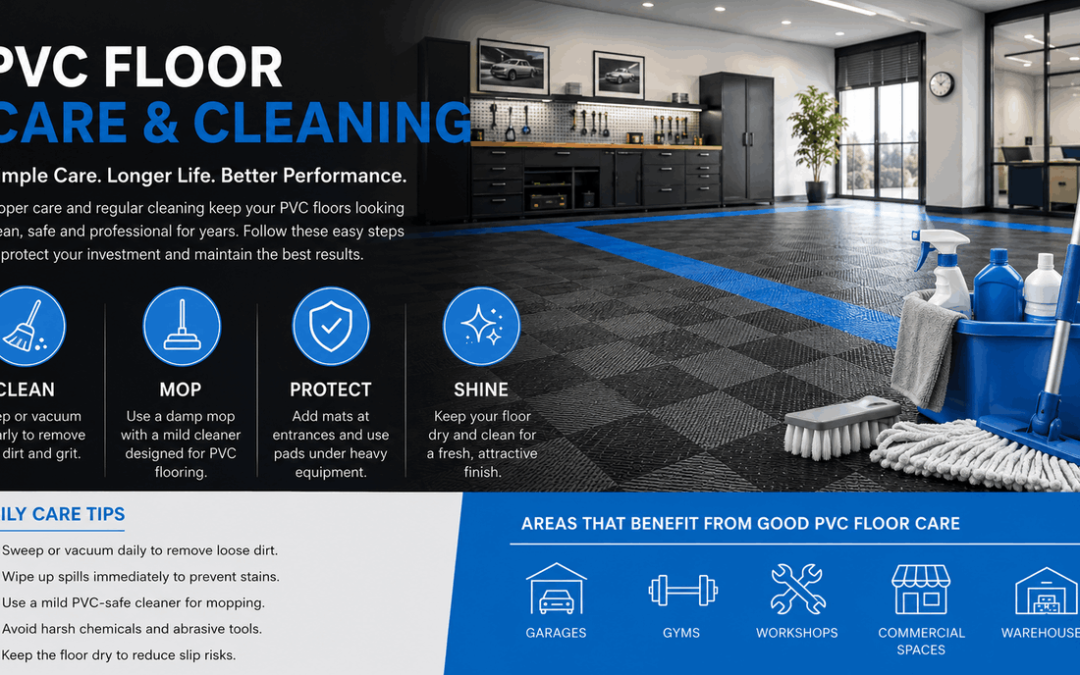
PVC floor care is important if you want your flooring to stay clean, strong, slip-resistant and professional-looking for many years. Whether you have PVC tiles in a garage, gym, workshop, warehouse, school, showroom or commercial space, the correct cleaning routine can protect the surface and improve long-term performance.
PVC flooring is popular because it is durable, practical and easy to maintain. However, like any floor, it still needs regular cleaning, correct products and proper aftercare. Good PVC floor care helps prevent dirt build-up, surface dullness, scratches, stains and unnecessary wear.
Daily PVC Floor Cleaning Tips
Daily cleaning does not need to be complicated. The main goal is to remove dust, sand, small stones and loose dirt before they scratch or mark the floor.
Sweep or Vacuum
Use a soft broom or vacuum cleaner to remove loose dirt, dust and grit from the surface.
Damp Mop
Use clean water and a mild cleaner suitable for PVC flooring. Avoid soaking the floor with too much water.
Dry the Surface
Allow the floor to dry properly before heavy use, especially in entrances, gyms and work areas.
Weekly and Deep Cleaning Routine
Busy PVC floors may need a deeper clean once a week or when visible marks start to appear. This is especially important in garages, workshops, gyms and commercial spaces where the floor handles more traffic.
A weekly PVC floor care routine helps remove marks, traffic dirt and hidden build-up before it becomes difficult to clean.
For Light Dirt
Use a mild floor cleaner with warm water and mop the floor evenly.
For Stubborn Marks
Use a soft brush or cloth. Avoid hard metal brushes that can scratch the surface.
For Larger Areas
A floor scrubber with a soft pad can help clean bigger commercial or industrial floors faster.
For Interlocking Tiles
Check joints and edges where dirt may collect, especially in high-traffic areas.
How to Clean Interlocking PVC Tiles
Interlocking PVC tiles are easy to clean because they can be swept, vacuumed and mopped like many other hard flooring surfaces. The interlocking design also makes it possible to lift individual tiles when deeper cleaning or inspection is required.
For more practical advice on fitting and aftercare, read our floor cleaning and maintenance tips. Proper installation and regular maintenance help PVC tiles stay firm, clean and attractive for longer.
Cleaning PVC Floors in Garages
Garage floors often deal with tyre marks, dust, oil, water and equipment movement. Regular sweeping helps remove sand and small stones before they scratch the surface. Wipe spills quickly and clean tyre marks before they become harder to remove.
If you are choosing flooring for a garage space, compare our garage floor tiles for practical options designed for vehicle areas, workshops and home garages.
Cleaning PVC Floors in Gyms
Gym floors can collect sweat, dust and equipment marks. Clean the surface regularly using a mild cleaner and avoid leaving moisture on the floor. Place protective pads under heavy equipment where needed.
A clean gym floor improves hygiene, comfort and safety for users, especially in busy training areas.
Cleaning Products to Avoid
The wrong cleaning product can damage the floor surface or leave a slippery residue. Always use mild cleaning products that are suitable for PVC flooring.
Avoid Harsh Solvents
Strong solvents can affect the surface finish and may cause dullness or damage.
Avoid Bleach Overuse
Bleach can be too harsh for regular use and may affect colour or finish over time.
Avoid Abrasive Tools
Metal brushes, rough pads and sharp scrapers can scratch or mark the floor.
Avoid Oily Residue Cleaners
Cleaners that leave residue can make the floor slippery and attract more dirt.
PVC Floor Care for Long-Term Protection
PVC floor care is not only about cleaning. It is also about preventing damage before it happens. Simple habits can make a big difference in how long the floor lasts.
- Use entrance mats to trap dust and grit before it reaches the PVC floor.
- Lift heavy equipment instead of dragging it across the surface.
- Use protective pads under furniture, machines or gym equipment.
- Clean spills quickly to reduce staining and slip risk.
- Inspect high-traffic areas regularly for dirt build-up or loose edges.
- Keep sharp tools and metal objects away from the floor surface where possible.
Slip Safety and Cleaning
A clean floor is usually safer than a dirty or greasy floor. Dust, oil, water and cleaning residue can all increase slip risk. This is why regular cleaning and correct drying are important, especially in workplaces, gyms and public areas.
For additional safety information, the Health and Safety Executive provides useful floor slip prevention guidance on reducing slips through better cleaning, surface control and workplace awareness.
PVC Floor Care Schedule
A simple PVC floor care schedule helps keep cleaning consistent and prevents dirt from becoming a bigger problem.
| Task | How Often | Why It Helps |
|---|---|---|
| Sweep or vacuum | Daily or as needed | Removes grit, dust and loose dirt before it scratches the floor. |
| Damp mop | Weekly or more often in busy areas | Keeps the surface clean and fresh without heavy cleaning. |
| Wipe spills | Immediately | Reduces staining, odour and slip risks. |
| Deep clean | Monthly or when needed | Removes stubborn dirt from high-traffic areas. |
| Inspect joints and edges | Monthly | Helps identify loose tiles, dirt build-up or damage early. |
Common PVC Floor Care Mistakes
Using Too Much Water
Excess water can collect around edges and joints. Use a damp mop, not a flooded floor.
Dragging Heavy Items
Dragging machines, benches or tools can scratch or mark the surface.
Leaving Dirt Too Long
Dust and grit can damage the floor when walked over repeatedly.
Frequently Asked Questions About PVC Floor Care
How often should I clean PVC flooring?
Clean PVC flooring as often as the space needs it. Busy areas may need daily sweeping and weekly mopping, while lighter-use areas may need less frequent cleaning.
Can I use a normal household cleaner?
Yes, but only if it is mild and suitable for PVC floors. Avoid harsh solvents, oily residue cleaners and abrasive products.
Can PVC tiles be deep cleaned?
Yes. PVC tiles can be deep cleaned using a suitable cleaner, soft brush, mop or floor scrubber with a soft pad.
How do I remove tyre marks from PVC flooring?
Clean tyre marks early using a mild cleaner and soft cloth or brush. Avoid harsh chemicals unless approved for the specific PVC product.
Is PVC flooring easy to maintain?
Yes. PVC flooring is known for being easy to clean and maintain when the correct routine and cleaning products are used.
Final Thoughts
PVC floor care is simple when you follow the right routine. Sweep or vacuum regularly, mop with a suitable mild cleaner, wipe spills quickly and avoid harsh chemicals or abrasive tools. These small steps can help your floor stay clean, safe and professional-looking for longer.
Whether your PVC flooring is used in a garage, gym, workshop, warehouse or commercial space, proper PVC floor care will help protect your investment and keep the surface ready for everyday use.
Get Practical Advice for PVC Flooring Care
Speak to PVC Floor Tile for help choosing, cleaning and maintaining PVC floor tiles for garages, gyms, workshops and commercial areas.
Contact Us for Flooring Advice