
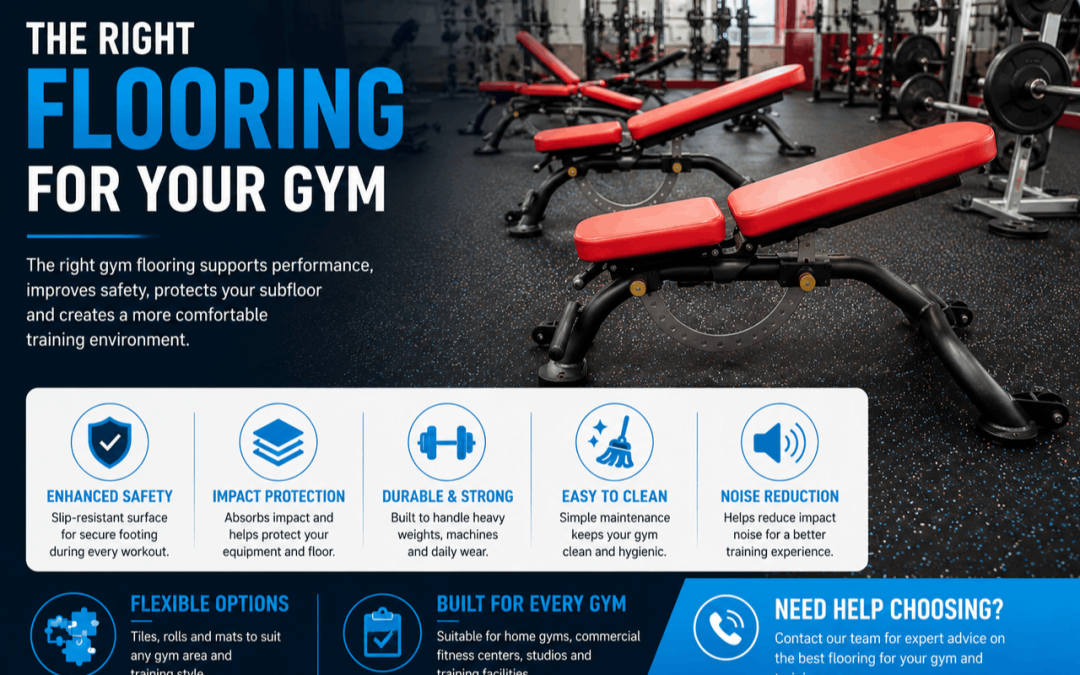
Choosing the right flooring for your gym is one of the most important decisions when setting up a fitness space. The floor is used every day for walking, stretching, lifting, training, moving equipment and exercising at different intensity levels. A good floor covering can improve comfort, protect the subfloor, support safer movement and make the gym easier to clean.
Why Gym Flooring Matters
Gym flooring is not only about appearance. It plays a practical role in how the space performs every day. The surface must support movement, equipment, cleaning and repeated foot traffic. A poor floor choice can make the gym harder to maintain and less comfortable to use.
In a training area, the floor may be exposed to machines, benches, free weights, cardio equipment, stretching zones and regular walking traffic. Good flooring helps create a space that feels organised, safe and suitable for the type of exercise being done.
Customers comparing suitable fitness surfaces can view our gym flooring range for training and exercise spaces.
Consider the Type of Gym or Training Space
The first factor to consider is the type of gym you are creating. A home workout room may need flooring for light exercise and basic equipment, while a commercial gym may need stronger flooring for daily use by many people.
A weight training section may need better impact support, while a cardio area may need a stable surface for machines. A studio space may need flooring that feels comfortable underfoot for movement, stretching and bodyweight training.
- Home workout rooms.
- Commercial fitness areas.
- Personal training studios.
- Weight training sections.
- Cardio equipment zones.
- Stretching and mobility areas.
- Multi-purpose activity rooms.
Check Flooring Thickness and Impact Support
Thickness is one of the most important factors when choosing flooring for your gym. Thicker flooring is usually better for heavier activity areas, while thinner options may be suitable for lighter exercise spaces.
If the gym will include free weights, benches, racks or heavy machines, the flooring should be strong enough to support regular pressure and movement. For light stretching or basic home workouts, the flooring may not need to be as thick.
- Consider the type of exercise being done.
- Check whether weights or machines will be used.
- Think about how often the area will be used.
- Match thickness to impact level and traffic.
- Choose flooring that supports the existing subfloor.
Think About Safety, Grip and Movement
A gym floor should support confident movement. Many exercises involve changing direction, lifting, stretching, balancing or moving between equipment. The surface should feel stable underfoot and suitable for the type of activity happening in the space.
Grip is especially important in busy training areas where different users move across the same floor throughout the day. The floor should also be easy to clean because dust, sweat and moisture can affect how the surface performs.
For general safety reading, view this workplace slip and trip safety guidance.
Consider Equipment and Weight Use
Gym equipment places pressure on flooring. Treadmills, bikes, benches, racks, dumbbells and cable machines all affect the surface in different ways. Before choosing a product, plan where the equipment will be placed and how the space will be used.
A cardio section may not need the same support as a free-weight area. A stretching section may need comfort, while an equipment zone may need stability and surface protection.
- Dumbbells and free weights.
- Benches and racks.
- Cardio machines.
- Cable machines.
- Functional training equipment.
- Storage racks and accessories.
Look at Cleaning and Maintenance
Gym flooring must be practical to clean. Fitness spaces are exposed to sweat, dust, foot traffic and equipment movement. A surface that is difficult to maintain can quickly become a problem, especially in a commercial environment.
Before choosing flooring, think about how often the area will be cleaned, whether many people will use the space and whether the surface can handle regular sweeping and mopping.
Customers needing general surface protection can also view our rubber matting options for selected areas.
Compare Tiles, Rolls and Mats
Gym flooring comes in different formats. Tiles can be useful for modular spaces because they are easier to handle and can suit smaller rooms. Rolls may be practical for larger areas where fewer joins are preferred. Mats can be useful for selected zones, equipment areas or temporary surface protection.
The best format depends on the size of the gym, type of training, installation method, budget, traffic level and whether the layout may change in future.
Consider Noise and Comfort
Noise is another important factor. Gyms can be loud because of footsteps, equipment movement and exercise activity. A suitable floor covering can help reduce some of the sound caused by movement when compared with a hard bare floor.
Comfort also matters. A very hard surface may not be ideal for stretching, standing exercises or bodyweight movement. The flooring should support both performance and user experience.
Think About Installation
Installation should be considered before buying flooring. The existing floor should be clean, stable and as level as possible. Uneven, rough or damaged surfaces may need preparation before any floor covering is installed.
Simple installation can be useful for home gyms and smaller training spaces. Larger commercial gyms may need more planning, especially if the space must remain open during upgrades.
Match Flooring to Your Budget
Budget matters, but the cheapest option is not always the best long-term choice. Flooring that is too thin or unsuitable for the activity may wear faster or fail to support the space properly.
A better approach is to choose flooring based on value. Consider product thickness, durability, maintenance needs, replacement flexibility and suitability for the expected use of the gym.
Read More About Flooring for Different Spaces
Before selecting a gym surface, it can help to read our guide to choosing flooring for different spaces so you can compare flooring by use, traffic and maintenance needs.
This helps you understand why a gym, workshop, garage, retail space or utility area may each need a different flooring approach.
Avoid Common Gym Flooring Mistakes
- Choosing flooring without checking the activity type.
- Ignoring thickness and impact support.
- Using unsuitable products under heavy equipment.
- Forgetting about cleaning and maintenance.
- Not checking the existing floor condition.
- Choosing only based on price.
- Installing flooring without planning the gym layout.
Final Advice Before Choosing Flooring for Your Gym
Choosing flooring for your gym should be based on how the space will be used. The best option depends on activity level, equipment, traffic, maintenance, comfort and the condition of the existing surface.
A well-chosen floor can help protect the subfloor, support movement and create a more professional training environment. Whether the gym is for personal use, commercial training or a multi-purpose fitness area, the flooring should match the needs of the space.
Need Help Choosing Flooring for Your Gym?
PVC Floor Tile can assist with practical flooring guidance for home gyms, training rooms, commercial fitness spaces and equipment areas.
Contact Us